Hip pain has a way of quietly taking over your life before you realize how much it has changed things. Maybe you started avoiding the stairs. Maybe getting out of bed in the morning became something you dread. Maybe you stopped going on walks, skipped a workout, or said no to something you used to love because you just knew your hip would not cooperate. It builds slowly for some people and hits all at once for others, but either way, it is not something you should have to keep pushing through.
If you have found yourself searching for the best hip doctor near you, that search matters. The right provider makes a real difference, not just in how your hip feels, but in how you live. At Medici Orthopaedics & Spine, we work with patients across the Atlanta metro who are done accepting pain as their normal and ready to find out what is actually going on and what can be done about it.
Arthritis is the leading reason adults seek out a hip doctor. As the cartilage inside the hip joint wears down over time, patients experience:
The labrum is a ring of cartilage that lines the hip socket and helps stabilize the joint. Tears can happen from a single injury or develop gradually from repetitive motion. They are common in athletes and active adults and often cause a clicking or locking sensation along with groin or hip pain.
Inflammation of the bursae (small fluid-filled sacs) or the tendons around the hip can cause significant outer hip and thigh pain. This type of pain is often worse with activity, going up stairs, or lying on the affected side at night.
Femoroacetabular impingement occurs when there is abnormal contact between the ball and socket of the hip joint. It is more common in younger and active patients and can lead to labral tears over time if not addressed.
Not all hip pain originates in the hip. Conditions in the lumbar spine, including disc herniations and nerve compression, can refer pain directly into the hip, groin, and thigh. This is one of the most important distinctions a qualified provider can make, because the treatment is entirely different.
Patients who have had a prior hip replacement or procedure and are still experiencing pain deserve a thorough re-evaluation. Implant issues, scar tissue, and adjacent joint problems are all possibilities that a specialist can assess.
The best hip doctors are not one-trick providers. They know when to recommend surgery and, just as importantly, when not to. A provider who can honestly say "you are not a surgical candidate yet, and here is what we should try first" is worth a great deal.
We believe the least invasive option that works is always the right place to start. That means physical therapy, injections, and regenerative treatments get a real chance before anyone talks about an operating room. Patients who come to us hoping to avoid surgery will find that we share that goal whenever it is medically appropriate.
Accurate diagnosis is the foundation of good care. The right provider will combine a detailed physical exam with appropriate imaging, including X-rays and MRI, to understand exactly what is happening before recommending a course of action.
PRP (platelet-rich plasma), stem cell therapy, and prolotherapy represent a newer generation of treatment that can promote healing in damaged tissue. Not every practice offers these options. For patients who are not yet candidates for surgery but have not responded to basic conservative care, regenerative medicine can be a meaningful next step.
The best doctors explain things in plain language. They involve patients in decisions, answer questions without rushing, and make sure you leave the office actually understanding your diagnosis and your options.
Your provider will want to understand when the pain started, where it is located, what makes it better or worse, and how it is affecting your daily life. The more specific you can be, the better.
Expect an assessment of your range of motion, strength, gait, and the specific areas of tenderness around your hip. These findings guide both the diagnosis and the treatment approach.
Once your evaluation is complete, your provider will walk you through the findings and outline a treatment plan that fits your condition, your lifestyle, and your goals. At Medici, that plan always starts with the most effective, least invasive option appropriate for your situation.
Targeted physical therapy is often the starting point for hip pain. Strengthening the muscles that support the hip joint, improving mobility, and correcting movement patterns can significantly reduce pain and prevent further deterioration.
Injections can provide fast, meaningful relief for patients dealing with inflammation. They are not a permanent solution, but they can reduce pain enough to allow patients to engage more fully in physical therapy and other treatments.
For patients with nerve-related hip pain or complex referred pain from the spine, interventional procedures including nerve blocks and other targeted treatments can address the source of the problem directly.
When a labral tear, FAI, or other structural issue requires surgical repair, hip arthroscopy offers a minimally invasive approach using small incisions and a camera. Recovery is typically faster than open surgery, and outcomes for the right candidates are very good.
When hip osteoarthritis has progressed to the point that conservative care is no longer providing adequate relief and quality of life is significantly affected, joint replacement can be genuinely life-changing. Modern hip replacement techniques are highly refined, and most patients see dramatic improvements in pain and mobility.
Our team includes experienced orthopedic and spine specialists, including Dr. Sonny Dosanjh and Dr. Darren Newfield, who bring both surgical expertise and a genuine commitment to conservative care. Patients do not get pushed toward procedures they do not need. They get honest answers and a plan that makes sense for their situation.
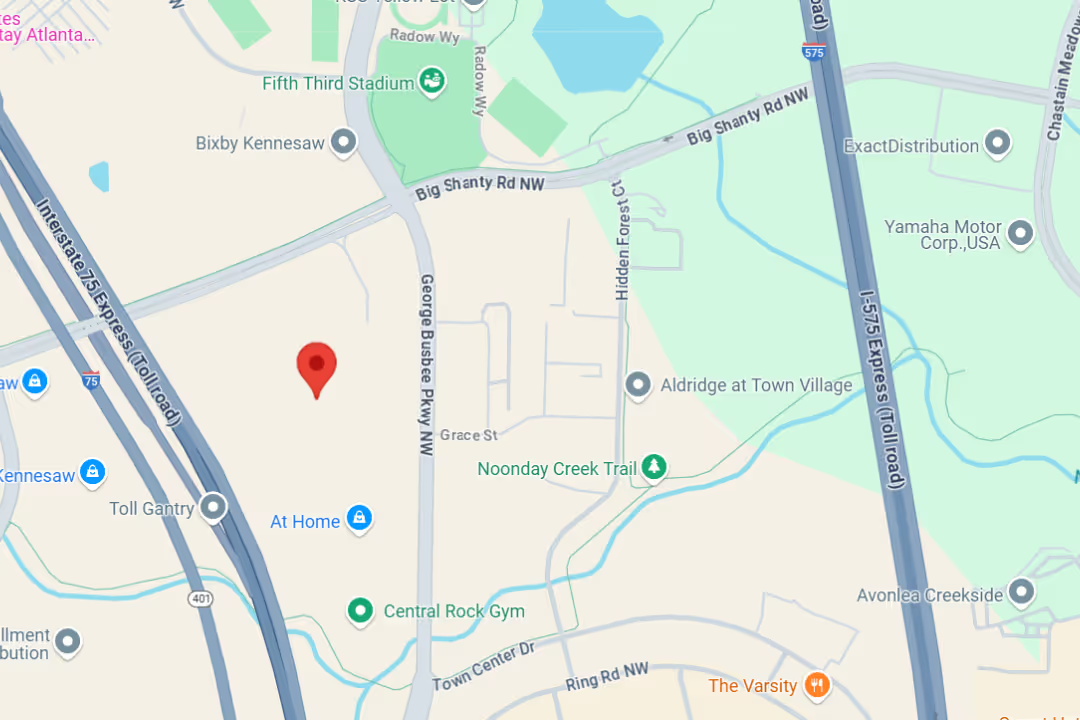
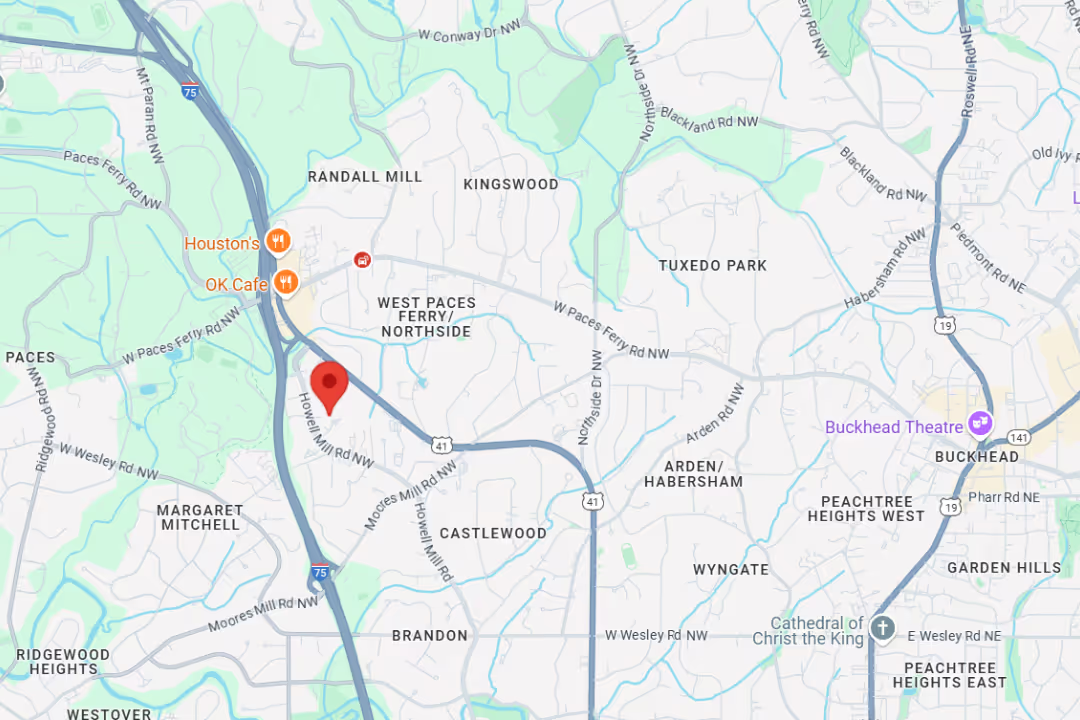
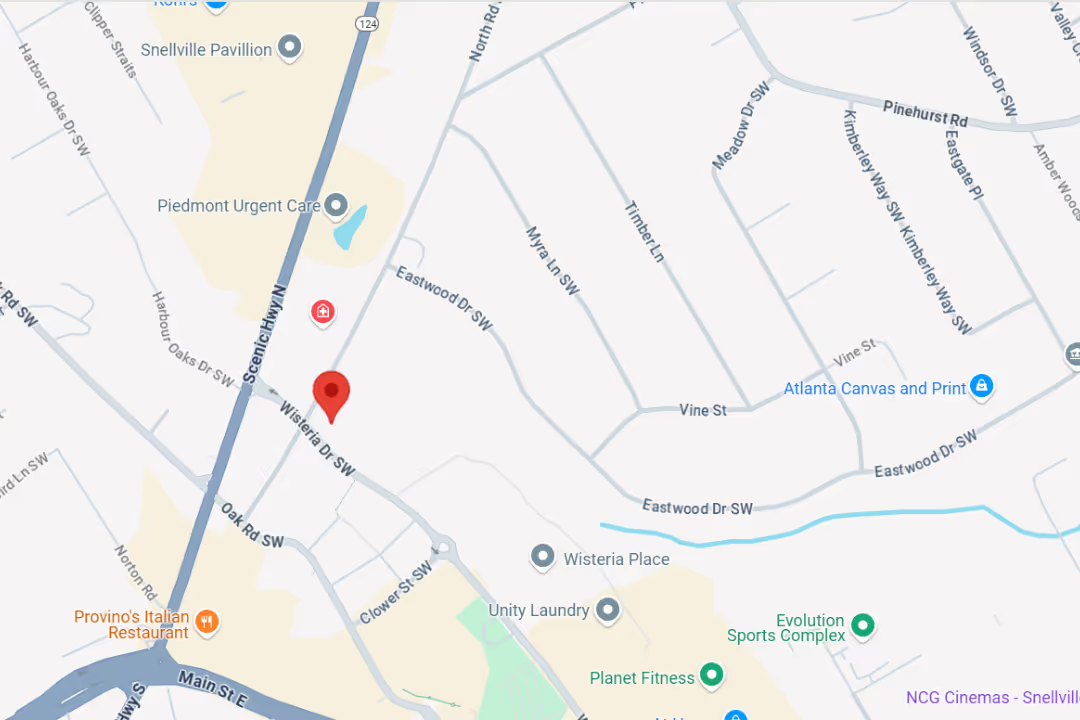
We see patients at clinics in Kennesaw, Snellville, Buckhead, and Marietta. When you are already dealing with hip pain, having convenient access to care matters. Our ambulatory surgery centers in Marietta and Snellville bring surgical and interventional services close to home as well.
Our approach is built around finding the most effective, least invasive, least drug-dependent solution medically appropriate for each patient. For patients searching for a hip doctor who will not rush them into surgery, that philosophy is exactly what they are looking for.
There is a version of this story a lot of our patients know well. You told yourself it would get better on its own. You adjusted your routine around the pain without really noticing you were doing it. You looked up symptoms online, felt reassured for a day or two, and then the ache came back. Months passed. Maybe years.
What we want you to know is that getting an evaluation is not an overreaction. It is not jumping the gun. It is just information, and having an accurate picture of what is happening in your hip gives you options. It puts you back in control of a situation that has probably felt out of your hands for longer than it should have.
Pain does not have to be your normal. The team at Medici Orthopaedics & Spine is ready to help you find out what is driving your hip pain and build a plan to address it using the most effective, least invasive options available.
We have clinics in Kennesaw, Snellville, Buckhead, and Marietta, with ambulatory surgery centers in Marietta and Snellville. We accept Medicare and many other insurance plans.
Explore our library of patient support guides covering the conditions we treat, the treatments we offer, and the questions we hear most. Each one is written to help you understand your options and feel confident about your next step. Browse the topics below to learn more, or reach out to our team anytime.

At Medici, you’re more than your MRI.
We take time to hear your story, understand your pain, and create a plan that actually works for you.

Our team delivers specialist care at convenient locations across Metro Atlanta:
Get expert tips on injury recovery, pain relief, joint health, and movement strategies—straight from our Fellowship-Trained team.