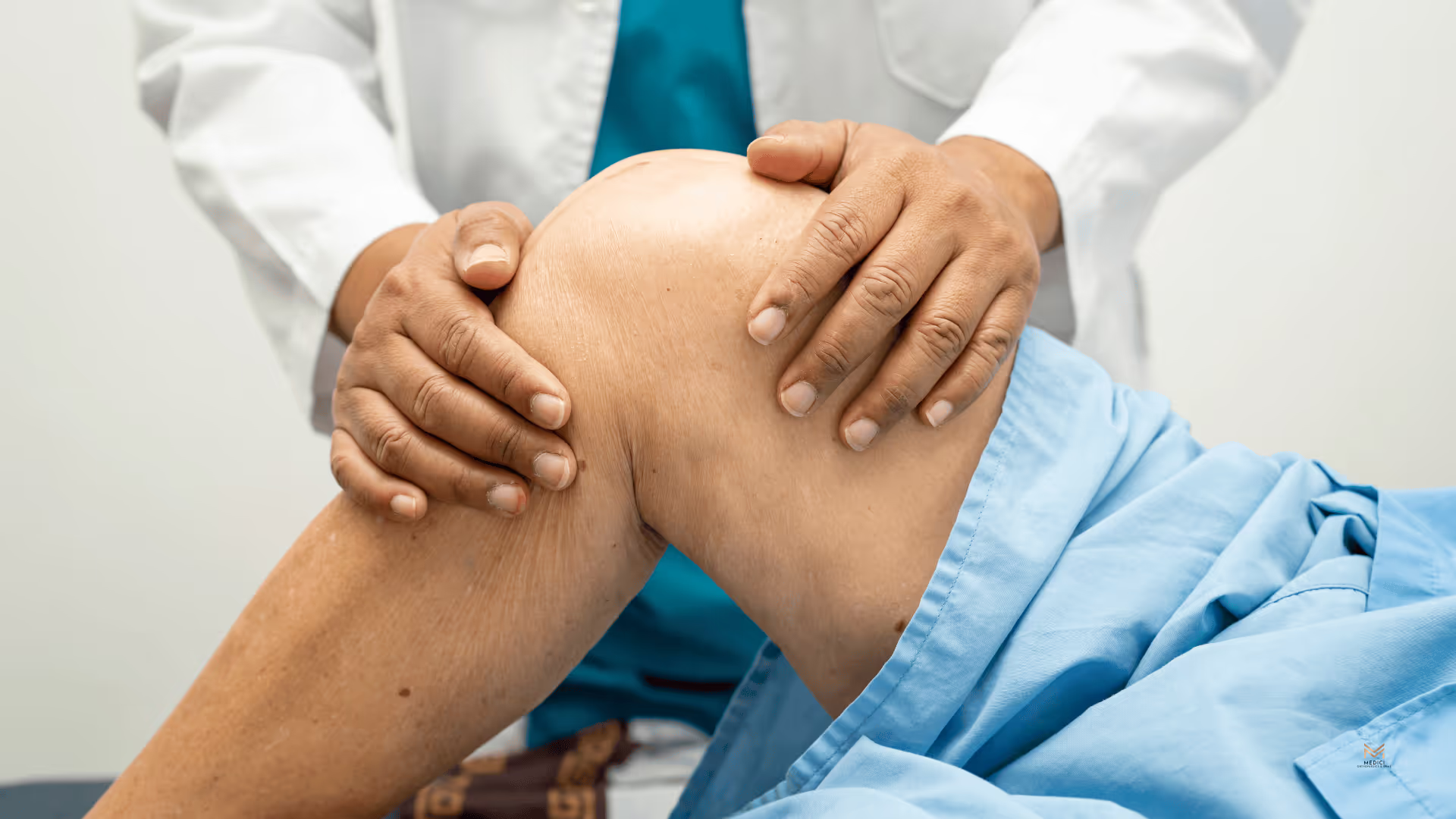
After knee surgery, your joint is in a vulnerable state. The tissues that support movement—ligaments, tendons, cartilage, and surrounding muscles—have been repaired, adjusted, or carefully reconstructed. While this is essential for healing, it also means the knee is temporarily weaker, less stable, and more sensitive to pressure or sudden motion.
This is where post-surgical knee bracing becomes so important.
Stabilization plays a critical role in the healing process. A properly fitted brace can keep the knee aligned, protect delicate repair sites, and prevent movements that could compromise early healing. Without proper support, patients may experience unnecessary pain, swelling, or even re-injury—delaying recovery or requiring additional treatments.
At Medici Orthopaedics & Spine, our goal is simple: support optimal recovery with the least invasive, least drug-dependent strategies available today. This includes ensuring patients receive the right brace, the right fit, and the right level of support for their specific surgery and healing stage.
While not every surgery requires bracing, many post-operative protocols depend on structured support to protect healing tissues. The type of brace recommended often varies based on the surgery performed, the stability needed, and the phase of recovery.
ACL Reconstruction
One of the most common sports-related surgeries, ACL repair typically requires a hinged brace to stabilize the knee and limit rotation during early healing.
Meniscus Repair
Because the meniscus needs controlled movement to heal properly, post-op braces help prevent twisting or bending too far.
MCL/LCL Repair
Since these ligaments stabilize the inner and outer knee, bracing protects them from side-to-side stress.
Patellar Stabilization Surgery
Braces help maintain proper patellar alignment and prevent lateral tracking issues as the knee heals.
Knee Arthroscopy Procedures
While some arthroscopies require minimal bracing, more complex repairs—such as cartilage restoration—may need structured support.
Regardless of surgery type, knee braces generally serve four essential purposes:
Protect Repair Sites
Bracing shields healing tissues from excessive force or movement.
Control Movement
Many braces allow adjustable flexion and extension settings to guide safe range of motion.
Reduce Weight-Bearing Stress
Especially important when walking early in recovery, as it prevents overloading the joint.
Support Proper Alignment During Healing
Good alignment helps prevent compensatory strain and reduces the risk of long-term biomechanical issues.
The timing and duration of brace use depend on your unique procedure and healing goals.
Timing of Brace Use
Some braces are used immediately after surgery, while others are introduced later in rehab.
Duration of Wear
You may need full-time support for a few weeks or only during activity—your provider will determine what’s best.
Activity-Based Adjustments
As mobility improves, your brace settings may change to allow more movement while still offering protection.
Medici’s team coordinates closely with physical therapists and surgeons to ensure your brace supports healing at every stage—not too restrictive, not too loose, and always aligned with your recovery plan.
When complete restriction is needed
Immobilizers are used immediately after certain surgeries when the knee must be kept fully straight to protect fragile repairs.
Benefits & limitations
These braces are typically used for the first few days or weeks before transitioning into something more flexible.
Medial and lateral support
These braces stabilize side-to-side knee movement, protecting ligaments during early recovery.
Adjustable range-of-motion settings
Providers can control how much the knee bends and straightens, ensuring safe, gradual mobility.
Best for ligament repairs
Hinged braces are commonly recommended after ACL, MCL, LCL, or meniscus surgery because they allow protected movement while preventing harmful motions.
Designed for walking and early mobility
Functional braces provide moderate stability while allowing patients to begin moving more naturally.
Often used after ACL or meniscus procedures
They’re especially useful during the midpoint of recovery, when patients are transitioning from protected healing to strengthening and mobility exercises.
Reduce swelling
Compression can help control inflammation that may limit range of motion or cause pain.
Improve circulation
This promotes healing and can make physical therapy more comfortable.
When they’re appropriate—and when they’re not
Compression sleeves are NOT stabilizing braces. They should not be used alone after ligament repairs or major procedures but can complement other braces later in recovery.
Multi-lock systems with ROM control
These advanced braces allow your provider to set safe movement limits as you heal.
Used immediately after surgery
Many surgeons fit these braces during or right after your procedure.
How they transition into lighter support
As healing progresses, settings are adjusted to allow more motion before eventually switching to a functional brace.
Each surgery has specific stability requirements.
For example:
Your brace must match the surgical demands.
Healing happens in stages, and your brace should evolve with you.
Early healing (maximal support)
Protection is the priority; braces limit movement and reduce strain.
Mid-phase rehab (controlled movement)
The brace is adjusted to allow more mobility while protecting vulnerable tissues.
Return-to-activity phase (functional stability)
Functional braces provide dynamic support for exercise, therapy, and daily tasks.
Every patient’s daily routine is different, and that impacts brace selection.
Athletes
May need stronger, sport-specific functional braces.
Workers with physical demands
Require durable support for lifting, walking, or standing.
Sedentary recovery needs
Focus more on comfort and swelling control without over-restricting movement.
A knee brace only works if it fits correctly.
Pain relief depends on alignment
Improper fit can cause rubbing, pinching, slippage, or poor joint support.
Common mistakes patients make
Why professional fitting matters
At Medici Orthopaedics & Spine, our specialists ensure your brace fits properly, supports the right structures, and enhances—not hinders—your recovery.
Your provider begins with a hands-on evaluation of knee stability, swelling, alignment, and pain points.
Understanding exactly what was repaired helps us determine how rigid or flexible your brace needs to be.
We evaluate how your knee responds during movement—walking, standing, stepping—to identify the level of external support required.
Whether you need a hinged brace, functional brace, immobilizer, or post-op adjustable model, we match the brace to both your surgery and your healing stage.
Proper fit is essential. Our team ensures:
Choosing the right knee brace after surgery isn’t just a small detail—it is one of the most important decisions you can make for a safe, successful recovery. The proper brace helps protect healing tissues, supports movement, and reduces the risk of re-injury during the delicate early phases of rehabilitation.
Because different surgeries require different levels of stability, your brace should be customized to the exact procedure you had and the stage of healing you’re in. And while many patients focus on brand or style, the truth is that fit and function matter far more than the name on the label. A brace that isn’t aligned correctly or doesn’t match your surgical needs may actually slow recovery or cause discomfort.
At Medici Orthopaedics & Spine, our specialists provide expert evaluations and personalized recommendations to ensure you receive the right brace—and the right guidance—to help your knee heal stronger, safer, and faster.
📞 Call us today: +1-844-328-4624
🌐 Schedule now: https://www.mediciortho.com/
At Medici, you’re more than your MRI.
We take time to hear your story, understand your pain, and create a plan that actually works for you.

Our team delivers specialist care at convenient locations across Metro Atlanta:
Get expert tips on injury recovery, pain relief, joint health, and movement strategies—straight from our Fellowship-Trained team.