How Kennesaw Patients Are Finding Neck Pain Relief Without Surgery

It often starts subtly — a little stiffness in the morning, a twinge when checking your blind spot, or an ache that lingers after a long day at the desk. Over time, that mild discomfort can evolve into something that affects nearly every part of your day. For many Kennesaw residents, neck pain has become more than just a nuisance — it’s a daily obstacle.

At Medici Orthopaedics & Spine in Kennesaw, we see this every day — patients regaining movement, reducing pain, and returning to normal activities through personalized care that prioritizes healing over surgery. “Without surgery” doesn’t mean “without results.” It simply means your care starts with the least invasive, most effective options available.

Neck pain may be running your life right now — but it doesn’t have to stay that way. With today’s innovative, non-surgical spine care, many Kennesaw patients are getting back to work, movement, and restful sleep faster than they ever thought possible — all without a scalpel or extended recovery time.

Physical Therapy & Corrective Exercise

Physical therapy is often the cornerstone of non-surgical neck pain relief because it doesn’t just “calm symptoms”—it addresses the mechanics that keep pain coming back.

Posture correction and deep neck flexor strengthening

  • Retraining the small stabilizing muscles in the front of the neck that support healthy alignment
  • Reducing “forward head posture” that overloads joints and soft tissues
  • Improving endurance so the neck doesn’t fatigue as quickly during screen time or driving

Scapular stabilization and upper back mobility

  • Strengthening the shoulder blade muscles that take stress off the neck
  • Improving upper back (thoracic) mobility so the neck isn’t forced to overwork
  • Correcting shoulder rounding that commonly contributes to upper trap tightness

Range-of-motion work and gentle strengthening

  • Restoring safe, comfortable motion—especially turning, side-bending, and looking up/down
  • Gradually building strength without provoking flare-ups
  • Reducing fear of movement by teaching controlled, pain-informed progression

Home exercise programs for lasting improvement

  • Simple, repeatable routines that fit real life (work breaks, mornings, evenings)
  • Consistency-focused plans to maintain gains between visits
  • Long-term strategies to keep improvements after pain decreases

Myofascial Release & Targeted Soft Tissue Work

A surprising amount of neck pain is driven—or amplified—by muscle guarding, tension, and trigger points. Targeted soft tissue work can be a powerful way to reduce pain and improve motion so other treatments (like exercise) work better.

Trigger point relief for neck/upper trap/scalene tightness

  • Addressing “knots” and tight bands that refer pain into the head, jaw, shoulder, or shoulder blade
  • Releasing common problem areas like upper trapezius, levator scapulae, scalenes, and suboccipital muscles
  • Reducing the “pull” these muscles place on the cervical spine

Reducing protective muscle spasm

  • Calming the body’s protective response after strain, whiplash, or disc/joint irritation
  • Decreasing stiffness that can limit movement and reinforce pain cycles
  • Helping patients feel safer moving again (which is essential for recovery)

Improving movement quality and pain tolerance

  • Smoother motion patterns with less “catching” or sharp pain
  • Better tolerance for activity—driving, desk work, light exercise
  • Improved comfort so strengthening and posture work can progress more effectively

Medication Management 

Medication isn’t meant to be the whole plan—it’s often used as a short-term support to help patients move, sleep, and participate in therapy while inflammation settles.

Anti-inflammatory strategies when appropriate

  • Reducing inflammation around irritated joints and tissues
  • Helping decrease pain enough to restore normal movement
  • Supporting functional improvement rather than masking symptoms long-term

Short-term muscle relaxants for spasm (select cases)

  • Used when spasms are severe and limiting motion or sleep
  • Typically short duration to avoid unnecessary dependence or side effects
  • Most effective when paired with movement-based rehab, not used alone

Avoiding long-term dependency and focusing on function

  • Emphasis on returning patients to activity, strength, and stability
  • Medication used as a bridge—not a destination
  • Preference for the least risky options whenever possible, based on individual needs

Interventional Spine Treatments

When neck pain is driven by inflammation around a nerve or irritation in the small joints of the spine, targeted procedures can help calm symptoms and help you move forward with rehab—often without surgery and without long downtime. These treatments are typically considered when pain is persistent, radiating, or limiting your ability to participate in physical therapy and daily activities.

Cervical epidural steroid injections (for nerve inflammation)

  • Designed to reduce inflammation around irritated cervical nerves
  • Often used when pain radiates into the shoulder, arm, or hand (radiculopathy)
  • Can help decrease “electric,” burning, or shooting pain so patients can tolerate therapy and normal movement

Selective nerve root blocks (diagnostic + therapeutic)

  • Targets a specific nerve suspected of causing symptoms
  • Helps in two important ways:
    • Therapeutic: reduces inflammation and nerve irritation
    • Diagnostic: confirms which nerve level is responsible when symptoms or imaging are unclear
  • Especially helpful when multiple levels show changes on imaging

Facet joint injections (joint-based neck pain)

  • For pain coming from the cervical facet joints (often worse with looking up or turning the head)
  • Can reduce localized neck pain and referred pain into the shoulder blade/upper back
  • Often used when arthritis or joint irritation is suspected

Medial branch blocks and radiofrequency ablation (RFA) for chronic facet pain (when appropriate)

  • Medial branch blocks:
    • Short-acting numbing medicine is placed near the small nerves that transmit pain from facet joints
    • Helps confirm whether facet joints are the true pain generator
  • Radiofrequency ablation (RFA):
    • If blocks confirm the source, RFA may be considered to interrupt pain signals for longer-term relief
    • Commonly used for chronic, recurrent facet-related neck pain when conservative care alone isn’t enough

How these procedures support recovery (not just temporary relief)

  • Reduce inflammation at the source (nerve or joint)
  • Interrupt pain signaling so the nervous system can “calm down”
  • Improve tolerance for rehab, allowing:
    • better participation in physical therapy
    • better sleep and movement confidence
    • faster progress with posture correction and strengthening

Regenerative & Advanced Therapies

For select patients, advanced therapies may be considered—especially when pain is linked to soft tissue support issues or when the goal is to improve stability and long-term tissue health. Candidacy is important, and these options are typically individualized based on exam findings, imaging when needed, and response to conservative care.

Prolotherapy (select ligament/tendon support cases)

  • Used when ligament or tendon support appears to contribute to instability or persistent strain patterns
  • Aims to stimulate the body’s natural repair response in targeted tissues
  • May be considered when patients have recurring pain patterns despite doing “all the right things”

Regenerative medicine approaches based on candidacy

  • Considered case-by-case depending on diagnosis, health factors, and goals
  • Often geared toward supporting tissue quality rather than simply masking symptoms

Focus on strengthening and long-term tissue health

  • Best viewed as part of a larger plan—not a standalone fix
  • Typically paired with:
    • corrective exercise
    • posture retraining
    • movement education
  • Goal: improve resilience so the neck is less reactive and less prone to flare-ups

Lifestyle and Ergonomic Interventions

Even the best treatments can struggle to “stick” if daily habits keep re-irritating the neck. Small adjustments—done consistently—often make a surprisingly large difference, especially for people whose symptoms are aggravated by screen time, driving, or prolonged sitting.

Desk setup and monitor height adjustments

  • Raise screens to reduce “head-forward” strain
  • Use chair and keyboard positioning that supports neutral posture
  • Consider lumbar and arm support to reduce shoulder/neck tension

Phone habits and head positioning

  • Avoid “chin-to-chest” scrolling for long periods
  • Bring the phone up closer to eye level when possible
  • Use voice-to-text or brief pauses to reduce repetitive strain

Sleep posture and pillow guidance

  • Support the neck’s natural curve without forcing it into flexion
  • Side sleepers: maintain neutral neck alignment (not tilted up/down)
  • Back sleepers: avoid pillows that push the head too far forward

Neck Pain Relief—Without Pressure, With a Plan

Neck pain has a way of shrinking your world—how you sleep, how you work, how you drive, and how confidently you move. But it’s important to hear this clearly: neck pain isn’t something you just “have to live with.” With the right plan, many patients are able to reduce pain, restore motion, and get back to daily life without surgery.

If your neck pain is lingering, radiating into the arm, waking you at night, or limiting your work and routines, consider getting expert guidance sooner rather than later. At Medici Orthopaedics & Spine, the approach is conservative-first and personalized—built around the least invasive options that make sense for your diagnosis, your lifestyle, and your goals.

When you’re ready, the Medici team is here to help you understand your options and move forward with a plan—without pressure, and with your quality of life at the center of every decision.

Contact Medici Orthopaedics & Spine

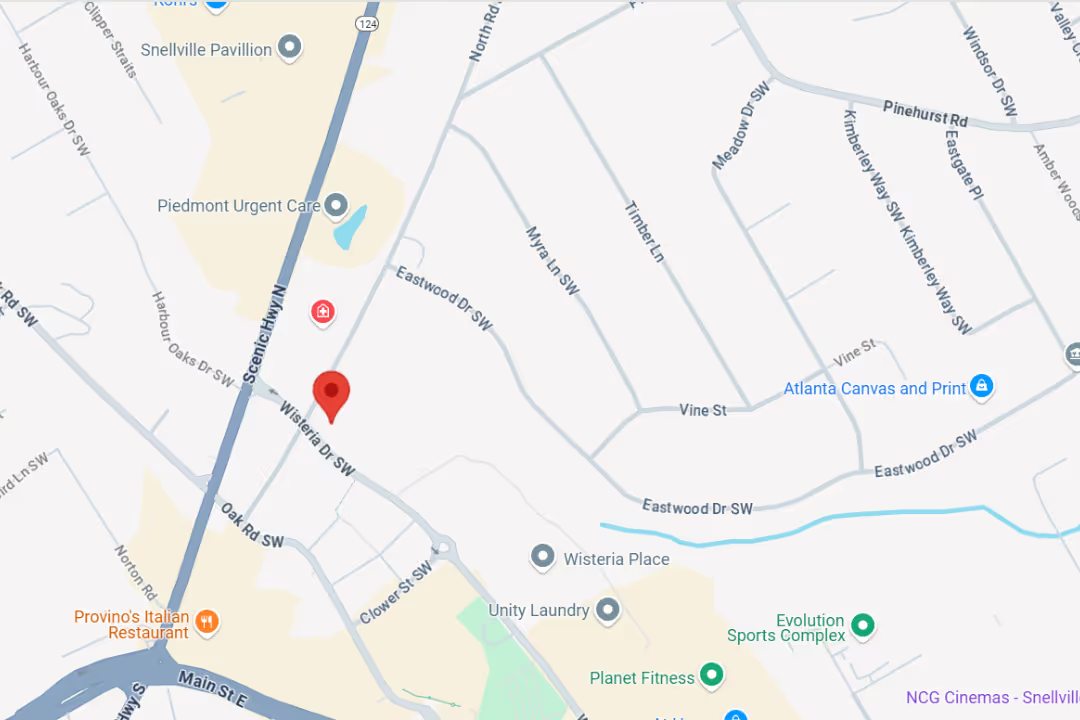
Kennesaw Clinic
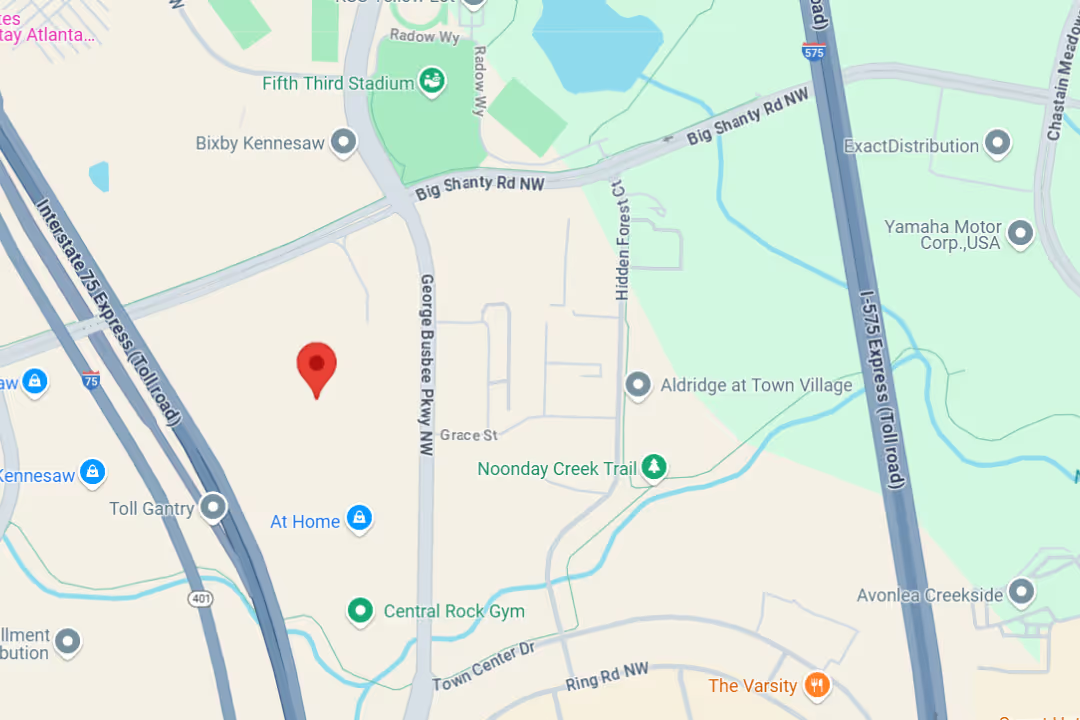
2911 George Busbee Parkway
Suite 50
Kennesaw, GA 30144
(770) 545-6404

Tired of Feeling
Like Just Another
Chart?

At Medici, you’re more than your MRI.
We take time to hear your story, understand your pain, and create a plan that actually works for you.