There's a specific kind of frustration that comes with a sports injury. Maybe it's a knee that gave out during a Saturday morning run, or a shoulder that hasn't felt right since a tennis match three weeks ago. Maybe it's your teenager limping off the soccer field, and you're not sure if it's something that will heal on its own or something that needs a real evaluation. Whatever brought you here, searching for a sports orthopedic surgeon near you usually means one thing: an injury is getting in the way of a life you want back.
We understand that active people don't want to sit on the sidelines longer than necessary. Our team at Medici Orthopaedics & Spine works with athletes of every level, from weekend warriors to competitive high schoolers to lifelong recreational players, and we know the questions that come with an injury are rarely just medical ones. Patients want to know how soon they can get back to their sport, what their options actually look like, and whether surgery is truly necessary or just one possibility among several. Those are exactly the conversations we have every day.
A sports orthopedic surgeon typically completes additional fellowship training beyond general orthopedic surgery, focusing specifically on musculoskeletal injuries related to athletic activity. This training covers the biomechanics of movement, the demands specific sports place on joints and soft tissue, and surgical techniques designed to preserve function for active patients. It's a narrower, deeper focus than general orthopedics offers.
A general orthopedic surgeon can treat fractures, joint pain, and degenerative conditions across a wide range of patients. A sports-focused surgeon brings that same foundation but adds specific expertise in:
Choosing a surgeon with sports-specific experience often means a treatment plan built around your activity goals, not just pain relief. Many patients don't realize that recovery timelines and rehabilitation protocols can look very different depending on whether a surgeon regularly treats athletes. This can affect everything from surgical technique to how quickly you're cleared to return to your sport.
Knee injuries are among the most common reasons patients search for a sports orthopedic surgeon. These include:
The shoulder is a complex joint, and overhead athletes in particular are prone to certain injuries. Common issues include:
Ankle sprains are frequently dismissed as minor, but repeated sprains or improperly healed injuries can lead to long-term instability. Fractures and Achilles tendon injuries also fall into this category, and both typically require a specialist's evaluation to avoid complications.
Throwing and racquet sports place unique stress on the elbow and wrist. Conditions like tennis elbow, golfer's elbow, and stress fractures are common among athletes who repeat the same motion frequently, whether that's a serve, a swing, or a pitch.
Not every sports injury happens in a single dramatic moment. Overuse injuries develop gradually from repetitive motion, while acute injuries result from a specific incident, like a fall or collision. Both categories deserve evaluation, even when the pain seems manageable at first.
Certain symptoms suggest it's time to stop waiting and schedule an evaluation:
Minor strains and mild soreness often do improve with basic rest, ice, and time. But many patients don't realize that waiting too long on a more serious injury, like a partial ligament tear, can lead to further damage or a longer recovery down the road. If you're unsure which category your injury falls into, an evaluation is almost always the safer choice.
Myth: If you can still walk on it, it's probably not serious. Fact: Many significant injuries, including partial ACL tears and stress fractures, still allow limited mobility.
Myth: Surgery is always the first recommendation for sports injuries. Fact: Conservative treatment is typically explored first, with surgery reserved for cases where it's genuinely needed.
Your first visit typically includes a physical examination, a review of your symptoms and activity history, and imaging such as X-rays or MRI if needed. This helps our team understand the full picture before recommending any treatment path.
In line with our philosophy of least invasive care, we typically discuss non-surgical options first. These might include physical therapy, activity modification, bracing, or regenerative treatments like PRP injections, depending on the injury.
If conservative treatment isn't enough, or if the injury is severe enough that surgery offers a clearer path to recovery, we'll walk you through exactly what that would involve. Patients leave these conversations understanding their options, not just being told what to do next.
We believe surgery should be reserved for situations where it's truly the most effective option, not the default. This means exploring physical therapy, bracing, and activity adjustments before jumping to more invasive measures whenever it's medically appropriate.
When surgery is needed, our surgeons, including Dr. Darren Newfield, prioritize minimally invasive and arthroscopic techniques where possible. These approaches often mean smaller incisions, less tissue disruption, and typically faster recovery compared to traditional open surgery.
For many sports injuries, regenerative treatments like PRP (platelet-rich plasma) injections and prolotherapy can support healing without surgical intervention. These options may help reduce inflammation and encourage tissue repair, particularly for tendon and ligament injuries.
Recovery doesn't end after treatment or surgery. Our physical therapy and rehabilitation support helps patients rebuild strength and mobility safely, with a plan tailored to their specific sport and activity goals.
Consider asking:
Look for board certification, fellowship training specific to sports medicine, and a track record of treating athletes at your activity level, whether that's recreational, competitive, or somewhere in between.
The best outcomes often come from a team that considers your goals, not just your diagnosis. A twenty-year-old competitive athlete and a fifty-year-old recreational runner may have the same injury but very different treatment priorities, and a good surgeon recognizes that difference.
An injury can feel like it's putting your entire routine on hold, but for most patients, it's a temporary setback rather than a permanent one. With the right evaluation and a treatment plan built around your specific goals, most people find a clear path back to the activities that matter to them. That path looks different for everyone, and that's exactly why an individualized approach makes such a difference.
Our team has spent years helping patients throughout the Atlanta area navigate exactly this kind of uncertainty. We know that getting back to a sport isn't just about healing an injury. It's about doing so in a way that reduces the risk of it happening again, while keeping recovery as efficient and comfortable as possible.
If pain, swelling, or instability is keeping you from the activities you love, our team at Medici Orthopaedics & Spine is ready to help you figure out what's next. Dr. Sonny Dosanjh and Dr. Darren Newfield lead a team dedicated to effective, least invasive, least drug-dependent care for active patients throughout the greater Atlanta area.
Reach us at:
📞 +1-844-328-4624 🌐 mediciortho.com
Explore our library of patient support guides covering the conditions we treat, the treatments we offer, and the questions we hear most. Each one is written to help you understand your options and feel confident about your next step. Browse the topics below to learn more, or reach out to our team anytime.

At Medici, you’re more than your MRI.
We take time to hear your story, understand your pain, and create a plan that actually works for you.

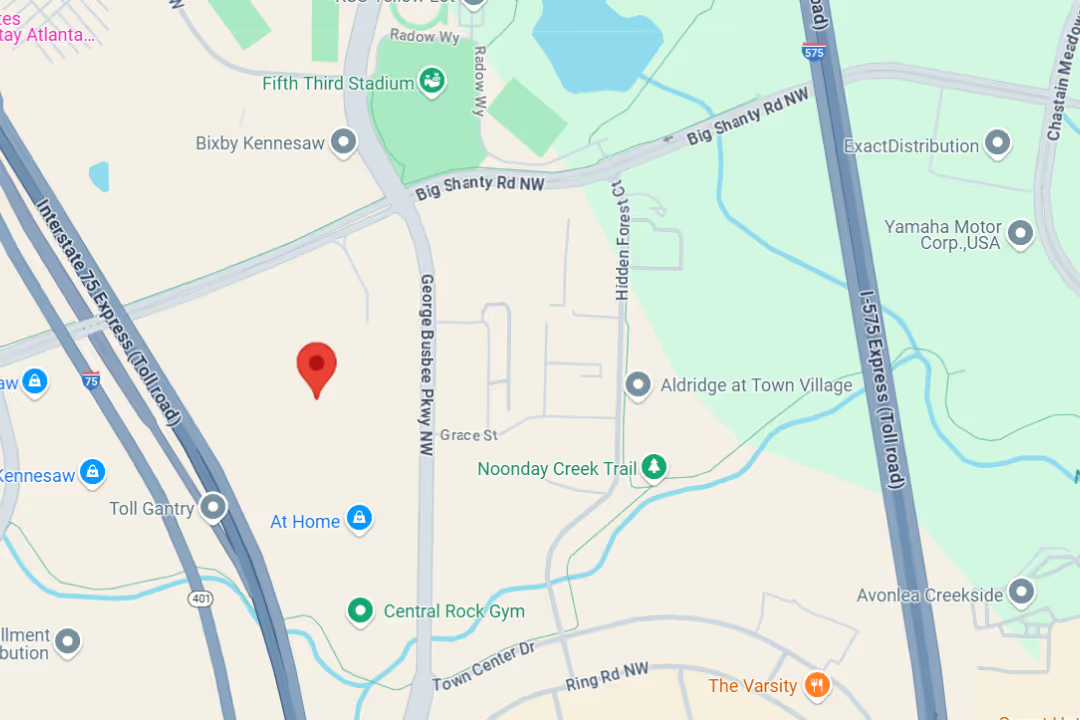
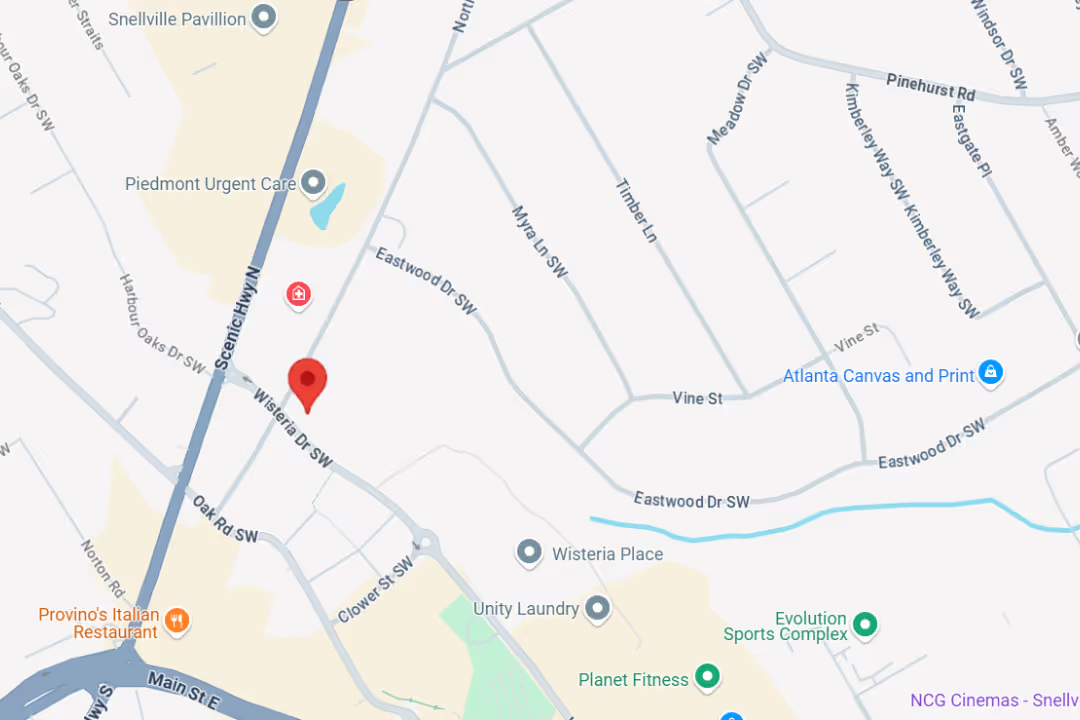
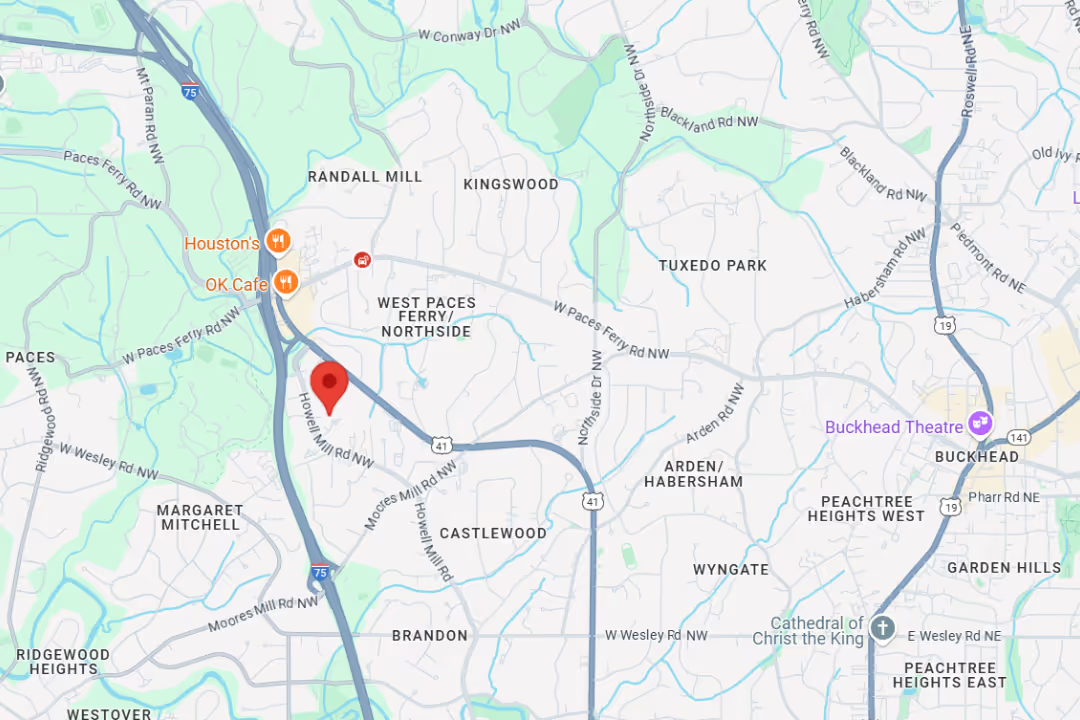
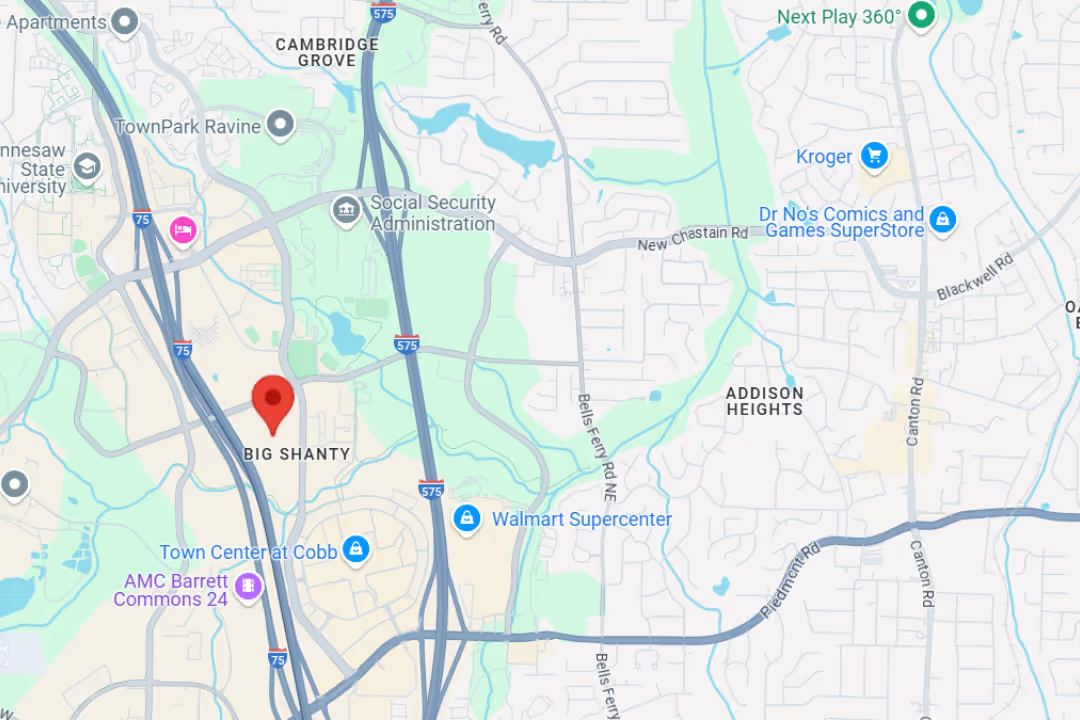
Our team delivers specialist care at convenient locations across Metro Atlanta:
Get expert tips on injury recovery, pain relief, joint health, and movement strategies—straight from our Fellowship-Trained team.