Shoulder pain has a way of quietly taking over your life. Reaching for a cabinet, buckling a seatbelt, or simply rolling over in bed can suddenly feel like a negotiation with your own body. Once that happens, you start wondering who can actually help, and whether the next step means surgery, months of physical therapy, or something in between.
That uncertainty is often harder than the pain itself. You want someone who will listen first, examine thoroughly, and recommend a path that fits your life, not a one size fits all protocol. At Medici Orthopaedics & Spine, that is exactly the kind of care our patients across the Atlanta area have come to expect from our team.
We know that choosing a surgeon is a personal decision, and it should never feel rushed. Our goal is to give you the information you need to feel confident about that choice, starting with what truly separates an excellent shoulder surgeon from an average one.
Board certification confirms that a surgeon has met rigorous national standards in orthopedic surgery. Fellowship training goes a step further, focusing specifically on shoulder and upper extremity conditions. Surgeons with this additional training tend to see a higher volume of complex shoulder cases, which builds sharper diagnostic instincts.
A surgeon who has treated hundreds of rotator cuff tears will approach your case differently than one who sees them occasionally. Experience with your exact condition, whether that is instability, arthritis, or a labral tear, shapes both the diagnosis and the treatment plan. Ask directly about a surgeon's experience with your specific issue during your consultation.
Surgery should always be a considered decision, not a default one. Our physicians at Medici follow a conservative first approach, meaning we explore every reasonable non-surgical option before recommending an operation. This philosophy reflects our broader mission of restoring quality of life through the least invasive path available.
When surgery is genuinely the right choice, technique matters. Minimally invasive and arthroscopic methods generally mean smaller incisions, less tissue disruption, and often a faster return to daily activities. Look for a surgeon who stays current with these advances rather than relying solely on older, more invasive approaches.
Shoulder pain rarely has just one cause, which is why an accurate diagnosis is so important. Understanding the most common conditions can help you describe your symptoms more clearly during your visit.
If you are waking up because you rolled onto your shoulder, or you avoid certain movements out of fear of pain, that is a meaningful signal. Pain that interferes with sleep or basic daily tasks rarely improves without proper treatment.
Struggling to lift your arm overhead, reach behind your back, or carry everyday items can indicate structural damage. Weakness paired with pain often points to a rotator cuff issue that benefits from early evaluation.
Ice, rest, and over the counter pain relievers are reasonable first steps for minor strains. If symptoms continue past a couple of weeks despite these efforts, it is time to bring in a specialist rather than continuing to guess.
Sudden injuries, especially those involving a fall, direct impact, or forceful pulling motion, deserve prompt attention. Waiting too long after an acute injury can allow a treatable issue to become more complicated.
Surgery is never our starting point, and for many patients, it is never needed at all. Our team builds a treatment plan around the least invasive option that can genuinely restore function.
Arthroscopic surgery uses small incisions and a camera to guide precise repairs, which often means less scarring and a smoother recovery. This approach is commonly used for labral tears, impingement, and many rotator cuff repairs.
Larger or more complex rotator cuff tears may require reconstruction to restore strength and function. Our surgeons evaluate tear size, tissue quality, and patient activity level to determine the most effective surgical strategy.
For patients with advanced arthritis or severe joint damage, partial or total shoulder replacement can relieve pain and restore movement. Advances in implant design and surgical technique have made these procedures more precise than ever.
Recovery timelines vary based on the procedure and each patient's overall health, but most surgical plans include a structured physical therapy program afterward. Our team walks you through what to expect at every stage, so there are no surprises along the way.
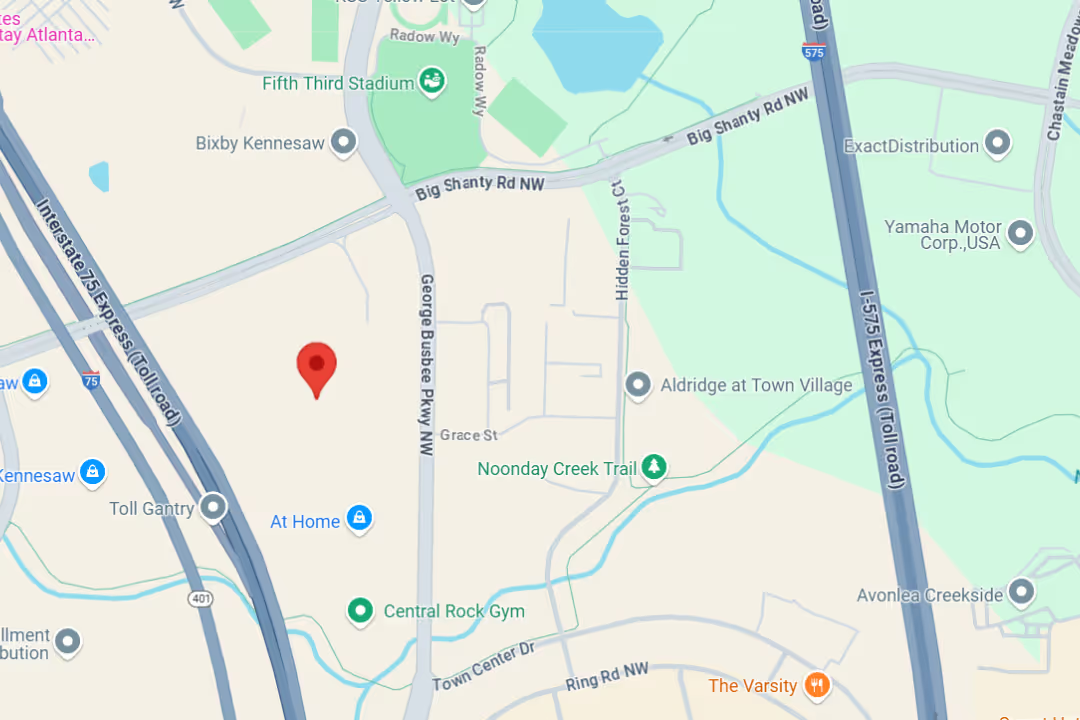
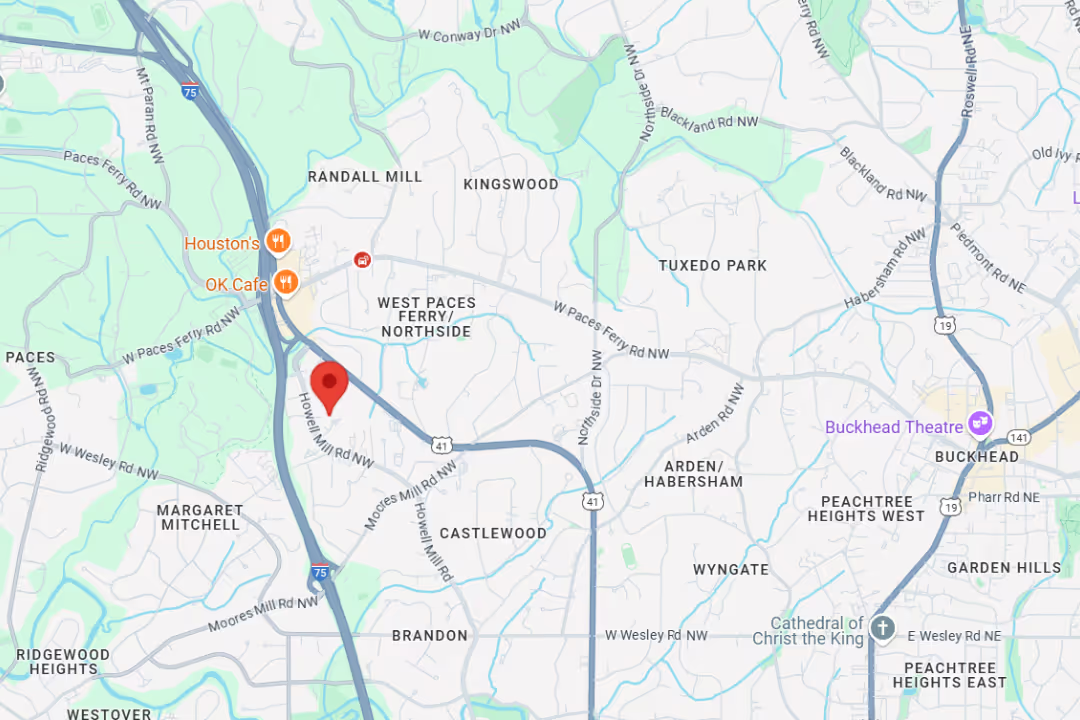
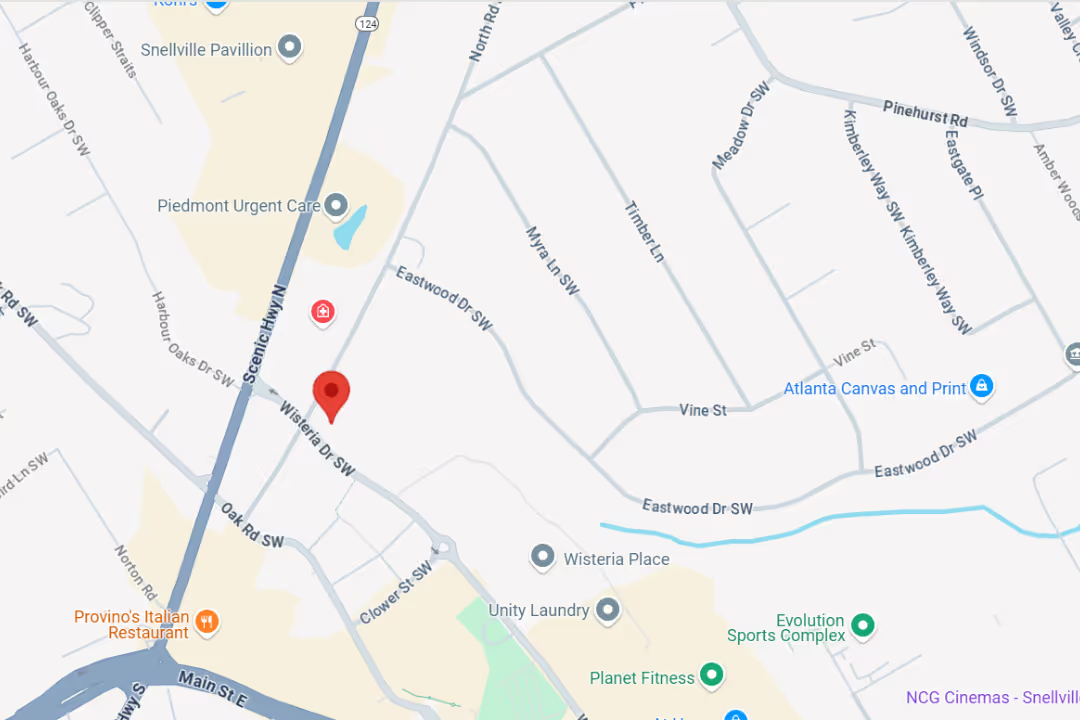
With clinics and surgery centers spread across these communities, patients rarely have to travel far for expert shoulder care. This local footprint also supports easier follow-up visits and continuity throughout treatment.
Our physicians, physical therapists, and support staff work together rather than in isolated silos. This coordinated approach means your treatment plan reflects input from every relevant specialty, not just one perspective.
Dr. Sonny Dosanjh and Dr. Darren Newfield bring complementary expertise in orthopedic and spine care to our practice. Their combined experience allows patients to receive well-rounded evaluations, whether the issue is isolated to the shoulder or connected to broader musculoskeletal concerns.
Shoulder injuries frequently result from car accidents or workplace incidents, and navigating that process can feel overwhelming. Our team has experience supporting personal injury and workers compensation patients through both treatment and the surrounding paperwork.
Living with shoulder pain can feel isolating, especially when it limits things you used to do without a second thought. The good news is that most shoulder conditions respond well to the right combination of evaluation, treatment, and time. You do not have to figure out the right path on your own.
Our physicians take the time to understand your specific situation before recommending any course of action. Whether that means physical therapy, regenerative treatment, or a carefully planned surgical repair, the goal remains the same. We want to help you move, work, and live without your shoulder holding you back.
If shoulder pain has been slowing you down, our team is ready to help you figure out what comes next. Reach out to Medici Orthopaedics & Spine to schedule an evaluation with a physician who will actually listen to what you are dealing with.
📞 Phone: +1-844-328-4624
🌐 Website: mediciortho.com
Locations:
Explore our library of patient support guides covering the conditions we treat, the treatments we offer, and the questions we hear most. Each one is written to help you understand your options and feel confident about your next step. Browse the topics below to learn more, or reach out to our team anytime.

At Medici, you’re more than your MRI.
We take time to hear your story, understand your pain, and create a plan that actually works for you.

Our team delivers specialist care at convenient locations across Metro Atlanta:
Get expert tips on injury recovery, pain relief, joint health, and movement strategies—straight from our Fellowship-Trained team.