Knee pain has a way of becoming the background noise of everyday life. It shows up when you stand from a chair, when you try to take the stairs, when you lie down at night hoping to finally get some rest. For a while, you work around it. You adjust, you compensate, you push through. But there comes a point when pushing through is no longer enough, and the conversation shifts from managing pain to actually solving it.
If you've reached that point and you're searching for a top rated knee replacement surgeon near you, you're already asking the right question. Choosing the right surgeon is one of the most important decisions you'll make in this process, and it deserves more than a quick Google search and a star rating. At Medici Orthopaedics & Spine, we work with patients across greater Atlanta who are at exactly this crossroads, and we want to help you understand what to look for, what to expect, and what your options actually are.
Not everyone who has knee pain needs surgery, and a good orthopedic practice will be honest with you about that. Knee replacement becomes a serious conversation when the joint has deteriorated to a point where other treatments can no longer provide meaningful relief.
Most patients arrive here after years of osteoarthritis, the gradual breakdown of cartilage that cushions the knee joint. As that cartilage wears away, bones begin rubbing directly against each other, causing pain, swelling, and stiffness that gets harder to ignore. Other conditions like rheumatoid arthritis, post-traumatic arthritis, and joint deformity can lead to the same outcome.
Common indicators that knee replacement may be appropriate include:
At Medici, surgery is never our first move. Before we recommend knee replacement, we explore every appropriate conservative option, because the right treatment is always the least invasive one that actually works for you.
That can include physical therapy to strengthen the muscles around the knee, anti-inflammatory medications, corticosteroid or hyaluronic acid injections, and regenerative medicine approaches like platelet-rich plasma (PRP) or stem cell therapy. These options won't reverse severe structural damage, but for patients who are not yet at that stage, they can provide meaningful relief and help delay or even avoid surgery altogether.
When those options have been exhausted and your quality of life is still significantly limited, that's when knee replacement becomes a well-supported clinical decision rather than a first resort.
When people search for a "top rated knee replacement surgeon near me," they're often looking at review platforms and star ratings. Those can offer some useful signal, but they don't tell the whole story. Here's what actually matters.
Total knee replacement is recommended when the entire joint surface has deteriorated. The surgeon removes damaged bone and cartilage from the end of the femur, the top of the tibia, and sometimes the underside of the kneecap, then resurfaces the joint with metal and plastic components. It is the most common type of knee replacement and has a strong long-term track record.
Partial (unicompartmental) knee replacement is an option when damage is limited to one compartment of the knee, most commonly the inner (medial) side. Because less bone is removed and the healthy portions of the joint are preserved, recovery can be faster and the feel of the knee may be more natural. However, not everyone is a candidate. A thorough evaluation including imaging is required to determine whether the undamaged portions of your joint are healthy enough to support this approach.
The process begins well before the day of your procedure. Your surgical team will conduct a thorough pre-operative evaluation that includes physical examination, imaging (X-rays or MRI), and a review of your medical history and any current medications. You may be referred for cardiac clearance or other specialty consultations depending on your health history.
We also walk you through how to prepare at home, including setting up a recovery space, arranging transportation and support, and any pre-operative exercises or dietary adjustments that may improve your outcome.
Many knee replacement procedures today are performed on an outpatient or short-stay basis. Medici's ambulatory surgery centers in Marietta and Snellville are fully equipped for these procedures, offering patients a more comfortable, efficient alternative to large hospital settings.
On the day of surgery, you'll meet with your anesthesia team to review your options. The procedure itself typically takes one to two hours. Most patients are up and bearing weight with assistance within hours of waking from anesthesia.
Recovery from knee replacement is a gradual process that unfolds over weeks and months. The early phase focuses on controlling swelling, restoring range of motion, and beginning weight-bearing movement. Physical therapy starts quickly, often within the first day or two, and continues for several weeks after your return home.
Most patients are walking independently within a few weeks, driving within four to six weeks (depending on which knee was replaced), and returning to low-impact activities within two to three months. Full recovery, including the resolution of residual swelling and return to higher-impact activities, can take up to a year. Our team supports you through the entire arc of that process, not just the surgical event itself.
Medici is not a single-specialty surgical practice. We are a multidisciplinary orthopedic and spine group that combines surgical expertise with physical therapy, pain management, regenerative medicine, and interventional care under one roof. That breadth of capability matters because knee replacement is not just the surgery. It's everything around it.
Our orthopedic surgical team, including Dr. Darren Newfield, brings focused expertise in joint replacement alongside the full clinical support of the Medici practice. Patients benefit from a coordinated care approach where their surgeon, physical therapist, and pain management team are working from the same plan.
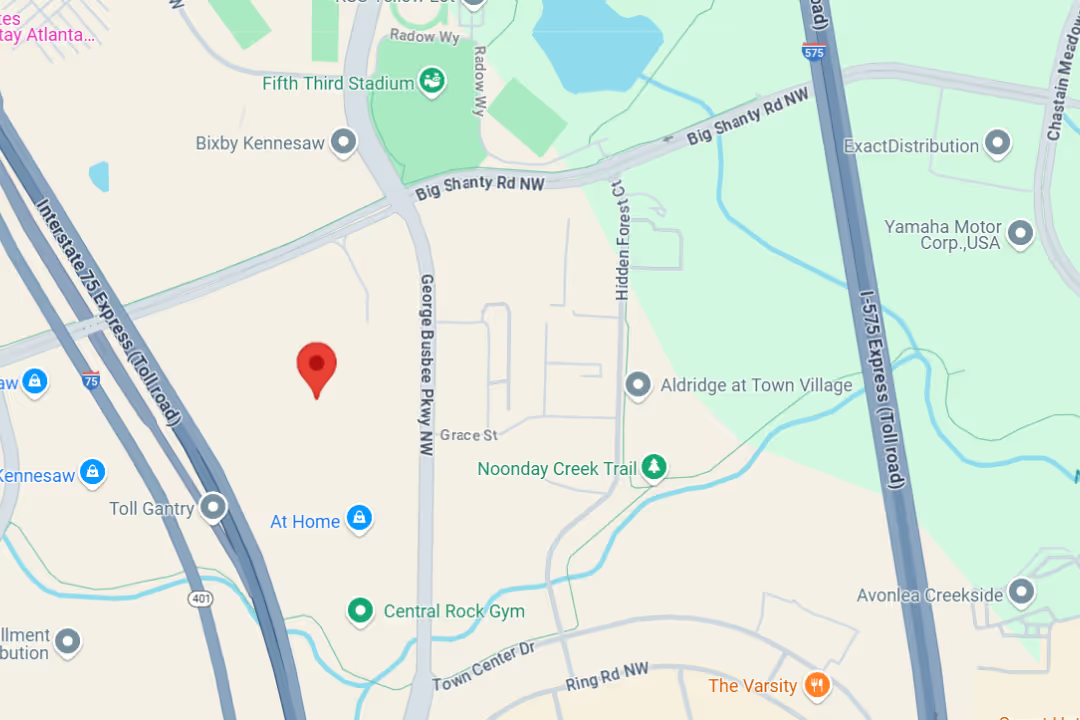
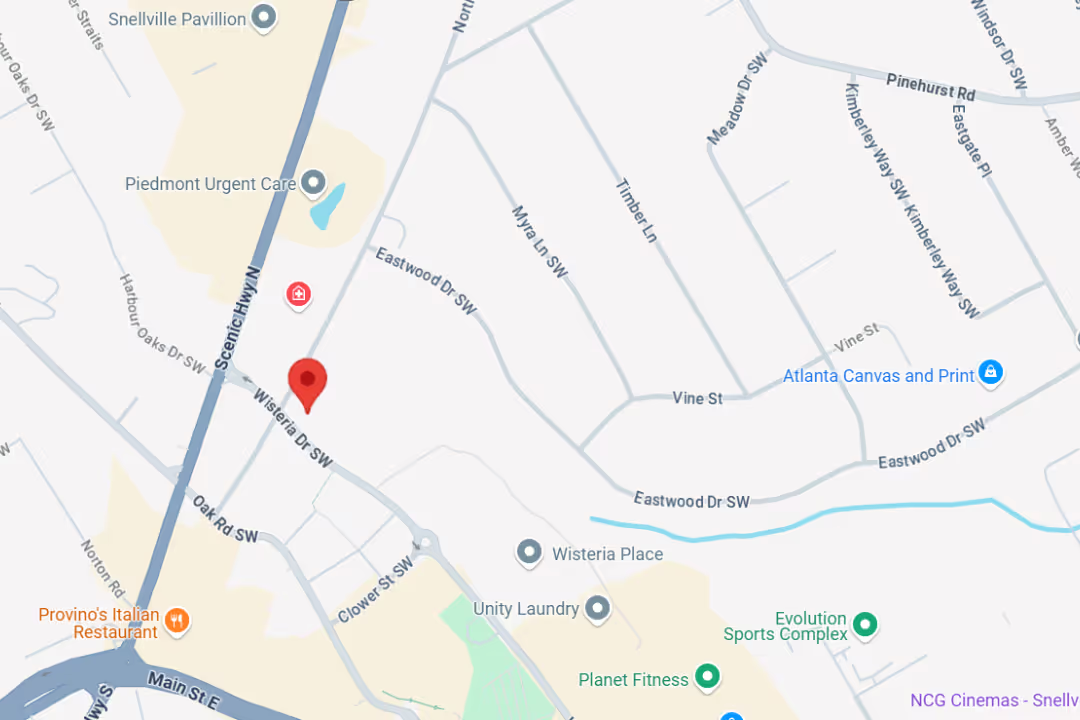
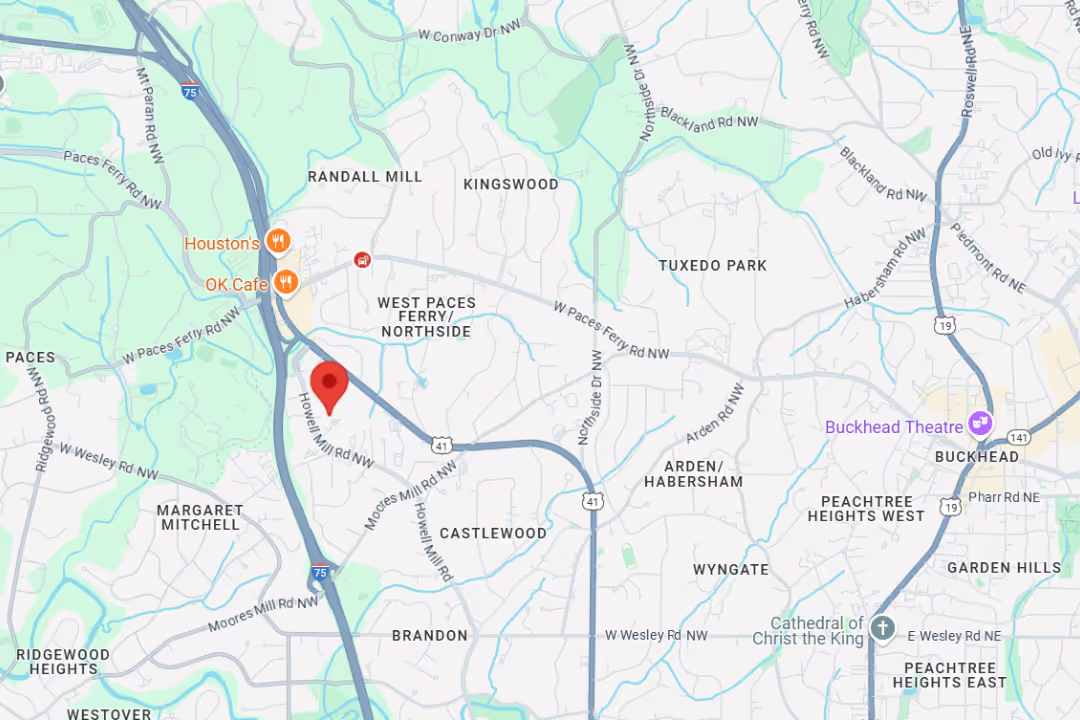
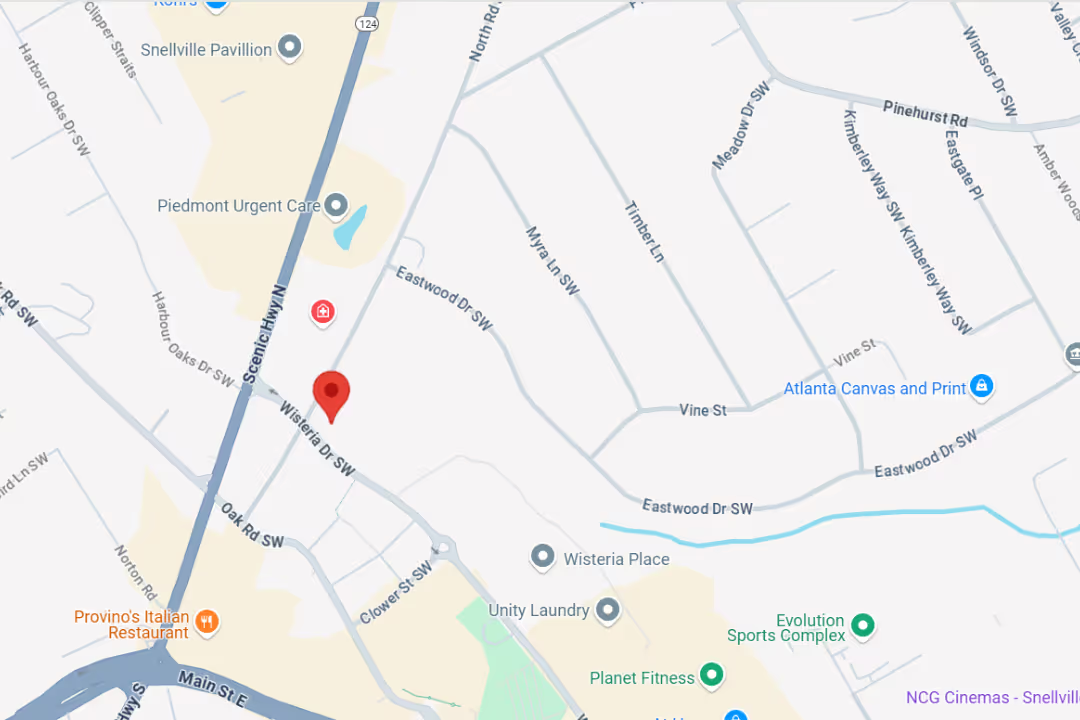
We have clinic locations across the greater Atlanta area in Kennesaw, Snellville, Buckhead, and Marietta, along with ambulatory surgery centers in Marietta and Snellville. We accept Medicare and many other insurance plans, making high-quality orthopedic care accessible to a wide range of patients.
Most importantly, our philosophy has never changed: we recommend surgery when it is the right answer, not as a default. When knee replacement is the right call, we approach it with precision, modern technology, and a genuine commitment to your recovery.
There's a particular kind of fatigue that comes with chronic knee pain. It's not just physical. It wears on your patience, your plans, and eventually your sense of what a normal day is supposed to feel like. A lot of people put off this conversation for years because surgery sounds overwhelming, or because they're not sure they'll find someone who truly listens.
What we've seen over and over again is that the patients who do their homework, who ask good questions and find a team they trust, tend to feel a lot less afraid. They feel prepared. And when surgery is the right answer and it's done well, the relief on the other side is real.
Our team is ready to meet you where you are, whether you're exploring your options for the first time or you've already decided it's time to move forward. We'll take the time to understand your history, review your imaging, and walk you through every option available to you before any decision is made.
Explore our library of patient support guides covering the conditions we treat, the treatments we offer, and the questions we hear most. Each one is written to help you understand your options and feel confident about your next step. Browse the topics below to learn more, or reach out to our team anytime.

At Medici, you’re more than your MRI.
We take time to hear your story, understand your pain, and create a plan that actually works for you.

Our team delivers specialist care at convenient locations across Metro Atlanta:
Get expert tips on injury recovery, pain relief, joint health, and movement strategies—straight from our Fellowship-Trained team.