Reaching into a high cabinet, buckling a seatbelt, or simply rolling over in bed shouldn't come with a jolt of pain. When it does, most people don't think about doctors right away. They think about the dishes they can't put away or the night's sleep they didn't get.
That frustration is usually what sends someone searching for an orthopedic surgeon for shoulder pain near them. The shoulder is one of the most mobile joints in the body, which also makes it one of the most complicated to diagnose correctly. Finding a surgeon who takes the time to understand what's actually happening, rather than rushing toward a scalpel, makes all the difference in how quickly and completely you recover.
A search for "orthopedic surgeon for shoulder near me" often returns a mix of results. Some are surgical practices that move quickly toward operating. Others are physical therapy clinics without a surgeon on staff at all. Neither extreme serves every patient well.
The right fit is usually a practice that offers both. Medici Orthopaedics & Spine combines surgical expertise with a genuinely conservative first philosophy, so patients aren't funneled toward surgery before other options have been fully explored.
The rotator cuff is a group of tendons that stabilizes the shoulder and allows for overhead motion. Tears can happen gradually from repetitive use or suddenly from an injury. Impingement occurs when these tendons become pinched during certain movements, often causing pain when reaching overhead.
Osteoarthritis in the shoulder develops as cartilage wears down over time, leading to stiffness and a grinding sensation with movement. It tends to progress slowly, which means many patients live with it for years before seeking evaluation.
The labrum is a ring of cartilage that helps keep the shoulder joint in place. Tears here often cause a sense that the shoulder is loose or may "give way" during certain activities, particularly overhead sports or heavy lifting.
Frozen shoulder involves a gradual thickening and tightening of the tissue surrounding the joint. It typically develops in stages, moving from painful stiffness to significantly limited motion before slowly improving.
Common warning signs across these conditions include:
Your provider will move your arm through a series of positions to identify where pain occurs and how far your shoulder can comfortably move. This hands-on assessment often reveals a great deal before any imaging is even ordered.
X-rays are typically used first to evaluate bone structure and rule out fractures or significant arthritis. When soft tissue involvement, such as a rotator cuff or labral tear, is suspected, an MRI provides a much more detailed picture.
Not all shoulder pain originates in the shoulder. Nerve issues from the neck, or pain referred from other areas, can sometimes mimic a shoulder problem. A careful evaluation helps confirm the actual source before treatment begins.
Can shoulder pain come from the neck?
Yes. Pinched nerves in the cervical spine can send pain into the shoulder and down the arm, even when the shoulder joint itself is healthy.
Do I need an MRI for shoulder pain?
Not always. Many shoulder issues can be identified through physical exam and X-ray first, with MRI reserved for cases where soft tissue detail is needed.
How long does a shoulder evaluation take?
A typical initial visit takes about 30 to 45 minutes, including history, physical exam, and discussion of next steps.
For many patients, the first line of treatment doesn't involve surgery at all. Options often include:
For select patients, regenerative approaches such as PRP (platelet-rich plasma) may support the body's own healing response. These options are typically considered when conservative measures alone haven't fully resolved symptoms, and before surgical intervention is discussed.
Surgery is recommended when imaging and exam findings show a structural problem, such as a significant rotator cuff tear, that is unlikely to improve without repair. Even then, many shoulder procedures today can be performed using minimally invasive, arthroscopic techniques.
Dr. Darren Newfield brings focused surgical experience to Medici's shoulder patients. When surgery is genuinely the right path forward, patients benefit from his direct involvement in both the surgical plan and the recovery process that follows.
Myth: Shoulder pain always means you need surgery. Fact: Most shoulder conditions improve with conservative treatment first. Surgery is reserved for cases where imaging and exam findings clearly support it.
Medici's mission centers on the most effective, least invasive, and least drug-dependent program available. That means patients can trust they won't be pushed toward surgery or medication before more conservative options have had a fair chance to work.
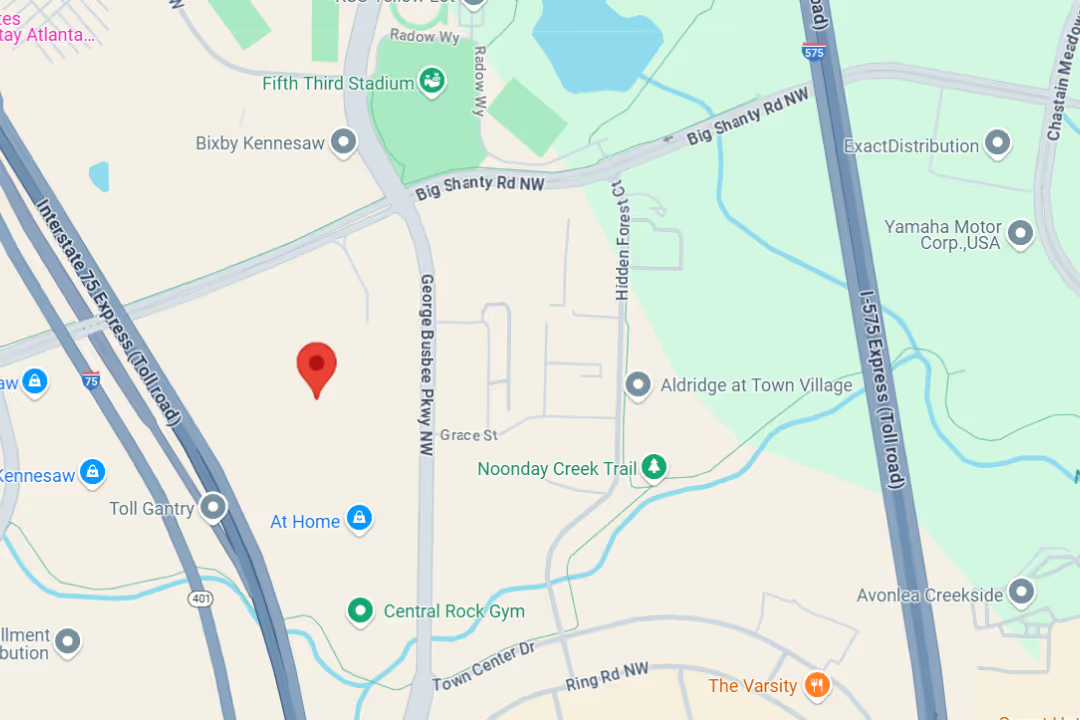
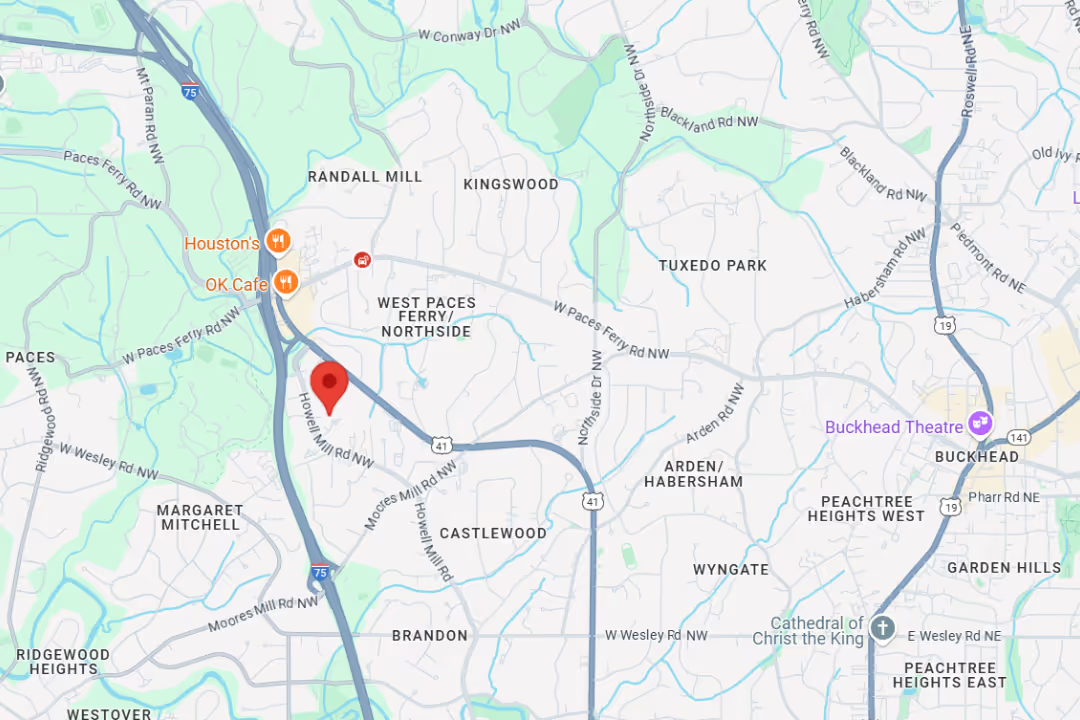
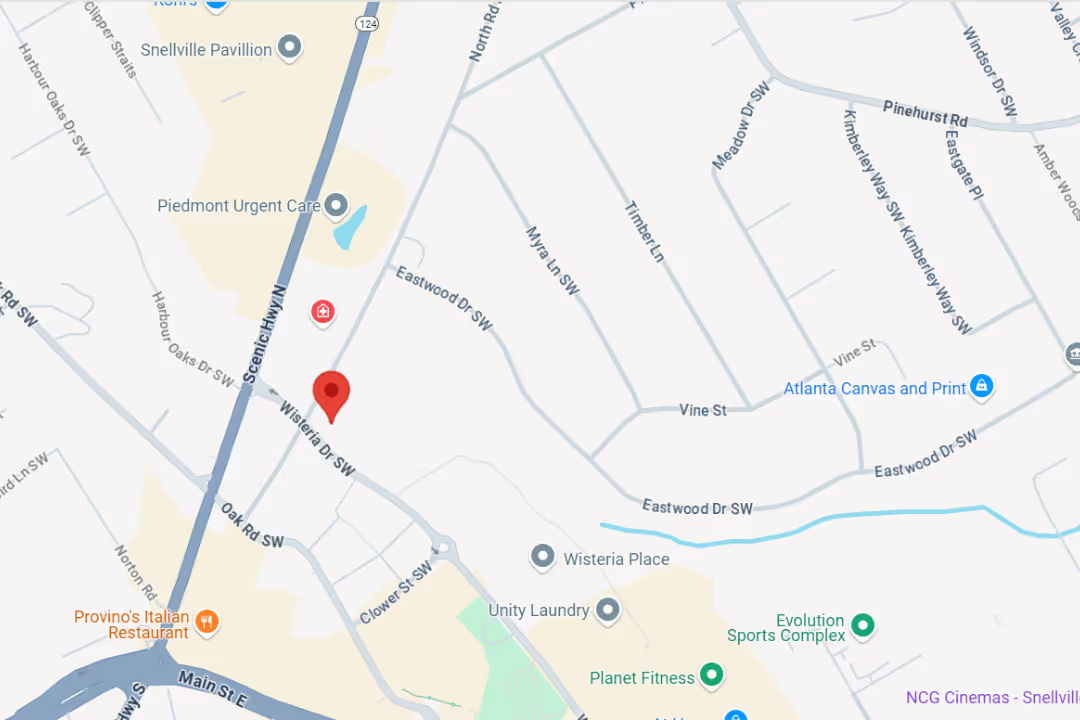
With clinic locations in Kennesaw, Snellville, Buckhead, and Marietta, along with ambulatory surgery centers in Marietta and Snellville, patients across the greater Atlanta area have a nearby option for both evaluation and, when needed, surgical care.
Because Medici offers both orthopedic surgery and interventional pain management under one practice, patients don't have to coordinate between separate offices. Dr. Newfield's surgical expertise and Dr. Sonny Dosanjh's conservative pain management approach work together, so care stays consistent from first visit through recovery.
ApproachSurgery-First ModelMedici's ModelFirst recommendationOften surgical evaluationConservative treatment firstCoordination of careSeparate providersIntegrated surgical and pain management teamSurgical techniqueVaries by providerMinimally invasive when surgery is neededLocationsSingle officeMultiple metro Atlanta locations
Look for board certification in orthopedic surgery, along with specific experience treating shoulder conditions. A surgeon who regularly performs shoulder procedures is likely to have refined techniques that improve outcomes and recovery time.
Bringing a list of symptoms, when they started, and any activities that worsen the pain helps your provider evaluate more efficiently. If you have prior imaging or records from another provider, bring those as well.
Shoulder pain has a way of shrinking daily life down to the movements you're avoiding. The goal of treatment isn't just a diagnosis on paper. It's being able to reach the top shelf, sleep through the night, or throw a ball with your kid again without thinking twice.
Finding a nearby orthopedic surgeon who takes the time to understand your specific situation, rather than moving straight to a standard protocol, is what makes that kind of recovery possible. Care that starts conservative and escalates only when truly necessary tends to produce better long-term results with less disruption to your life along the way.
If shoulder pain has been limiting what you can do, the next step is a thorough evaluation with a team that will explain what's happening and why. Medici Orthopaedics & Spine offers both conservative and surgical shoulder care across four convenient metro Atlanta locations.
Locations:
Explore our library of patient support guides covering the conditions we treat, the treatments we offer, and the questions we hear most. Each one is written to help you understand your options and feel confident about your next step. Browse the topics below to learn more, or reach out to our team anytime.

At Medici, you’re more than your MRI.
We take time to hear your story, understand your pain, and create a plan that actually works for you.

Our team delivers specialist care at convenient locations across Metro Atlanta:
Get expert tips on injury recovery, pain relief, joint health, and movement strategies—straight from our Fellowship-Trained team.