Chronic pain has a way of shrinking your world. At first, you may stop doing the bigger things — traveling, exercising, working full days, or going to events. Then, over time, even simple things like standing in the kitchen, walking through a store, sleeping comfortably, or sitting through dinner can become harder than they should be.
At Medici Orthopaedics & Spine, we understand how exhausting that can feel. Many patients near Snellville come to us after they have already tried physical therapy, medications, injections, prior spine surgery, or other treatments and still do not have the relief they hoped for. By the time they reach us, they are not looking for a rushed answer. They are looking for someone to listen, explain what is happening, and help them find a realistic next step.
Spinal cord stimulator surgery may be an option for certain patients with chronic back pain, leg pain, nerve pain, sciatica, neuropathy, complex regional pain syndrome, or pain that continues after spine surgery. A spinal cord stimulator is designed to help change how pain signals travel through the nervous system, which may reduce the intensity of pain and improve daily function.
A spinal cord stimulator, often called an SCS, is an implanted medical device used to help manage certain types of chronic pain. It is commonly considered for patients whose pain has lasted for months or years and has not improved enough with more conservative care.
The device does not remove a disc, repair arthritis, or undo a previous spine surgery. Instead, it focuses on the way pain signals are processed. For many patients, that distinction is important. The goal is not to “fix” every structural issue in the spine. The goal is to help reduce pain signals so the patient may function better.
Pain signals travel through nerves to the spinal cord and then to the brain. A spinal cord stimulator sends mild electrical impulses near the spinal cord. These impulses are intended to interrupt or modify pain signals before the brain fully processes them as pain.
The device is adjustable, which means the care team can fine-tune settings over time. Patients also typically receive a controller that allows them to use approved settings based on their needs.
A spinal cord stimulation system usually includes several parts that work together.
These may include:
Spinal cord stimulation can be a very helpful option for the right patient, but it is important to understand its role clearly.
Spinal cord stimulation may help:
Spinal cord stimulation does not:
Spinal cord stimulation is usually a two-step process. This is one of the most important things for patients to understand.
The process typically includes:
The trial comes first because spinal cord stimulation does not work the same way for everyone. A person may look like a good candidate on paper, but the trial helps answer the most important question: does it help this patient in real life?
During the trial period, patients can pay attention to whether they are:
If the trial is successful, the patient may be considered for permanent spinal cord stimulator implant surgery. During this procedure, leads are positioned near the spinal cord, and a small pulse generator is placed under the skin.
The generator is often placed near the low back or buttock area, depending on the patient’s anatomy, comfort, and the device being used. The device is then programmed to help target the patient’s pain pattern.
The permanent system is fully implanted under the skin. After healing, patients do not have external trial equipment attached. They use a controller to manage approved settings and attend follow-up visits for programming adjustments.
Failed back surgery syndrome refers to persistent or recurring pain after spine surgery. It may also be called post-laminectomy syndrome or persistent spinal pain after surgery.
This condition can be especially frustrating because patients often expected surgery to solve the problem. When pain continues, returns, or changes, it can feel discouraging. But ongoing pain after surgery does not mean the patient did anything wrong.
Some patients live with long-term low back and leg pain that has not improved enough with therapy, injections, medication, or other treatments. The pain may affect walking, sitting, standing, sleeping, work, and daily life.
SCS may be considered when pain has become chronic and is difficult to manage through conservative care alone. The patient still needs a complete evaluation to make sure there is not a structural problem that should be addressed in another way first.
Sciatica, or lumbar radiculopathy, happens when nerve irritation in the lower back causes pain that travels into the buttock, leg, or foot. Patients may describe it as burning, shooting, electric, tingling, or numb.
For some patients, nerve pain remains even after other treatments. Spinal cord stimulation may be discussed when symptoms are chronic, nerve-related, and not improving enough with other appropriate care.
Complex regional pain syndrome, often called CRPS, is a chronic pain condition that can develop after an injury, surgery, fracture, or other event. It may cause severe pain, sensitivity, swelling, color or temperature changes, and movement difficulty in an arm or leg.
Spinal cord stimulation may be considered for selected patients with CRPS when conservative treatments have not provided enough relief. Because CRPS can be complex, evaluation and planning must be careful and individualized.
Diabetic peripheral neuropathy can cause burning, tingling, numbness, or painful sensations in the feet and legs. For some patients, symptoms interfere with sleep, walking, and quality of life.
Certain spinal cord stimulation systems may be considered for painful diabetic neuropathy in selected patients. Candidacy depends on the patient’s medical condition, symptoms, safety factors, and prior treatments.
Some patients experience chronic pain in the neck, arms, trunk, or limbs that is difficult to manage. Depending on the diagnosis and pain pattern, spinal cord stimulation may be part of the discussion.
Examples may include:
Living with chronic pain can make life feel smaller. You may start avoiding errands, family activities, work responsibilities, travel, or even simple movement because you do not know how your body will respond. When you have already tried multiple treatments, it can be hard to stay hopeful.
Dr. Sonny Dosanjh and the Medici team take time to understand your pain, your prior treatments, your daily limitations, and your goals. We believe the best care starts with listening and continues with a plan that is clear, practical, and medically appropriate.
If you are searching for spinal cord stimulator surgery near Snellville, Medici Orthopaedics & Spine is here to help. Our team evaluates chronic back pain, leg pain, nerve pain, failed back surgery syndrome, sciatica, CRPS, neuropathy, and other complex pain conditions to determine whether spinal cord stimulation or another minimally invasive option may be appropriate.
Call +1-844-328-4624 or visit https://www.mediciortho.com/ to schedule an appointment.
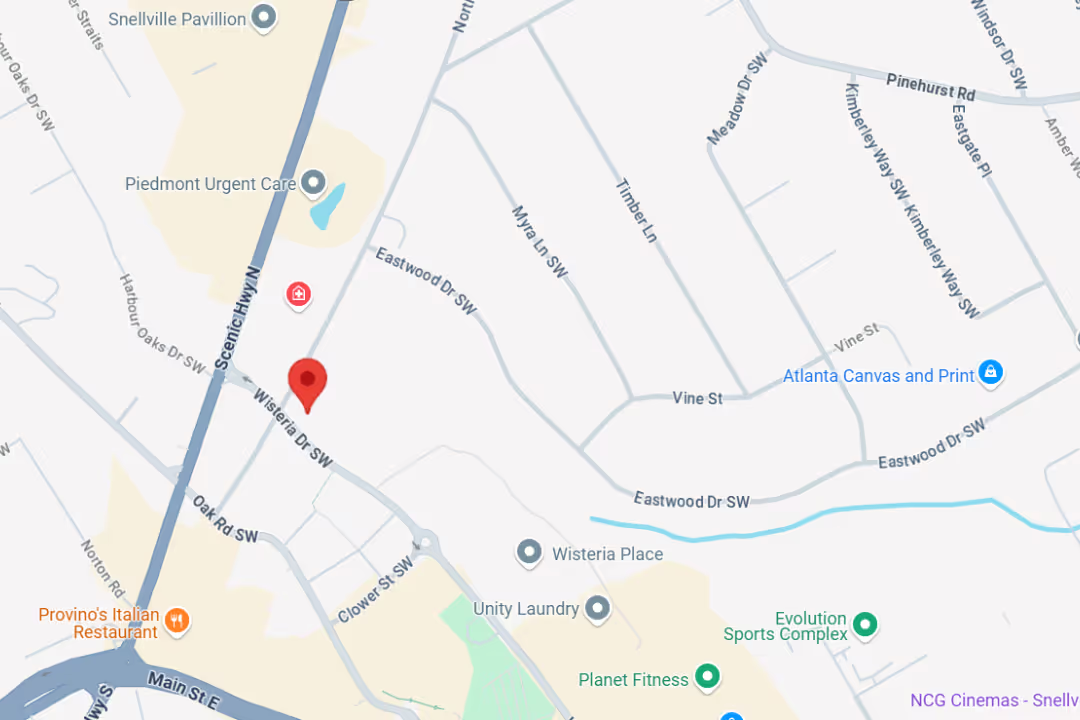
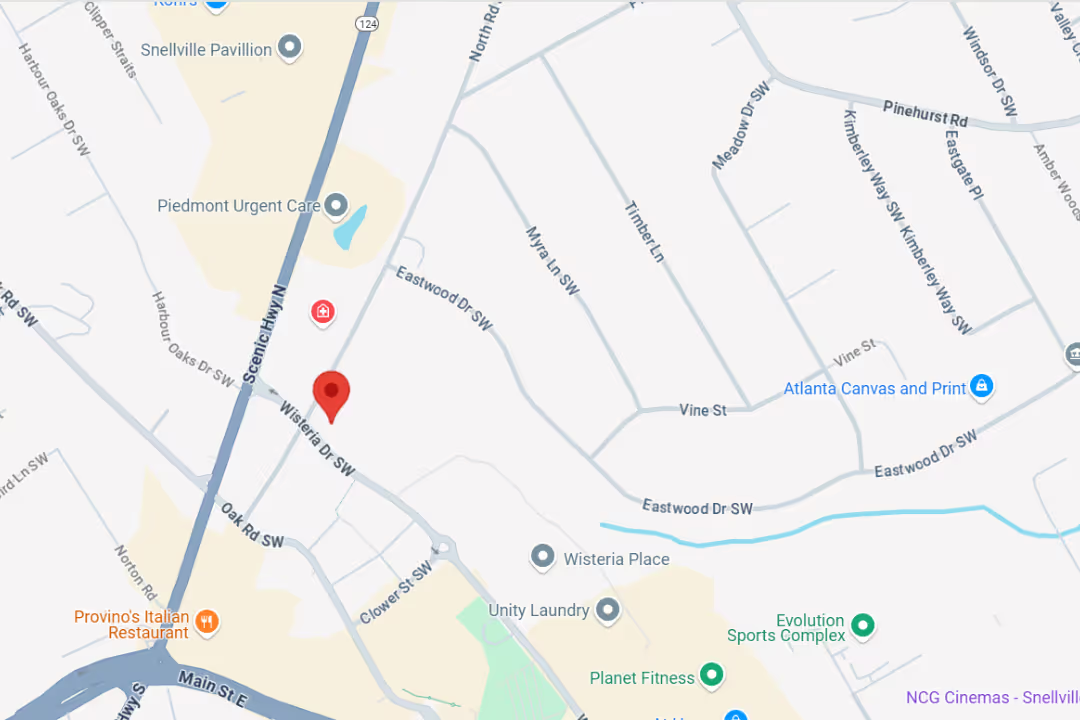
Snellville Clinic
2220 Wisteria Drive, Unit 101
Snellville, GA 30078
Phone: (470) 645-9297
Snellville Surgery Center
2220 Wisteria Drive, Unit 100
Snellville, GA 30078
Phone: (470) 795-8398
At Medici, you’re more than your MRI.
We take time to hear your story, understand your pain, and create a plan that actually works for you.

Our team delivers specialist care at convenient locations across Metro Atlanta:
Get expert tips on injury recovery, pain relief, joint health, and movement strategies—straight from our Fellowship-Trained team.