Sciatica Treatment Without Surgery

Sciatica has a way of inserting itself into every part of your day. It can make walking across a parking lot feel endless, turn sitting at your desk into a chore, and make standing in line or trying to sleep through the night almost impossible. When nerve pain is flaring, it’s not just uncomfortable—it’s draining.

Sciatica refers to nerve-related pain that travels from the lower back into the leg, sometimes reaching the calf or even the foot. For some, it feels sharp and stabbing. For others, it’s more of a burning, electric, or searing sensation. It can come with numbness, tingling, or weakness in the leg or foot, and it often flares with simple movements like bending, lifting, or prolonged sitting.

Many patients worry that sciatica means they are headed straight for back surgery. The good news is that many cases can be managed effectively without surgery, especially when treatment is started early and targeted to the true source of the problem.

At Medici Orthopaedics & Spine, our team focuses on precise diagnosis and conservative care first. We prioritize minimally invasive treatments and the least drug-dependent options possible, always with the goal of restoring your comfort, your function, and your confidence in movement.

Comprehensive Non-Surgical Evaluation at Medici Orthopaedics & Spine

Detailed Medical History

Your visit begins with a detailed conversation. We’ll ask about:

  • Onset, location, and pattern of pain
    When it began, whether it started suddenly or gradually, and where it travels.
  • Activities or positions that worsen or relieve symptoms
    Sitting, walking, bending, twisting, lying down, driving, or standing for long periods.
  • Work demands, lifestyle, and previous injuries
    Whether you sit at a desk, do heavy lifting, stand all day, or have had past accidents or falls.
  • Prior treatments and responses
    Medications, physical therapy, chiropractic adjustments, injections, or home remedies you’ve tried—and whether they helped or made things worse.

Physical and Neurological Examination

Next, we perform a focused physical and neurological exam to evaluate how your spine and nervous system are functioning.

This may include:

  • Posture, gait, and alignment assessment
    Watching how you stand, walk, and shift your weight can reveal mechanical issues that contribute to nerve irritation.
  • Range of motion testing
    Gently moving the lumbar spine and hips to see which directions provoke pain or feel limited.
  • Strength, reflex, and sensation testing
    Checking muscle strength in the legs, evaluating reflexes at the knees and ankles, and testing for changes in light touch or pinprick sensation.
  • Special maneuvers
    Specific tests that stretch or tension the sciatic nerve (such as straight-leg raise maneuvers) to reproduce or localize your symptoms.

Imaging and Diagnostic Testing

Not every case of sciatica requires extensive imaging, but when needed, we use testing strategically to guide your care:

  • X-rays
    To evaluate spinal alignment, disc height, and signs of arthritis or bone spurs.
  • MRI (Magnetic Resonance Imaging)
    Often the most informative study for sciatica, allowing us to see discs, nerves, spinal canal, and soft tissues. MRI can reveal herniated discs, stenosis, or other sources of nerve compression.
  • CT scans or other imaging
    Used in select cases when more detailed bone anatomy is needed or if MRI is not an option.
  • Electrodiagnostic testing (EMG/NCS)
    Electromyography (EMG) and nerve conduction studies (NCS) can help clarify how well the nerves are functioning, identify which nerve roots are involved, and distinguish sciatica from other nerve conditions.

Conservative, Non-Surgical Treatment Options

Activity Modification and Education

Non-surgical care for sciatica often begins with simple, strategic changes to how you move throughout the day. The goal isn’t to stop moving—it’s to move in ways that calm the sciatic nerve instead of constantly irritating it.

We may recommend short-term adjustments such as:

  • Limiting heavy lifting and learning safer lifting techniques when you can’t avoid it
  • Reducing or modifying repetitive bending or twisting, especially at the waist
  • Avoiding prolonged sitting and taking breaks on long drives to stand, stretch, and walk
  • Learning safe ways to get in and out of bed, chairs, and cars, using your arms and legs together instead of twisting through the spine

Medications and Non-Opioid Pain Management

Medications can play a supportive role while the underlying irritation is healing, but they’re not the whole answer—and they shouldn’t be a long-term crutch.

Depending on your medical history, we may consider:

  • Short-term anti-inflammatory medications (when appropriate) to decrease swelling around the nerve
  • Muscle relaxants in selected cases where muscle spasm is a major contributor
  • Nerve pain medications for persistent, burning, or electric-like neuropathic symptoms
  • Topical creams or patches to reduce localized discomfort without affecting your whole system

Physical Therapy and Targeted Exercise

Physical therapy is one of the most important tools for treating sciatica without surgery. A customized program helps reduce nerve irritation and correct the mechanical issues that led to pain in the first place.

Your plan may include:

  • Core strengthening to support the lumbar spine and reduce stress on the discs and joints
  • Hip and gluteal strengthening to improve pelvic stability and overall alignment
  • Flexibility exercises for tight hamstrings, hip flexors, and the piriformis muscle, which can contribute to nerve compression
  • Nerve gliding techniques (when appropriate) to gently mobilize the sciatic nerve and reduce sensitivity

Manual Therapy and Myofascial Release

Hands-on care can make a meaningful difference when muscles and soft tissues are guarding or in spasm around an irritated nerve.

Manual techniques may include:

  • Myofascial release to ease tightness in the lower back, hips, and legs
  • Gentle joint mobilization to improve motion where stiffness is contributing to poor mechanics
  • Focused work on muscles that may be compressing or irritating the sciatic nerve

Posture, Ergonomics, and Workstation Changes

How you sit, stand, and work throughout the day has a powerful impact on the spine and sciatic nerve.

We often look at:

  • Sitting posture, chair support, and lumbar alignment
  • Screen height and foot placement to reduce slouching or twisting
  • Adjustments for standing workstations, including how long to stand and when to rest
  • Education on lifting mechanics, bending strategies, and safe transitions from sitting to standing or floor to standing

Lifestyle Changes to Support Nerve and Spine Health

Lasting relief from sciatica is easier to achieve when your overall health supports your spine.

We may discuss:

  • Weight management, since extra weight can increase pressure on discs and joints
  • Smoking cessation, to improve blood flow and healing in spinal and nerve tissues
  • Sleep optimization, including mattress support, positions, and routines that allow your body to recover overnight
  • Stress management strategies, such as breathing exercises or relaxation techniques, to reduce muscle tension and sensitivity to pain

Interventional Non-Surgical Treatments

Epidural Steroid Injections

When conservative care alone isn’t enough to control pain, epidural steroid injections can provide significant relief without surgery.

These injections:

  • Deliver anti-inflammatory medication around irritated nerve roots in the spine
  • Are performed using imaging guidance for precision
  • May be placed via different approaches—transforaminal, interlaminar, or caudal—depending on your imaging and symptoms

Selective Nerve Root Blocks

A selective nerve root block targets one specific nerve root that is suspected to be the main pain generator.

These injections serve a dual purpose:

  • Diagnostic – If numbing that nerve significantly reduces your leg pain, it helps confirm we’ve identified the correct nerve.
  • Therapeutic – The added anti-inflammatory medication can calm irritation and provide relief that lasts beyond the numbing effect.

Facet Joint Injections and Medial Branch Blocks

Sometimes, pain that feels like sciatica has contributions from facet joint arthritis in the spine. Stiff or irritated facet joints can cause back pain that amplifies or mimics nerve-related leg symptoms.

In these cases, we may consider:

  • Facet joint injections to reduce inflammation in the joint itself
  • Medial branch blocks to numb the small nerves that carry pain signals from the facet joints

Sacroiliac Joint Injections

The sacroiliac (SI) joint, where the spine meets the pelvis, can sometimes coexist with or mimic sciatica symptoms.

Image-guided SI joint injections:

  • Help calm inflammation in the joint when it is a contributor
  • Can clarify diagnosis by showing how much of your pain is coming from the SI joint versus the spine

Radiofrequency Ablation (RFA)

For some patients, chronic pain from spinal joints or certain nerves can be reduced with radiofrequency ablation.

RFA works by:

  • Using controlled heat to disrupt specific pain-signaling nerve fibers
  • Providing longer-term relief than injections alone in select patients

Advanced Non-Surgical Pain Management Options

Spinal Cord Stimulation

For chronic, refractory sciatica and nerve pain that has not responded to other non-surgical treatments, spinal cord stimulation (SCS) may be an option.

SCS is a minimally invasive, implantable therapy that:

  • Delivers gentle electrical signals to the spinal cord
  • Helps modulate or “turn down” pain signals before they reach the brain
  • Provides an alternative for some patients who are not candidates for, or wish to avoid, traditional open spine surgery

Find Lasting Relief from Sciatica—Without Surgery

Sciatica can make every step, every drive, and every night’s sleep more difficult—but it doesn’t always require back surgery. With an accurate diagnosis and a thoughtful combination of conservative therapies, interventional procedures, and advanced non-surgical options, many patients find meaningful relief and a stronger, more confident return to daily life.

At Medici Orthopaedics & Spine, Dr. Sonny Dosanjh and our team are dedicated to using the most effective, least invasive, and least drug-dependent treatments available to help you move forward with less pain.

If you’re ready to explore comprehensive, non-surgical options for sciatica, we’re here to help.

Contact Medici Orthopaedics & Spine

📞 Main Line: +1-844-328-4624
🌐 Website:
https://www.mediciortho.com/

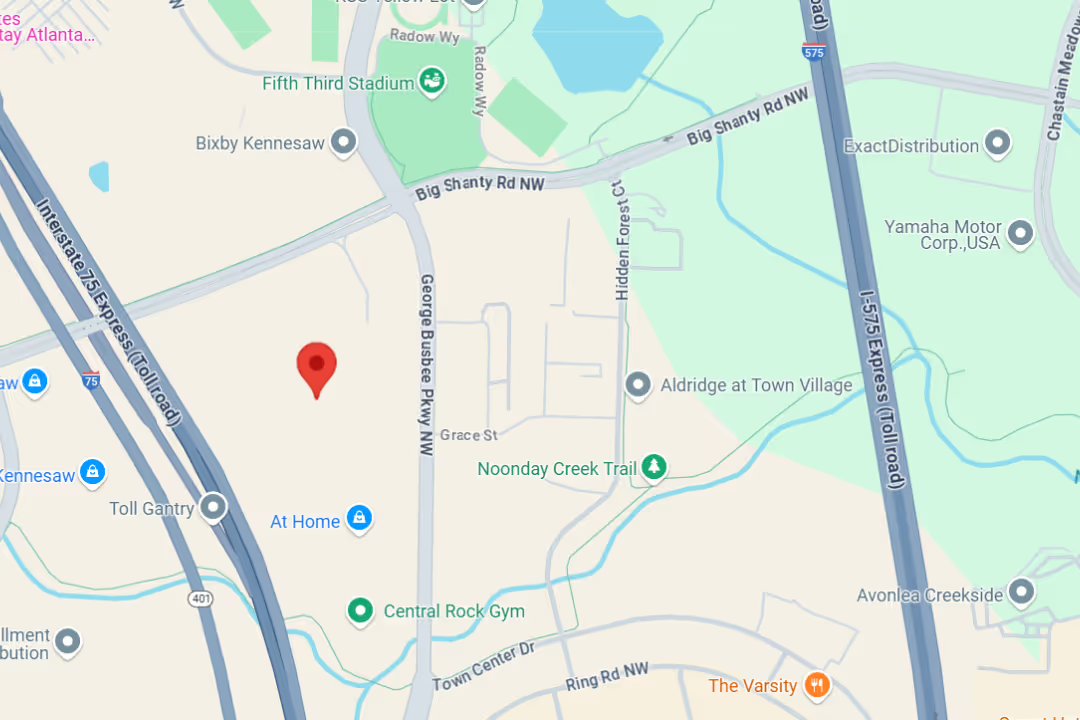
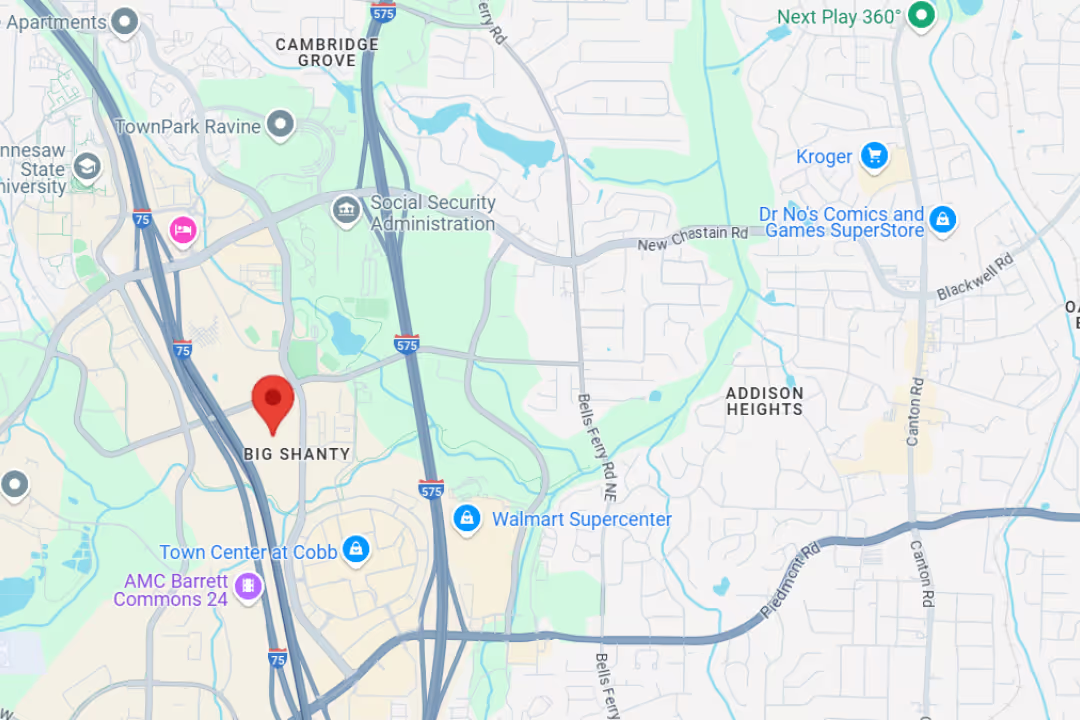
Kennesaw Clinic
2911 George Busbee Parkway, Suite 50
Kennesaw, GA 30144
(770) 545-6404

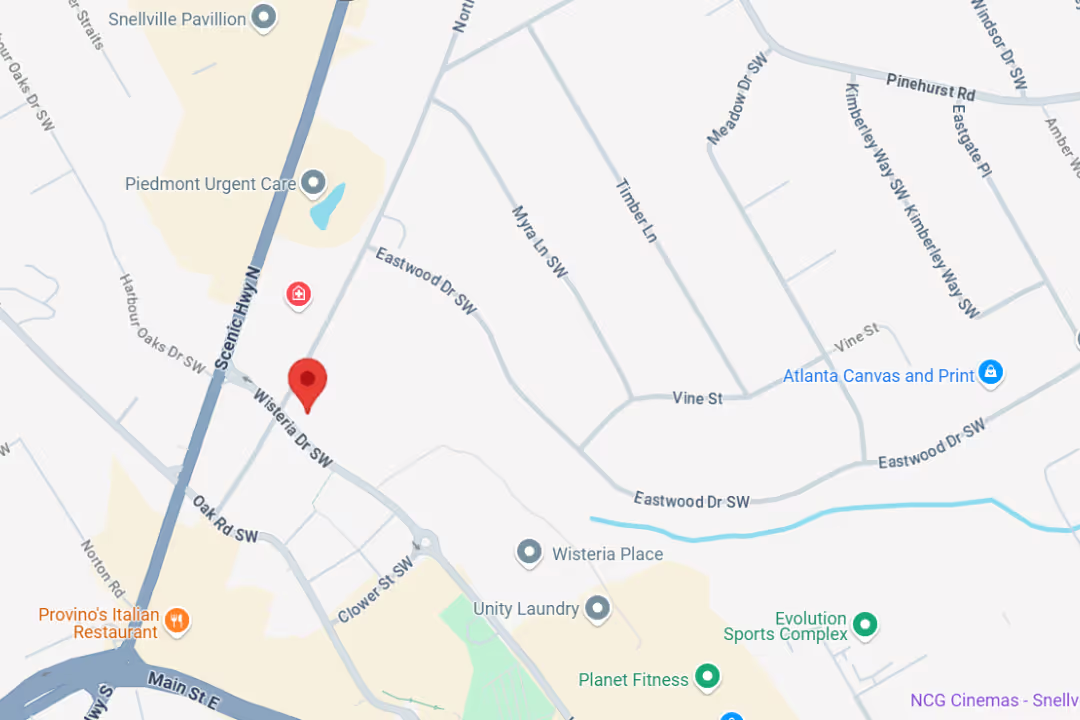
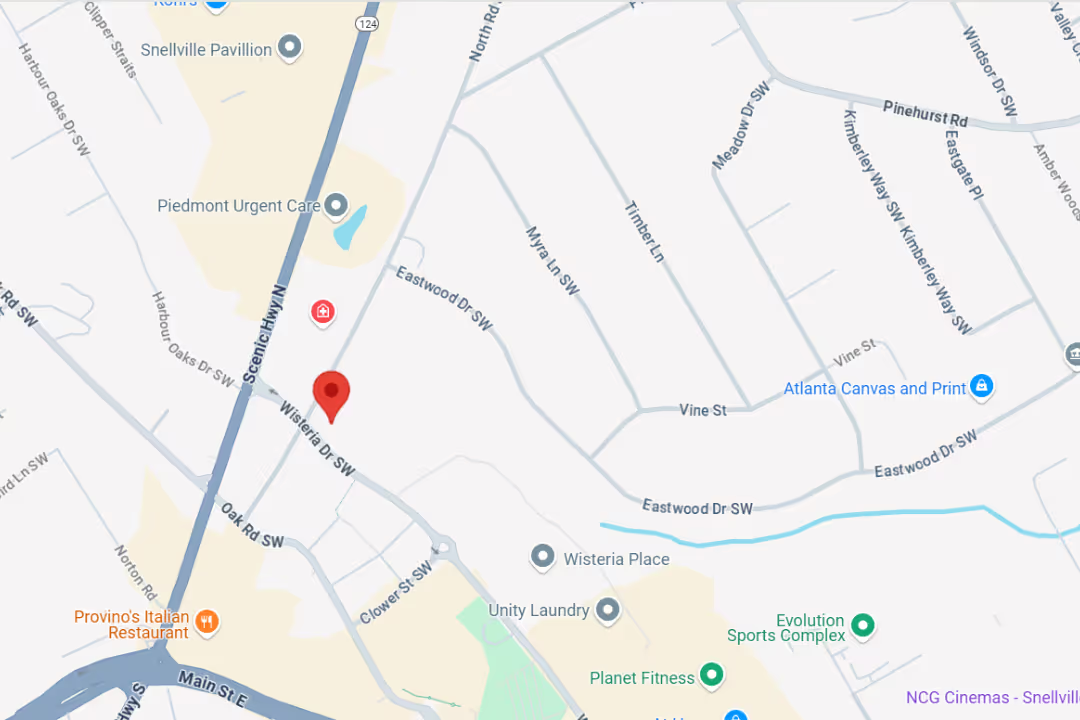
Snellville Clinic
2220 Wisteria Drive, Unit 101
Snellville, GA 30078
(470) 645-9297

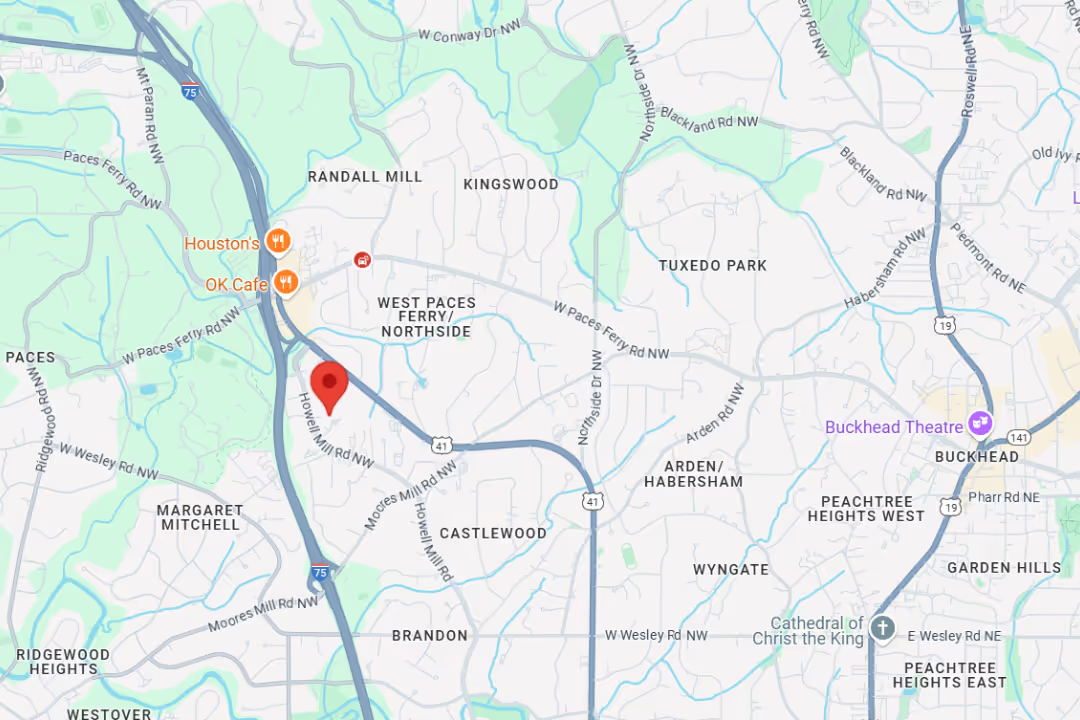
Buckhead PM&R Clinic
3200 Downwood Circle, NW, Suite 520
Atlanta, GA 30327
(770) 872-7549

Tired of Feeling
Like Just Another
Chart?

At Medici, you’re more than your MRI.
We take time to hear your story, understand your pain, and create a plan that actually works for you.