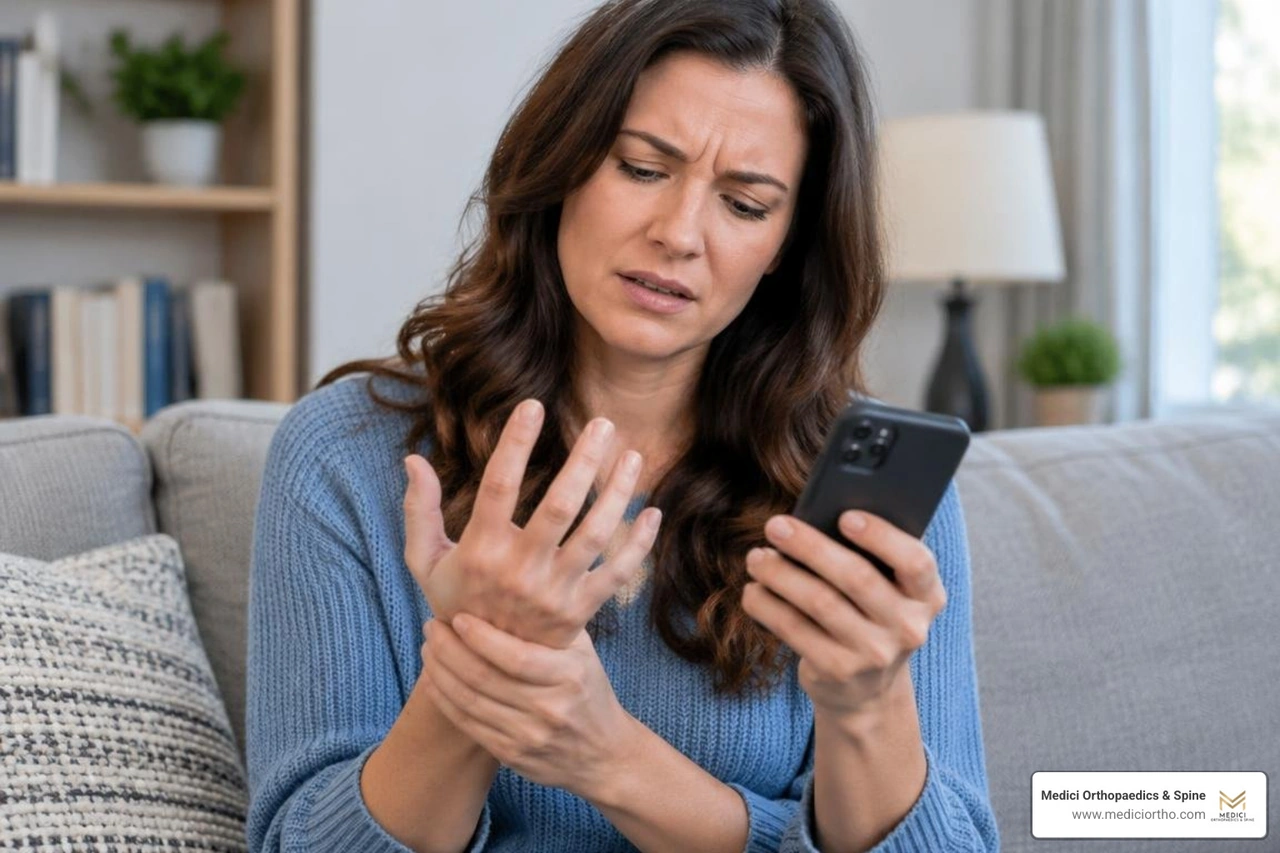
Fingers often go numb while holding a phone, book, or steering wheel because your grip or arm position puts pressure on a nerve. Numbness in the thumb, index, and middle fingers may point to carpal tunnel syndrome. Numbness in the ring and little fingers may point to pressure on the ulnar nerve near the elbow.
Let go, relax your grip, and straighten your wrist and elbow. If feeling returns quickly, the pressure may have been temporary. If numbness keeps coming back, lasts after you change position, or makes you drop things, get it checked. Sudden numbness with face drooping, arm weakness, or trouble speaking needs emergency care.
I'm Sonny Dosanjh, M.D., a board-certified physical medicine and rehabilitation physician who evaluates nerve, hand, and spine problems that may explain why fingers get numb when holding something. This guide will help you spot useful clues and decide what to do next.
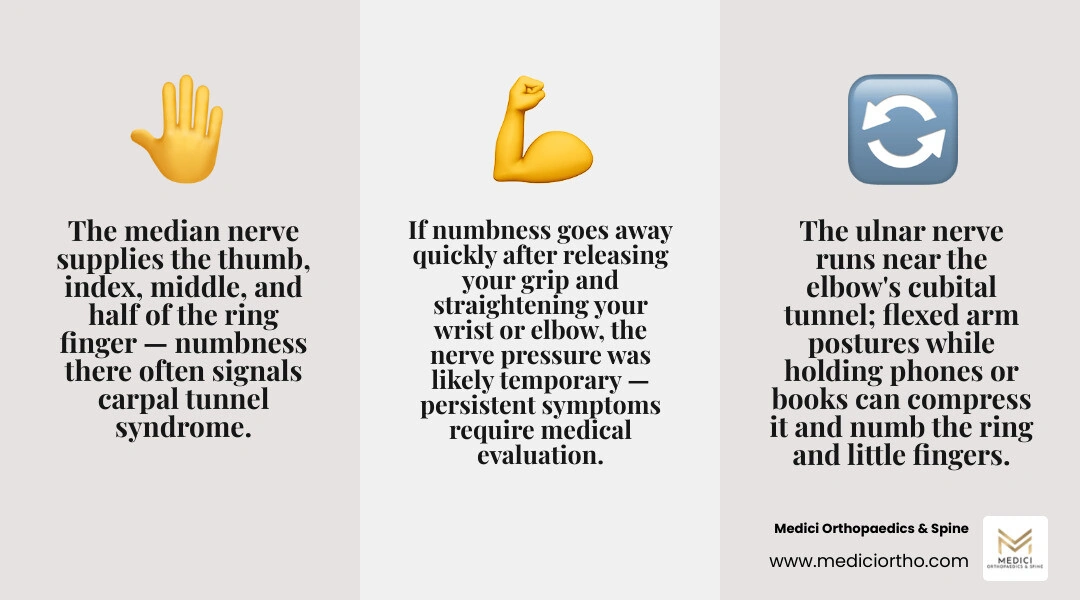
Handy fingers get numb when holding something terms:
When you grip an everyday object—whether you are scrolling on your phone, reading a hardcover novel, or commuting through Atlanta traffic—your hands rely on an intricate electrical grid. This network is made of peripheral nerves traveling from the cervical spine in your neck, through the shoulder, down the arm, and into the fingertips.
Holding an object requires sustained isometric grip. During static gripping, the muscles and flexor tendons in your forearm and hand maintain continuous tension. If you hold your wrist in a bent position or press your forearm against a hard edge, this tension increases pressure inside confined anatomical spaces.
This mechanical pinch triggers localized ischemia—a temporary drop in microvascular blood supply feeding the nerve fibers. Without oxygen and nutrients delivered by microscopic capillaries, the nerve temporarily loses its ability to conduct electrical impulses normally. The result is paresthesia, that familiar prickling sensation often described as a hand falling asleep.
Medical literature documents at least 100 different causes of hand and finger numbness. Determining the underlying trigger starts with mapping out which nerve pathway is compromised.
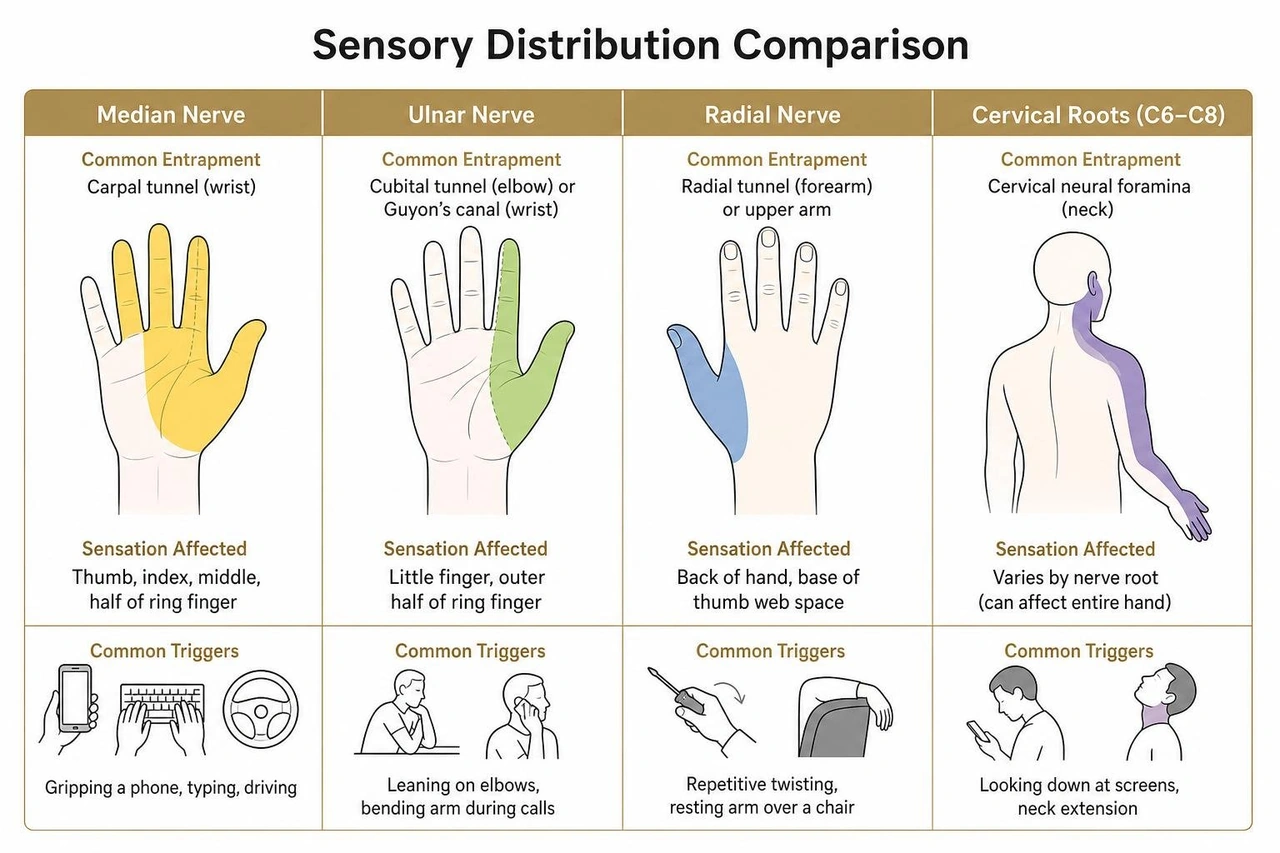
| Nerve Pathway | Primary Anatomical Compression Site | Fingers Sensation Is Reduced | Common Everyday Triggers |
|---|---|---|---|
| Median Nerve | Carpal tunnel (wrist) | Thumb, index, middle, half of ring finger | Gripping a phone, typing, driving |
| Ulnar Nerve | Cubital tunnel (elbow) or Guyon's canal (wrist) | Little finger, outer half of ring finger | Leaning on elbows, bending arm during calls |
| Radial Nerve | Radial tunnel (forearm) or upper arm | Back of hand, base of thumb web space | Repetitive twisting, resting arm over a chair |
| Cervical Roots (C6–C8) | Cervical neural foramina (neck) | Varies by nerve root (can affect entire hand) | Looking down at screens, neck extension |
The median nerve travels through the carpal tunnel, a rigid passageway at the base of the wrist bounded by carpal bones and the fibrous transverse carpal ligament. Alongside this nerve run nine flexor tendons that curl your fingers.
When repetitive motion, sustained wrist bending, or fluid retention swells these tendons, space runs out. The median nerve gets squeezed against the ligament, irritating the palmar digital nerves. This leads directly to carpal tunnel syndrome symptoms, which classically produce tingling, numbness, and burning pain across the palmar side of the thumb, index, middle, and radial half of the ring finger.
According to AAOS guidelines on carpal tunnel anatomy, carpal tunnel syndrome is the most common peripheral nerve entrapment disorder, affecting up to 3% to 6% of the general population. It occurs significantly more often in women and older adults.
When sensory loss targets the other side of your hand, the ulnar nerve is usually responsible. This nerve passes through the retrocondylar groove behind the medial epicondyle—the anatomical landmark colloquially known as the "funny bone."
Maintaining a flexed elbow position while holding a phone up to your ear or resting your elbows on an office desk stretches and compresses the nerve within the cubital tunnel. Developing cubital tunnel syndrome causes tingling and a noticeable loss of feeling in pinky finger and the adjacent ulnar half of the ring finger. Over time, persistent compression can lead to weakness in the hypothenar eminence (the muscular pad below your pinky) and diminish your grip stability.
Less frequently, sensory disturbances stem from the radial nerve as it winds around the humerus and through the forearm. Conditions like radial tunnel syndrome cause forearm pain and weakness in wrist extension, while direct irritation of the superficial radial sensory branch creates tingling over the back of the hand and the base of the thumb.
However, the problem does not always start in the arm. Structural changes in the neck—such as a herniated intervertebral disc, degenerative disc disease, or bone spurs narrowing the neuroforaminal canals—can pinch spinal nerve roots. A cervical radiculopathy pinched nerve produces sharp, aching, or radiating dermatomal pain that travels from the neck and shoulder down into specific fingertips. In some patients, a "double crush phenomenon" occurs, where a compressed nerve root in the neck makes the peripheral nerve far more vulnerable to secondary compression at the wrist or elbow.
Recognizing the exact pattern of your hand symptoms helps pinpoint the underlying issue before minor nerve irritation progresses to structural axonal injury.
When sensory nerve fibers are compressed, you lose precise tactile feedback. This sensory disruption makes handling small items feel awkward. If you notice yourself dropping coffee mugs, struggling to button a shirt, or fumbling with keys, motor fibers may also be affected. Prolonged severe median nerve entrapment can cause visible thenar atrophy—a flattening of the muscle mound at the base of the thumb—which directly impairs your pinch grip strength.
Everyday objects often force your joints into non-neutral positions:
Many people also notice symptoms when waking up. If you regularly think, "I wake up with numb hands," nocturnal wrist flexion is a primary culprit. During sleep, many people curl their wrists inward, spiking carpal tunnel pressure. Furthermore, lying flat causes fluid to redistribute throughout the upper body, increasing tissue turgor and nerve compression inside tight anatomical canals.
Not all grip numbness is purely mechanical. Underlying metabolic and vascular conditions can damage nerves or restrict circulation:
If you experience recurring numbness when holding items, simple physical maneuvers can help gauge nerve sensitivity before your clinical evaluation. While informative, self-checks should complement—not replace—a thorough diagnostic exam, as detailed in the Cleveland Clinic overview of hand numbness.

During a physical exam, providers use targeted maneuvers to reproduce your symptoms:
To confirm the diagnosis and determine the precise degree of nerve injury, we utilize advanced electrodiagnostic testing—including Nerve Conduction Studies (NCS) and Electromyography (EMG)—alongside high-resolution diagnostic musculoskeletal ultrasound to visualize structural entrapments, tendon swelling, and anatomical variants.
While occasional mild numbness that resolves instantly upon shaking the hand is common, certain red flags demand prompt medical evaluation:
Left untreated, chronic nerve compression can cause permanent axonal loss and irreversible muscle weakness.
Managing grip-induced numbness requires combining immediate physical relief, ergonomic adjustments, and targeted medical interventions.
When your hand goes numb while holding something:
For long-term joint health, implement supportive ergonomic adaptations. Using neutral-position wrist splints at night keeps your carpal tunnel open during sleep. By preventing awkward wrist angles, splinting reduces mechanical pressure on the median nerve.
During daily activities, ergonomic tools with enlarged grips, lightweight book stands, voice-to-text software, and padded steering wheel covers minimize isometric hand strain. To learn more about conservative techniques, explore how to relieve tingling sensation in hands naturally.
At Medici Orthopaedics & Spine, we believe in delivering the most effective, least invasive, and least drug-dependent care possible. For patients struggling with persistent hand numbness, our team tailors care plans to restore function quickly.

If you are experiencing loss of coordination or pain, learn more about our options for hand nerve pain treatment and our comprehensive non-surgical carpal tunnel treatment protocols.
Holding a smartphone or steering wheel requires continuous isometric contraction of forearm flexors alongside prolonged wrist extension or flexion. This posture elevates fluid pressure inside the carpal tunnel and cubital tunnel, producing transient ischemia in the median or ulnar nerve fibers. Relaxing your grip, taking regular breaks, and adjusting your posture relieves this mechanical strain.
Yes. Compression of the cervical nerve roots (particularly C6, C7, or C8) due to a herniated disc, spinal stenosis, or arthritis can send radiating sensations down the arm into specific fingers. Furthermore, proximal nerve root irritation makes distal peripheral nerves more susceptible to compression at the wrist or elbow.
Mild, transient cases triggered by temporary conditions like pregnancy-induced fluid retention often improve on their own after delivery. However, structural, chronic compression rarely resolves without activity modification, splinting, or medical intervention. Delaying care can allow intermittent numbness to turn into permanent nerve damage and muscle loss.
Hand and finger numbness when holding everyday objects is your body's early warning signal that a peripheral nerve is under stress. Whether your symptoms stem from carpal tunnel syndrome, ulnar nerve entrapment at the elbow, cervical spine irritation, or a systemic condition like diabetic neuropathy, identifying the root cause early protects long-term hand function and grip strength.
At Medici Orthopaedics & Spine, Dr. Sonny Dosanjh and our multidisciplinary team specialize in helping patients across Georgia regain pain-free mobility. Through integrated physical therapy, state-of-the-art diagnostic testing, and advanced minimally invasive procedures, we design individualized recovery pathways tailored to your needs.
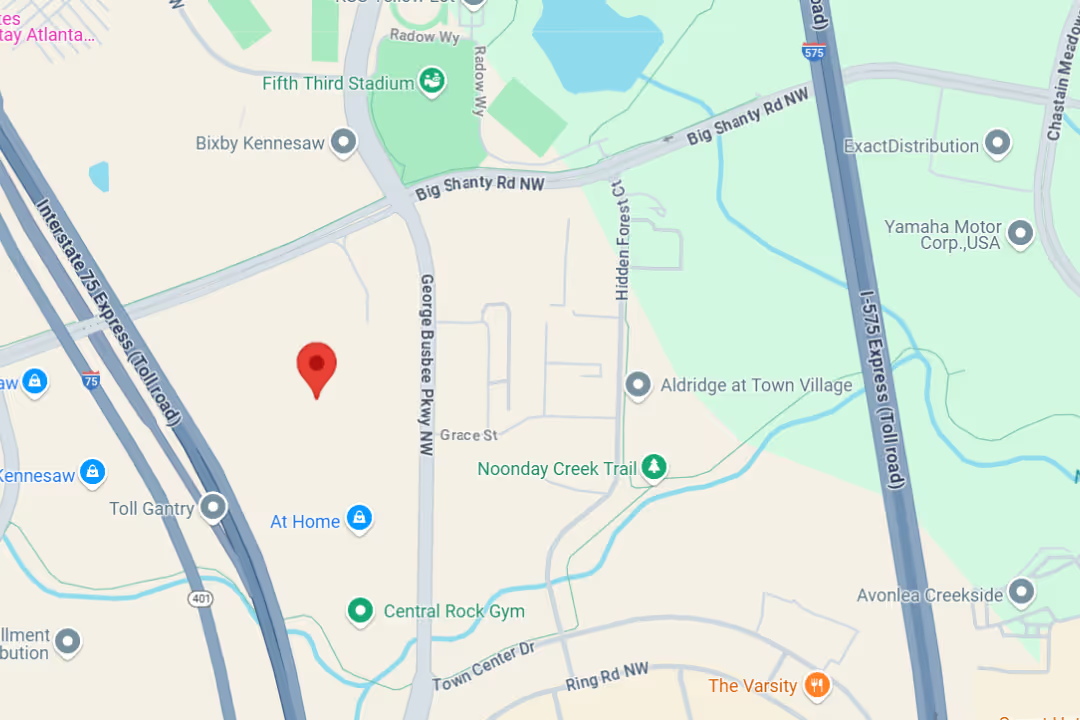
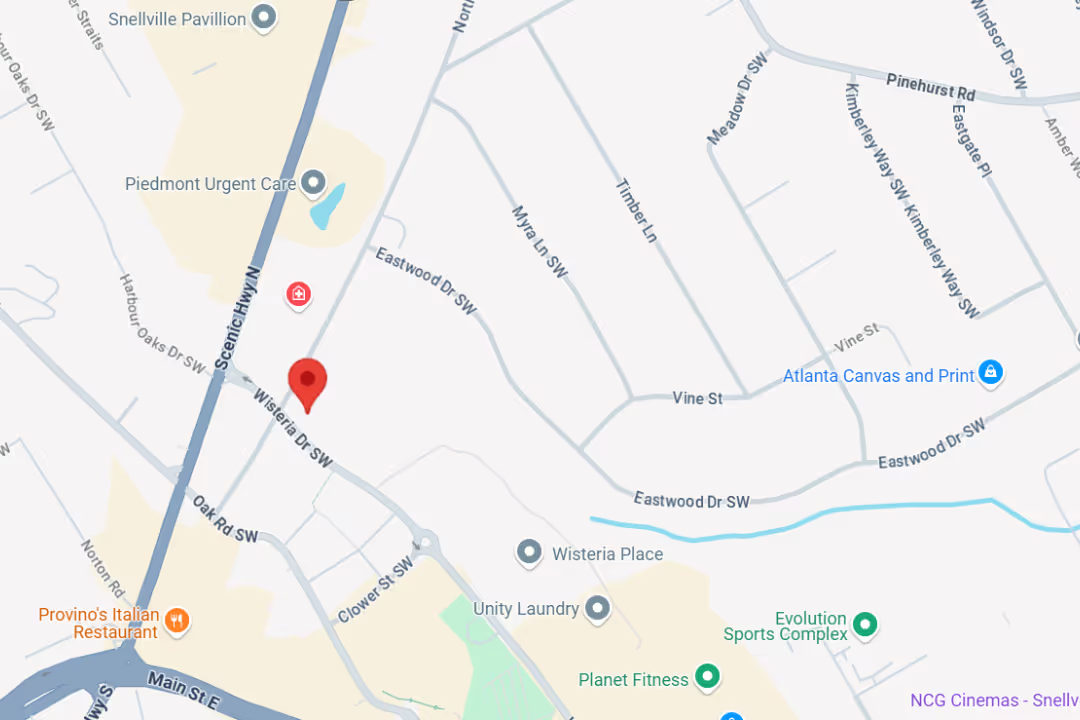
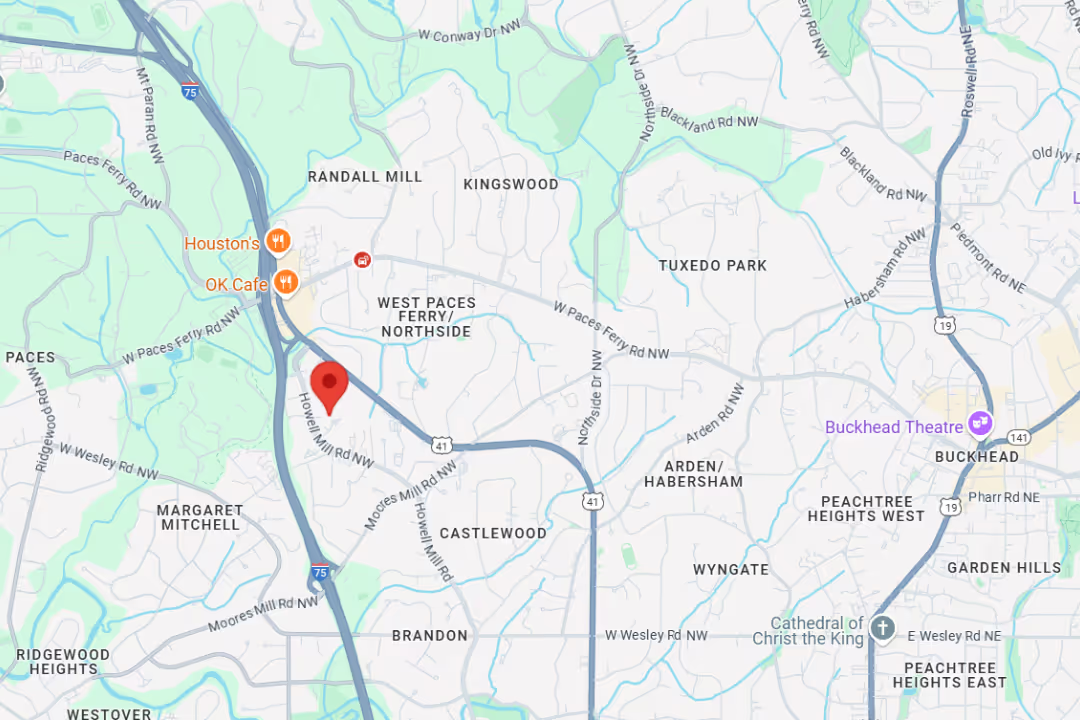
If persistent hand numbness or weakness is interfering with your daily routine, explore our comprehensive interventional neuropathy and neuralgia care or contact our clinic locations in Snellville, Kennesaw, Marietta, and Buckhead to schedule your comprehensive evaluation today.
At Medici, you’re more than your MRI.
We take time to hear your story, understand your pain, and create a plan that actually works for you.

Our team delivers specialist care at convenient locations across Metro Atlanta:
Get expert tips on injury recovery, pain relief, joint health, and movement strategies—straight from our Fellowship-Trained team.