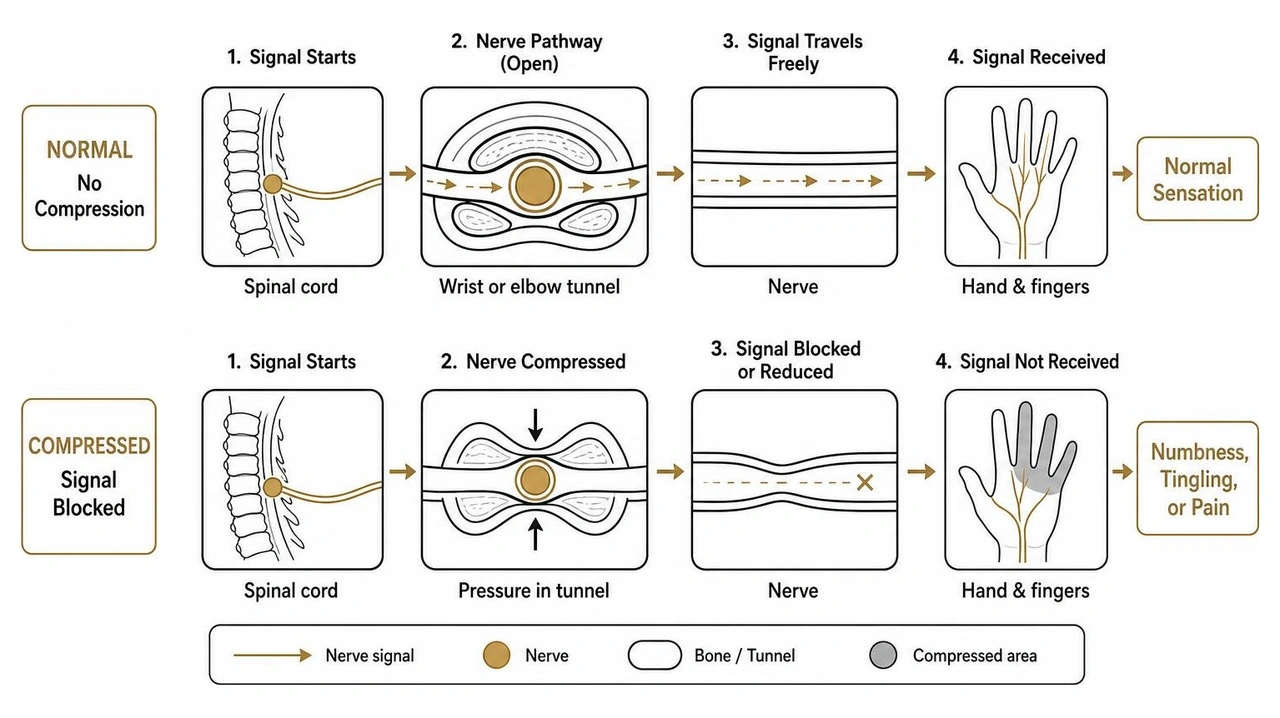
Waking up to hands that feel like cold, heavy blocks of wood is medically known as nocturnal paresthesia. When you sleep, your body naturally lowers its metabolic rate, reduces movement, and undergoes subtle fluid shifts. When you lay flat for hours, fluid can collect in soft tissues. If an anatomical space in your wrist or elbow is already tight, this fluid shift puts extra mechanical pressure on passing nerves.
Think of a nerve like a garden hose. When water flows freely, everything downstream works perfectly. But if someone steps on the hose, the stream trickles to a halt. When you bend your wrist or elbow while sleeping, you step on that "hose." The nerve can't send electrical signals back and forth between your spinal cord and your fingertips. The result is total loss of sensation or a prickling, static-like numbness.
Three main pathways account for almost all morning hand numbness:
Understanding what causes tingling and numbness in hands and feet starts with determining whether the issue is a simple positional block or a structural problem.
A common myth is that waking up with numb hands means your blood circulation was cut off. While poor vascular health can cause cold or pale hands, true morning numbness and tingling are nearly always driven by nerve compression, not blood flow restriction.
| Feature | Nerve Compression (Paresthesia) | Poor Blood Circulation (Vascular) |
|---|---|---|
| Primary Sensation | "Pins and needles," numbness, burning, electric static | Coldness, aching, dull heavy pain |
| Skin Appearance | Normal color and temperature | Pale, blue, or purplish color change |
| Relief Trigger | Shaking hands, unbending joints, nerve flossing | Warming hands, elevating/lowering arms |
| Main Culprit | Pinched or trapped nerves (median, ulnar, cervical) | Blocked blood vessels, Raynaud's syndrome |
When you wake up and vigorously shake your hands, you aren't just pumping blood back into the fingers—you are physically opening up compressed joint spaces, relieving mechanical pressure on the trapped nerve, and restoring signal transmission. Learning how to improve circulation for peripheral neuropathy can help maintain overall nerve health, but relieving mechanical pressure remains the primary fix for nocturnal hand numbness.
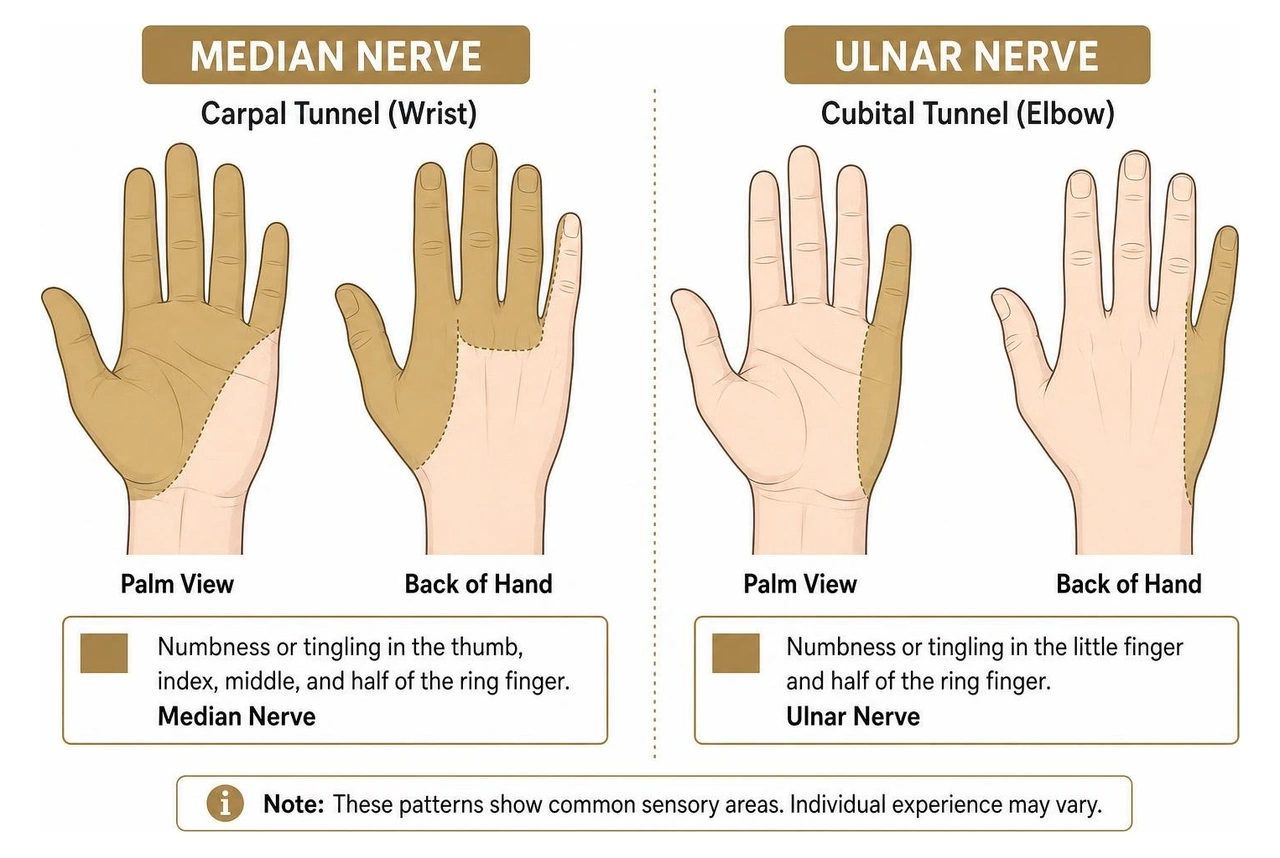
Your hands provide an exact roadmap of which nerve is suffering. Pay close attention to which specific fingers feel numb when you wake up:
| Affected Fingers | Primary Involved Nerve | Most Likely Cause |
|---|---|---|
| Thumb, index, middle, side of ring finger | Median Nerve | Carpal Tunnel Syndrome |
| Pinky finger, half of ring finger | Ulnar Nerve | Cubital Tunnel Syndrome |
| Whole hand, wrist, radiating down arm | Cervical Spine (C6-C8) | Pinched Nerve in Neck / Cervical Radiculopathy |
| Both hands + feet in "glove and stocking" pattern | Peripheral Nerves | Diabetic Neuropathy or Vitamin B12 Deficiency |
How you position your body during sleep directly impacts pressure levels within your peripheral nerve tunnels. When you sleep, you drop your conscious awareness, making it easy to hold extreme, unnatural joint angles for hours at a time.

The most problematic sleeping habits include:
To keep nerves relaxed overnight, your wrists and elbows should sit in a neutral position—straight, unclenched, and slightly extended.
Inside the body, nerves travel through narrow anatomical tunnels bounded by bone, ligament, and muscle. When a joint bends to its absolute limit, the interior space of those tunnels shrinks drastically.
For instance, bending your wrist fully forward or backward can increase fluid pressure inside the carpal tunnel up to eight times above normal levels. In an elbow bent past 90 degrees, pressure inside the cubital tunnel climbs significantly.
If you maintain these bent positions for 6 to 8 hours straight, fluid pools, tissue swells, and nerve signals stall completely. When you finally wake up, your hand feels entirely dead until you straighten the joint and shake out the built-up fluid pressure.
If you adjust your sleep posture and still frequently ask, "Why do i wake up with numb hands?" an underlying medical condition may be making your nerves extra sensitive to baseline pressure.
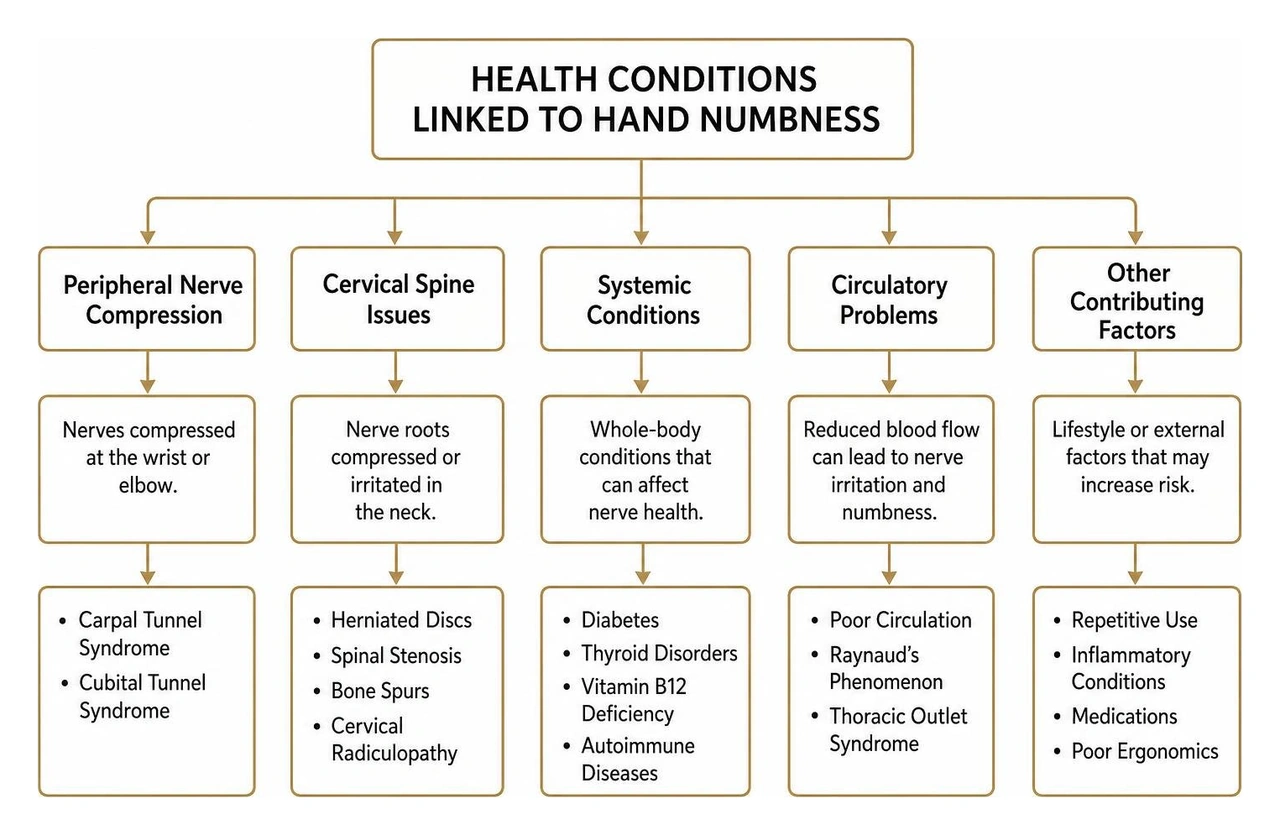
Carpal tunnel syndrome is the most widespread cause of repetitive hand numbness. Daytime repetitive movements—like typing, using heavy tools, or texting—inflame tendons in the wrist. When night falls, fluid shifts make this pre-existing inflammation press even harder on the median nerve. Similarly, cubital tunnel syndrome compresses the ulnar nerve at the elbow, triggering numbness in the pinky and ring fingers.
A structural issue in the neck, such as a disc herniation, spinal stenosis, or bone spurs, can compress nerve roots right as they exit the spinal cord. This is known as cervical radiculopathy pinched nerve. Neck-based nerve compression causes pain, numbness, or tingling that shoots down the arm into the hand.
Diabetes is another common metabolic cause of chronic nerve damage. According to clinical data, up to 50% of people with diabetes develop nerve damage, and 60% to 70% may experience peripheral nerve impairment over their lifetime.
High blood sugar over extended periods damages the microscopic blood vessels (capillaries) that supply oxygen and vital nutrients to your nerves. Without proper nourishment, nerve fibers deteriorate—a condition called diabetic neuropathy.
Diabetic nerve damage typically follows a "glove and stocking" pattern, usually starting in the longest nerves of the toes and feet before moving up to the hands. Additionally, diabetic patients frequently experience the dawn phenomenon—a natural surge in overnight blood sugar spikes between 3 AM and 8 AM. These overnight blood sugar surges irritate already vulnerable nerves, making morning hand numbness far more pronounced.
Distinguishing between metabolic issues, spinal conditions, and local wrist entrapment is critical for effective relief:
If you want to stop waking up with numb hands, targeted conservative care and nighttime habit changes offer an excellent place to start.

Reviewing how can I relieve tingling in my hands naturally and trying options for natural remedies to relieve tingling in hands without medication can provide safe, noticeable relief.
When you wake up with numb hands, try this simple 90-second morning nerve routine to clear fluid and restore smooth signal transmission:
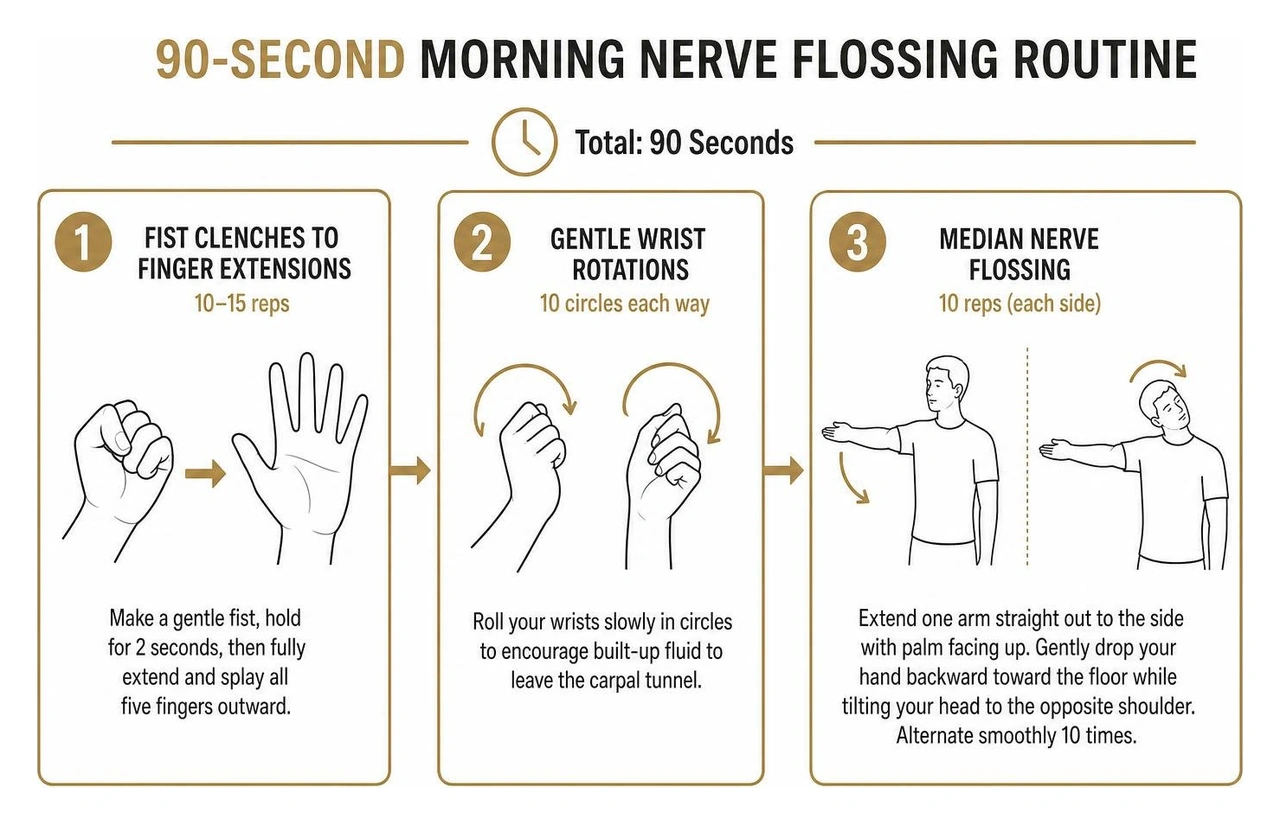
Practicing techniques on how to relieve tingling sensation in hands naturally every morning gently warms nerve tissues without causing further irritation.
While occasional hand numbness from awkward sleep posture resolves quickly, persistent or worsening symptoms require professional evaluation.
Call emergency services (911) immediately if hand numbness begins suddenly alongside face drooping, slurred speech, confusion, or one-sided body weakness. These are potential warning signs of a stroke.
When you visit our specialists at Medici Orthopaedics & Spine, we perform standard tests to pinpoint the exact source of nerve irritation:
Our team is committed to restoring your quality of life with effective, minimally invasive programs:
Reading up on what causes nerve pain in your hands symptoms causes treatments helps you understand all available medical options.
Occasional numbness from sleeping awkwardly on your arm happens to everyone. However, waking up with numb hands every single morning is not normal. Daily morning numbness indicates that nerves are under continuous mechanical pressure or that an underlying systemic condition—such as carpal tunnel syndrome, cervical spine disease, or diabetic neuropathy—has rendered your nerves hyper-sensitive. A medical evaluation is recommended if symptoms recur daily.
Pay attention to your fingers and neck:
A Vitamin B12 deficiency is the primary dietary deficiency that causes nighttime hand and foot numbness. B12 maintains the protective myelin sheath surrounding peripheral nerves. When B12 levels drop, nerves lose protection and suffer structural dysfunction, causing tingling, numbness, and balance issues.
Waking up with numb hands doesn't have to be a daily norm. By identifying your finger symptoms, switching to neutral sleep postures, using nighttime wrist splints, and completing gentle morning stretches, you can resolve mechanical nerve compression and protect long-term hand function.
If home adjustments don't fully relieve your symptoms, early medical diagnosis is the key to preventing permanent nerve damage. At Medici Orthopaedics & Spine, Dr. Sonny Dosanjh and our expert clinical team offer comprehensive evaluations and custom, non-surgical treatment plans across our Metro Atlanta locations—including Snellville, Kennesaw, Buckhead, Marietta, and Atlanta.
Many of our conservative modalities work synergistically—combining physical therapy, targeted injections, interventional spine care, and advanced nerve therapies to achieve long-lasting results.
Explore our specialized care for neuropathy neuralgia or contact our team directly to schedule your evaluation and start restoring your quality of life today.
At Medici, you’re more than your MRI.
We take time to hear your story, understand your pain, and create a plan that actually works for you.

Our team delivers specialist care at convenient locations across Metro Atlanta:
Get expert tips on injury recovery, pain relief, joint health, and movement strategies—straight from our Fellowship-Trained team.