

Numb fingertips often point to a compressed nerve, especially at the wrist or elbow. When sensory loss affects the thumb, index, and middle fingers, it can suggest carpal tunnel syndrome; numbness in the little finger and part of the ring finger can suggest pressure on the ulnar nerve. If both hands are affected and your feet went numb first, a condition such as diabetic neuropathy or vitamin B12 deficiency may be more likely. Cold-triggered numbness with finger color changes can point to Raynaud's phenomenon.
Notice which fingers are affected, when it happens, and whether your feet are numb too. Seek emergency care if numbness starts suddenly with weakness, facial drooping, or trouble speaking.
I'm Sonny Dosanjh, M.D., a board-certified physical medicine and rehabilitation physician and founder of Medici Orthopaedics & Spine. I evaluate nerve and spine problems that leave the end of a finger numb, with a focus on finding the cause and choosing the least invasive care that fits.
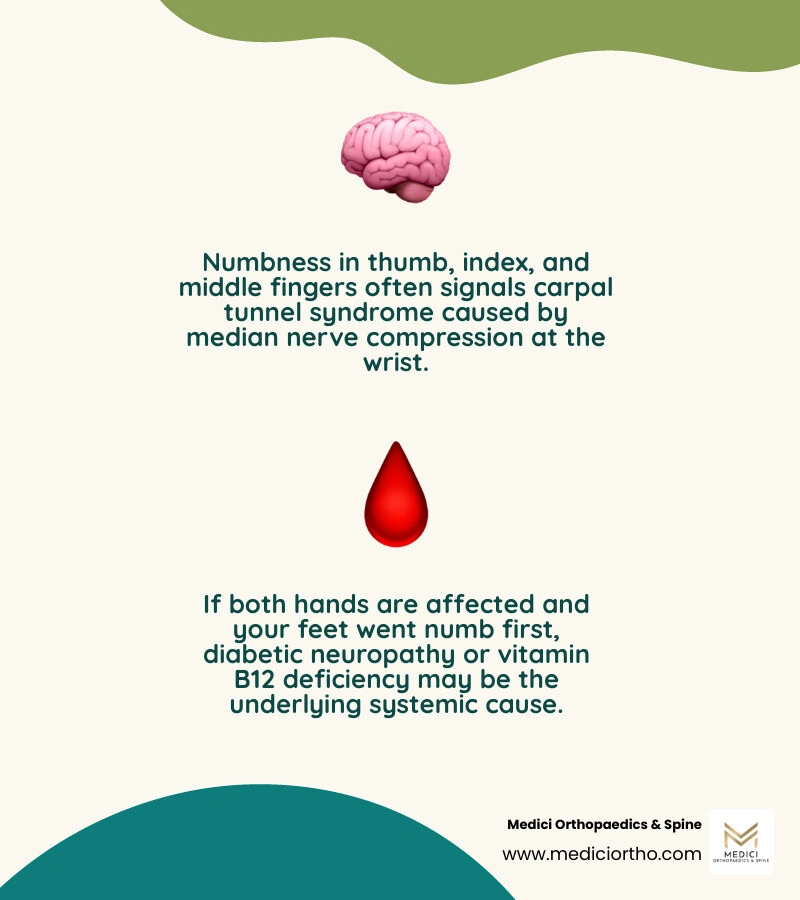
Relevant articles related to fingertip numbness:
While most cases of fingertip numbness stem from localized nerve compression or manageable metabolic changes, sudden sensory loss can represent an acute medical crisis. Neurological emergencies demand immediate evaluation to preserve long-term function and protect vital systems.
If sensory loss appears abruptly, evaluate the situation using the F.A.S.T. framework:
Sudden sensory deficits accompanied by confusion, visual disruptions, or severe coordination loss represent potential central nervous system events. Similarly, numbness traveling down the left arm paired with chest tightness, pressure, cold sweats, or shortness of breath indicates potential myocardial ischemia. Recognize serious hand nerve damage symptoms and review clinical insights on Tingling Fingers: Causes, Other Symptoms, and Treatments to distinguish between routine compression and an acute emergency.
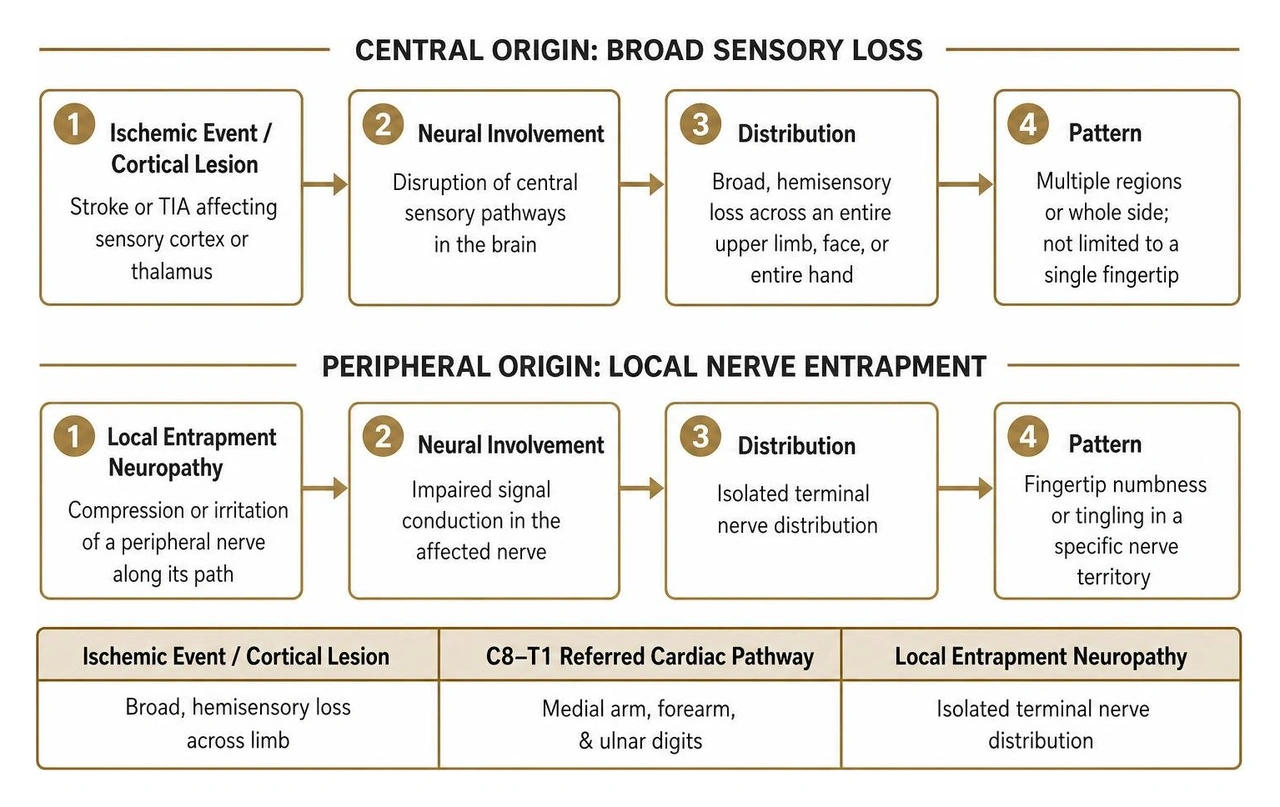
A central vascular event rarely isolates itself strictly to the very tip of a single finger. Strokes affecting the sensory cortex or thalamus typically produce hemisensory deficits, dampening sensation across an entire upper extremity, half of the face, or an entire hand.
However, transient ischemic attacks (TIAs) or focal microvascular embolic events can produce brief, sharp neurological deficits that mimic localized nerve issues. In cardiac events, referred pain travels along shared cervical and thoracic dermatomes (C8–T1), often presenting as an aching numbness spanning the inner arm down to the ring and small fingers, rather than an isolated patch on the tip of the index finger.
When an individual notices that the end of a finger is numb during daily tasks, the underlying culprit generally falls into one of two diagnostic categories: mechanical nerve entrapment or systemic metabolic disruption.
Our fingertips contain the highest density of sensory receptors—such as Meissner's and Merkel corpuscles—in the human body. Because these terminal receptors rely on sustained microvascular blood flow and unobstructed electrical signals along lengthy nerve axons, even mild mechanical pressure or systemic stress manifests at the distal tips first. Exploring what causes nerve pain in your hands helps separate structural impingement from diffuse metabolic nerve irritation.
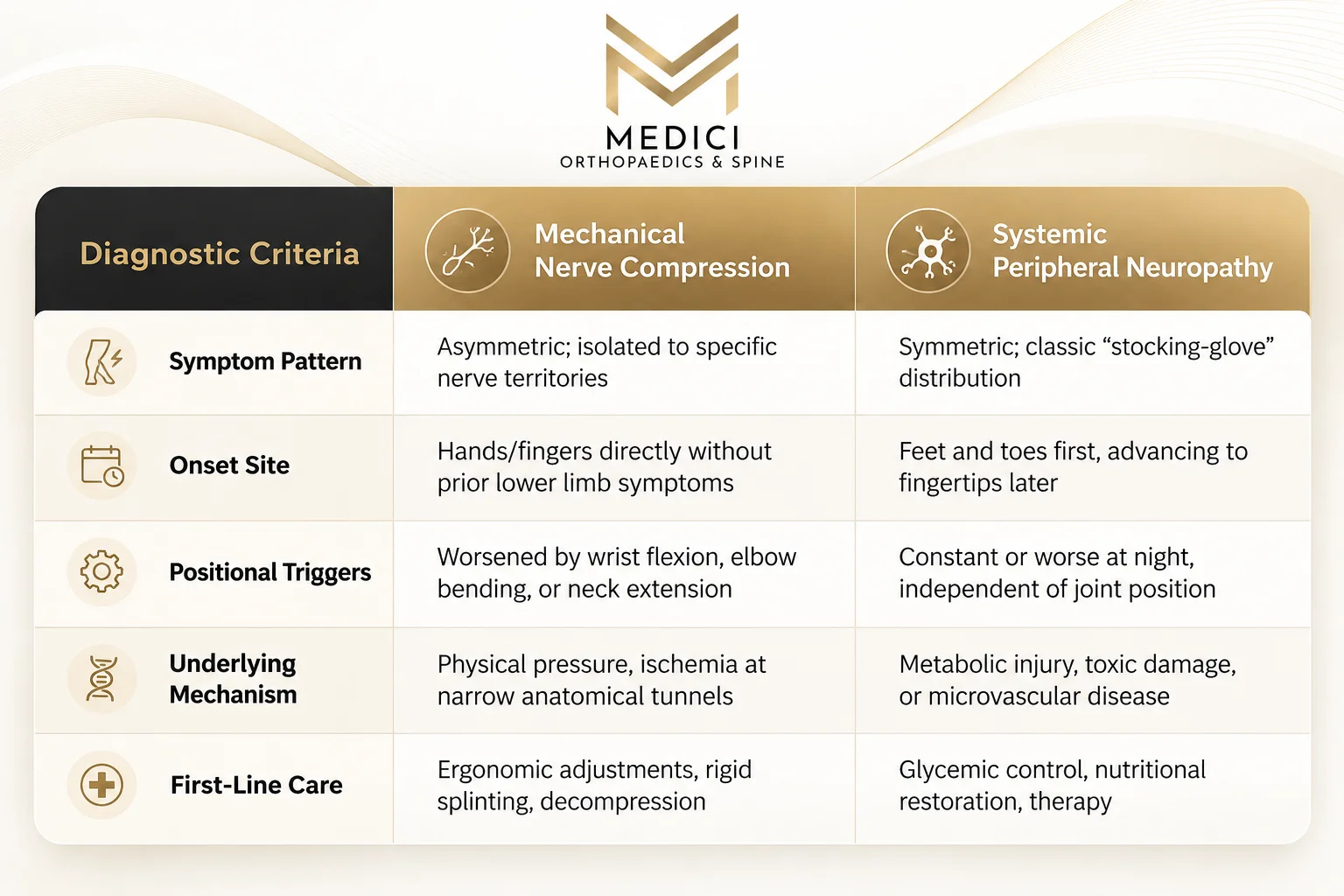
Mechanical compression acts like a physical obstruction along a utility line. When a nerve passes through a rigid anatomical space—such as the carpal tunnel in the wrist, the cubital tunnel at the elbow, or the neural foramina of the cervical spine—inflammation or sustained joint flexion restricts internal microcirculation. Detailed clinical discussions in Finger Numbness: Causes, Diagnosis, and Treatment highlight how mechanical compression creates localized ischemia, causing tingling and numbness in specific fingers.
People who wake up with their hands falling asleep often are frequently dealing with positional compression. For example, sleeping with wrists curled in hyperflexion elevates intracarpal pressure, starving the median nerve of oxygen until the hand is shaken out.
Systemic neuropathy operates differently. Rather than pinching a nerve at a specific tunnel, metabolic conditions degrade nerve fibers along their entire length. Up to 50% of individuals with diabetes eventually develop diabetic peripheral neuropathy due to chronic hyperglycemia damaging delicate capillary networks feeding peripheral axons.
Systemic contributors include:
Reviewing our pins and needles fingertips guide provides additional context on systemic sensory changes.

The exact anatomical distribution of your sensory loss provides a clear roadmap to the affected nerve. Peripheral nerves supply distinct sensory territories on the hand.
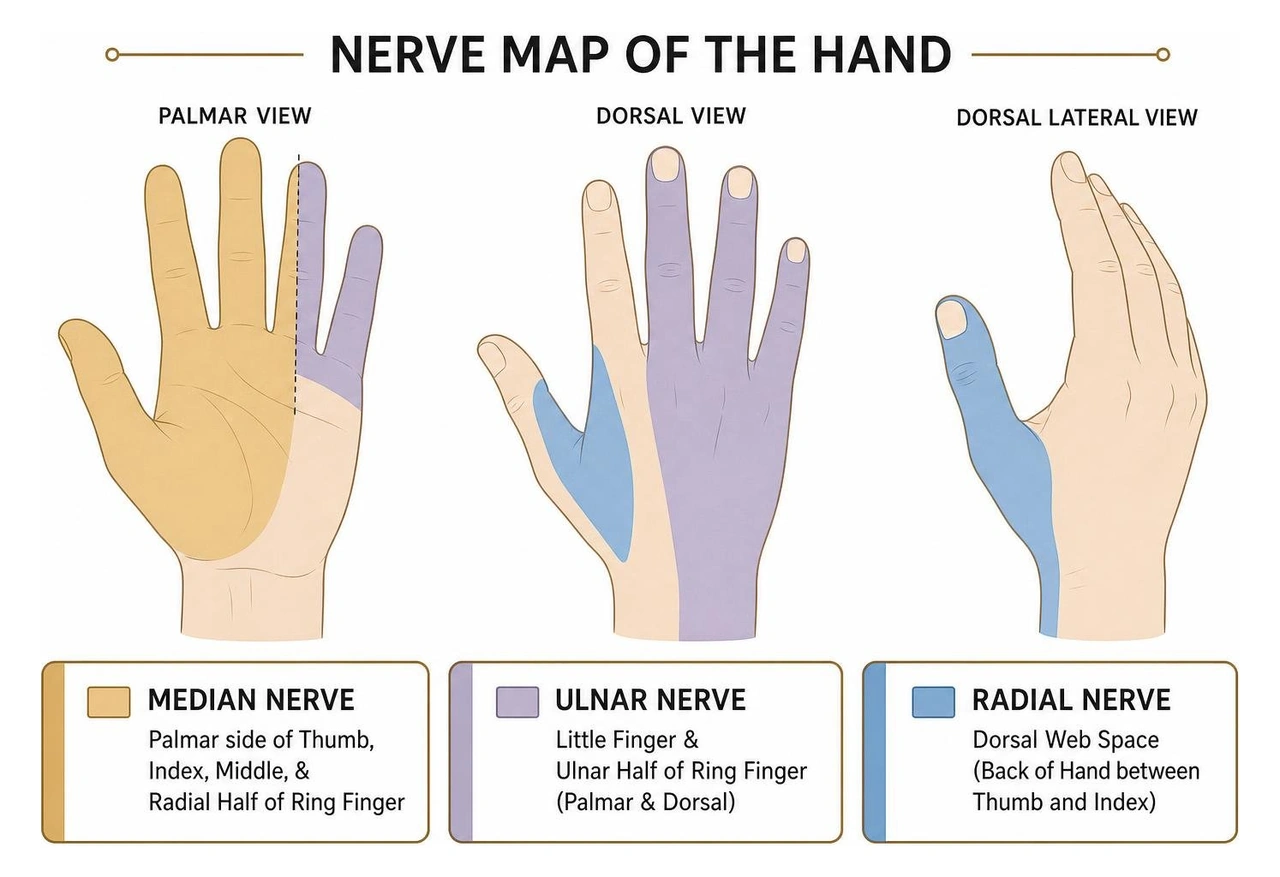
Tracking your symptom boundaries clarifies the underlying issue, especially when dealing with persistent fingertips tingling.
A simple clinical check helps differentiate true carpal tunnel syndrome from higher-level median nerve compression near the elbow or neck:
If sensory loss started in your toes and balls of your feet before developing in your fingertips months later, the underlying mechanism is almost certainly a length-dependent peripheral neuropathy rather than focal nerve entrapment.
Nerves are living cells that transport vital proteins, neurotransmitters, and cellular fuel from the cell body down the entire length of the axon. The longest nerves in the body—stretching from the lower spine down to the tips of the toes—have the highest metabolic demands. When systemic conditions like diabetes, kidney dysfunction, or nutritional deficits impair cellular transport, these longest axons fail first at their furthest terminals ("dying-back" neuropathy). Symptoms only migrate to the upper extremities once sensory loss in the legs reaches mid-calf level, at which point the fingertips begin their own distal-to-proximal progression.

Resolving fingertip numbness requires identifying the structural or metabolic origin. Using our finger tingling causes guide, patients can evaluate symptom progression alongside diagnostic pathways.
For mild, intermittent compression, simple non-operative steps reduce intradural and intracarpal pressures:
Addressing early symptoms prevents progressive finger coordination loss and protects fine motor control.
When symptoms resist basic adjustments, a clinical evaluation pinpoints the problem:
At Medici Orthopaedics & Spine, we emphasize conservative care. Treatments may integrate physical therapy, targeted ultrasound-guided injections, hyperbaric oxygen therapy, or advanced interventional nerve decompressions. Patients benefit when multiple modalities work synergistically to resolve structural impingements and improve nerve health.
Vitamin B12 deficiency is the most common nutritional cause of distal fingertip numbness. Inadequate B12 disrupts myelin maintenance, leading to bilateral tingling and sensory loss. Deficiencies in thiamine (B1), folate, and copper can cause similar presentations. Conversely, excessive intake of vitamin B6 (pyridoxine) above recommended daily thresholds can cause toxic sensory neuropathy.
Yes. In early or mild carpal tunnel syndrome, symptoms frequently isolate strictly to the terminal pads of the thumb, index, and middle fingers. The distal fingertips possess the highest density of sensory nerve endings, making them sensitive to minor oxygen deprivation within the compressed median nerve.
Recovery depends on the underlying mechanism and duration of compression:
Fingertip numbness is a clear neurological signal that should not be ignored. If you notice that the end of a finger is numb and the sensation persists, the cause may be focal compression at the wrist, a disc bulge in the neck, or a systemic metabolic issue. Early diagnosis prevents permanent nerve damage.
Our team at Medici Orthopaedics & Spine is dedicated to restoring your function through integrated, minimally invasive, non-surgical approaches. If you are struggling with persistent numbness, tingling, or weakness, explore our specialized care for neuropathy and neuralgia or contact our clinics in Snellville, Kennesaw, Marietta, and Buckhead, GA, to schedule a comprehensive evaluation.
At Medici, you’re more than your MRI.
We take time to hear your story, understand your pain, and create a plan that actually works for you.

Our team delivers specialist care at convenient locations across Metro Atlanta:
Get expert tips on injury recovery, pain relief, joint health, and movement strategies—straight from our Fellowship-Trained team.






