
Hands falling asleep often is something most people have experienced — you wake up at 3 a.m. and your hand feels like a block of wood, completely numb and tingling. You shake it out, change position, and it fades. No big deal, right?
Usually, yes. But how often it happens matters.
Occasional numbness from an awkward sleep position is harmless. When it starts happening regularly — during the day, at your desk, while holding your phone, or every single night — your body may be signaling something worth paying attention to.
Here are the most common reasons hands fall asleep frequently:
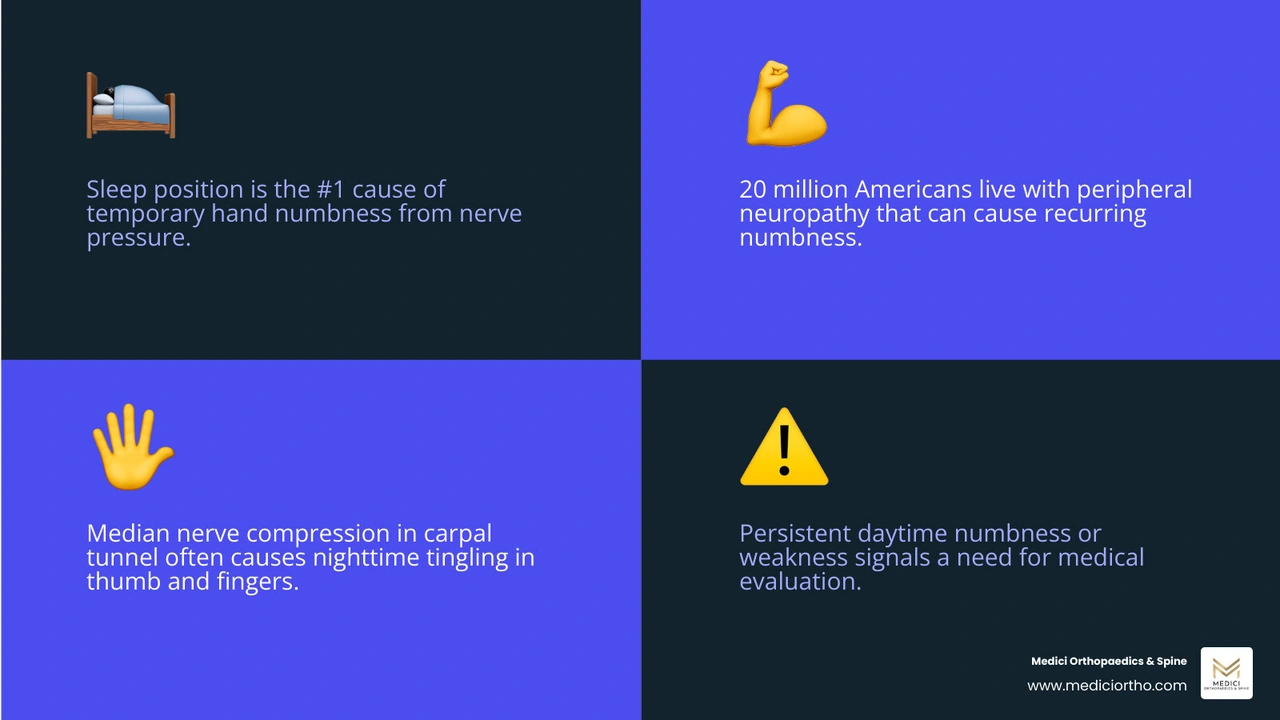
An estimated 20 million people in the United States live with some form of peripheral neuropathy — and many don't realize their recurring hand numbness is an early warning sign.
This guide will help you understand why your hands keep falling asleep, how to tell a positional quirk from a real medical condition, and what you can do about it.
To understand why your hands are taking unexpected daytime naps or waking you up in the middle of the night, we have to look at how nerves transmit sensations.
When you experience paresthesia—the medical term for that "pins and needles" sensation—it is usually because a nerve is being compressed, irritated, or starved of its normal blood supply. Nerves act like garden hoses; when you kink the hose, the flow of signals stops. Once you unkink it, the sudden rush of built-up signals causes that familiar, prickly tingling.
While an occasional "kink" is normal, experiencing hands falling asleep often suggests a more permanent or recurring obstruction. According to clinical resources like the Numbness in Hands: Causes & Treatment guide from Cleveland Clinic, persistent hand numbness typically stems from localized nerve compression, systemic nerve damage, or spinal alignment issues.
At Medici Orthopaedics & Spine, we frequently help patients trace this symptom back to its exact source. As we outline in our guide on What Causes Tingling and Numbness in Hands and Feet, identifying which fingers are tingling is one of the most reliable ways to pinpoint the underlying issue.
| Condition | Primary Nerve Affected | Key Sensation Locations | Common Triggers |
|---|---|---|---|
| Carpal Tunnel Syndrome | Median Nerve | Thumb, index, middle, and half of the ring finger | Typing, driving, wrist flexion during sleep |
| Cubital Tunnel Syndrome | Ulnar Nerve | Pinky and outer half of the ring finger | Sleeping with bent elbows, leaning on elbows |
| Cervical Radiculopathy | Cervical Nerve Roots (Neck) | Radiates down the entire arm into various fingers | Neck movement, poor posture, looking down |
| Peripheral Neuropathy | Multiple Peripheral Nerves | Both hands in a symmetrical "glove" pattern | Rest, sleep, systemic metabolic changes |
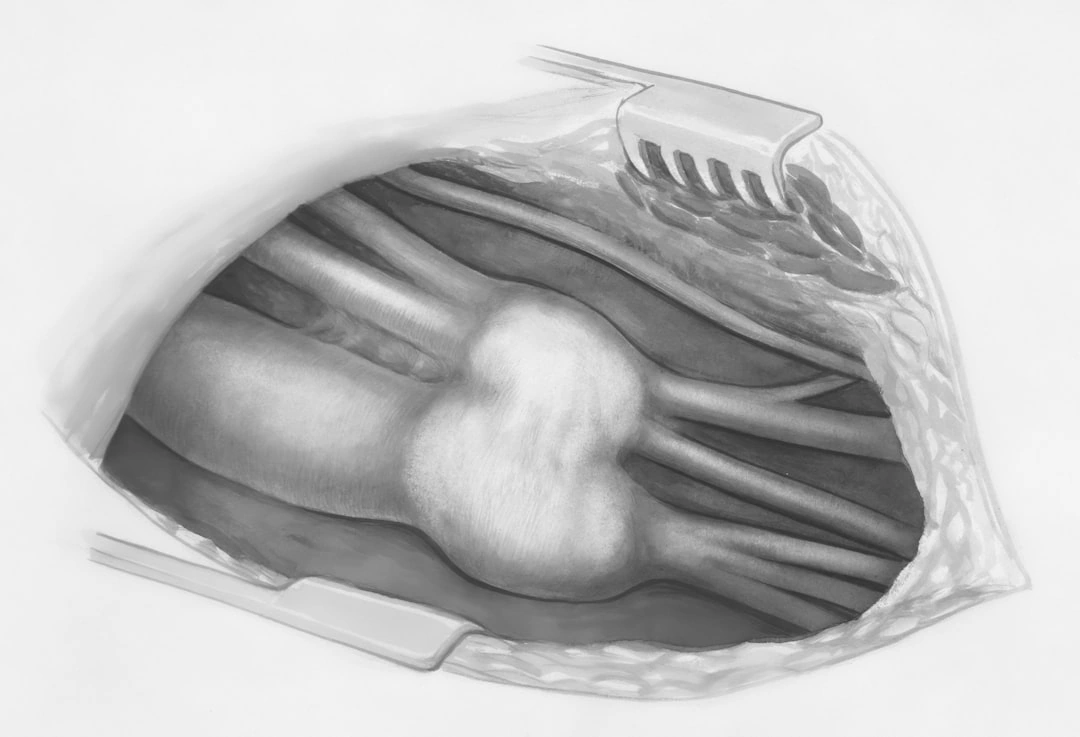
Carpal tunnel syndrome is perhaps the most notorious culprit behind nighttime hand tingling. It occurs when the median nerve, which runs from your forearm through a narrow passageway in your wrist (the carpal tunnel), becomes compressed.
This nerve controls sensation in your thumb, index, middle, and part of your ring finger. Because many of us naturally sleep with our wrists flexed or curled inward, the carpal tunnel narrows even further at night. Combined with the natural pooling of inflammatory fluids while lying flat, this posture puts immense pressure on the median nerve, waking you up with a burning or tingling hand.
If repetitive tasks like typing, assembly work, or even holding a steering wheel trigger these symptoms during the day, it is a classic sign of median nerve irritation. Left unaddressed, this can lead to chronic discomfort. You can learn more about managing this in our detailed article on What Causes Nerve Pain in Your Hands Symptoms Causes Treatments.
If you wake up and realize only your pinky and ring fingers are numb, you can leave your carpal tunnel off the suspect list. This pattern points directly to ulnar nerve compression, commonly known as cubital tunnel syndrome.
The ulnar nerve travels through a tight space on the inner side of your elbow (your "funny bone"). When you sleep with your elbows bent tightly—such as hugging a pillow or sleeping stomach-down with your arms tucked under you—the ulnar nerve is stretched taut across the elbow joint. Over hours of sleep, this sustained stretch cuts off the nerve’s blood supply, leaving your pinky and ring fingers completely numb.
Sometimes, the root cause of your hand numbness isn't in your hand or arm at all—it's in your neck.
Cervical radiculopathy occurs when a nerve root in the cervical spine (your neck) becomes pinched or inflamed. This is often caused by a herniated disc, bone spurs, or age-related wear and tear (osteoarthritis). Because these neck nerves travel down your shoulder and arm to supply sensation to your fingertips, a pinch in the neck can feel like a fire alarm going off in your hand.
If your hand numbness is accompanied by a dull ache in your neck, pain that shoots down your arm when you tilt your head, or a general feeling of weakness in your shoulder and arm, your cervical spine is likely the source.
When nerves throughout the body are damaged or dysfunctional, it is referred to as peripheral neuropathy. Unlike localized compression (like a pinched wrist or elbow nerve), peripheral neuropathy often causes a symmetrical "glove" pattern of numbness, tingling, or burning in both hands and feet.
According to Harvard Health's advisory on Hands or feet asleep? What to do - Harvard Health, nearly 20 million Americans suffer from peripheral neuropathy. The most common identifiable cause is diabetes, which accounts for approximately one-third of all cases. Chronically high blood sugar levels damage the tiny blood vessels that supply oxygen and nutrients to your peripheral nerves, leading to progressive nerve decay.
Other systemic causes include:
For those managing nerve damage from metabolic issues, we outline targeted options in our guide on the Best Treatment for Diabetic Neuropathy.

How do you determine if your hands falling asleep often is simply a result of how you curl up in bed, or if it warrants a trip to our Metro Atlanta clinics? Paying attention to the timing, duration, and progression of your symptoms offers the best clues.
If your hand numbness is purely positional, it will behave in a highly predictable way:
Positional paresthesia is harmless. It is simply your body's built-in alarm system telling you to roll over.
If an underlying medical condition or chronic nerve entrapment is at play, the symptoms will begin to spill over into your daily life:
If you recognize any of these daytime or progressive signs, it is time to seek a professional evaluation to prevent permanent nerve damage.
When you visit us at Medici Orthopaedics & Spine, our first goal is to map out exactly where your nerve signal is getting blocked.
Our diagnostic process is highly thorough and may include:
Once we have a clear diagnosis, we focus on restoring your comfort. Many patients ask, "Can nerve damage be reversed?" The answer is often yes, especially when caught early before permanent structural damage occurs. We discuss this in-depth in our patient resource, Can Nerve Pain Be Reversed.
We prioritize non-surgical, minimally invasive treatments designed to work synergistically. For those looking to avoid medication, we recommend exploring Natural Remedies to Relieve Tingling in Hands Without Medication.
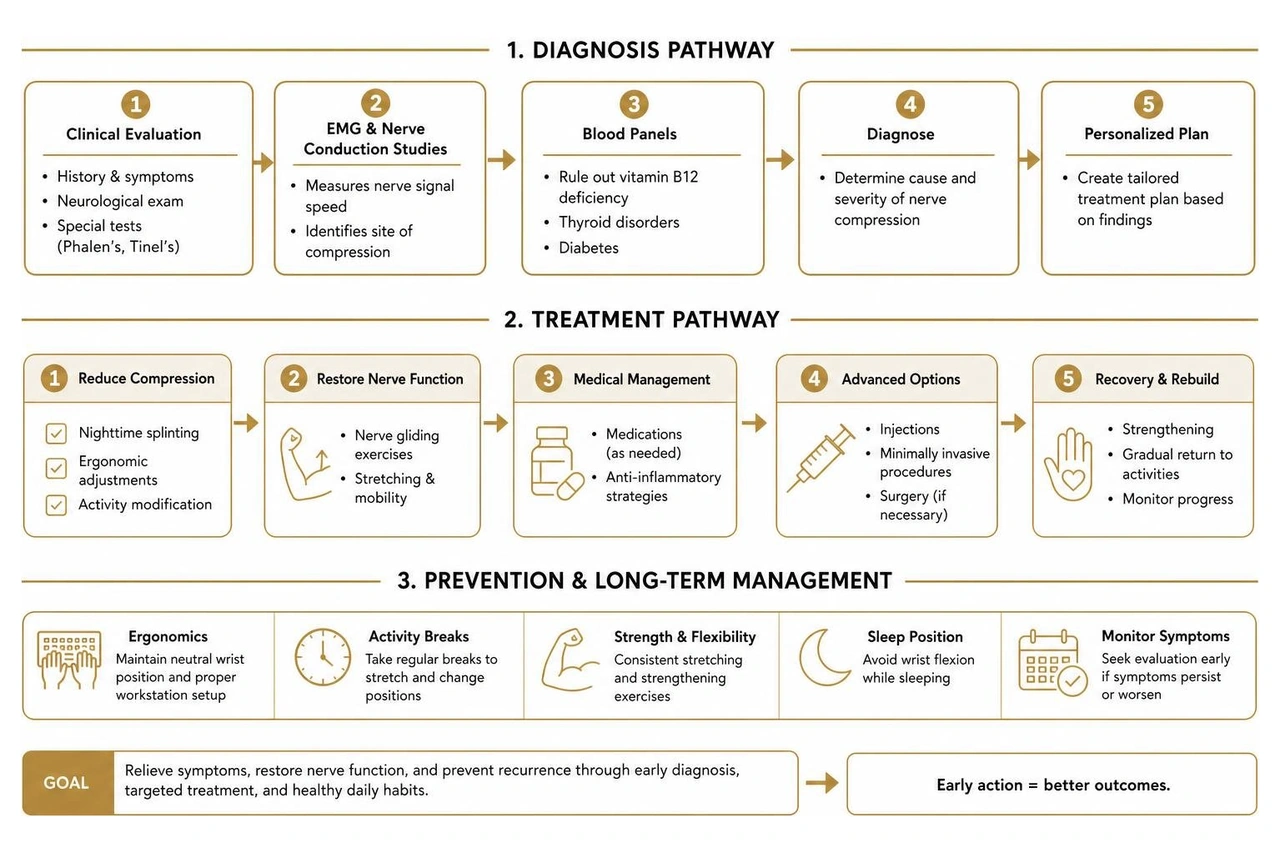
Here is a breakdown of the most effective home remedies and medical treatments we utilize to help patients find lasting relief:
You should schedule a medical evaluation if your hand numbness occurs frequently, persists during the day, wakes you up multiple times a night, or is accompanied by hand weakness or clumsiness (like dropping objects).
Seek emergency medical care immediately if your hand numbness starts suddenly and is accompanied by any of the following:
These are potential signs of a stroke or acute neurological event.
While people commonly blame "poor circulation" when their hands fall asleep, true circulatory issues are rarely the primary cause of isolated hand tingling.
When blood flow is severely restricted (such as in Raynaud's disease or peripheral artery disease), your hands will typically turn pale, blue, or bright red, and feel icy cold to the touch. The sensation is usually a dull, aching pain rather than the classic "pins and needles" of nerve compression. If you do have circulation issues related to nerve damage, you can read our practical guide on How to Improve Circulation for Peripheral Neuropathy.
To minimize nighttime tingling, try these adjustment strategies tonight:
If you are dealing with hands falling asleep often, you do not have to simply live with the discomfort or wait for it to worsen. What starts as a minor nighttime annoyance can eventually impact your grip strength, coordination, and overall quality of life.
At Medici Orthopaedics & Spine, led by our founder and CEO Dr. Sonny Dosanjh, M.D., we are committed to helping you find the root cause of your nerve discomfort. Following our July 2026 clinical guidelines, we specialize in delivering highly integrated, non-surgical, and minimally invasive treatments. From targeted physical therapy and regenerative medicine to advanced interventional spine care, we work to restore your comfort and mobility without relying on invasive surgeries or long-term drug dependency.
If you are ready to take the first step toward waking up your hands for good, explore our comprehensive guide on How to Relieve Tingling Sensation in Hands Naturally, or contact us to schedule an evaluation at one of our convenient Metro Atlanta locations in Snellville, Kennesaw, Marietta, or Buckhead. Let us help you optimally restore your quality of life today!
At Medici, you’re more than your MRI.
We take time to hear your story, understand your pain, and create a plan that actually works for you.

Our team delivers specialist care at convenient locations across Metro Atlanta:
Get expert tips on injury recovery, pain relief, joint health, and movement strategies—straight from our Fellowship-Trained team.