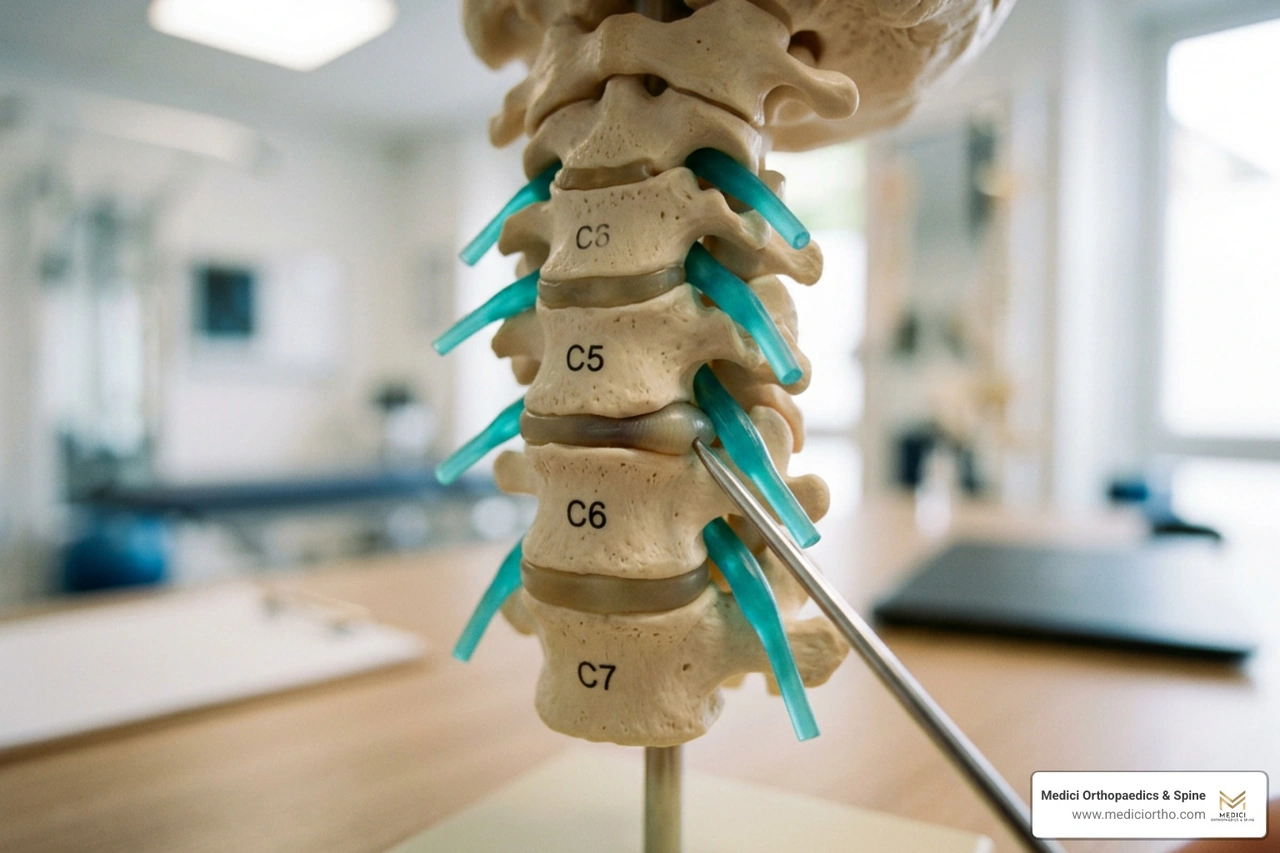
The correct cervical spondylosis with radiculopathy ICD-10 code is M47.22 — "Other spondylosis with radiculopathy, cervical region." This is a billable, specific code effective October 1, 2025 under the 2026 ICD-10-CM guidelines.
Quick answer at a glance:
| Condition | ICD-10 Code |
|---|---|
| Cervical spondylosis with radiculopathy | M47.22 |
| Cervical spondylosis without radiculopathy or myelopathy | M47.812 |
| Cervical disc disorder with radiculopathy (unspecified level) | M50.10 |
| Cervical radiculopathy, cause unspecified | M54.12 |
Use M47.22 when imaging or clinical findings confirm that spondylotic changes — bone spurs, facet arthritis, or foraminal stenosis — are causing nerve root compression. Do not use M54.12 when spondylosis is the documented cause; it is explicitly excluded by ICD-10 guidelines.
Getting this wrong is not a minor clerical issue. Over 85% of adults over 60 show signs of cervical degeneration, making this one of the most frequently coded spine conditions. Musculoskeletal claims are also among the leading sources of improper Medicare payments — and a wrong or unspecified code can trigger automatic claim denials, audits, and delayed reimbursement.
The difference between a clean claim and a denial often comes down to one thing: did the documentation explicitly link spondylosis as the cause of the radiculopathy?
Consider this contrast:
The second example supports M47.22 clearly. The first leaves a coder guessing — and guessing usually means an unspecified code, which means a denial.
I'm Dr. Sonny Dosanjh, M.D., board-certified in Physical Medicine & Rehabilitation and fellowship-trained in Multidisciplinary Pain Management at Emory University, where I regularly evaluate and treat patients with cervical spondylosis with radiculopathy ICD-10 documented conditions ranging from mild foraminal narrowing to severe nerve root compression. In this guide, I'll walk you through exactly how to code, document, and defend this diagnosis — whether you're a clinician, a coder, or both.
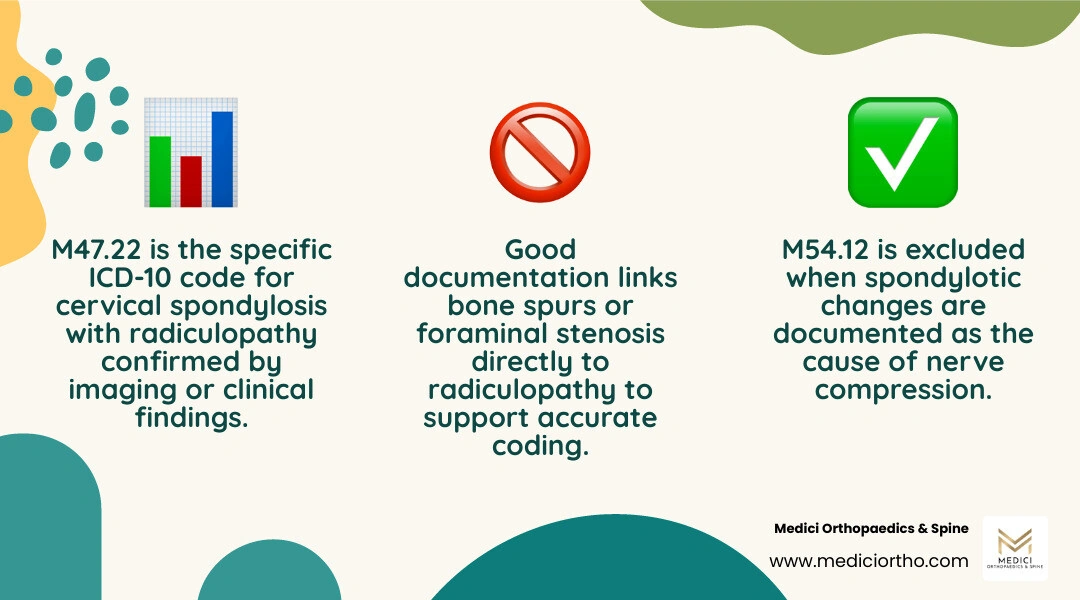
When coding degenerative spinal conditions, precision is your best friend. The primary code we use for this condition is M47.22. According to the official 2026 ICD-10-CM Diagnosis Code M47.22 classification, this code represents "Other spondylosis with radiculopathy, cervical region." This category specifically includes arthrosis, osteoarthritis of the spine, and degeneration of the facet joints when they directly result in compression or irritation of a cervical nerve root.
To understand how this fits into the broader clinical picture, let's look at the underlying pathology. Spondylosis refers to the wear-and-tear changes that occur in the spine as we age. For More info on cervical spondylosis, we can look at how the joints, intervertebral discs, and ligaments gradually degenerate, leading to osteophyte (bone spur) formation and joint narrowing. When these bone spurs grow into the intervertebral foramina, they pinch the exiting nerve roots, resulting in radiculopathy.
To ensure your medical claims are processed smoothly, you must understand how M47.22 differs from similar diagnostic codes in Chapter 13 of the ICD-10-CM manual.
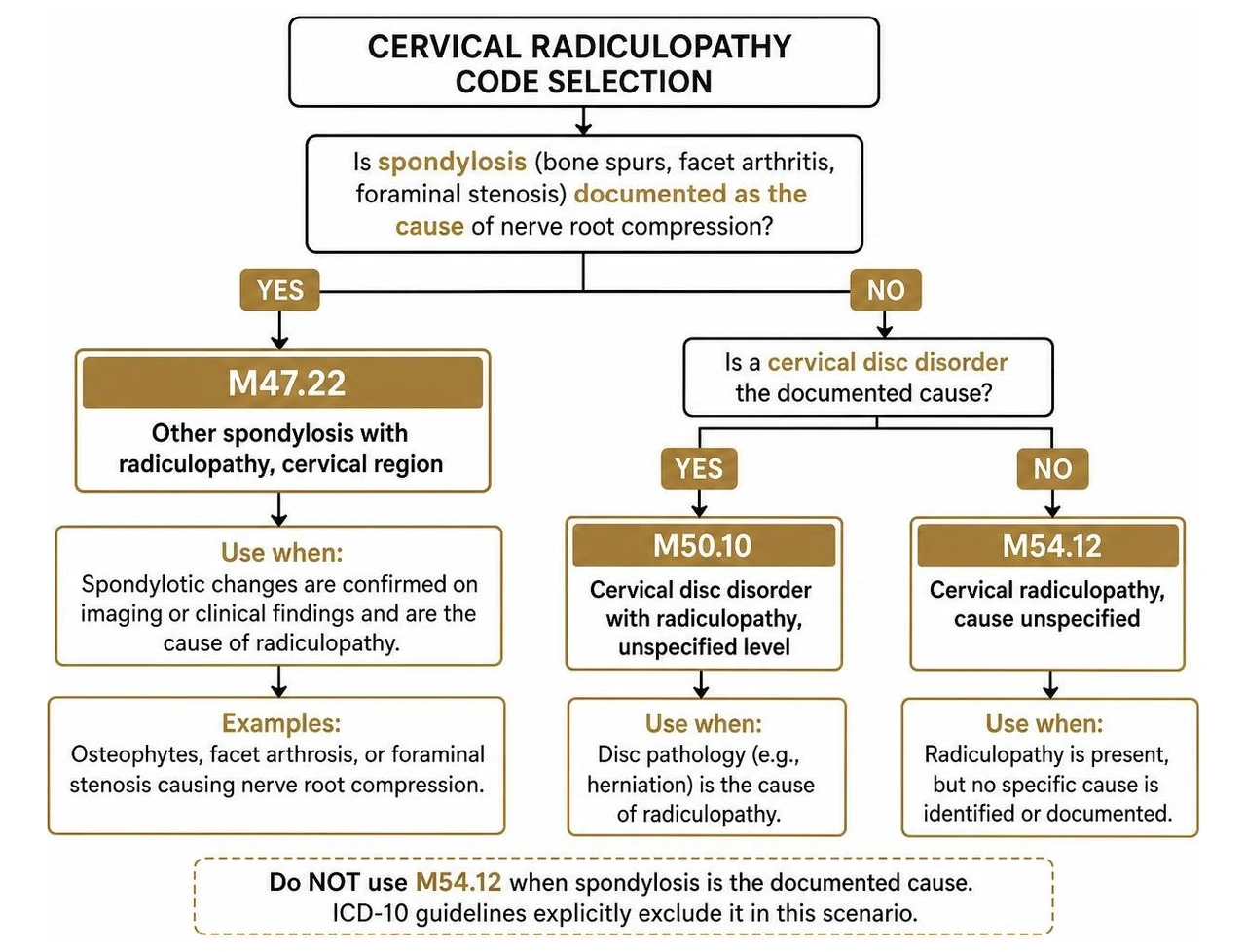
Below is a quick-reference comparison table to help you distinguish between these closely related codes:
| ICD-10 Code | Official Long Descriptor | Clinical Scenario | Key Distinguishing Feature |
|---|---|---|---|
| M47.22 | Other spondylosis with radiculopathy, cervical region | 58-year-old with neck pain radiating down the arm due to C5-C6 bone spurs narrowing the neural foramen. | Spondylosis (osteophytes/facet arthrosis) is the documented cause of nerve compression. |
| M50.10 | Cervical disc disorder with radiculopathy, unspecified cervical region | 42-year-old with acute arm pain and weakness caused by a herniated C6-C7 disc pressing on the C7 nerve root. | A primary disc herniation or prolapse is the cause of the radiculopathy. |
| M54.12 | Radiculopathy, cervical region | Patient has radiating arm pain with sensory loss, but the underlying cause has not yet been determined by imaging. | The cause of the radiculopathy is unspecified or unknown. |
| M47.812 | Spondylosis without myelopathy or radiculopathy, cervical region | 65-year-old with chronic stiffness and localized neck pain; X-rays show bone spurs, but there are no neurological symptoms. | Degenerative changes are present, but there is no nerve root or spinal cord compression. |
To support the medical necessity of M47.22 and prevent insurance denials, your clinical documentation must be incredibly thorough. It is no longer enough to simply write "cervical radiculopathy" in the assessment. Payers expect a clear clinical narrative that connects the physical examination findings with objective diagnostic imaging.
When documenting the patient's presentation, we look for key clinical indicators:
If a patient presents with chronic neck pain, we must document whether the pain is localized or radiating. For More info on neck pain, we must evaluate whether there is a neuropathic component. An MRI report showing "severe right C5-C6 neural foraminal narrowing due to uncovertebral joint hypertrophy" paired with a physical exam noting "weakness in right elbow flexion and sensory loss in the C6 dermatome" provides the perfect clinical validation for M47.22.
One of the most frequent coding errors is the incorrect use of "Excludes1" codes. Under the ICD-10-CM guidelines, an Excludes1 note indicates that the codes listed cannot be billed together because they represent mutually exclusive conditions.
For example, there is an Excludes1 note between radiculopathy with spondylosis (M47.2-) and unspecified radiculopathy (M54.1-). If you bill M54.12 (Radiculopathy, cervical region) alongside M47.812 (Spondylosis without myelopathy or radiculopathy, cervical region), your claim will likely be rejected. If spondylosis is causing the radiculopathy, the rules state you must use the single combination code: M47.22.
Another pitfall is relying on unspecified codes, such as 2026 ICD-10-CM Diagnosis Code M54.10 (Radiculopathy, site unspecified). In 2026, commercial payers and Medicare administrative contractors are increasingly using automated AI-driven claim scrubbers. These digital systems automatically flag and deny claims containing unspecified codes when more specific alternatives are available. By documenting the exact anatomical level and the underlying cause, we protect our patients and our practice from administrative delays.
A critical step in accurate coding is performing a clear differential diagnosis between spondylosis and primary disc disorders. While both conditions can pinch a nerve root and cause identical radicular symptoms, they are classified under entirely different codes in the ICD-10 system.
When a patient's radiculopathy is caused by a herniated, ruptured, or displaced intervertebral disc, we use the M50 series. For instance, 2026 ICD-10-CM Diagnosis Code M50.10 represents "Cervical disc disorder with radiculopathy, unspecified cervical region." If the provider identifies the exact region, more specific codes are used, such as M50.11 - Cervical disc disorder with radiculopathy, high cervical region | ICD-10-CM 2025 for the C2-C4 levels, or 2026 ICD-10-CM Diagnosis Code M50.13: Cervical disc disorder with radiculopathy, cervicothoracic region for the C7-T1 junction.
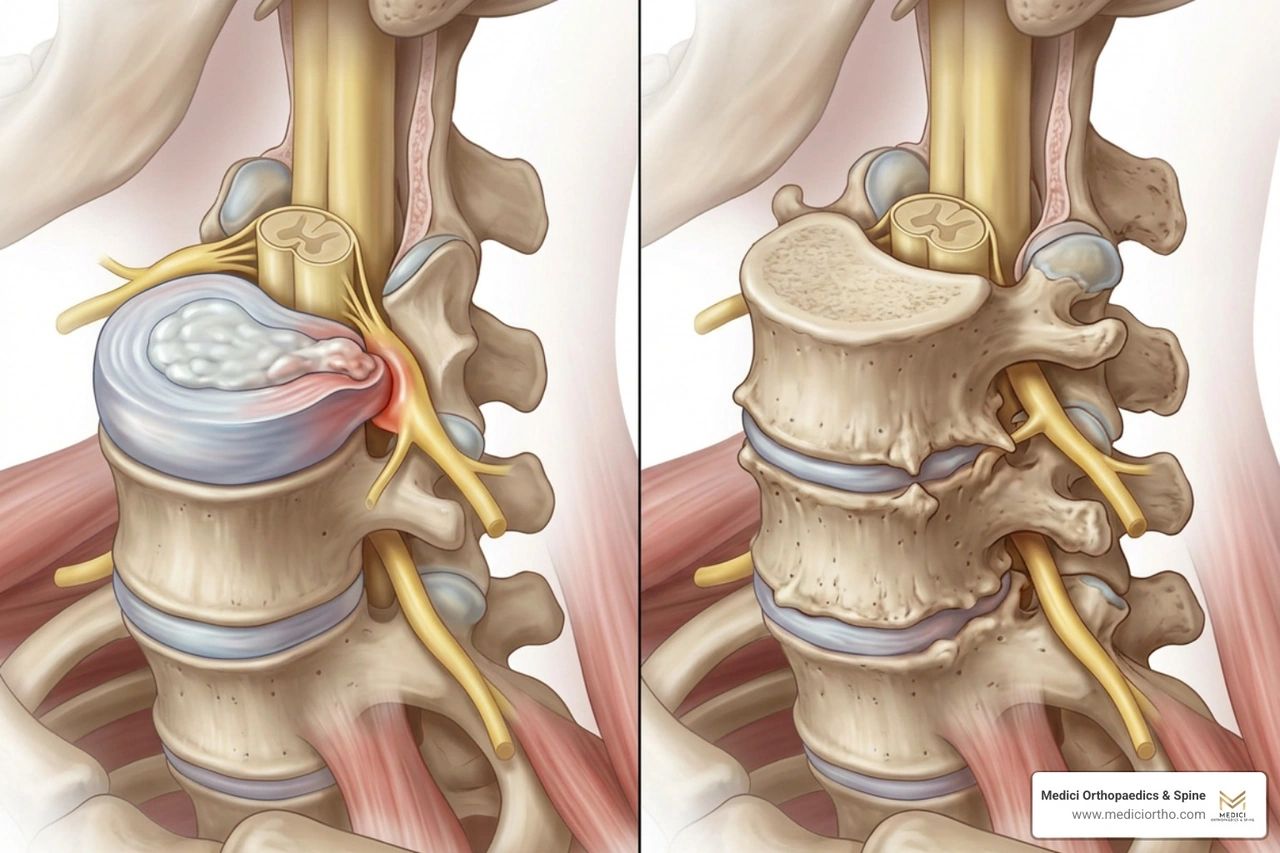
The key pathological difference lies in the nature of the compression:
Understanding these pathological mechanisms is vital. For More info on cervical radiculopathy, we see that while the clinical presentation of a pinched nerve is similar, the treatment pathways and coding requirements differ significantly.
It is equally important to distinguish radiculopathy from myelopathy, as they represent very different levels of clinical urgency.
If a patient shows signs of spinal cord compression, coding M47.22 instead of M47.12 (Cervical spondylosis with myelopathy) is a major clinical and coding error. Myelopathy often requires urgent surgical decompression, and the documentation must reflect this severe pathology to justify advanced interventions.
Accurate diagnosis coding is the key that unlocks reimbursement for procedures. To justify the medical necessity of advanced diagnostics and interventional treatments, your ICD-10 codes must pair perfectly with the corresponding Current Procedural Terminology (CPT) codes.
For example, when we order an MRI of the cervical spine to evaluate a patient suspected of having a pinched nerve, we use CPT 72141 (Magnetic resonance imaging, cervical spinal canal and contents; without contrast material). To get this approved, the pre-authorization team must submit a supporting diagnosis code like M47.22. If we only submit a generic neck pain code, the insurer may deny the scan, arguing that conservative care has not been sufficiently documented.
For patients who do not find relief with conservative measures, interventional spine treatments are often the next step. A common procedure is a cervical epidural steroid injection, billed under CPT 62321 (Injection, interlaminar epidural; cervical or thoracic, with imaging guidance).

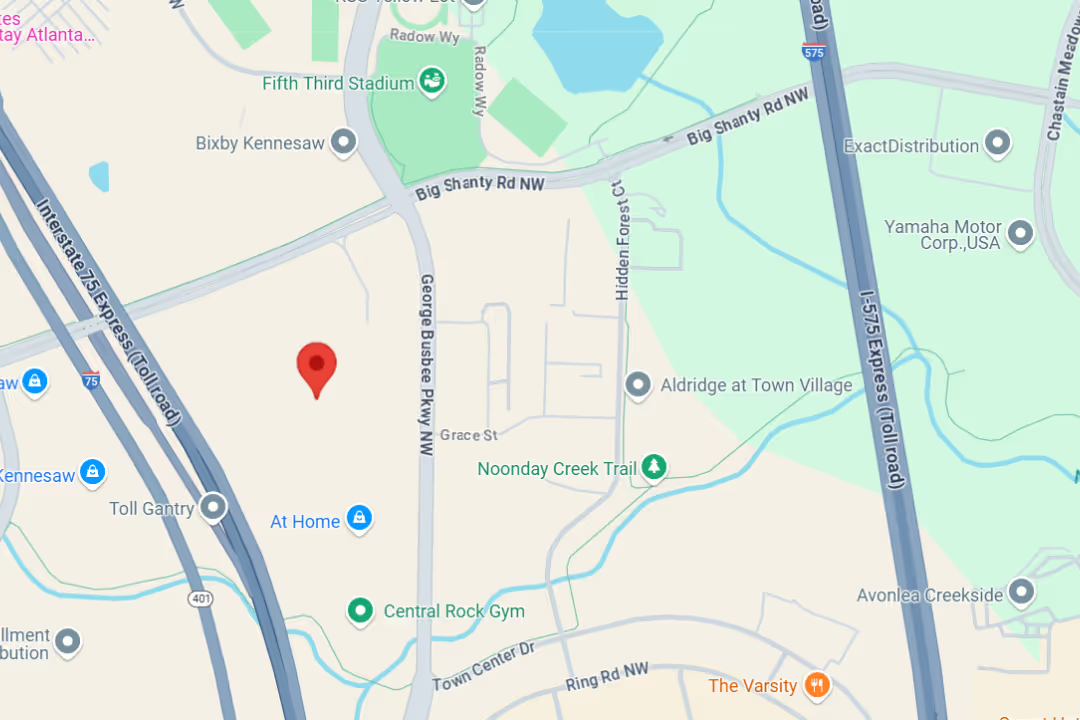
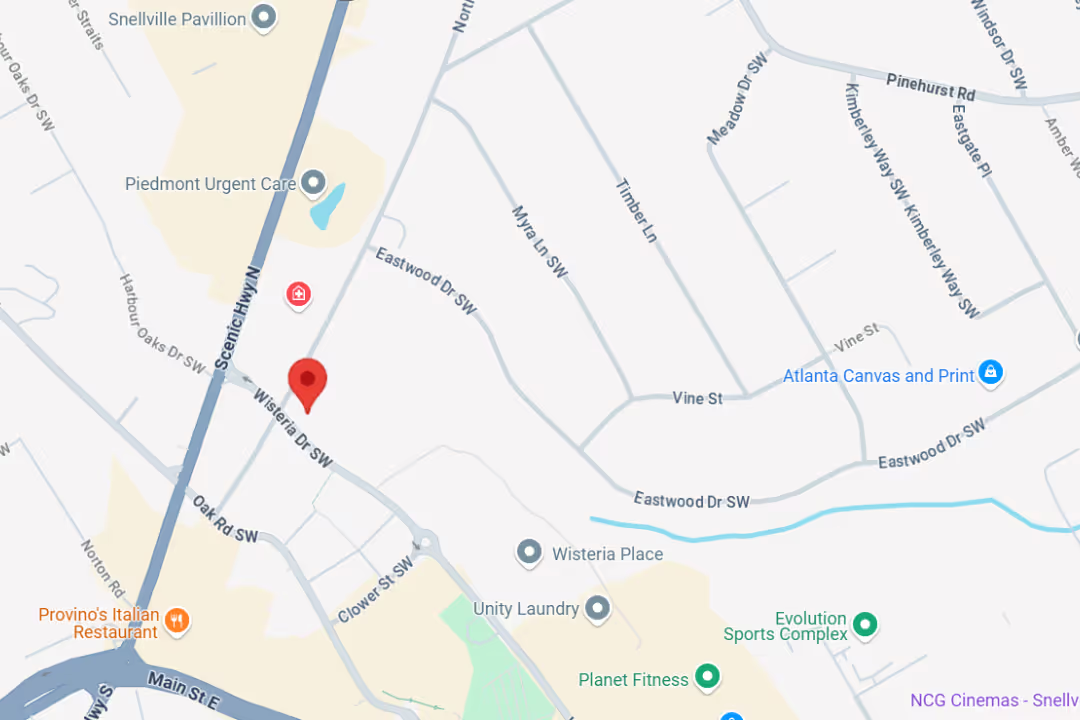
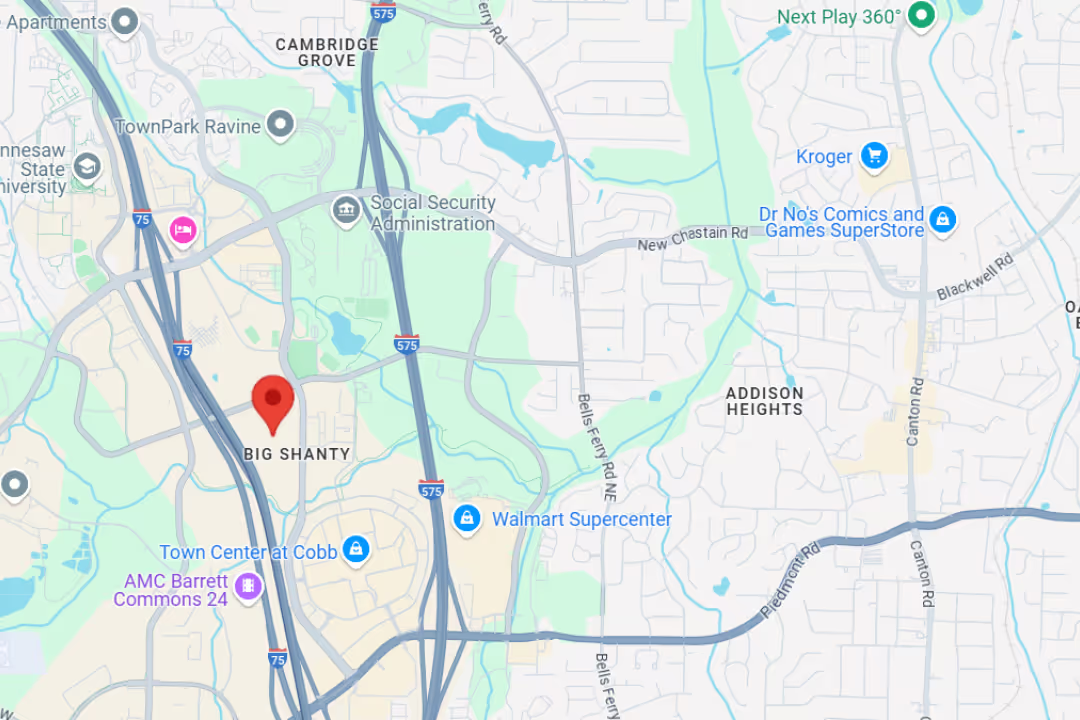
To support CPT 62321, we must document that the patient has radicular pain matching the level of the injection, supported by an MRI showing spondylotic compression. At our clinics across Georgia—including Kennesaw, Snellville, Marietta, and Atlanta—we focus on these highly targeted, minimally invasive options. You can read more about How Kennesaw patients find non-surgical relief to see how integrating accurate clinical diagnostics with advanced interventional care helps patients avoid major spinal surgeries.
Most insurance payers require proof of a "treatment ladder" before they will authorize expensive injections or surgical interventions. This means your clinical documentation must show that the patient has tried and failed conservative treatments.
A typical conservative care pathway includes:
By documenting these steps, we establish a clear medical necessity trail. If you are looking for Effective non-surgical options for back and neck pain, we always recommend starting with these conservative modalities. Only when these therapies fail to provide relief do we escalate to interventional procedures, and having a well-documented treatment history ensures that insurance authorizations go through without a hitch.
The specific, billable ICD-10-CM code for this condition is M47.22 ("Other spondylosis with radiculopathy, cervical region"). For more details on this code's structure and billing rules, refer to the ICD-10-CM Code for Other spondylosis with radiculopathy on the AAPC portal.
No, you cannot. According to official coding guidelines, there is an Excludes1 note between the M54.1- family and the M47.2- family. If a patient has cervical spondylosis (which is represented by 2026 ICD-10-CM Diagnosis Code M47.812 when no radiculopathy is present) and they develop radiculopathy due to that spondylosis, you must use the single combination code M47.22.
Similarly, if the radiculopathy is located at the transitional cervicothoracic junction, you would look to specific codes like M54.13 - Radiculopathy, cervicothoracic region | ICD-10-CM 2025 , provided there is no underlying spondylosis documented as the primary cause.
A patient should seek an expert evaluation if they experience persistent radiating neck pain that does not improve with rest, or if they develop progressive neurological signs such as muscle weakness in the arm, constant numbness, or sensory loss.
If you or a loved one are experiencing these symptoms, you can read about When to see a spine care specialist in Georgia to learn how early evaluation can prevent permanent nerve damage and help you find relief without resorting to major surgery.
Accurate coding for cervical spondylosis with radiculopathy ICD-10 is not just about avoiding administrative denials; it is about reflecting the true clinical picture of our patients' health. By ensuring our medical records are precise, detailed, and compliant with the latest 2026 guidelines, we can focus on what truly matters: providing exceptional, patient-centered care.
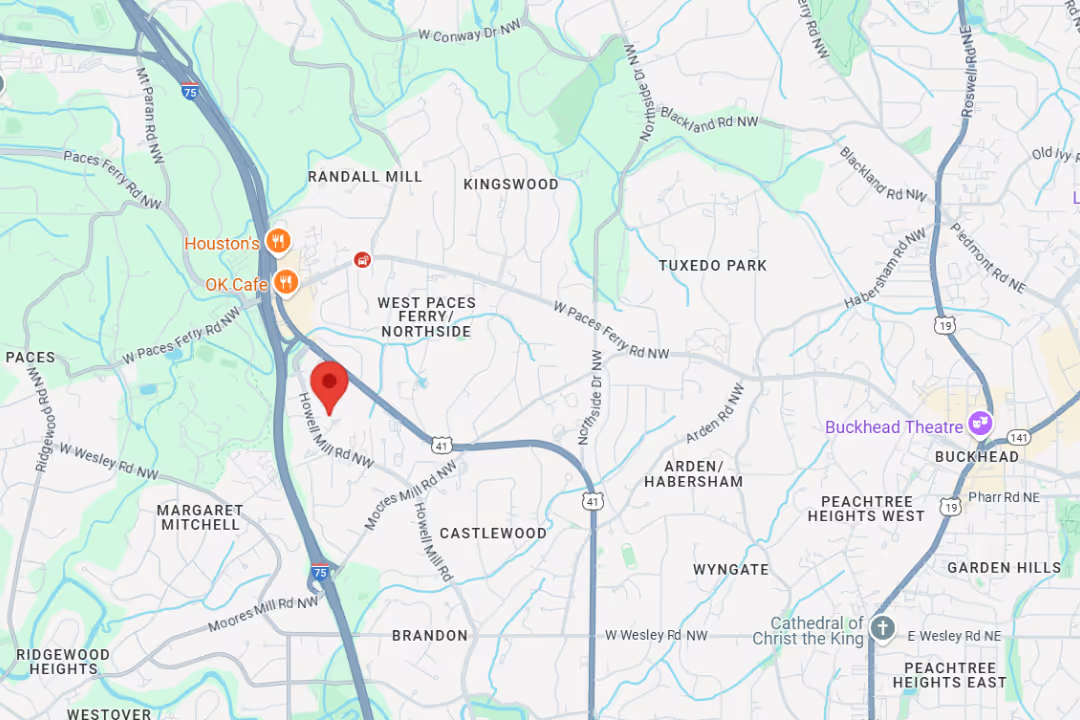
At Medici Orthopaedics & Spine, led by Dr. Sonny Dosanjh, M.D., we are committed to optimally restoring your quality of life using the most effective, least invasive, and least drug-dependent programs medically available. Whether through advanced physical therapy, regenerative medicine, or targeted interventional spine treatments, our integrated team in Kennesaw, Snellville, Marietta, Buckhead, and Atlanta is here to help you get back to living life to the fullest.
If you are struggling with radiating neck pain or numbness, do not wait for the symptoms to worsen. Schedule a consultation for cervical radiculopathy relief with our specialists today, and let us help you find a personalized, non-surgical path to recovery.
At Medici, you’re more than your MRI.
We take time to hear your story, understand your pain, and create a plan that actually works for you.

Our team delivers specialist care at convenient locations across Metro Atlanta:
Get expert tips on injury recovery, pain relief, joint health, and movement strategies—straight from our Fellowship-Trained team.