Knee pain has a way of shrinking your world. The morning stiffness that makes it hard to get out of bed, the stairs you now dread, the walks you've cut short, the activities you've quietly stopped doing because the pain just isn't worth it anymore. For people living with severe knee degeneration, that kind of daily limitation is exhausting in ways that go well beyond the physical.
When conservative treatments have run their course and knee replacement starts becoming a real conversation, the next question is almost always: who do I trust with this? Finding the right surgeon isn't just a logistical decision. It's one of the most important healthcare choices you can make, and it deserves more than a quick internet search. The surgeon you choose, the facility where your procedure takes place, and the care team supporting your recovery all play a direct role in your outcome.
Knee replacement surgery, whether partial or total, is a major procedure, and it's not the right answer for everyone. Total knee replacement involves resurfacing the entire joint, while partial (unicompartmental) replacement addresses only the damaged compartment. Both are highly effective when performed on the right patient at the right time.
Most surgeons and orthopedic specialists will consider knee replacement when:
Timing matters. Waiting too long can allow surrounding muscle weakness and altered movement patterns to develop, which can complicate both surgery and recovery. That's why having an experienced orthopedic team evaluate you early, even if surgery isn't yet on the table, puts you in a much better position down the road.
Not all orthopedic surgeons have the same depth of experience with knee replacement, and the differences matter. When you're evaluating surgeons, here's what we'd encourage you to look for:
The surgeon's credentials matter. So does the system around them.
Most surgeons are excellent advocates for their patients. But it's worth knowing the warning signs of a poor fit:
If something doesn't feel right, trust that instinct. A second opinion is always appropriate when surgery is involved.
The outcome of a knee replacement isn't determined entirely in the operating room. What happens before and after your procedure has just as much influence on how well you recover and how much function you regain.
Pre-surgical optimization can meaningfully improve outcomes. This may include:
Post-surgical rehabilitation is non-negotiable. A structured physical therapy program helps restore range of motion, rebuild strength, and retrain movement patterns. Patients who engage consistently with rehab recover faster and achieve better long-term function.
The best knee replacement programs treat the whole patient across the entire care journey, not just the hours spent in surgery.
Robotic-assisted knee replacement has become one of the most meaningful advances in joint surgery over the past decade. Rather than replacing the surgeon's skill, robotic systems enhance it by providing real-time data and precise guidance for implant placement.
The benefits include:
Not every patient is a candidate for robotic-assisted surgery, but for those who are, it represents a meaningful step forward in what knee replacement can achieve. At Medici Orthopaedics & Spine, our surgical approach prioritizes precision and minimal disruption, because how we operate affects how you recover.
The knee has three compartments: the medial (inner), lateral (outer), and patellofemoral (kneecap) compartments. When damage is confined to one area, a partial knee replacement may be appropriate. When arthritis has affected the majority of the joint, total knee replacement is typically the better option.
Partial knee replacement tends to involve a shorter recovery, preserves more of the natural joint, and can feel more natural in the early months after surgery. However, it requires that the remaining cartilage and ligaments be intact and healthy.
Total knee replacement is more comprehensive and remains one of the most studied and successful procedures in all of surgery, with implants routinely lasting 15 to 20 years or longer in appropriate patients.
The right choice depends entirely on your anatomy, the pattern of your arthritis, your activity level, and your goals. That's a conversation best had with a surgeon who has examined your imaging and taken time to understand your situation.
Recovery from knee replacement is real work, and setting accurate expectations from the start makes the process far less frustrating.
Pain during recovery is normal and expected. What matters is that it follows a consistent downward trend. If you're working with a care team that includes both surgical and pain management expertise, you'll have more options for managing discomfort throughout the process.
Searching for a knee replacement surgeon can feel like trying to make an enormously important decision with incomplete information. The truth is that the most important factor isn't a single credential or a single technology. It's finding a team that treats you as a whole person, communicates clearly, starts with conservative options, and has the surgical skill and support structure to carry you through when surgery is the right answer.
That combination of conservative care and advanced surgical capability is exactly what we've built at Medici Orthopaedics & Spine. Patients come to us at every stage of their knee journey, and we meet them wherever they are. Some leave with a physical therapy plan. Some with an injection series. Some with a surgery date and a recovery roadmap. All of them leave with a clearer picture of what's possible.
Our team is ready to evaluate your knee, walk you through every option, and help you build a plan that fits your life. Whether surgery is on the horizon or you're still exploring, we'll give you an honest picture of where you stand and what we can do together.
Call us or visit our website to schedule your consultation at one of our Atlanta metro locations.
Explore our library of patient support guides covering the conditions we treat, the treatments we offer, and the questions we hear most. Each one is written to help you understand your options and feel confident about your next step. Browse the topics below to learn more, or reach out to our team anytime.

At Medici, you’re more than your MRI.
We take time to hear your story, understand your pain, and create a plan that actually works for you.

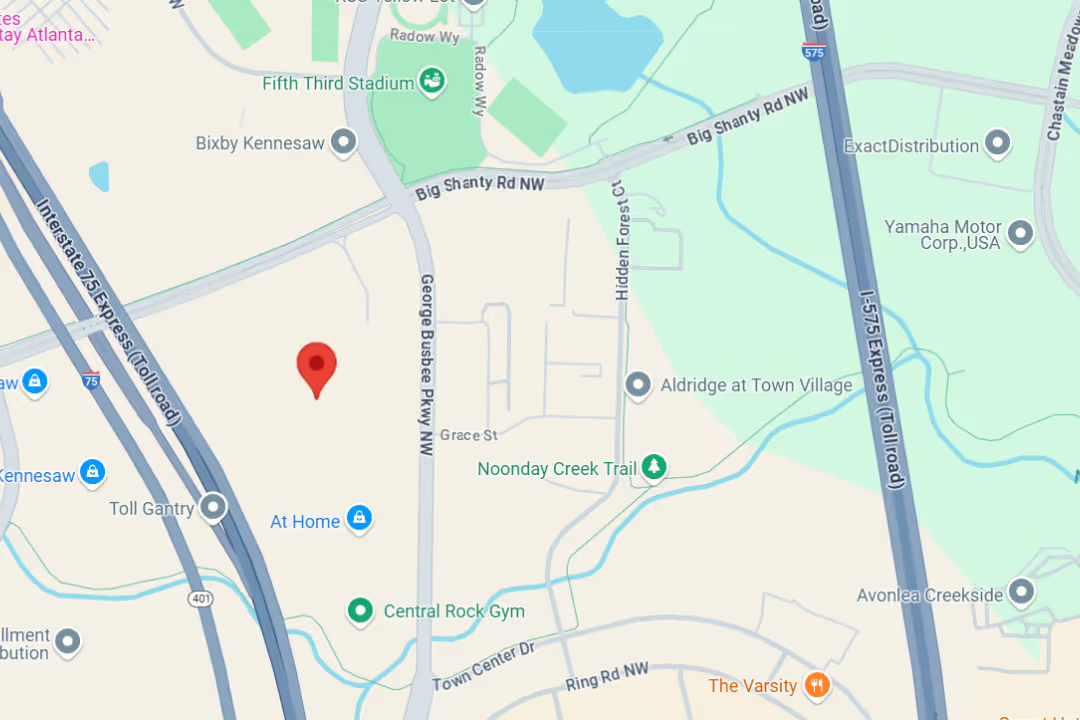
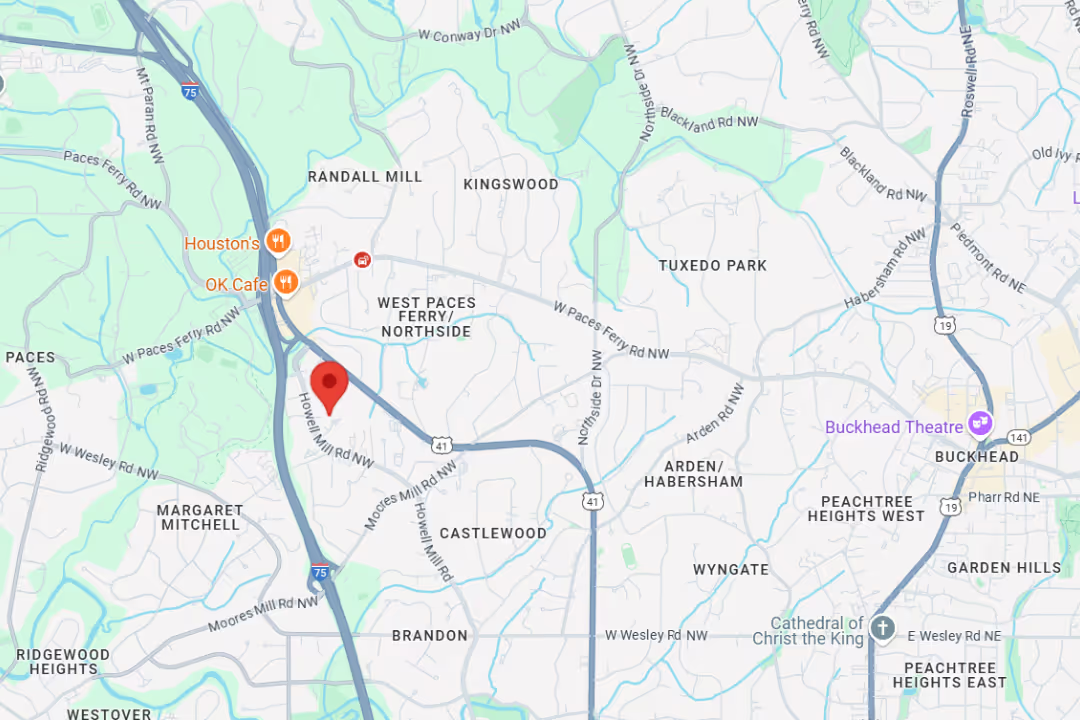
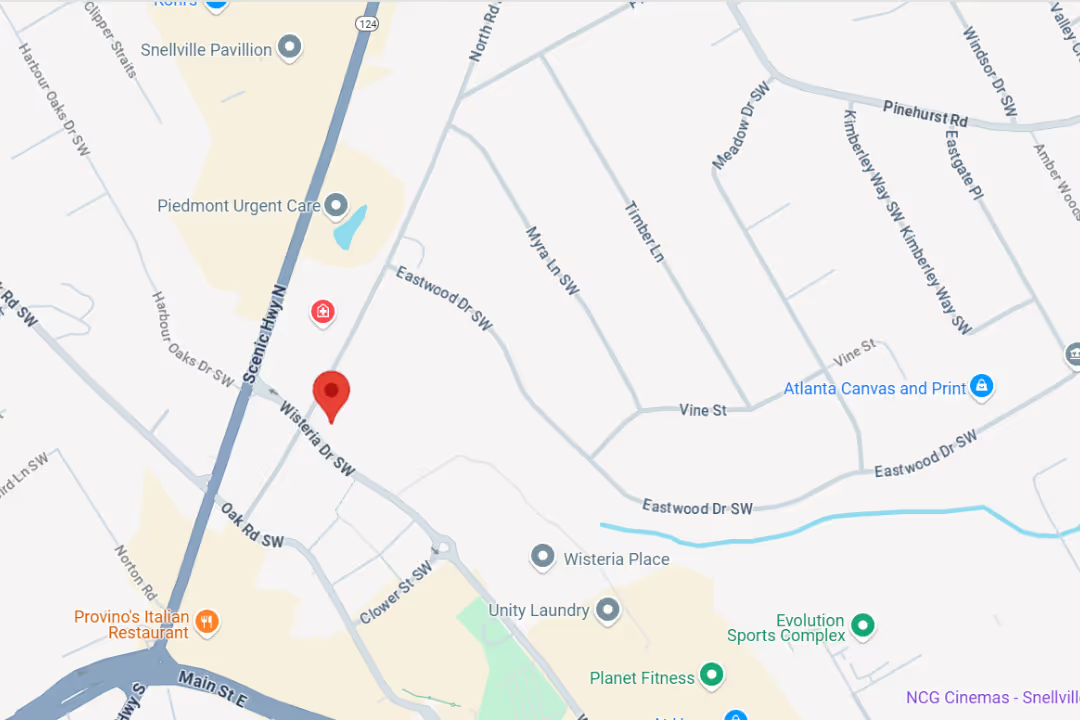
Our team delivers specialist care at convenient locations across Metro Atlanta:
Get expert tips on injury recovery, pain relief, joint health, and movement strategies—straight from our Fellowship-Trained team.