Achilles tendon pain has a way of interrupting life in small, frustrating ways at first. Maybe it starts as tightness in the back of your ankle when you get out of bed. Maybe you notice soreness after a run, a long walk, a workout, or a full day on your feet. Then, over time, the pain starts showing up more often and taking longer to calm down.
At Medici Orthopaedics & Spine, Dr. Sonny Dosanjh and the Medici team understand that chronic tendon pain can be discouraging, especially when rest, stretching, shoe changes, or medication have not been enough. We also know patients often want options that do not immediately jump to surgery or long-term medication.
For certain patients, PRP injections may be considered as part of a regenerative medicine approach for Achilles tendonitis or Achilles tendinopathy. PRP uses a concentrated portion of your own blood, rich in platelets, to support the body’s natural healing response around injured or irritated tissue. At Medici, our goal is to help you restore your quality of life with the most effective, least invasive, least drug-dependent care medically appropriate for your condition.
The Achilles tendon is the strong band of tissue that connects your calf muscles to your heel bone. It is one of the most important tendons in the body because it helps you push off the ground when you walk, run, climb stairs, jump, or stand on your toes.
You use your Achilles tendon more than most people realize. It works when you:
Achilles tendonitis means the Achilles tendon is irritated, painful, or inflamed. Many people use the word “tendonitis” for almost any Achilles tendon pain, but long-lasting cases may involve more than simple inflammation.
When Achilles pain becomes chronic, the tendon may develop tiny areas of wear, thickening, or degeneration. This is sometimes called Achilles tendinopathy or Achilles tendinosis. The wording can get technical, but the patient experience is usually pretty clear: the tendon hurts, feels stiff, and does not bounce back the way it should.
PRP stands for platelet-rich plasma. It is made from a small sample of your own blood. The blood is processed so the platelet-rich portion can be separated and concentrated, then injected near the injured or irritated tissue.
Platelets are best known for helping blood clot, but they also contain growth factors and signaling proteins involved in the body’s natural healing response. PRP treatment is designed to place a higher concentration of those healing components near the area that needs support.
For Achilles tendonitis, PRP may be considered when the tendon has been painful for a while and has not responded enough to conservative care.
The PRP process is typically performed in a medical setting and usually includes several steps:
At Medici Orthopaedics & Spine, PRP fits into the larger category of regenerative medicine. Regenerative treatments are designed to support healing and tissue repair rather than simply masking pain.
For the right patient, PRP may be appealing because it is:
Many patients with Achilles tendonitis improve with conservative care. Rest, physical therapy, stretching, strengthening, footwear changes, and activity modification are often the first steps. But some patients continue to struggle even after doing the right things.
PRP may be considered when Achilles pain has not improved enough with treatments such as:
Insertional Achilles tendonitis occurs where the Achilles tendon attaches to the heel bone. Patients often feel pain directly at the back of the heel. This area can be especially sensitive because it may involve more than just the tendon.
Insertional Achilles pain may be related to:
Mid-portion Achilles tendinopathy usually causes pain a few centimeters above the heel. Patients may notice soreness, thickening, or a tender spot along the tendon itself.
PRP may be considered for mid-portion Achilles tendinopathy when:
PRP may be considered for patients who have had Achilles tendon pain for weeks or months and have not improved enough with conservative treatment. These patients may feel like they have tried to do the right things, but the tendon keeps flaring every time activity increases.
A patient may be evaluated for PRP if they have:
Achilles tendonitis is common in active people, but “active” does not only mean competitive athletes. Many patients simply want to walk, work, exercise, travel, or enjoy hobbies without constant tendon pain.
PRP may be discussed for:
Some patients are not ready for surgery, and in many cases, surgery is not the first answer. PRP may be considered as a minimally invasive option when symptoms are persistent but the tendon does not clearly require surgical repair.
This fits with Medici’s focus on the most effective, least invasive, least drug-dependent care medically appropriate for the patient.
For the right candidate, PRP may offer an option that:
Achilles tendon surgery may be necessary for some patients, especially in cases of rupture, severe degeneration, or major structural problems. But not every patient with chronic Achilles pain needs surgery.
PRP may be considered for patients who want to explore nonsurgical or minimally invasive options before moving toward surgery, when it is medically appropriate.
This may include patients who:
PRP injections may be an option for certain Kennesaw patients with chronic Achilles tendonitis or tendinopathy who have not improved enough with conservative care. It is not a guaranteed fix, and it is not right for everyone. But for the right patient, it may support healing and help create a path back toward better movement and less pain.
Dr. Sonny Dosanjh and the Medici team are here to listen, evaluate, and guide you through your options with honesty and care. Our goal is simple: to help you restore your quality of life with the most effective, least invasive, least drug-dependent plan medically appropriate for you.
If you are searching for PRP injections for Achilles tendonitis in Kennesaw, Medici Orthopaedics & Spine is here to help. Whether your pain started from running, sports, work, exercise, or daily wear and tear, our team can evaluate your tendon pain and discuss whether PRP or another treatment option may be right for you.
Call +1-844-328-4624 or visit https://www.mediciortho.com/ to schedule an appointment.
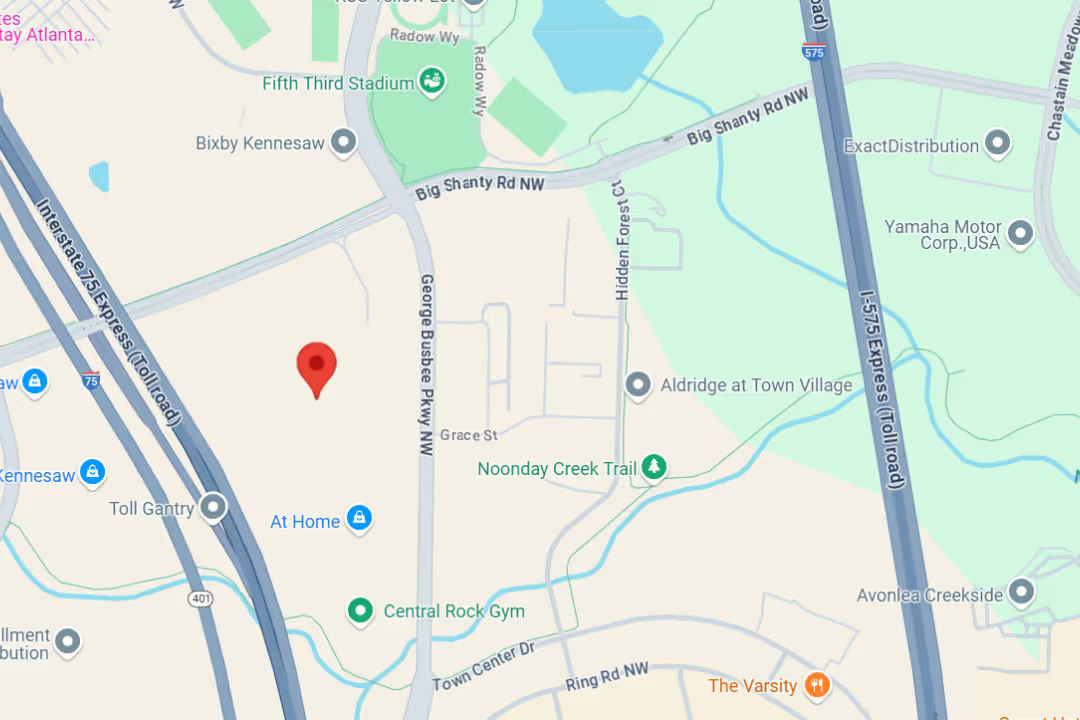
Kennesaw Clinic
2911 George Busbee Parkway, Suite 50
Kennesaw, GA 30144
Phone: (770) 545-6404
Explore our library of patient support guides covering the conditions we treat, the treatments we offer, and the questions we hear most. Each one is written to help you understand your options and feel confident about your next step. Browse the topics below to learn more, or reach out to our team anytime.

At Medici, you’re more than your MRI.
We take time to hear your story, understand your pain, and create a plan that actually works for you.

Our team delivers specialist care at convenient locations across Metro Atlanta:
Get expert tips on injury recovery, pain relief, joint health, and movement strategies—straight from our Fellowship-Trained team.