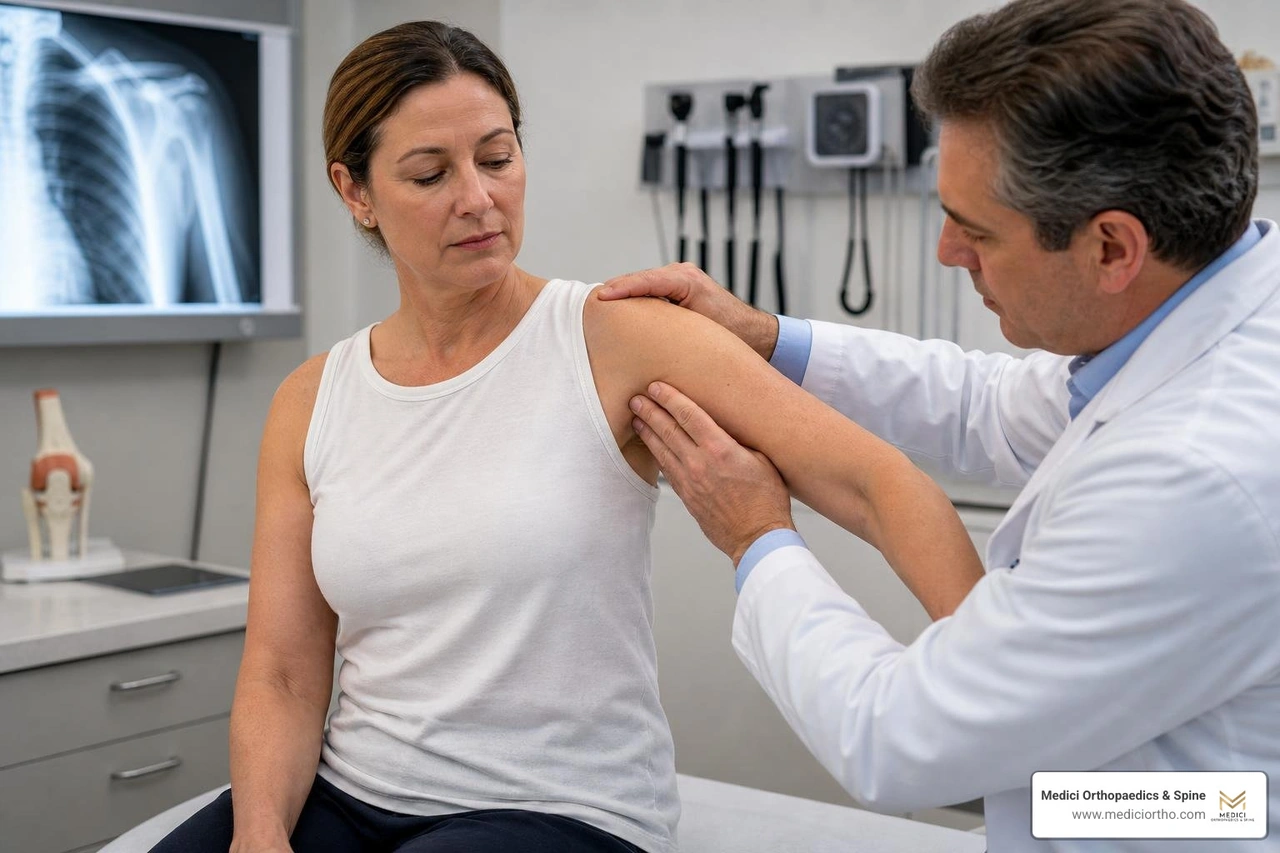
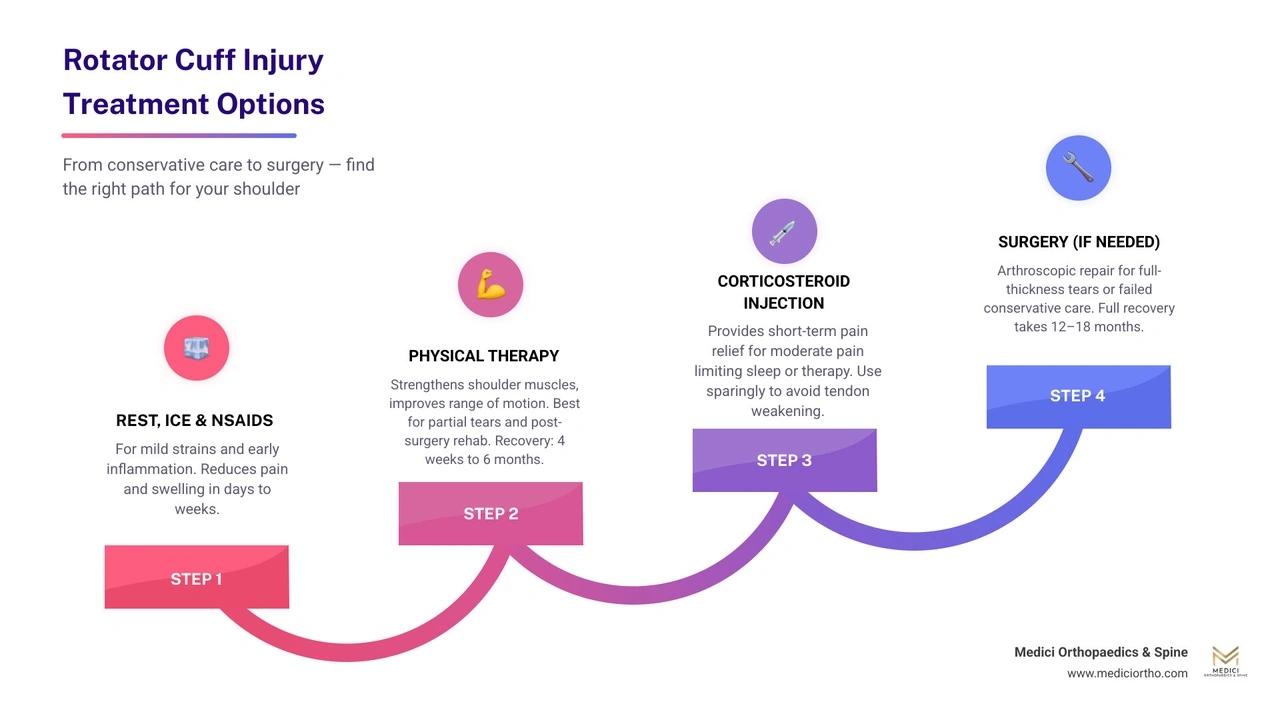
Rotator cuff injury treatment ranges from simple rest and ice to surgery — and most people never need an operating room.
Here's a quick overview of your main options:
| Treatment Type | Best For | Recovery Time |
|---|---|---|
| Rest, ice, NSAIDs | Mild strains, early inflammation | Days to weeks |
| Physical therapy | Partial tears, post-surgery rehab | 4–6 weeks to 6 months |
| Corticosteroid injection | Moderate pain limiting sleep or therapy | Short-term relief |
| Regenerative medicine (PRP, prolotherapy) | Conservative care augmentation | Varies |
| Arthroscopic surgery | Full-thickness tears, failed conservative care | 12–18 months full recovery |
| Reverse shoulder replacement | Massive irreparable tears with arthritis | 12–18 months |
More than 2 million Americans deal with rotator cuff problems every year. And yet, about 8 out of 10 people with partial tears get better without ever going under the knife.
That's the part most people don't hear when they first feel that sharp ache reaching for a shelf — or wake up at 3 a.m. unable to find a comfortable position on their pillow.
A rotator cuff injury can sideline you. But it doesn't have to define you.
This guide breaks down every evidence-based treatment option — from the first ice pack to advanced surgical techniques — so you can make a confident, informed decision about your shoulder health.
I'm Dr. Sonny Dosanjh, M.D., board-certified in Physical Medicine & Rehabilitation and fellowship-trained in Multidisciplinary Pain Management at Emory University, with extensive experience building personalized rotator cuff injury treatment plans that prioritize the least invasive, most effective options available. As the founder of Medici Orthopaedics & Spine, I've helped patients across Metro Atlanta avoid unnecessary surgery and reclaim their mobility — and this guide reflects the same approach I use with every shoulder patient who walks through our doors.
To understand how to fix a shoulder, we have to look at how it is built. The shoulder is a ball-and-socket joint that orthopedic specialists often compare to a golf ball sitting on a golf tee. It is incredibly mobile, allowing you to swing a tennis racket, paint a ceiling, or reach into the back seat of your car.
However, that extreme mobility comes at the cost of inherent instability. The joint relies heavily on a complex network of four muscles and their connecting tendons—the supraspinatus, infraspinatus, teres minor, and subscapularis—collectively known as the rotator cuff. These tendons keep the "golf ball" centered on the "tee."
When one or more of these tendons tear, the delicate balance of the shoulder is disrupted, resulting in pain, weakness, and restricted movement. To dive deeper into the mechanics of these injuries, you can read our detailed guide on Rotator Cuff Tears Explained: Symptoms, Treatment, and Recovery Options.
Rotator cuff tears are not all created equal. They generally fall into two primary categories:
Tears can happen suddenly due to a traumatic injury (like falling on an outstretched arm or lifting something far too heavy) or they can develop gradually over time due to degenerative wear. Degenerative tears are a natural byproduct of aging, often accelerated by repetitive overhead motions (common in painters, carpenters, and athletes) and a natural reduction in blood supply to the tendons as we age.
Without proper management, even a partial tear can progress. Over a 5 to 10-year period, untreated tears can lead to muscle atrophy (wasting away of the shoulder muscles) and fatty infiltration, where the healthy muscle tissue is permanently replaced by fat, making future repairs much more difficult.
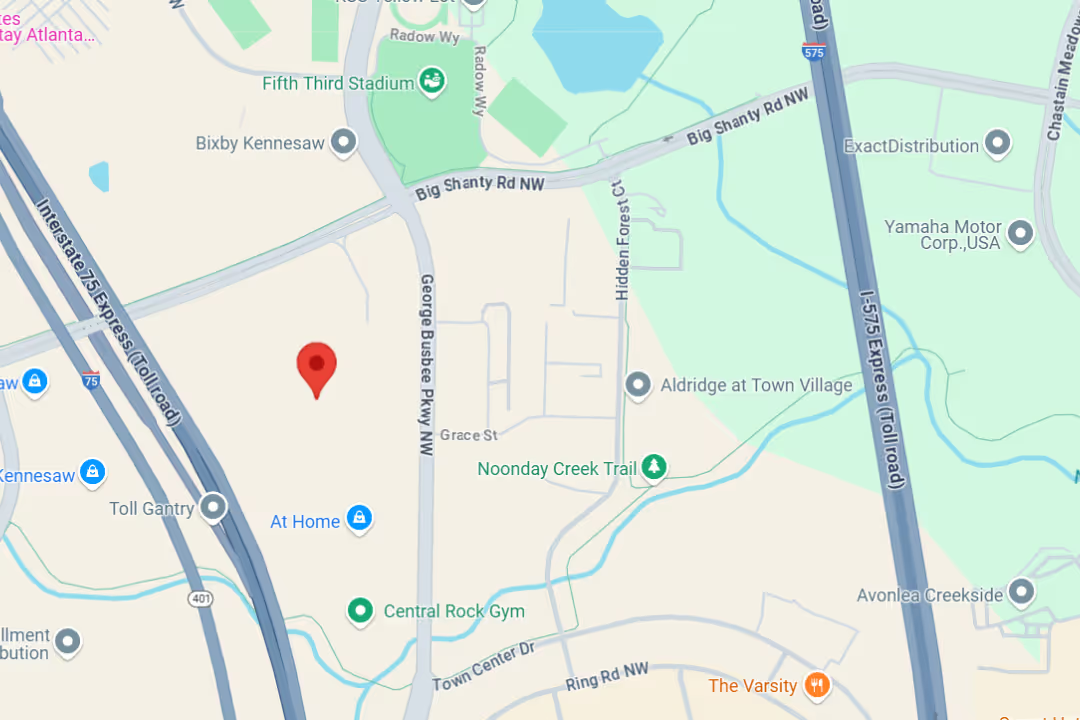
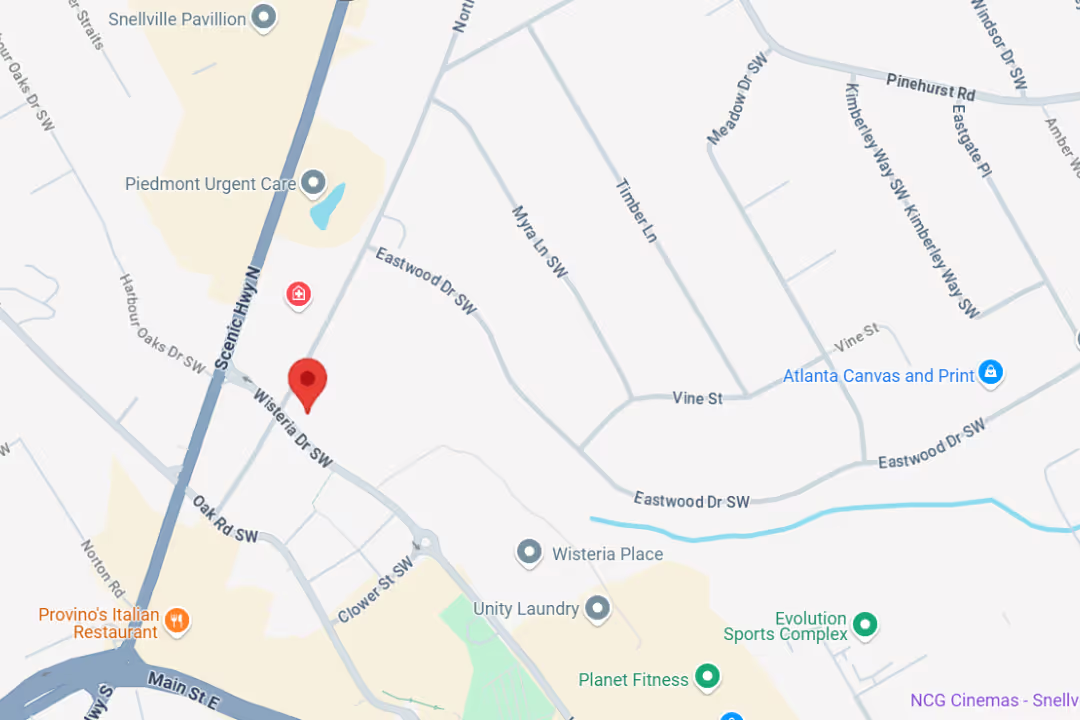
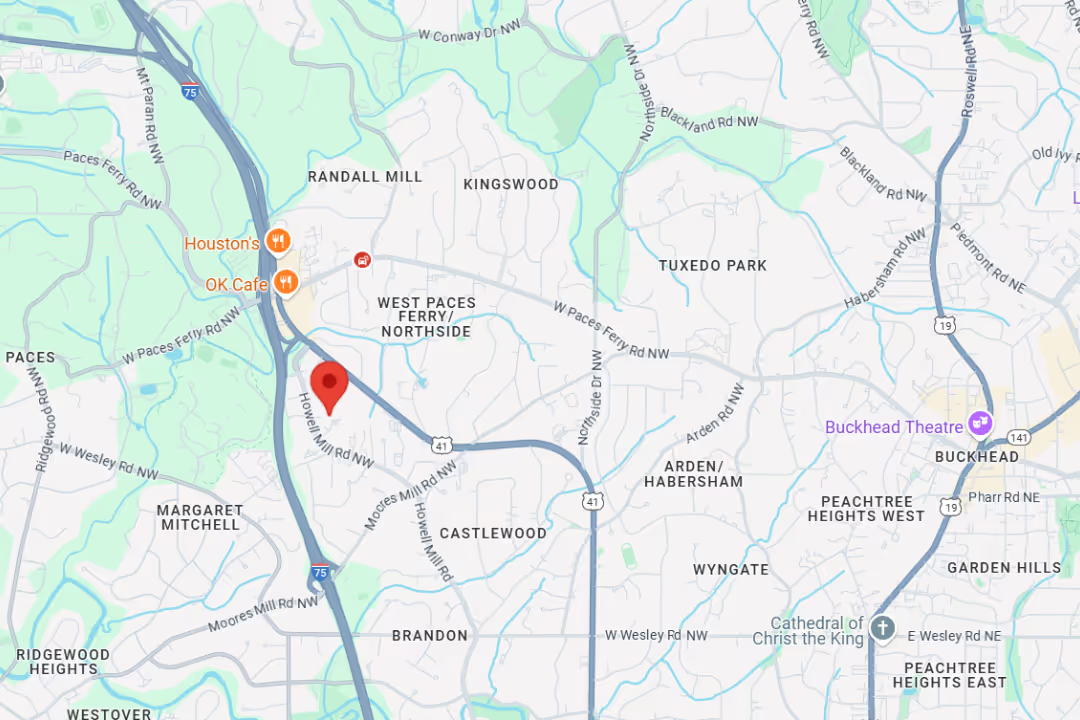
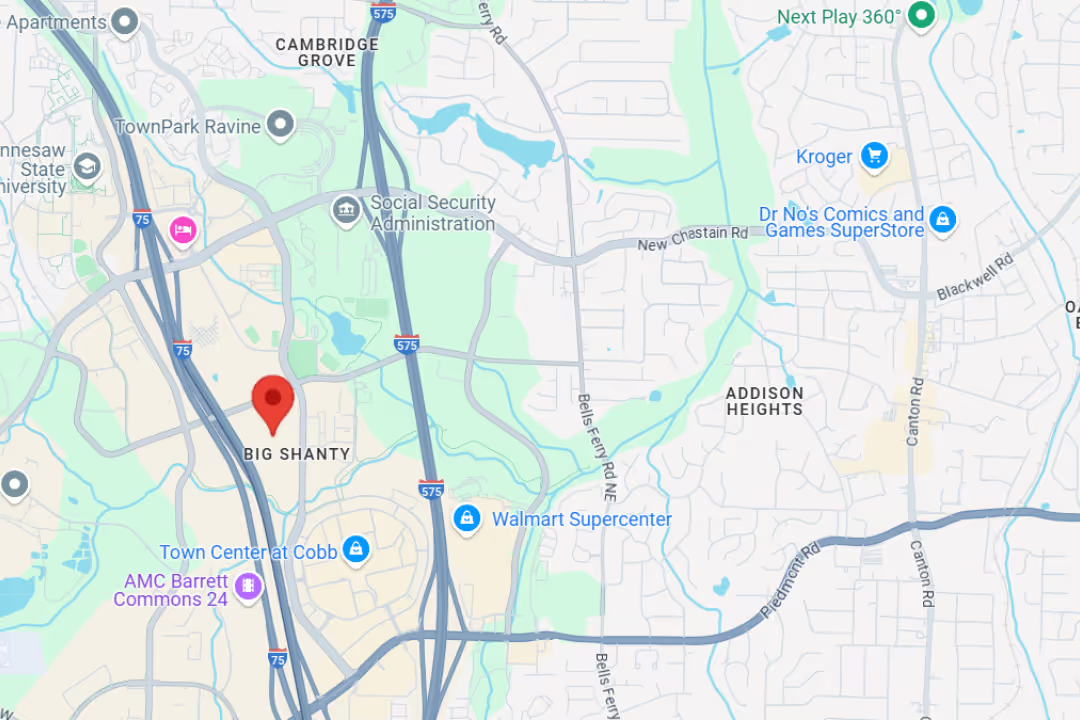
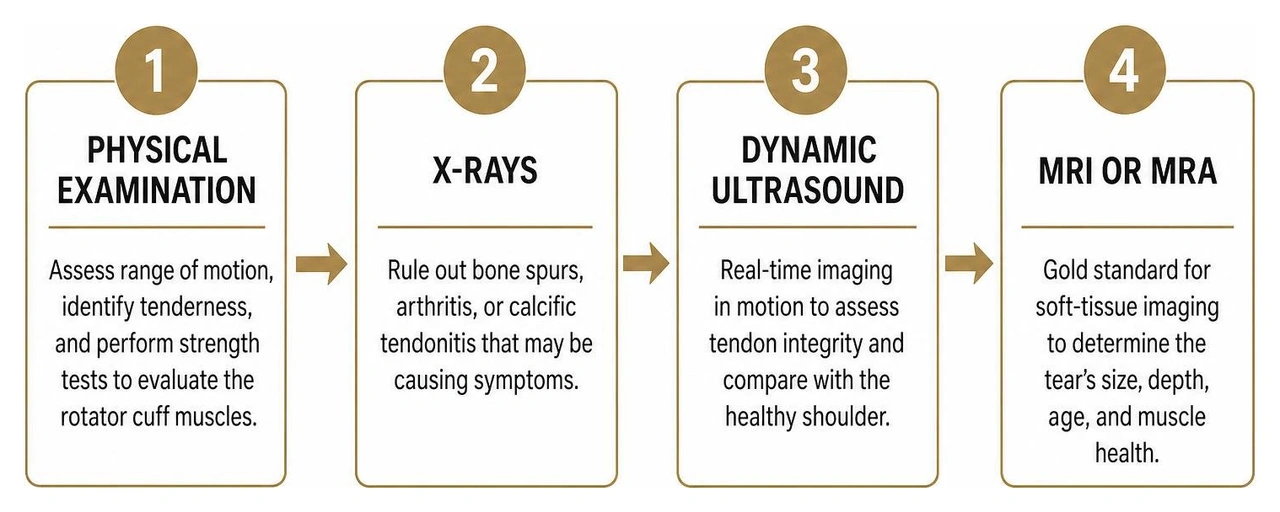
If you visit one of our Medici Orthopaedics & Spine clinics in Snellville, Kennesaw, Marietta, or Atlanta, we do not just guess what is happening inside your shoulder. A proper diagnosis requires a systematic, multi-step clinical approach:
The moment many patients hear the word "tear," they assume they are headed straight to surgery. Fortunately, that is rarely the case. For the vast majority of patients, conservative, non-surgical therapy is the safest and most effective starting point.
Initial conservative management focuses on reducing inflammation and giving the tissues a chance to rest. This involves temporary activity modification—avoiding overhead reaching, heavy lifting, and sleeping directly on the painful shoulder—alongside consistent ice application (15 to 20 minutes every 4 to 6 hours) to calm acute flare-ups. Over-the-counter nonsteroidal anti-inflammatory drugs (NSAIDs) like ibuprofen can also help manage early pain.
For a comprehensive look at these conservative approaches, explore our resource on Non-Surgical Treatment for Rotator Cuff Injury.
Physical therapy is the cornerstone of non-surgical rotator cuff injury treatment. When a tendon is damaged, the surrounding muscles must be trained to compensate, stabilizing the joint and restoring proper movement patterns.
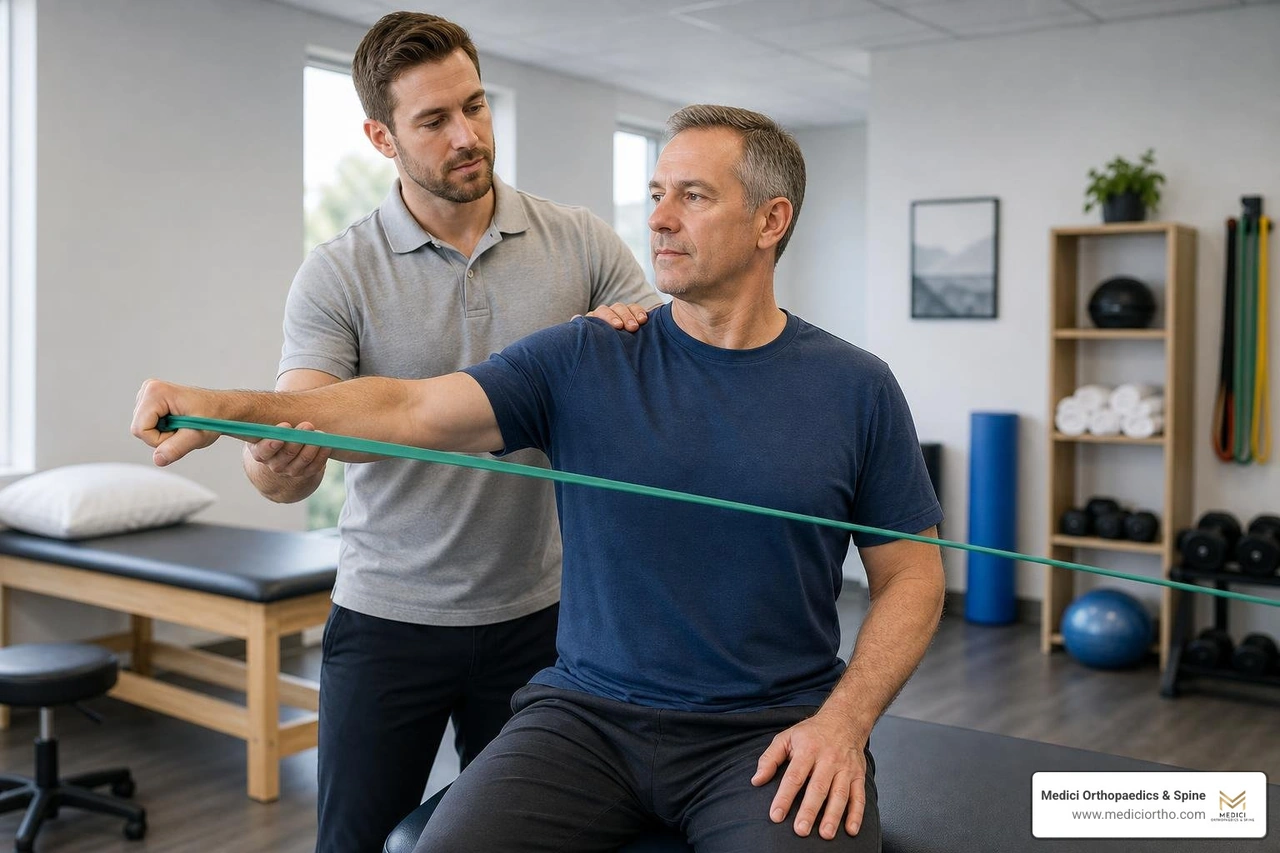
According to the latest clinical practice guidelines from the American Academy of Orthopaedic Surgeons (AAOS), a structured physical conditioning program targeting the shoulder girdle's nine major muscle groups is highly effective. A typical program lasts 4 to 6 weeks for initial recovery, but we encourage transitioning this into a 2 to 3 days a week lifelong maintenance routine to protect the joint long-term.
An effective conditioning program includes:
To learn how to structure your recovery safely at home, check out our guides on How to Recover From a Rotator Cuff Injury Without Surgery and Physical Therapy for Rotator Cuff Injuries.
When shoulder pain is so severe that it prevents you from sleeping or actively participating in physical therapy, a targeted injection can be a game-changer.
A corticosteroid injection delivers a powerful anti-inflammatory medication directly into the subacromial space of the shoulder. This provides rapid, temporary pain relief and reduces swelling, opening a "window of opportunity" for you to perform your rehabilitation exercises comfortably.
However, corticosteroids must be used with caution. The AAOS Clinical Practice Guidelines emphasize that while a single steroid injection is safe and highly effective for short-term relief, repeated injections can weaken the tendon's structural integrity, accelerate tissue degeneration, and ultimately reduce the success rate of a future surgical repair if one becomes necessary. We strictly limit the frequency of these injections to protect your long-term joint health.
For patients seeking alternatives to steroid injections or surgery, regenerative medicine offers promising, minimally invasive options. At Medici Orthopaedics & Spine, we specialize in these advanced modalities, using them to stimulate the body's natural healing mechanisms.
We find that these therapies work synergistically. By combining regenerative medicine with a dedicated physical therapy program, we can often achieve far better, more lasting results than if either treatment were used alone.
While we exhaust every non-surgical avenue first, there are times when surgery is the most appropriate path forward. Generally, we recommend discussing surgical options under the following circumstances:
To help you decide if you have reached this point, read our detailed FAQ on Do I Need Surgery for a Rotator Cuff Tear?.
Choosing between surgical and non-surgical care is a highly individualized decision. It is not just about looking at an MRI scan; it is about looking at the whole patient.
| Factor | Favor Non-Surgical Care | Favor Surgical Repair |
|---|---|---|
| Tear Size & Type | Small or partial tears | Large, complete, or acute traumatic tears |
| Patient Age | Older adults with lower physical demands | Younger, highly active individuals |
| Activity Level | Sedentary lifestyle, light daily activities | Overhead athletes, manual laborers, heavy lifters |
| Tissue Quality | Poor tissue, significant fatty infiltration | Good tendon and muscle quality |
| Symptoms | Manageable pain, preserved strength | Severe pain, profound weakness, loss of function |
Before making a decision, it is important to pause and look at all the variables. You can learn more about this decision-making process in our post, Not Every Shoulder Injury Needs Surgery: What to Know Before You Panic.
If surgery is required, modern orthopedic techniques have made the process highly efficient. Most procedures are performed on an outpatient basis, taking about 1 to 2 hours.
While surgery can successfully reattach the tendon, it is important to understand that any invasive procedure carries inherent risks, including infection, stiffness ("frozen shoulder"), and the risk of the tendon failing to heal or tearing again.
A tear is classified as "massive" when it involves two or more of the rotator cuff tendons, or when the tear size exceeds 5 centimeters. These are among the most complex injuries an orthopedic specialist treats, as the remaining tissue is often weak, frayed, or retracted.
When a massive tear is irreparable, traditional repair techniques may not work. In these cases, we look to advanced joint-preservation and reconstructive alternatives:
If you do undergo surgery, the procedure itself is only half the battle. The real work begins during the rehabilitation phase. Connective tissues like tendons have a limited blood supply compared to muscles, meaning they heal slowly and require a carefully structured, progressive recovery plan.

Immediately after surgery, your arm will be placed in a protective sling. Expect to wear this sling consistently for six weeks to immobilize the joint and protect the delicate, healing tendon repair. While wearing the sling can be frustrating, early, uncontrolled movement is the leading cause of surgical failure and retearing.
To give you an idea of the road ahead, here is a general week-by-week rehabilitation timeline. For a more detailed breakdown, you can read our guide on Physical Therapy for Rotator Cuff Injuries: What to Expect Week-by-Week.
We hear many of the same questions from patients navigating shoulder pain across our Metro Atlanta locations. Here are the facts you need to know:
A complete, full-thickness rotator cuff tear will not physically reattach itself to the bone without surgical intervention due to the limited blood supply of the tendon. However, a partial tear can heal and scar over with proper conservative care. Furthermore, about 80% of patients with tears find that they can eliminate their pain and fully restore their shoulder function without surgery by strengthening the surrounding muscles to compensate for the damaged tendon.
If you are treating a minor tear or strain non-surgically, you can expect to see significant improvement and return to pre-injury levels within 4 to 6 months of dedicated physical therapy. If you undergo surgical repair, the timeline is longer: you will wear a sling for 6 weeks, achieve functional recovery in 4 to 6 months, and reach full recovery and maximum strength within 12 to 18 months.
If a significant rotator cuff tear is left untreated, the shoulder joint can become chronically unstable. Over a 5 to 10-year period, the unused, torn muscle will undergo progressive muscle atrophy and fatty infiltration, where healthy muscle is permanently replaced by fat. This muscle degeneration, combined with abnormal joint wear, can eventually lead to severe, painful shoulder arthritis (rotator cuff tear arthropathy) which may ultimately require a reverse shoulder replacement.
Dealing with a shoulder injury can feel overwhelming, but you do not have to navigate the recovery process alone. At Medici Orthopaedics & Spine, led by Dr. Sonny Dosanjh, M.D., we are committed to helping you optimally restore your quality of life using the most effective, least invasive, and least drug-dependent programs medically available today.
We believe in the power of synergistic treatment plans. By combining state-of-the-art physical therapy, advanced regenerative medicine, and targeted pain management, we help our patients across Snellville, Kennesaw, Marietta, and Buckhead avoid unnecessary surgery and get back to doing what they love.
If you are ready to take the first step toward a pain-free shoulder, we are here to help. Explore our specialized Non-Surgical Treatment for Rotator Cuff Injury services to schedule your comprehensive shoulder evaluation at one of our convenient Metro Atlanta locations.
At Medici, you’re more than your MRI.
We take time to hear your story, understand your pain, and create a plan that actually works for you.

Our team delivers specialist care at convenient locations across Metro Atlanta:
Get expert tips on injury recovery, pain relief, joint health, and movement strategies—straight from our Fellowship-Trained team.