Left Side Lower Back Pain Above the Buttocks Explained

Why Lower Back Left Side Pain Is More Common — and More Complex — Than You Think

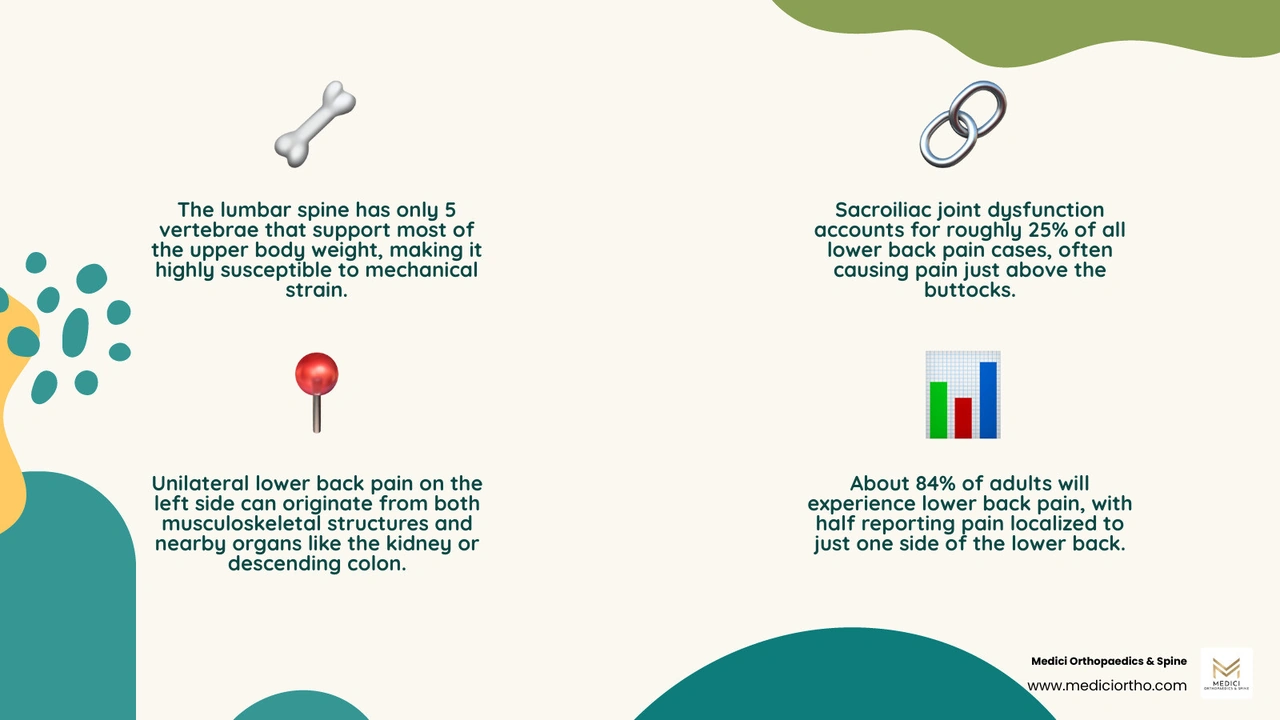
Lower back left side pain affects a surprising number of people — roughly 84% of adults will experience lower back pain at some point in their lives, and about half the time, that pain lands on just one side.

So what's actually causing it? Here's a quick overview:

Most common causes of lower back left side pain:

  • Muscle strain or sprain — the most frequent culprit, usually from lifting, twisting, or poor posture
  • Sacroiliac (SI) joint dysfunction — accounts for roughly 25% of all lower back pain cases
  • Herniated disc or sciatica — nerve compression at L4-S1 that can cause radiating leg pain
  • Facet joint arthritis — wear-and-tear joint degeneration in the lumbar spine
  • Kidney stones or kidney infection — organ-related pain felt in the flank and lower back
  • Endometriosis or ovarian cysts — common in women, often misdiagnosed as musculoskeletal pain
  • Pancreatitis or digestive issues — referred pain from organs near the lower left back

The tricky part? Many of these conditions feel similar on the surface. A dull ache in the lower left back could be a strained muscle — or it could be a kidney stone, a slipped disc, or even a gynecological condition. That's what makes this type of pain so easy to mismanage.

Lower back pain is the single leading cause of disability worldwide, and most people either wait too long to get help or jump straight to treatments that don't address the actual source of the problem.

This guide breaks down exactly what's going on, how to tell the difference between causes, and what actually works — without surgery in most cases.

I'm Sonny Dosanjh, M.D., board-certified in Physical Medicine & Rehabilitation and fellowship-trained at Emory University in Multidisciplinary Pain Management — I've spent my career helping patients identify the true root cause of lower back left side pain and recover through the least invasive, most effective treatment path available. As the founder of Medici Orthopaedics & Spine, I'll walk you through everything you need to know to get answers and get back to moving.
Anatomy of the lower left back showing lumbar spine, SI joint, left kidney, and adjacent organs infographic

Understanding the Common Causes of Lower Back Left Side Pain

When you experience lower back left side pain just above the buttocks, the source is often structural. The human lower back, or lumbar spine, is an engineering marvel. It consists of only five vertebrae that bear the vast majority of your upper body weight. Because of this heavy mechanical load, even minor imbalances can trigger significant discomfort.
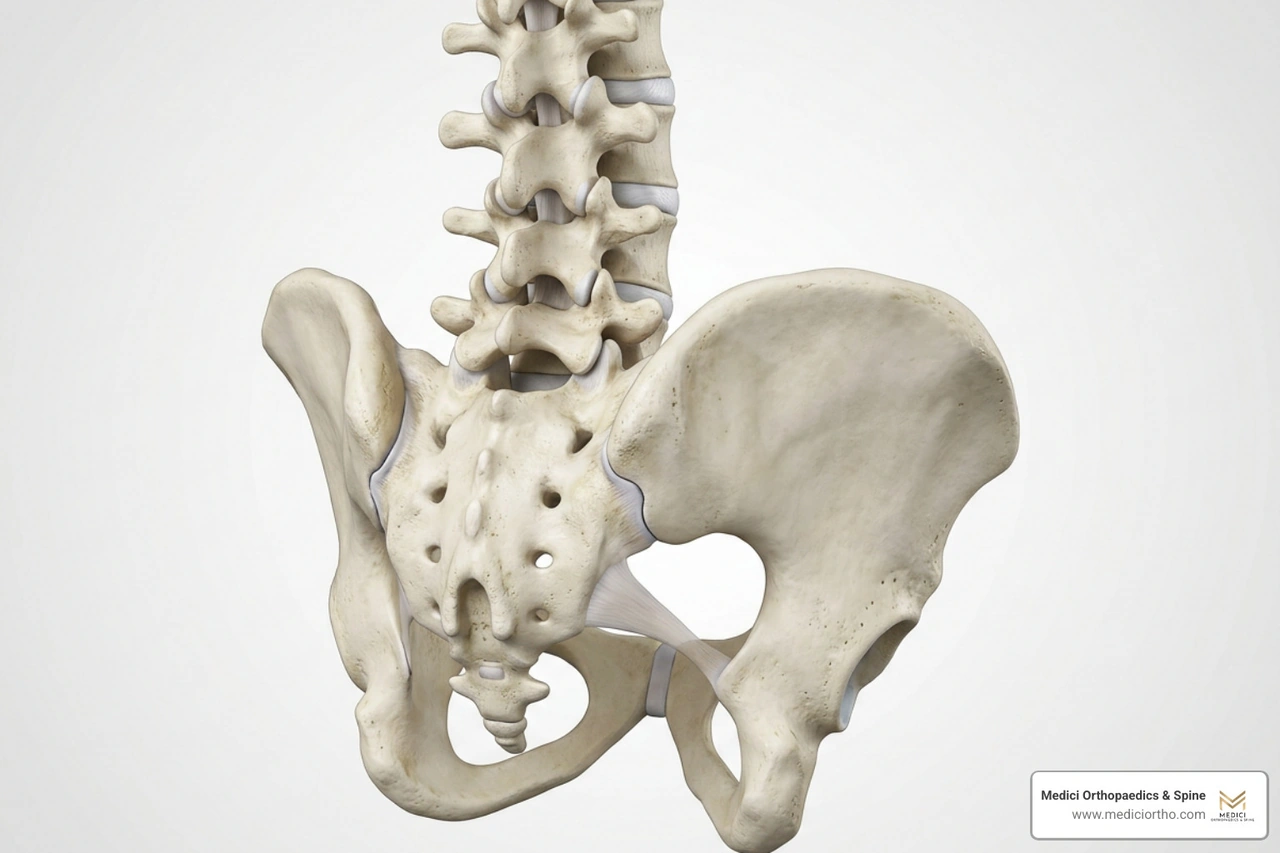
lumbar spine and sacroiliac joint anatomy

To understand why your left side is screaming at you, we first have to look at the primary musculoskeletal suspects:

  • Muscle Strain and Ligament Sprain: This is the absolute most common cause of localized left-sided pain. It happens when muscle fibers are overstretched or torn, often due to sudden twisting, improper lifting, or unconditioned physical exertion. The pain is typically a dull, aching soreness that worsens when you move or bend.
  • Sacroiliac (SI) Joint Dysfunction: The SI joints connect your hip bones to your sacrum (the triangular bone at the base of your spine). These joints act as shock absorbers. When the left SI joint becomes inflamed or undergoes hypermobility (too much movement) or hypomobility (too little movement), it causes localized pain above the buttocks. In fact, sacroiliac joint dysfunction accounts for about a quarter of lower back pain cases.
  • Facet Joint Arthritis: Your vertebrae connect to each other via small, cartilage-lined facet joints. Just like knees or hips, these joints can wear down over time. When disc degeneration increases the stress on these finger-joint-sized structures, cartilage thins, bone spurs form, and facet joint arthritis sets in. This typically causes localized pain that worsens when you stand or walk for long periods but improves when you sit down or bend forward.

For a deeper look into how these structural issues develop and overlap, you can read more about the 10 Causes of Lower Left Back Pain and How to Get Relief.

How a Herniated Disc and Sciatica Trigger Lower Back Left Side Pain

If your lower back left side pain isn't just a dull, localized ache but feels more like a hot, electric shock traveling down your leg, you are likely dealing with a herniated disc and sciatica.

Your spinal discs are often compared to jelly donuts—they have a tough outer shell (the annulus fibrosus) enclosing a viscous, shock-absorbing gel center (the nucleus pulposus). As we age, or due to sudden trauma, the outer shell can weaken or tear, allowing the inner gel to bulge or herniate outward.

If this herniation occurs on the left side of your lumbar spine (most commonly at the L4-L5 or L5-S1 levels), it can directly compress or irritate the adjacent left nerve roots.

This compression triggers a cascade of symptoms:

  1. Sciatica: Sharp, burning, or shooting pain that radiates from your lower left back, through your left buttock, and down the back of your left thigh and calf.
  2. Paresthesia: A fancy medical term for "pins and needles," tingling, or numbness along the pathway of the compressed nerve.
  3. Localized Spasms: The surrounding lower back muscles will often seize up in a protective spasm to keep you from moving the irritated area, compounding your discomfort.

Because the spine divides nerve pathways into distinct left and right sides, a left-sided herniation will almost exclusively produce symptoms on your left side. For a detailed breakdown of nerve root compression and how it behaves, check out this guide on Pain in the lower left back: Causes and treatments.

Gender-Specific Triggers: Lower Back Left Side Pain in Women

While anyone can experience a herniated disc or a muscle strain, women face a unique set of anatomical and hormonal triggers that can cause or mimic unilateral back pain.

  • Endometriosis: This chronic condition affects more than 11% of American women. It occurs when tissue similar to the lining of the uterus grows outside the uterine cavity. When these endometrial implants attach to pelvic ligaments, the ovaries, or the outer wall of the descending colon on the left side, they cause deep, cyclical pelvic pain that radiates directly into the lower left back. Endometriosis is notoriously underdiagnosed, with many women spending years treating what they believe is a simple muscle strain before the true pelvic cause is discovered.
  • Ovarian Cysts: A fluid-filled cyst on the left ovary can grow large enough to cause localized pelvic pressure and referred lower back left side pain. If the cyst ruptures or causes ovarian torsion (twisting), it can trigger sudden, severe unilateral pain.
  • Pregnancy: During pregnancy, a woman's body releases a hormone called relaxin, which loosens ligaments to prepare the pelvis for childbirth. This hormonal ligament laxity, combined with a shifting center of gravity and rapid weight gain, places immense stress on the sacroiliac joints and the lumbar spine, frequently compressing the sciatic nerve.
  • Uterine Fibroids: These non-cancerous growths on the uterus can press against pelvic nerves and muscles, leading to persistent, deep lower back aches.

One of the most critical steps in diagnosing unilateral back pain is determining whether the pain is coming from your spine and muscles (musculoskeletal) or from your internal organs (visceral).

Because your lower back houses and sits adjacent to major organs—including the left kidney, the tail of the pancreas, and the descending colon—problems in these organs can refer pain directly to your back.
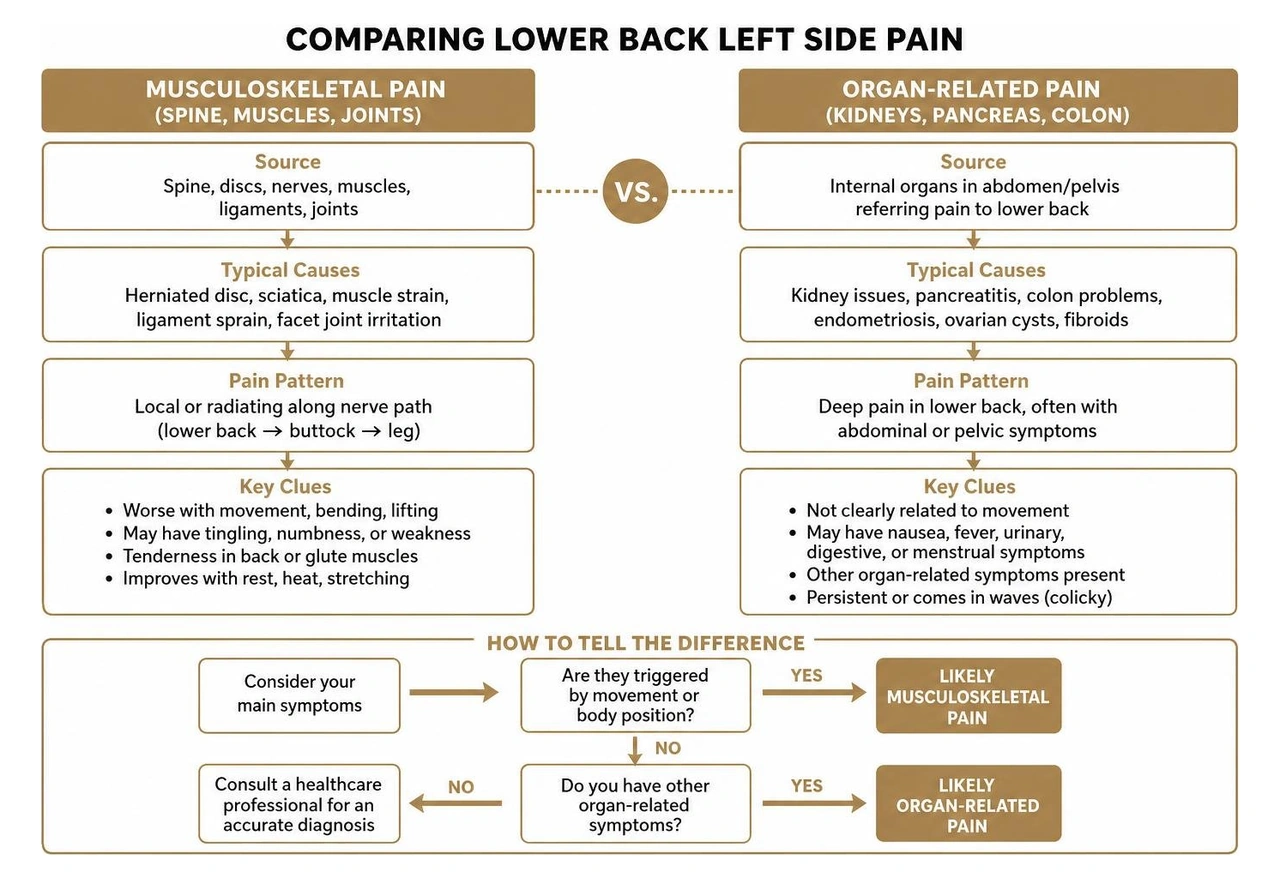
Comparing musculoskeletal and organ-related lower back pain

Here is a quick reference table to help you distinguish between the two:

FeatureMusculoskeletal Pain (Spine, Muscles, Joints)Organ-Related Pain (Kidneys, Pancreas, Colon)
Pain CharacterDull, aching, sore, or sharp/shooting if a nerve is pinched.Deep, boring, throbbing, or sharp, agonizing colicky waves.
Positional TriggersPain changes with movement. Worsens when bending, twisting, or standing; improves with rest or specific positions.Pain is constant and unaffected by position. You cannot find a comfortable position, even when lying perfectly still.
PalpationThe area is often tender to the touch; pressing on muscles or joints reproduces or worsens the pain.Deep tissue palpation of the spine does not reproduce the pain, though percussion over the lower ribs (flank) might.
Accompanying SymptomsMuscle stiffness, limited range of motion, localized swelling, or radiating leg numbness/weakness.Fever, chills, nausea, vomiting, painful or discolored urination, changes in bowel habits, or abdominal pain.

Organ-Specific Culprits on the Left Side

  • Kidney Stones or Kidney Infection (Pyelonephritis): Your left kidney is located just below your lower left ribs. A kidney infection can cause a deep, throbbing ache in your left flank and lower back, accompanied by fever, chills, and painful urination. Kidney stones, on the other hand, cause sudden, agonizing, colicky waves of pain as they attempt to pass through the ureter. This pain starts in the back or flank and radiates down toward the groin.
  • Pancreatitis: Inflammation of the pancreas (specifically the tail, which lies on the left side of the abdomen) can refer a deep, boring pain to the lower left back. This is typically accompanied by severe abdominal pain, nausea, and vomiting.
  • Ulcerative Colitis or Diverticulitis: Inflammation or infection in the descending and sigmoid colon (located on the left side of your abdomen) can cause lower left abdominal cramping that radiates directly to your lower left back.

Lifestyle Factors and Habits That Damage Your Lower Left Back

We often blame a single heavy lift or a sudden twist for our back pain, but the truth is that most episodes of lower back left side pain are slowly built over months or years of subtle, daily habits.

poor sitting posture at an office desk showing spinal misalignment

If you are struggling with persistent one-sided pain, consider whether these lifestyle factors are at play:

  • Asymmetrical Habits (The "Wallet-in-Pocket" Syndrome): Do you sit with a thick wallet in your left back pocket? This seemingly harmless habit tilts your pelvis, forcing your lumbar spine to bend unnaturally to keep your head level. Over time, this constant pelvic tilt overstretches the muscles and ligaments on the left side while compressing the right, leading to chronic unilateral strain. The same applies to carrying a heavy shoulder bag consistently on your left shoulder or carrying a child on your left hip.
  • Poor Ergonomics and Sedentary Lifestyle: Hunching over a laptop, leaning to one side while driving, or sitting in a chair without proper lumbar support forces your core and back muscles to work overtime just to keep you upright. When these muscles fatigue, the stress transfers directly to your spinal ligaments and discs.
  • Improper Lifting Mechanics: Bending at the waist and twisting while lifting—rather than bending your knees and keeping the load close to your core—places an immense, uneven torque on your lumbar discs and facet joints.
  • Obesity: Carrying extra weight, particularly around the abdomen, pulls your pelvis forward (hyperlordosis), drastically increasing the mechanical stress on your lower back joints.
  • Smoking: Nicotine constricts blood vessels, reducing the delivery of oxygen and vital nutrients to your spinal discs. This accelerates disc degeneration and slows down the body's natural healing processes.

Effective Non-Surgical Treatments for Lower Left Back Pain

The most important thing to remember when dealing with lower back left side pain is that surgery is rarely the answer. In fact, only about one in ten patients with lower back pain ever needs surgical intervention. The vast majority of cases resolve beautifully with targeted, conservative, non-surgical care.

At Medici Orthopaedics & Spine, we believe in a synergistic, drug-free approach to healing. Our goal is to avoid the operating table and eliminate opioid dependency by combining advanced medical treatments with active rehabilitation.

  • Avoid Complete Bed Rest: It might be tempting to lie on the couch for days, but research shows that Why resting your lower back might be making things worse is a scientific reality. Prolonged rest causes muscles to stiffen and weaken, delaying your recovery. Instead, gentle, controlled movement is medicine.
  • Epidural Steroid Injections (ESIs): For patients struggling with severe, radiating pain from a herniated disc or sciatica, an image-guided epidural steroid injection can deliver powerful anti-inflammatory medication directly to the irritated nerve root. This provides rapid pain relief, opening a critical window of comfort so you can actively participate in physical therapy.
  • Regenerative Medicine (PRP Therapy): Platelet-Rich Plasma (PRP) therapy utilizes your body's own natural growth factors to accelerate the healing of damaged ligaments, tendons, and joints. By injecting concentrated platelets directly into the injured left SI joint or facet joints, we can stimulate tissue repair naturally.
  • Interventional Spine Treatments: From facet joint injections to radiofrequency ablation (which safely deactivates the tiny nerves sending pain signals from arthritic joints), we offer highly targeted, minimally invasive options to restore your function.

To explore the full spectrum of advanced, non-surgical options available across our Metro Atlanta locations, check out The best non-surgical back pain treatments in Georgia: A 2026 guide.

Targeted Physical Therapy and Exercises

Active physical therapy is the cornerstone of long-term back pain recovery. By strengthening the muscles that support your spine—your core, glutes, and hips—you can permanently reduce the mechanical load on your discs and joints.

If you are looking for localized care, you can learn more about our specialized Physical therapy for back pain in Kennesaw.

Here are three highly effective, gentle exercises to help relieve left-sided lower back pain at home:

  1. Pelvic Tilts: Lie on your back with your knees bent and feet flat on the floor. Gently tighten your abdominal muscles and flatten your lower back against the floor. Hold for 5 seconds, then relax. Repeat 10 to 15 times. This builds deep core stability and gently mobilizes the lumbar spine.
  2. Child’s Pose with Left Side Bend: Start on your hands and knees, then sit your hips back toward your heels, reaching your arms forward into a traditional child's pose. To target the left side of your back, gently walk both hands over to the right side of your mat. You should feel a deep, comfortable stretch along the left side of your torso and lower back. Hold for 30 seconds, breathing deeply.
  3. The Bird-Dog: Start on your hands and knees with your spine in a neutral position. Slowly extend your right arm straight forward while simultaneously extending your left leg straight back. Keep your hips level and do not let your lower back sag. Hold for 3 seconds, then return to the starting position. Repeat on the opposite side. Perform 10 repetitions per side to build diagonal core and back strength.

For a complete step-by-step routine backed by our clinical team, explore our guide on Lower back pain relief: 5 physical therapy exercises that help.

Red Flags: When to See a Doctor for Lower Left Back Pain

While most cases of lower back left side pain are benign and resolve with conservative care, certain symptoms indicate a potentially serious underlying condition that requires immediate medical evaluation.

Seek emergency medical attention or consult a specialist immediately if your back pain is accompanied by any of the following "red flag" symptoms:

  • Progressive Leg Weakness: If you suddenly find it difficult to lift the front of your left foot when walking (a condition known as "foot drop") or if your left leg feels unstable or gives out.
  • Saddle Anesthesia: A profound numbness or "pins and needles" sensation in the parts of your body that would touch a saddle—including your groin, buttocks, and inner thighs. This is a classic sign of Cauda Equina Syndrome, a medical emergency caused by severe compression of the spinal nerve sac.
  • Bowel or Bladder Dysfunction: New-onset urinary retention (inability to urinate), fecal incontinence, or a complete loss of control over your bowel or bladder movements.
  • Unexplained Weight Loss and Fever: If your back pain is accompanied by a persistent fever, night sweats, or sudden, unintended weight loss, it could point to an infection or an underlying oncological condition.
  • Constant, Unremitting Pain: Pain that is severe, constant, and completely unaffected by rest, lying down, or changing positions.

If your pain has persisted for more than two to four weeks without improvement, even in the absence of red flags, it is time to seek a formal clinical evaluation to identify the root cause.

Frequently Asked Questions about Lower Left Back Pain

Can constipation or digestive issues cause lower left back pain?

Yes, absolutely. The descending colon and sigmoid colon sit on the left side of your lower abdominal cavity, resting very close to the muscles and nerves of your lower left back. When you experience severe constipation or stool impaction, the physical bulk and pressure of the retained stool can compress adjacent pelvic nerves and refer a dull, aching visceral pain directly to your lower left back.

Furthermore, the straining associated with difficult bowel movements can place acute mechanical stress on your lower back muscles. Staying hydrated and aiming for approximately 35 grams of dietary fiber daily can help prevent this.

How do I know if my lower left back pain is a kidney stone?

Kidney stone pain is highly distinct from musculoskeletal back pain. While a muscle strain causes a localized, dull ache that worsens when you bend or twist, a kidney stone causes sudden, agonizing, colicky waves of pain. This pain is typically felt in your flank (just below your left ribs) and radiates sharply downward toward your lower abdomen and groin.

Because it is visceral pain, it will not change when you move or rest; patients with kidney stones are often found pacing the floor because they cannot find a comfortable position. It is also frequently accompanied by blood in the urine (hematuria), nausea, vomiting, and painful, frequent urination.

Is lower left back pain above the buttocks common during pregnancy?

Yes, unilateral lower back and pelvic pain is incredibly common during pregnancy. This is primarily due to pelvic girdle pain and the release of the hormone relaxin, which loosens pelvic ligaments to prepare the birth canal. This ligament laxity, combined with a rapid shift in your center of gravity as your baby grows, places immense stress on the sacroiliac joints.

If the uterus or the baby's position presses directly against the sciatic nerve, it can also trigger classic, sharp sciatic pain radiating down the left leg.

Conclusion

Lower back left side pain is a highly common but complex complaint. Whether your pain is caused by a simple muscle strain, a stubborn sacroiliac joint, a herniated disc, or a referred organ issue, getting an accurate diagnosis is the first and most crucial step toward recovery.

At Medici Orthopaedics & Spine, led by Dr. Sonny Dosanjh, M.D., we are committed to Optimally Restoring your Quality of Life. We believe that many conservative therapies work synergistically—combining targeted physical therapy, lifestyle ergonomics, and advanced, non-surgical interventional treatments to help you achieve lasting relief and get back to the activities you love.

If you are ready to stop guessing and start healing, we invite you to take the first step. Schedule a comprehensive evaluation at one of our convenient Metro Atlanta locations in Kennesaw, Snellville, Buckhead, or Marietta, or visit our Medici Orthopaedics & Spine Lower Back Pain Treatment page to request an appointment online.

Tired of Feeling
Like Just Another
Chart?

At Medici, you’re more than your MRI.
We take time to hear your story, understand your pain, and create a plan that actually works for you.

Smiling woman with blonde hair wearing navy medical scrubs with hands behind her back.