Youth sports are a wonderful thing. The early morning practices, the sideline energy, the friendships formed over shared effort and competition. Most parents wouldn't trade any of it. But every parent who has watched their child limp off a field or clutch a wrist after a fall knows that particular knot in the stomach: is this serious, or will it be fine by morning?
The honest answer is that it depends, and the distinction matters more with kids than most people realize. Children's bodies are still growing, which means their injuries don't always behave the way adult injuries do. A painful ankle after a basketball landing might clear up in a few days with rest and ice. Or it might involve a growth plate that needs proper evaluation to heal correctly. The two can look almost identical from the outside.
Parents aren't expected to know the difference on sight. That's exactly what a pediatric orthopedic evaluation is for.
Ankle sprains are among the most common injuries in youth sports, but not all ankle pain is a sprain. Growth plate fractures around the ankle, particularly in adolescents who are still growing, can mimic a sprain closely. Without imaging and a proper exam, these are easy to miss.
Young baseball pitchers, swimmers, and volleyball players put significant repetitive stress on the shoulder. "Little Leaguer's shoulder," a growth plate stress injury at the upper arm bone, is one condition that responds well to early intervention and rest but can worsen significantly with continued play.
Stress fractures develop over time from repetitive loading rather than a single event. They're common in runners, gymnasts, and any athlete training at high volume. They can be easy to dismiss as general soreness until they become serious fractures.
Contact sports, gymnastics, and racket sports put the upper extremities at risk. Growth plate injuries around the wrist and elbow are particularly worth evaluating promptly in young athletes.
Rest and time genuinely do resolve many minor sports injuries, and that's not bad advice for a lot of situations. But certain signs suggest an injury deserves a professional evaluation rather than a wait-and-see approach.
Consider scheduling a youth sports injury evaluation if your child is experiencing any of the following:
Growth plates, also called physes, are areas of developing cartilage tissue near the ends of long bones. They're present in children and adolescents until the skeleton finishes maturing, typically in the late teens. Until then, they remain softer and more susceptible to injury than the bone or ligament tissue around them.
Growth plates are found throughout the body, including at the ends of the thighbone, shinbone, upper arm, forearm, and many smaller bones in the hands and feet. An injury at any of these sites during active growth deserves careful evaluation.
A typical X-ray may look normal even when a growth plate injury is present. Because growth plate cartilage doesn't show up on X-ray the same way bone does, some fractures in these areas require comparison views, MRI, or ultrasound to diagnose accurately. A sports medicine orthopedic doctor who regularly sees young athletes will know when additional imaging is warranted.
Undiagnosed or improperly treated growth plate injuries can cause the growth plate to close unevenly or prematurely. Depending on which bone is affected and how severe the injury is, this can result in a limb that grows shorter on one side, a joint that develops abnormal alignment, or chronic pain that persists long after the original injury. Early diagnosis protects against these outcomes.
A sports medicine orthopedic doctor will assess the injured area through range of motion testing, palpation to identify where the pain is located, strength assessment, and functional movement observation. For children, the exam also takes into account where they are in their development, including how much growth remains, because that directly affects treatment options and timelines.
Not every evaluation requires imaging, but when it does, the options include:
The goal of a pediatric orthopedic evaluation isn't to sideline a child longer than necessary. It's to understand exactly what's happening so treatment can be targeted and recovery can be as efficient as possible. A well-designed plan considers the child's age, sport, position, training load, and personal goals, not just the injury in isolation.
For the large majority of pediatric sports injuries, surgery is not the first answer and often isn't needed at all. Medici's team approaches these cases with a full range of conservative and rehabilitative options, including:
Some injuries do require surgical intervention, and the team at Medici includes skilled orthopedic surgeons who specialize in these cases. The difference is that surgery at Medici is a considered decision made after conservative options have been evaluated, not a reflexive first step. For young athletes, this matters even more because surgical decisions must account for open growth plates and long-term skeletal development.
One of the real advantages of Medici's multidisciplinary model is that a young athlete doesn't have to navigate multiple disconnected providers. Orthopedics, physical therapy, sports medicine, and pain management work together within the same practice, which means the care plan is coordinated, communication is streamlined, and the athlete moves through recovery with a consistent team supporting them.
A child's relationship with movement and sport is worth protecting, not just for competition, but because physical activity shapes health, confidence, and wellbeing for life. Getting a good evaluation isn't overcaution. It's one of the most useful things a parent can do when something doesn't feel right.
The team at Medici Orthopaedics & Spine works with young athletes and their families every day. The conversation starts with listening, not assumptions, and the goal is always to get your athlete back to doing what they love as safely and efficiently as possible.
If your child has been dealing with a sports injury that isn't resolving, or if something about the injury doesn't feel right to you, don't wait it out. A proper evaluation from a sports medicine orthopedic doctor who understands the unique demands of growing athletes can make all the difference in how the injury heals and what comes next.
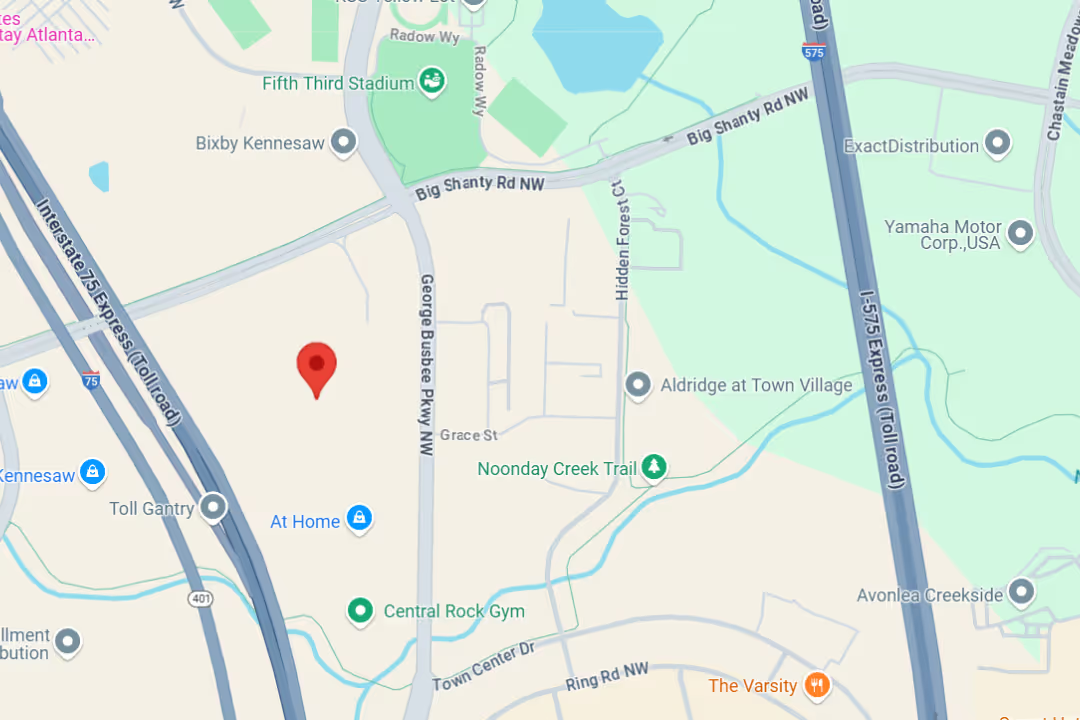
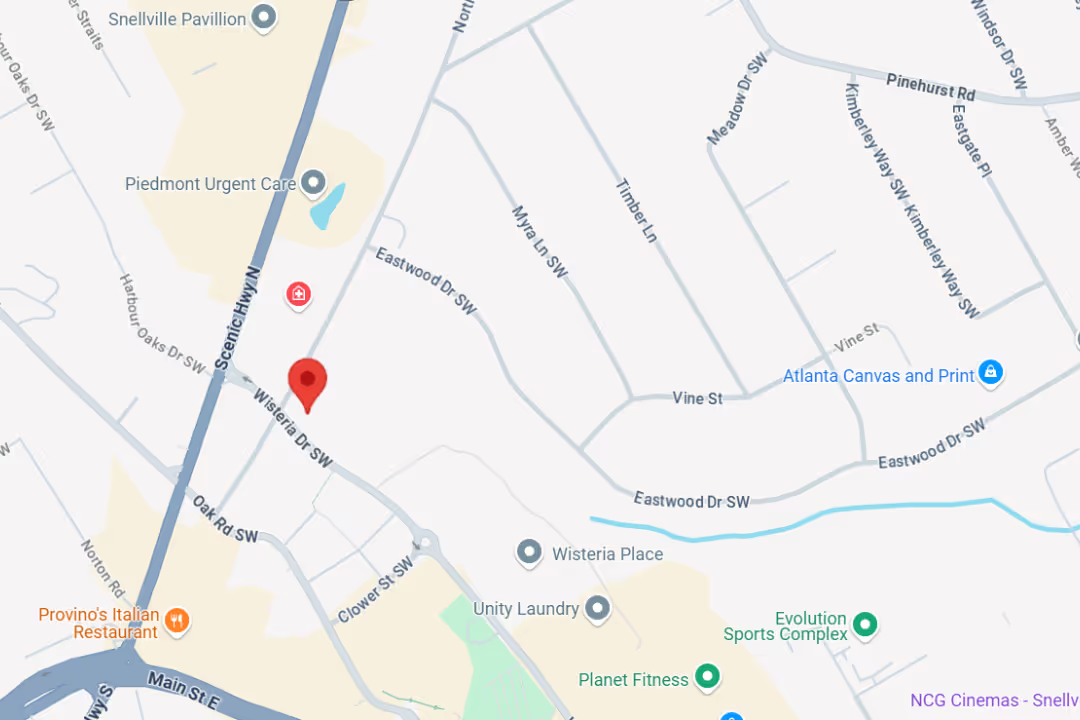
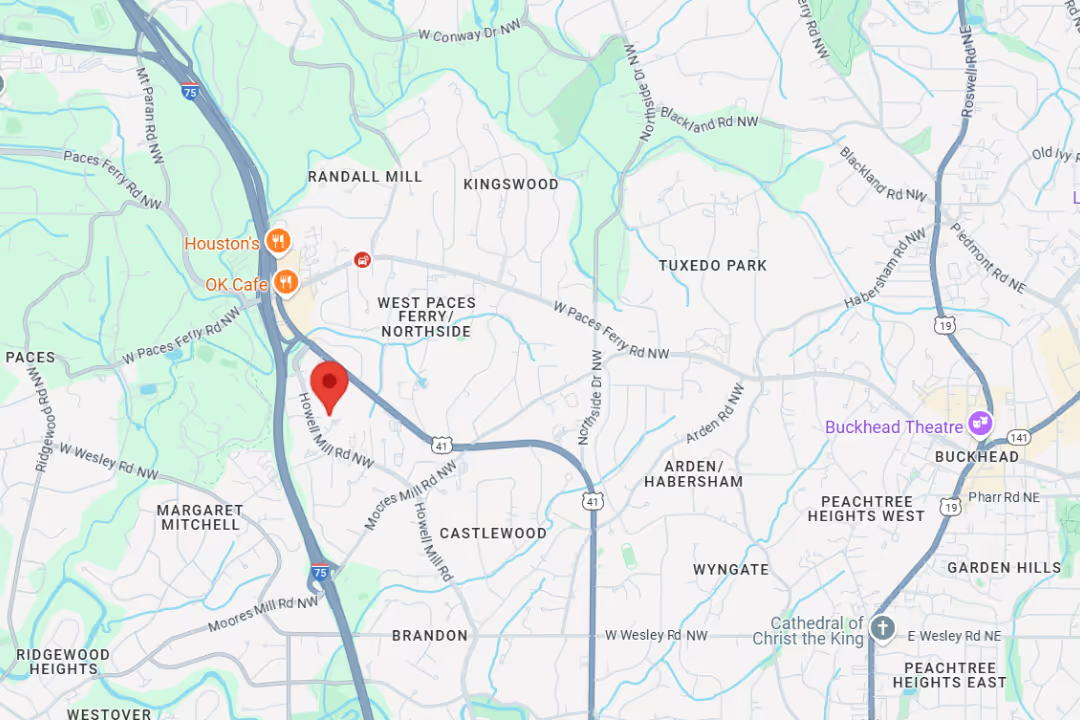
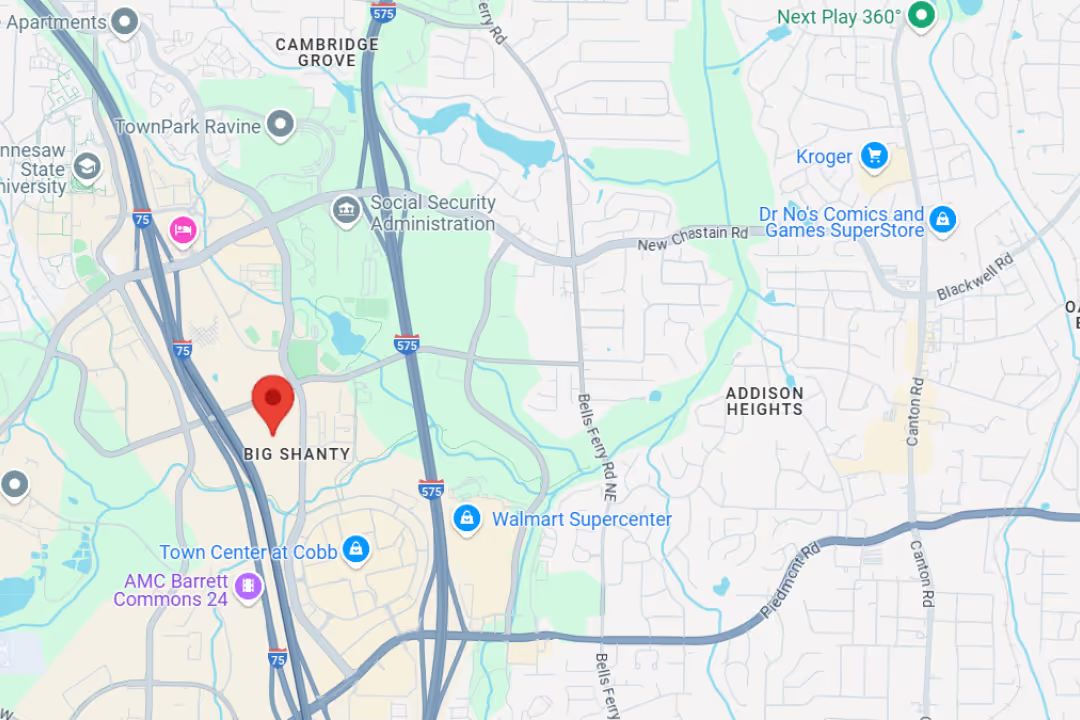
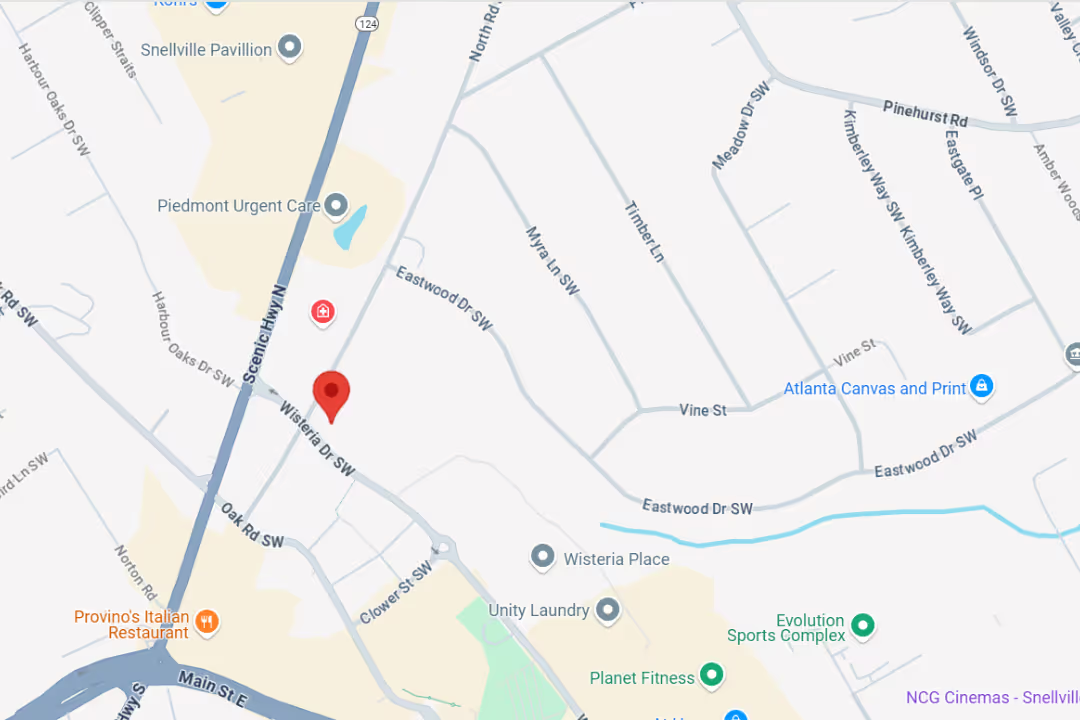
Medici Orthopaedics & Spine serves patients across the Atlanta metro area with clinic locations in Kennesaw, Snellville, and Buckhead. Whether you're searching for a pediatric orthopedic surgeon near me or a pedi orthopedic near me, Medici's team is ready to help.
📞 +1-844-328-4624
At Medici, you’re more than your MRI.
We take time to hear your story, understand your pain, and create a plan that actually works for you.

Our team delivers specialist care at convenient locations across Metro Atlanta:
Get expert tips on injury recovery, pain relief, joint health, and movement strategies—straight from our Fellowship-Trained team.