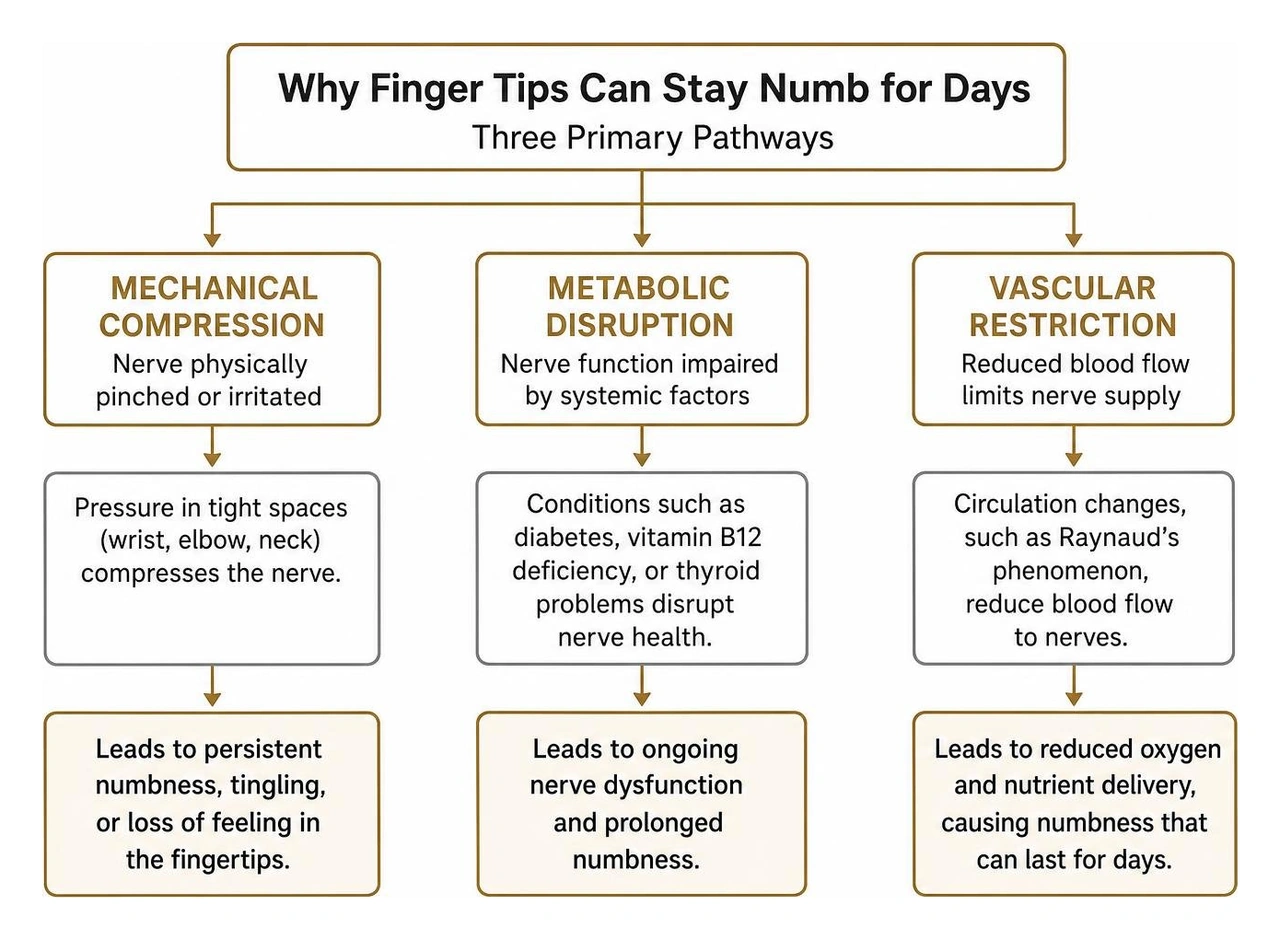
If your finger tips numb for days, do not assume they simply "fell asleep." Persistent numbness often comes from pressure or irritation along a nerve in the wrist, elbow, neck, or shoulder. It can also relate to diabetes, vitamin B12 deficiency, thyroid problems, circulation changes such as Raynaud's phenomenon, or an injury.
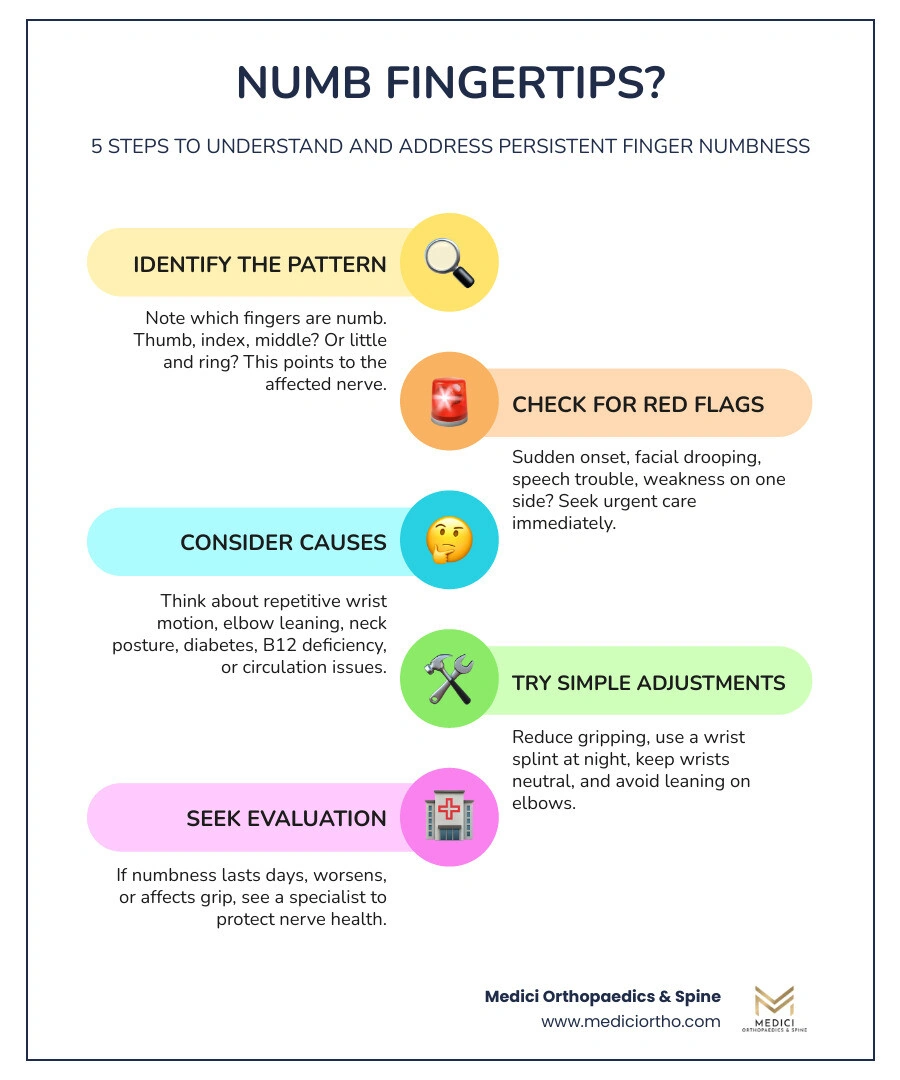
Get urgent help now if numbness starts suddenly or comes with facial drooping, speech trouble, severe headache, confusion, loss of balance, or weakness on one side of the body. Otherwise, make an appointment soon if symptoms are lasting several days, worsening, waking you at night, causing you to drop objects, or affecting grip strength.
Which fingers feel numb offers useful clues. Numbness in the thumb, index, middle, and part of the ring finger often points to carpal tunnel syndrome. Numbness in the little finger and outer half of the ring finger can suggest ulnar nerve compression, often near the elbow. Tingling that begins in the neck or shoulder and travels down the arm may involve a cervical nerve root.
For now, reduce repetitive gripping and typing, avoid leaning on your elbows, keep wrists neutral, and consider a nighttime wrist splint if symptoms fit carpal tunnel. Avoid forceful stretches or treating ongoing numbness as a minor annoyance; early assessment can help protect hand strength and sensation.
I am Sonny Dosanjh, M.D., a board-certified Physical Medicine and Rehabilitation physician with fellowship training in multidisciplinary pain management. At Medici Orthopaedics & Spine, I evaluate patients with finger tips numb for days by looking for the true source of nerve irritation, whether it begins in the hand, arm, neck, or a broader health condition.
Finger tips numb for days terms you need:
When sensation fades from your hands, everyday tasks like typing an email, turning a key, or buttoning a shirt become surprisingly difficult. Paresthesia—the medical term for abnormal sensations like tingling, prickling, or "pins and needles"—often occurs when a nerve is under stress. However, when the feeling of loss or numbness lingers continuously rather than resolving after a quick stretch, it indicates that a nerve's electrical signaling is consistently impeded or its microscopic blood supply is restricted.
Understanding the root causes of prolonged numbness helps us determine the most effective path forward. Broadly speaking, prolonged loss of sensation stems from three underlying drivers: mechanical compression, metabolic imbalances, or vascular insufficiency. Learning more about general numbness in hands can help contextualize why these physical and physiological disruptions occur.
Peripheral entrapment neuropathies occur when nerves traveling from your spinal cord down into your hand become physically pinched within tight anatomical tunnels. In your upper extremities, two nerves are particularly vulnerable:
Your fingertips might feel entirely detached from your neck, but the neural network connecting them tells a different story. The nerves supplying sensation to your hands originate as nerve roots exiting between the cervical vertebrae of your neck.
When a cervical disc herniates, degenerative disc disease narrows the spinal exit holes (foraminal stenosis), or bone spurs develop, these nerve roots become inflamed or compressed. This condition—known as cervical radiculopathy—sends shooting pain, tingling, or radiating numbness downward along your shoulder, forearm, and into specific fingers. Poor ergonomic neck posture from looking down at smartphones or computers can exacerbate these symptoms. To understand how spinal issues project down into your arms, review our detailed guide on what causes nerve pain in your hands.
Nerves require a finely balanced internal environment to transmit electrical signals properly. When systemic diseases disrupt cellular metabolism, peripheral nerve fibers can become damaged, leading to peripheral neuropathy.
Common metabolic drivers include:
For a deeper dive into nutritional and metabolic triggers, consult our guide on fingertips tingling causes and relief.
Not all persistent numbness begins in the nervous system; some cases originate within the circulatory system. Vascular disorders impede blood flow, depriving sensory nerves of oxygen and triggering acute numbness.
A primary example is Raynaud's phenomenon, a condition characterized by hyper-reactive vasospasms of the small digital arteries in response to cold temperatures or emotional stress. During an episode, the blood vessels abruptly constrict, causing the fingertips to turn white, then blue, and feel cold, painful, or completely numb. As blood flow returns, the skin turns bright red and throbs or tingles intensely. If episodes are frequent or severe, microvascular damage can lead to lingering fingertip numbness that lasts for days.
Your hand is an intricate sensory map. The nervous system divides the sensory workload of your palm and fingers among three main peripheral nerves, each innervating a distinct territory. Pinpointing exactly which fingers are numb gives your clinician a clear roadmap to locate the pinched nerve long before advanced imaging is performed.
| Affected Fingers | Primary Nerve Involved | Common Suspected Condition | Typical Clinical Presentation |
|---|---|---|---|
| Thumb, Index, Middle, Radial Half of Ring Finger | Median Nerve | Carpal Tunnel Syndrome, C6/C7 Radiculopathy | Numbness worsens at night or when holding objects; weakness in thumb base. |
| Little Finger & Ulnar Half of Ring Finger | Ulnar Nerve | Cubital Tunnel Syndrome, Guyon's Canal Compression, C8 Radiculopathy | Numbness increases with prolonged elbow flexion; loss of pinch grip strength. |
| Back of Hand & Base of Thumb/Index | Radial Nerve | Radial Nerve Compression, Saturday Night Palsy, C6 Radiculopathy | Sensory loss primarily on the back of the hand; difficulty lifting the wrist. |
| All Fingers Symmetrically (Both Hands) | Systemic / Metabolic | Diabetic Neuropathy, Vitamin B12 Deficiency, Thyroid Disease | Gradual, burning numbness progressing upward from fingertips; usually bilateral. |
If your numbness spares your pinky finger and concentrates on your thumb, pointer finger, middle finger, and half of your ring finger, the median nerve is almost certainly involved.
Because pressure inside the carpal tunnel naturally rises when your wrist bends forward or backward during sleep, many people find themselves waking up with numb hands. As compression advances, sensory signals decrease, and the motor branch of the median nerve becomes affected. Over time, this leads to weakness and visible wasting (atrophy) of the thenar muscles at the fleshy base of your thumb, making it difficult to pinch small objects or open jars.
When numbness isolates itself entirely to your little finger and the outer half of your ring finger, the ulnar nerve is responsible. The median nerve does not provide sensory innervation to the pinky finger; that territory belongs strictly to the ulnar pathway.
Ulnar nerve irritation frequently happens when the elbow is kept bent for long durations—such as holding a phone to your ear, resting your arm on a car door window ledge, or sleeping in a curled fetal position. If you notice your hands falling asleep often alongside a loss of grip strength or clumsiness when typing, ulnar nerve entrapment at the cubital tunnel is the primary culprit.

While many instances of fingertip numbness stem from posture or localized nerve entrapments, certain clinical patterns signal serious neurological or systemic emergencies that demand immediate intervention.
Seek emergency medical care immediately if your fingertip numbness is accompanied by:
If your symptoms are non-emergency but involve continuous numbness lasting more than several days, progressive muscle weakness, dropping items, or visible wasting of hand muscles, a specialist medical evaluation is essential to prevent permanent nerve injury. Consulting clinical references such as Healthline's guide on finger numbness can provide additional context on standard diagnostic timelines.
To pinpoint the exact site and severity of nerve irritation, our clinical team employs a comprehensive diagnostic approach:
If you are currently experiencing persistent sensory loss:

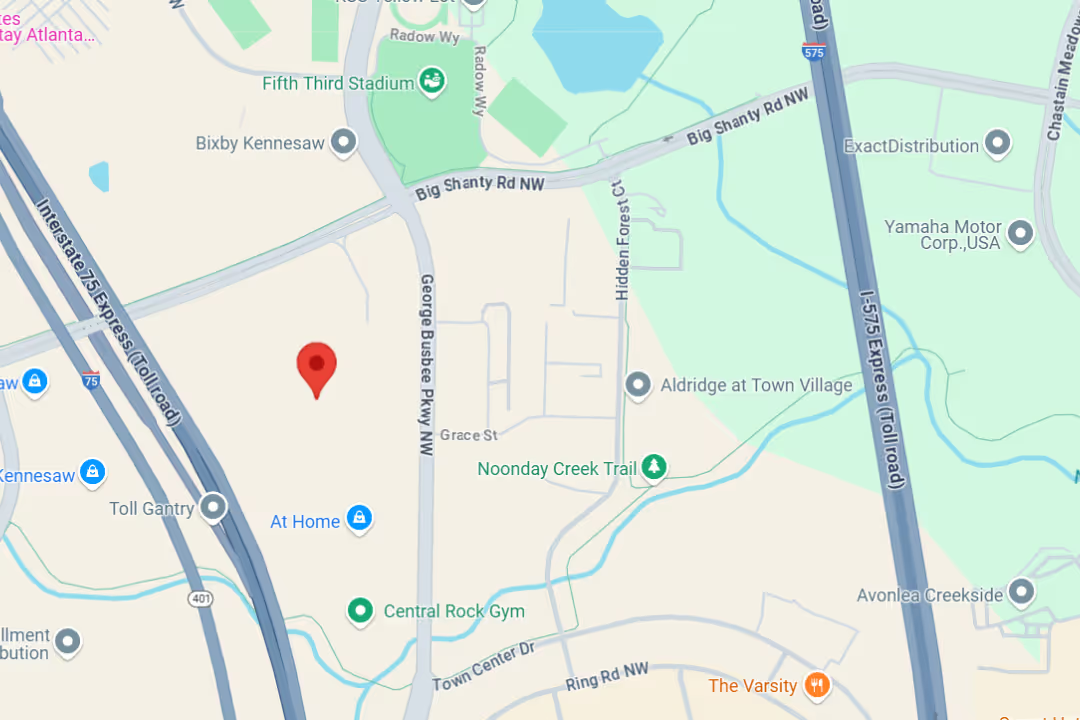
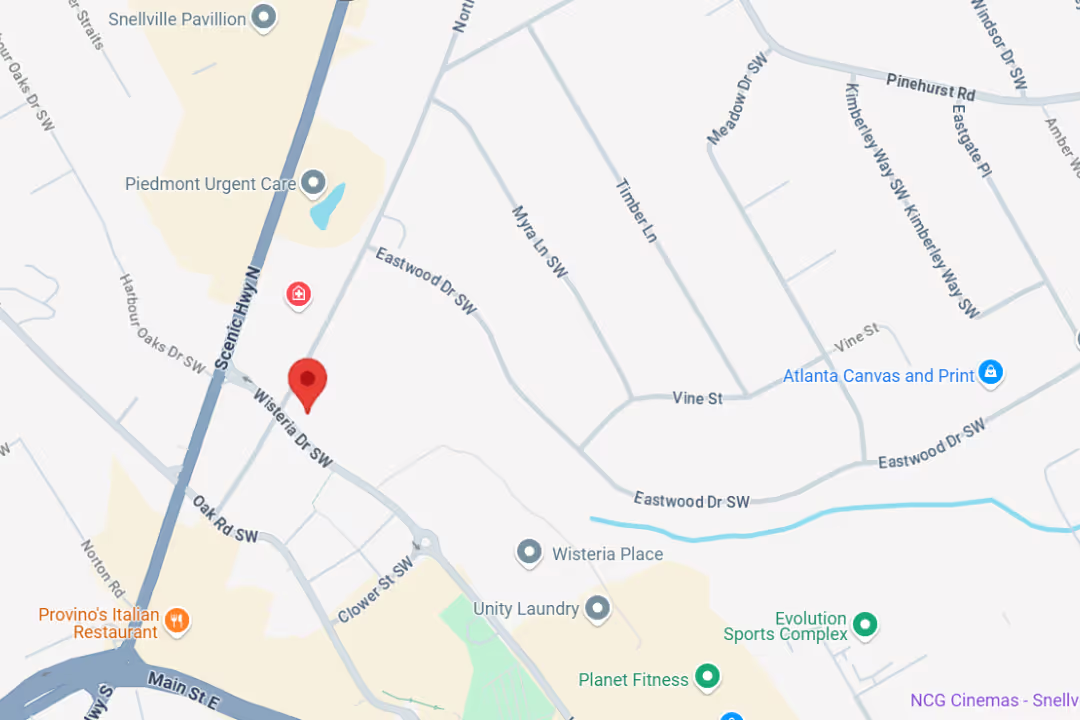
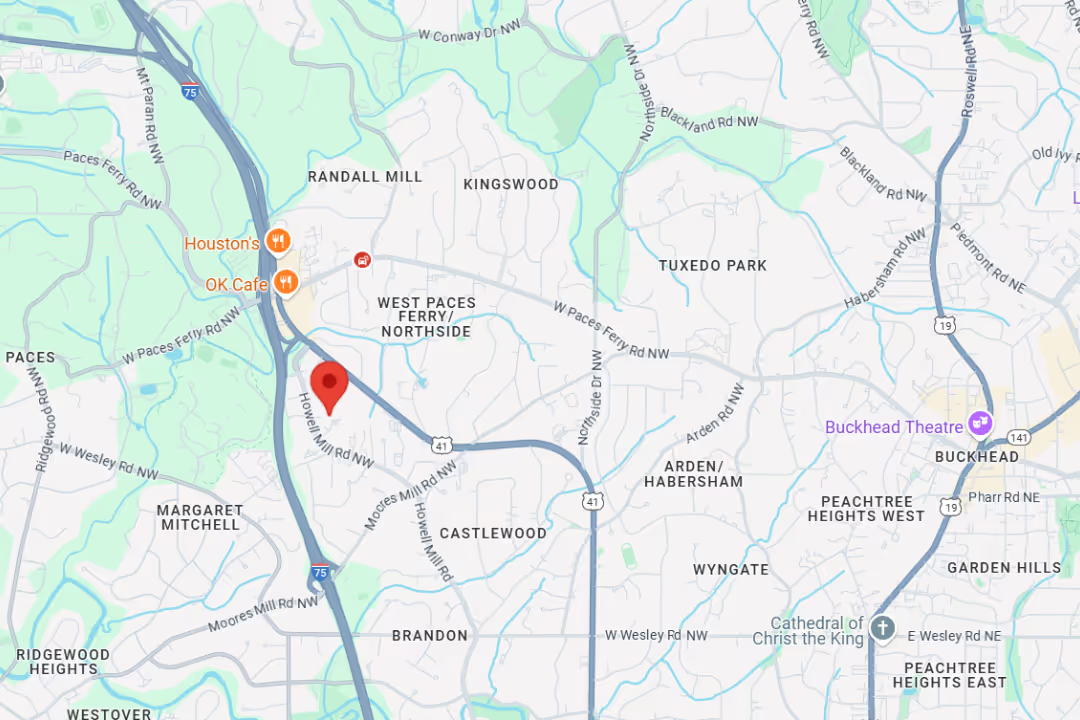
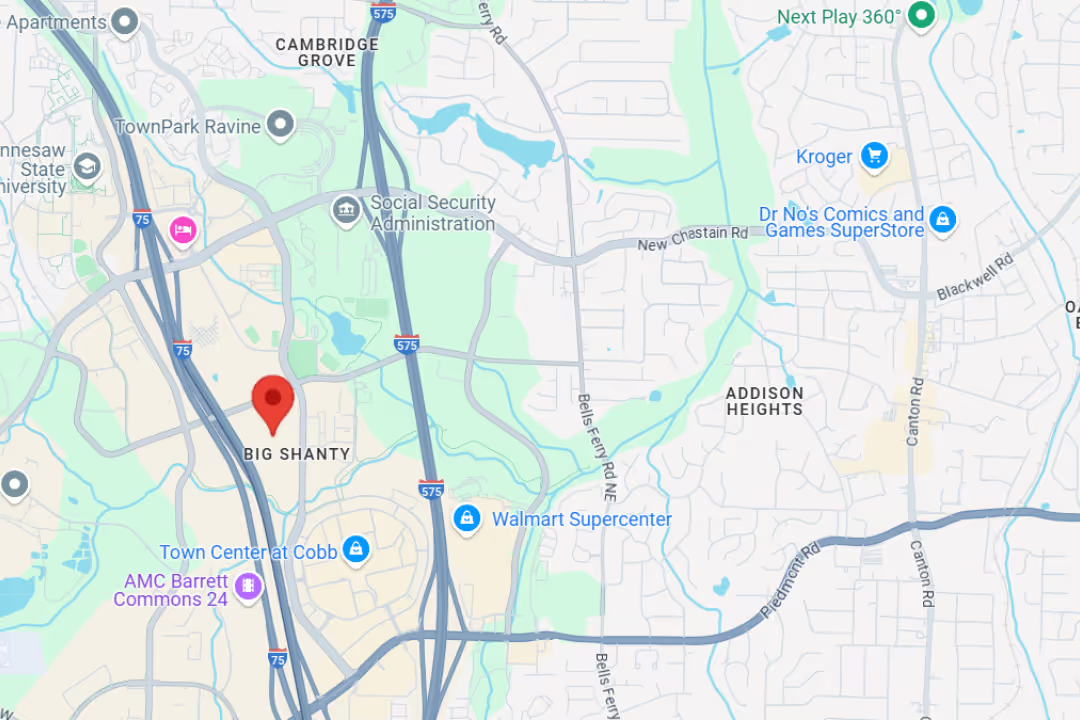
At Medici Orthopaedics & Spine, we believe in restoring your function using the most effective, least invasive, and least drug-dependent approaches available today. Under the leadership of Dr. Sonny Dosanjh, M.D., our teams across Marietta, Snellville, Kennesaw, Buckhead, and Atlanta, GA, prioritize non-surgical and minimally invasive modalities tailored to your lifestyle.
For mild to moderate nerve compression, proactive self-care and ergonomic corrections form the first line of defense:
For a broader understanding of early relief techniques, explore our updated finger tingling causes guide.
When conservative home remedies are insufficient, we utilize advanced interventional therapies designed to relieve nerve compression, accelerate tissue repair, and restore function synergistically:
Temporary numbness caused by a brief awkward posture (such as sleeping heavily on your arm) typically resolves within minutes to a few hours once normal blood flow and positioning are restored. However, when fingertip numbness persists for days, it indicates ongoing mechanical pressure or metabolic irritation.
While mild cases can fluctuate, untreated chronic entrapment restricts microscopic blood flow to the nerve fibers, eventually causing axonal degeneration, permanent sensory loss, and irreversible muscle weakness. Early medical evaluation ensures reversible issues do not turn into permanent deficits.
During sleep, people naturally bend their wrists and curl their elbows into flexion. Bending your wrist increases hydrostatic pressure inside the carpal tunnel up to sixfold, compressing the median nerve. Similarly, maintaining a bent elbow stretches and pinches the ulnar nerve within the cubital tunnel. Additionally, when you lie flat, systemic blood pressure drops and fluid redistributes into the upper extremities, slightly increasing tissue swelling inside tight anatomical tunnels. Wearing a neutral splint at night prevents these posture-induced pressure spikes.
A peripheral pinched nerve typically causes sensory loss restricted strictly to that nerve's anatomical territory (such as only the thumb and index finger, or only the little finger). Symptoms develop gradually, fluctuate with arm or neck posture, and rarely involve other body systems.
In contrast, a central neurological event (such as a stroke or transient ischemic attack) causes sudden, widespread deficits—often affecting an entire arm, leg, and the lower face simultaneously. Stroke symptoms frequently include speech difficulties, facial drooping, confusion, and loss of balance. Any sudden neurological deficit requires emergency medical services immediately.
Lingering fingertip numbness is more than an inconvenience—it is an early warning signal from your nervous system indicating that a nerve pathway is compromised. Whether your symptoms stem from carpal tunnel syndrome, an irritated cervical disc in your neck, or a systemic metabolic imbalance, prompt evaluation is key to preventing long-term nerve damage and preserving hand dexterity.
At Medici Orthopaedics & Spine, Dr. Sonny Dosanjh, M.D., and our multidisciplinary medical team specialize in comprehensive, minimally invasive, and non-surgical solutions to eliminate nerve pain at its source. We combine state-of-the-art diagnostics, physical therapy, ultrasound-guided interventions, and regenerative medicine to restore your hand function and comfort.
If your fingertips have felt numb for days, take the first step toward lasting relief. Schedule your comprehensive evaluation for neuropathy and nerve pain conditions with our team today across our Snellville, Kennesaw, Marietta, and Buckhead locations. Let us help you regain full feeling, strength, and confidence in your daily life.
At Medici, you’re more than your MRI.
We take time to hear your story, understand your pain, and create a plan that actually works for you.

Our team delivers specialist care at convenient locations across Metro Atlanta:
Get expert tips on injury recovery, pain relief, joint health, and movement strategies—straight from our Fellowship-Trained team.