Back pain has a way of stopping life in its tracks. One morning you reach for something on the counter and a sharp, electric sensation shoots down your leg. Or maybe it's been building for months — a dull ache in your lower back that's slowly crept into your hips, your thighs, even your feet. Either way, you end up at a computer searching for answers and running into terms like "bulging disc" and "herniated disc" used almost interchangeably, as if they mean the same thing.
They don't. And understanding the difference actually matters, because these two conditions behave differently, cause different symptoms, and often call for different approaches to care. The good news is that both are treatable, and surgery is far from the only option on the table.
If you've been living with spine pain and aren't sure where to start, this is a good place.
Your spine is made up of a column of bones called vertebrae, and between each pair of vertebrae sits a spinal disc. These discs are the spine's built-in shock absorbers. They cushion impact, allow for movement, and keep the vertebrae from grinding against each other.
Each disc has two layers. The outer layer, called the annulus fibrosus, is made of tough, fibrous cartilage. Inside it sits the nucleus pulposus, a gel-like core that gives the disc its ability to compress and rebound. When the spine is healthy, these discs distribute pressure evenly and move fluidly with every step, bend, and twist.
The problem is that discs are vulnerable. Age, repetitive stress, poor posture, sudden injury, and simple wear and tear can all compromise their structure over time. When that happens, you end up with either a bulging disc or a herniated disc, and the difference between the two comes down to how much of that structure has been disrupted.
A bulging disc occurs when the outer wall of the disc, the annulus fibrosus, weakens and begins to protrude outward beyond its normal boundary. The disc hasn't ruptured. The inner gel material is still contained. Think of it like a hamburger that's been pressed too hard and is spreading out past the bun.
Bulging discs are most often the result of gradual degeneration rather than a single traumatic event. Common contributors include:
Here's the thing about bulging discs: many people have them and never know it. They can be entirely asymptomatic. When they do cause symptoms, it's usually because the disc is pressing on a nearby nerve root or the spinal cord itself. Symptoms may include localized back or neck pain, stiffness, and in some cases radiating discomfort into the arms or legs depending on which part of the spine is affected. Bulging discs are most common in the lumbar (lower back) and cervical (neck) regions.
A herniated disc takes things a step further. In this case, the outer wall of the disc has actually torn or cracked, allowing the inner gel material to push through. This is sometimes called a ruptured disc or slipped disc, though all of those terms describe the same core problem: the disc's structural integrity has been broken.
Herniation can develop gradually as a disc degenerates over time, or it can happen suddenly following an acute injury, such as a fall, a car accident, or lifting something heavy with poor form. In many cases, a disc that has already been bulging for years reaches a tipping point and herniates.
Because herniated disc material can directly contact and irritate nearby nerve roots, the symptoms tend to be more intense than those of a bulging disc. Patients frequently describe:
Lumbar herniation is a leading cause of sciatica, the radiating leg pain that travels from the lower back through the buttock and down the leg. Cervical herniation can cause similar symptoms into the shoulder, arm, and hand.
Diagnosis begins with a thorough conversation. A spine care specialist will ask about your symptoms, how long you've had them, what makes them better or worse, and how they're affecting your daily life. A physical exam will assess your range of motion, reflexes, muscle strength, and any signs of nerve involvement.
Imaging helps confirm what's happening inside the spine:
An important detail: imaging findings don't always match up with symptoms. Some people have visible disc abnormalities on an MRI but no pain at all, while others have significant pain with relatively minor imaging findings. That's why seeing an experienced orthopedic doctor for herniated disc evaluation is so important. The clinical picture, not just the scan, guides treatment decisions.
The majority of patients with bulging or herniated discs respond well to non-surgical care. At Medici Orthopaedics & Spine, the approach always starts with the least invasive, least drug-dependent option that's medically appropriate.
Most herniated disc treatment begins here:
When conservative measures aren't providing enough relief, interventional treatments can offer more targeted results:
For appropriate candidates, regenerative therapies like platelet-rich plasma (PRP) and stem cell treatments may help support tissue healing and reduce inflammation, offering an alternative to more invasive procedures.
When more intervention is needed, minimally invasive spine procedures can address disc problems with less disruption to surrounding tissue, shorter recovery times, and reduced surgical risk compared to traditional open surgery. Medici offers advanced options including the Verteflex procedure for lumbar spinal stenosis.
Surgical intervention becomes a consideration when conservative and interventional treatments haven't provided adequate relief, or when there is significant nerve compression causing progressive weakness or loss of function. Even then, the goal is the least invasive surgical approach available. Medici's team includes experienced orthopedic surgeons who specialize in minimally invasive spine surgery.
Disc problems rarely fix themselves by being ignored. What often starts as manageable back stiffness can evolve into nerve pain that disrupts sleep, limits mobility, and sidelines you from the activities that matter most. The longer significant nerve compression goes unaddressed, the greater the risk of lasting damage.
The encouraging part is that modern spine care has more tools available than ever before. The gap between "just manage the pain" and "schedule surgery" is now filled with targeted injections, regenerative therapies, minimally invasive procedures, and specialized physical rehabilitation. Most patients find meaningful relief well before surgical intervention becomes a conversation.
Pain doesn't have to be your normal. The team at Medici Orthopaedics & Spine, led by Dr. Sonny Dosanjh, M.D., is here to help you find the most effective, least invasive path forward for your spine health. Whether you're dealing with a recent injury or years of chronic pain, a thorough evaluation is the first step toward real relief.
Schedule your appointment today and find out what's actually going on, and what can actually be done about it.
Kennesaw: (770) 545-6404
Snellville: (470) 645-9297
Buckhead: (770) 872-7549
At Medici, you’re more than your MRI.
We take time to hear your story, understand your pain, and create a plan that actually works for you.

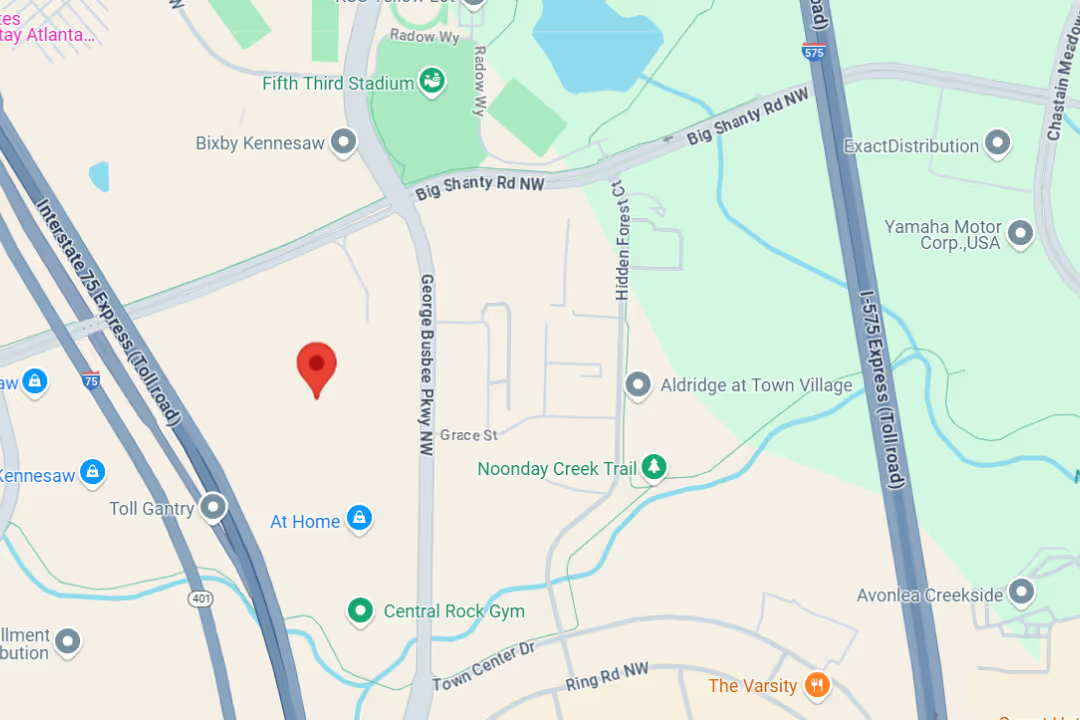
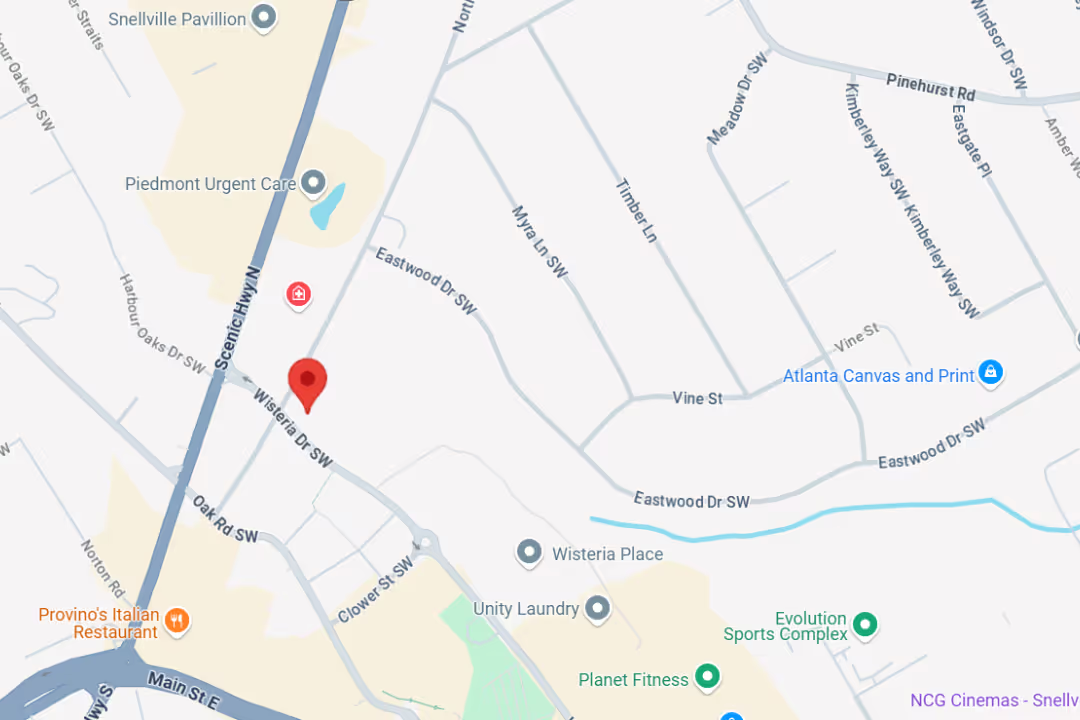
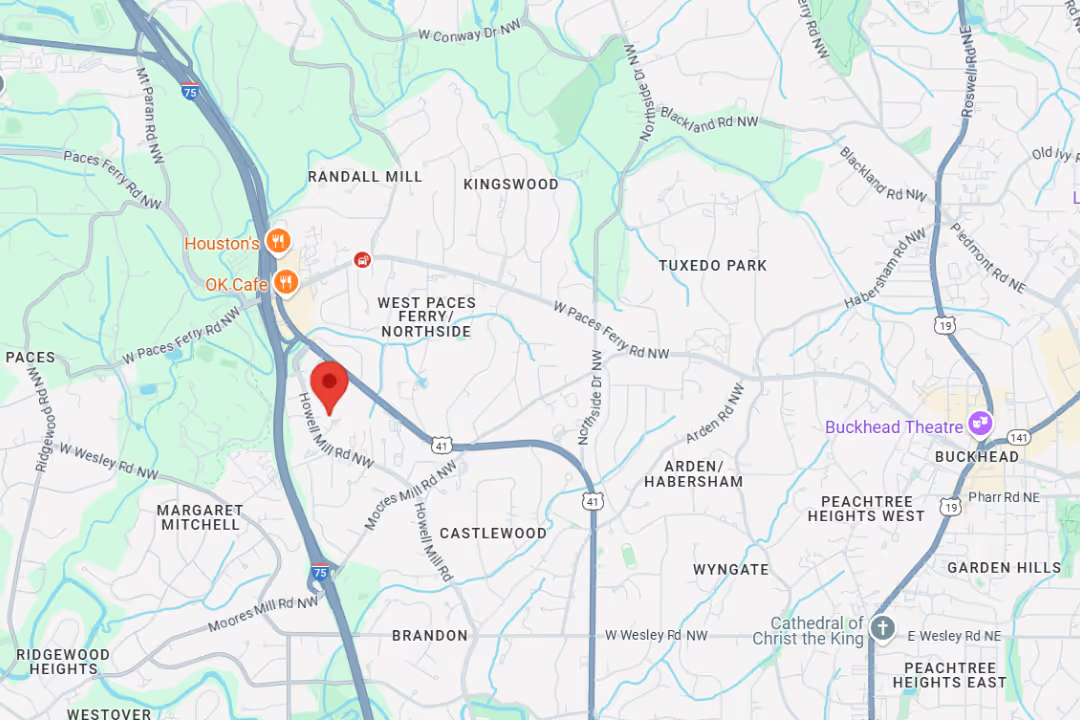
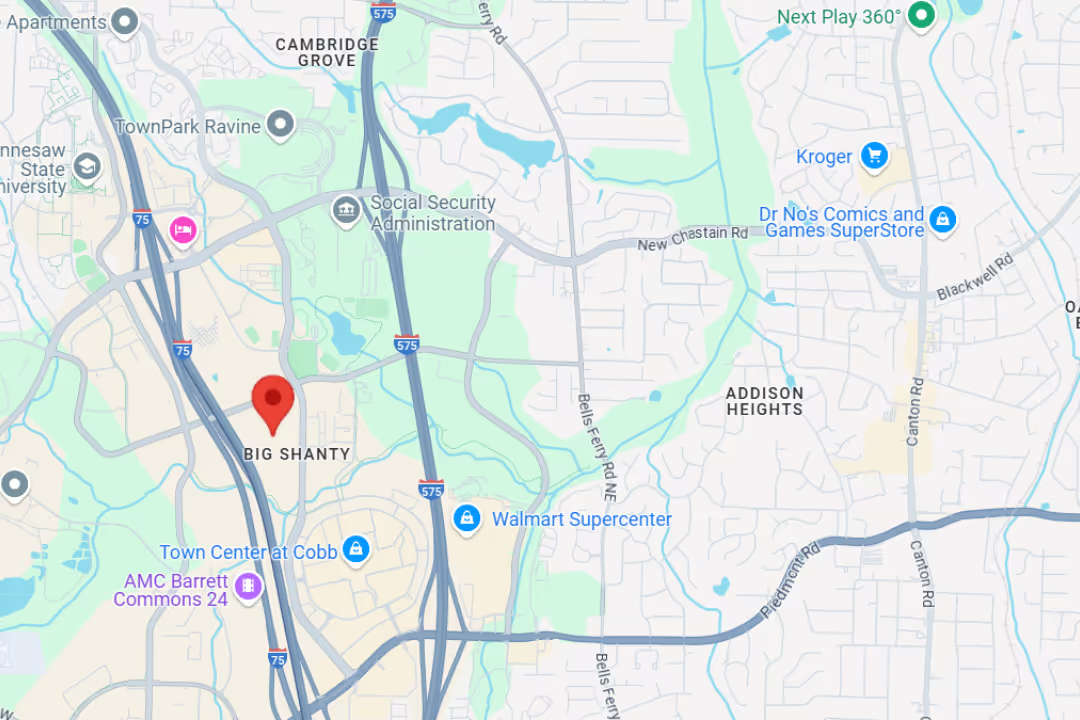
Our team delivers specialist care at convenient locations across Metro Atlanta:
Get expert tips on injury recovery, pain relief, joint health, and movement strategies—straight from our Fellowship-Trained team.