A herniated disc can disrupt your life in ways you don’t expect. Simple movements—like sitting, standing, or even sleeping—can suddenly become painful challenges. What starts as mild discomfort can quickly progress into persistent pain, numbness, or weakness that affects your ability to function day to day.
For many patients, the uncertainty is just as difficult as the pain itself. You may wonder whether your condition will improve on its own, whether surgery is inevitable, or if there are better options available. With so many treatment paths to consider, it’s not always clear what the right next step should be.
That’s why there has been a growing interest in minimally invasive treatments—options designed to relieve pain and restore function without the risks and downtime associated with traditional surgery.
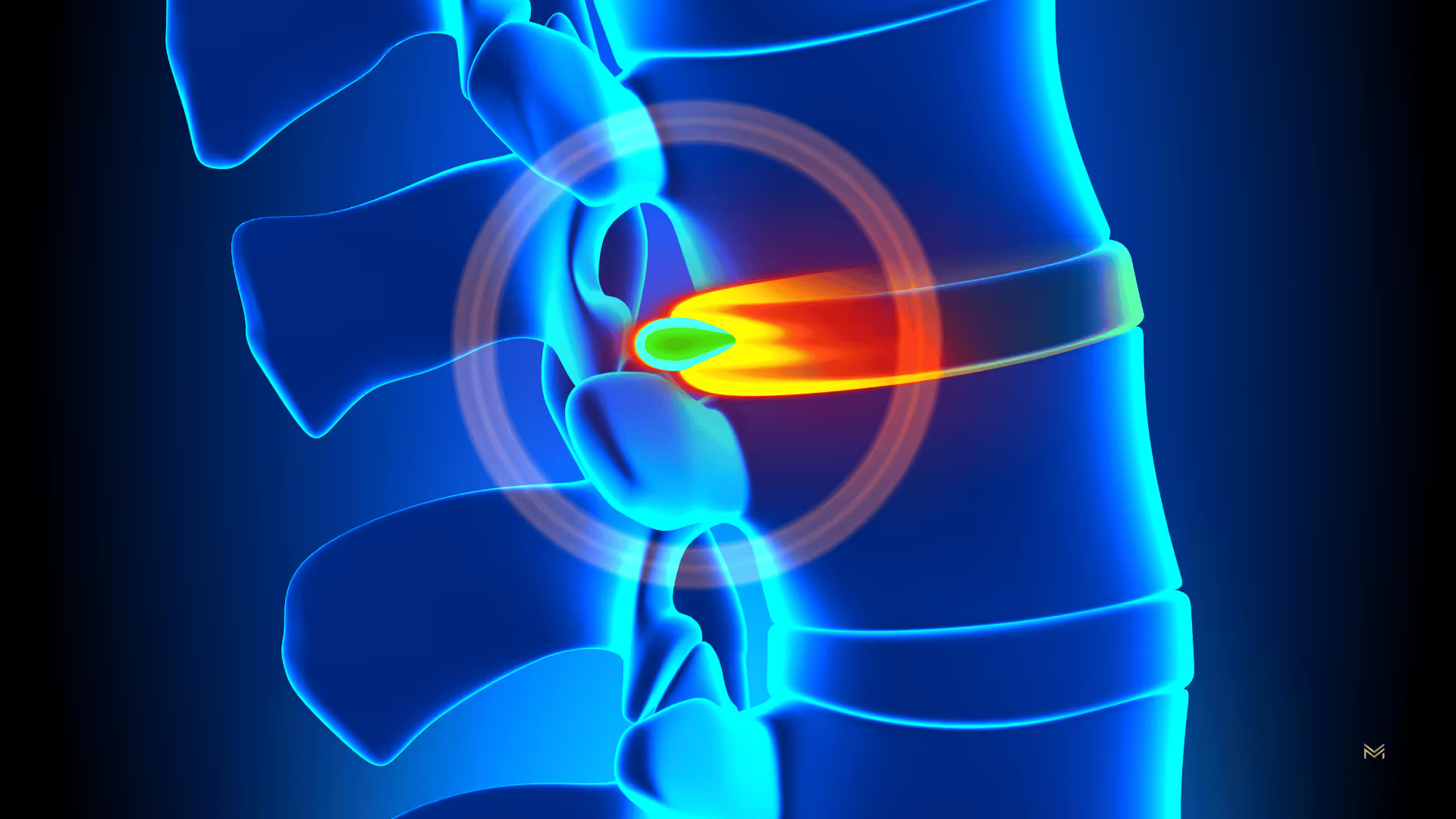
Your spine is made up of a series of bones (vertebrae) cushioned by soft, gel-like discs that act as shock absorbers. A herniated disc occurs when the inner portion of one of these discs pushes through its outer layer, often irritating nearby nerves.
This can happen due to:
When a disc is damaged or displaced, it can create pressure on surrounding nerves—leading to pain and other symptoms that extend beyond the spine itself.
Herniated discs don’t always feel the same for every patient, but there are several common patterns that tend to appear.
These may include:
The severity of symptoms often depends on the location of the herniation and how much nerve involvement is present.
The first line of treatment for most herniated discs is typically conservative care. This approach focuses on reducing pain and allowing the body time to heal naturally.
Common options include:
While these treatments can be effective, they don’t always address the root cause—especially in more persistent or severe cases. Some patients find that relief is temporary, with symptoms returning once treatment stops.
When conservative methods fail or symptoms become severe, surgery may be recommended. Traditional open spine surgery aims to remove or repair the damaged portion of the disc.
However, surgery comes with important considerations:
While surgery can be necessary in certain cases, many patients understandably look for less invasive alternatives first.
Advancements in medical technology have created new options that bridge the gap between conservative care and major surgery. Minimally invasive treatments are designed to target the source of pain with greater precision and less disruption to the body.
These approaches have gained popularity because they:
For many patients, this represents a more balanced path—providing meaningful relief without the physical and emotional toll of major surgical procedures.
Minimally invasive procedures focus on treating the source of pain while preserving as much of the surrounding tissue as possible.
They are typically characterized by:
This approach prioritizes efficiency and precision—treating the problem directly without unnecessary intervention.
There are several minimally invasive options available, each designed to address different aspects of herniated disc pain.
Common treatments include:
The right treatment depends on the severity of the condition, the location of the disc herniation, and the patient’s overall health and goals.
One of the primary goals is to directly address what’s causing discomfort.
This includes:
By focusing on the source, these treatments can provide more meaningful and lasting relief than generalized approaches.
Pain is not just about injury—it’s also about how the nervous system processes signals. Some minimally invasive procedures are designed to modify or block these signals.
This can involve:
These techniques are especially helpful for patients with persistent or chronic pain.
In addition to reducing pain, many of these treatments create an environment where the body can heal more effectively.
They often work best when combined with:
This integrated approach helps ensure that improvements are not only felt—but sustained.
Minimally invasive treatments have shown strong success in reducing pain, particularly when the source is clearly identified.
They are often most effective for:
By targeting the exact problem area, these treatments can provide relief that feels both immediate and meaningful.
Pain relief is only part of the equation. True success also includes restoring the ability to move and function normally.
Patients often experience:
This functional improvement is a key indicator that treatment is addressing more than just surface-level symptoms.
Results can vary depending on the individual and the treatment used.
Some patients may experience:
The goal is always to extend the duration of relief while minimizing the need for repeated interventions.
Research and real-world outcomes continue to support the effectiveness of minimally invasive treatments for many patients with herniated discs.
Key factors that influence success include:
When these elements are in place, patients are far more likely to achieve meaningful, lasting results.
Minimally invasive treatments have transformed the way herniated discs are managed, offering effective relief for many patients without the need for major surgery. For those dealing with persistent back or nerve pain, these options provide a path forward that prioritizes both comfort and recovery.
However, success with these treatments depends on more than just the procedure itself. Accurate diagnosis is essential to ensure the true source of pain is being addressed, and proper treatment selection plays a critical role in achieving meaningful results. Not every herniated disc is the same—and neither is every patient.
If you’re struggling with a herniated disc and want to avoid major surgery, there are options available that can help you heal with less disruption to your life. At Medici Orthopaedics & Spine, we specialize in advanced, minimally invasive treatments designed to target the source of your pain and restore function.
Contact Medici Orthopaedics & Spine today:
Locations:
Marietta Surgery Center
792 Church Street, Unit 101
Marietta, GA 30060
(470) 795-8398
Snellville Surgery Center
2220 Wisteria Dr, Unit 100
Snellville, GA 30078
(470) 795-8398
Kennesaw Clinic
2911 George Busbee Parkway, Suite 50
Kennesaw, GA 30144
(770) 545-6404
Snellville Clinic
2220 Wisteria Drive, Unit 101
Snellville, GA 30078
(470) 645-9297
Buckhead PM&R
3200 Downwood Circle NW, Suite 520
Atlanta, GA 30327
(770) 872-7549
At Medici, you’re more than your MRI.
We take time to hear your story, understand your pain, and create a plan that actually works for you.

Our team delivers specialist care at convenient locations across Metro Atlanta:
Get expert tips on injury recovery, pain relief, joint health, and movement strategies—straight from our Fellowship-Trained team.