It usually starts small. A twinge when you reach for a cabinet. A dull ache after a workout that never quite fades. Then one morning you try to lift your arm to wash your hair and it stops you cold, and suddenly you're lying awake at night because you can't find a comfortable position to sleep in.
That's usually the moment someone types "shoulder surgeons in my area" into their phone. Shoulder pain has a way of touching everything, driving, getting dressed, playing with grandkids, even just carrying groceries in from the car. It's frustrating because the shoulder is involved in almost everything we do with our hands.
At Medici Orthopaedics & Spine, we understand that frustration because we see it every day. Dr. Sonny Dosanjh and Dr. Darren Newfield lead a team that treats shoulder pain across the greater Atlanta area. We're your neighbors, and we've built our practice around the idea that most shoulder problems can be treated without jumping straight to the operating room.
A qualified shoulder surgeon should hold board certification in orthopedic surgery, with specific training in shoulder and upper extremity conditions. This training matters because the shoulder is one of the most complex joints in the body. Its wide range of motion also makes it more prone to injury than more stable joints like the hip.
Surgery should be a tool a provider reaches for when it's truly needed, not the default first step. We believe in starting with the least invasive, least drug-dependent option that makes sense for your specific situation.
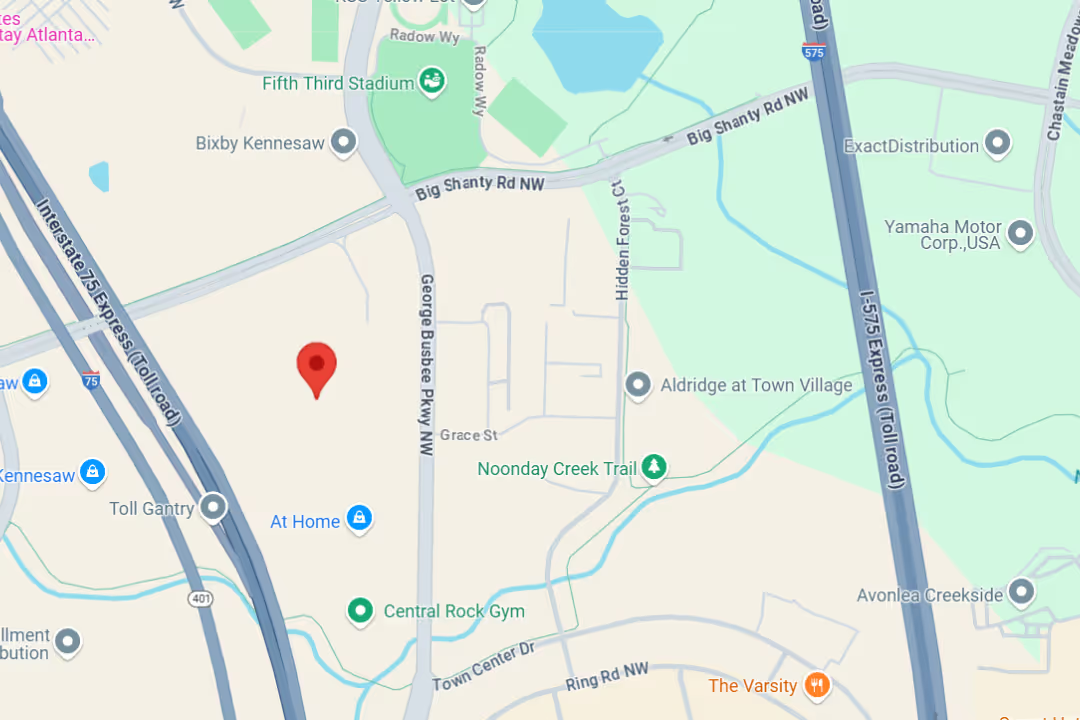
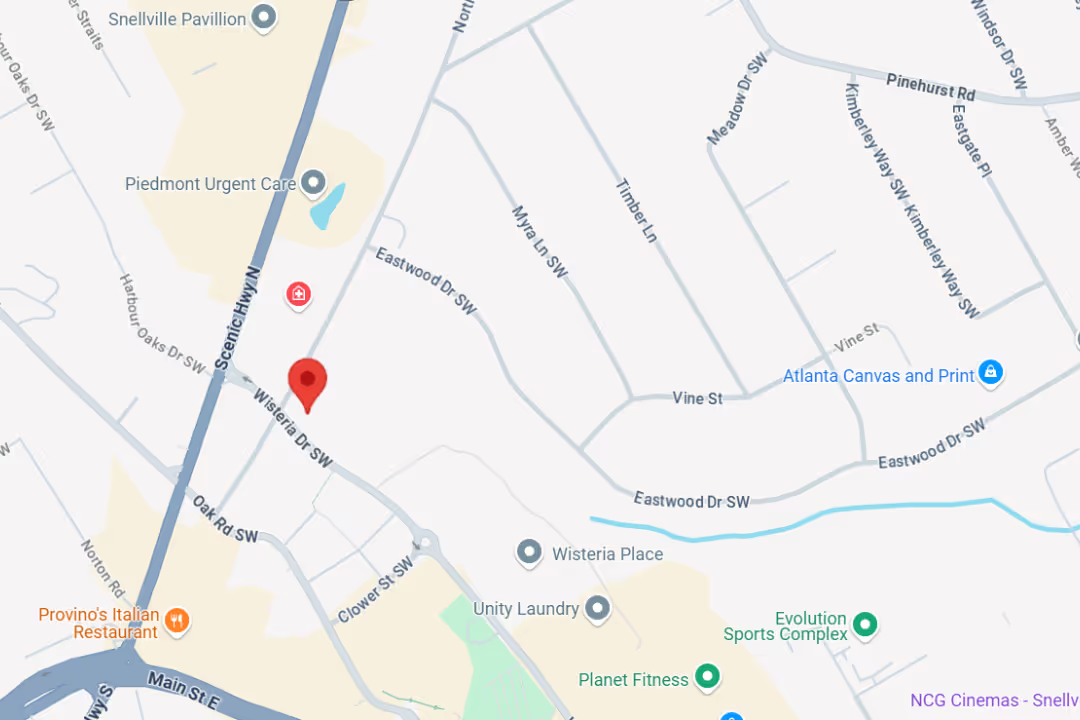
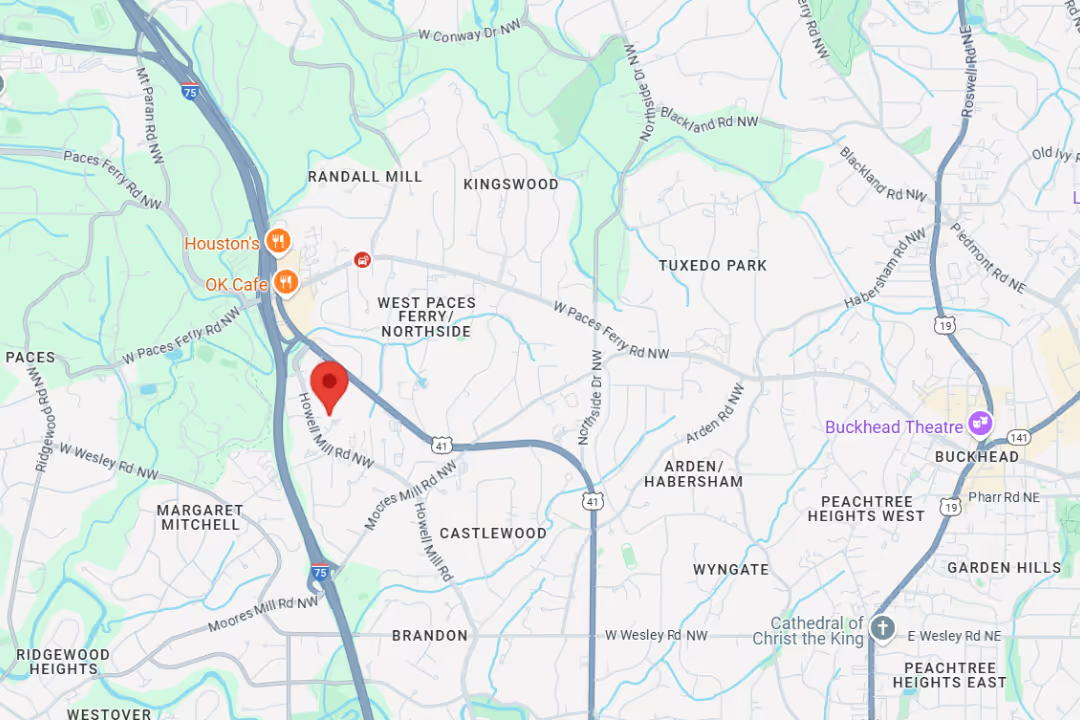
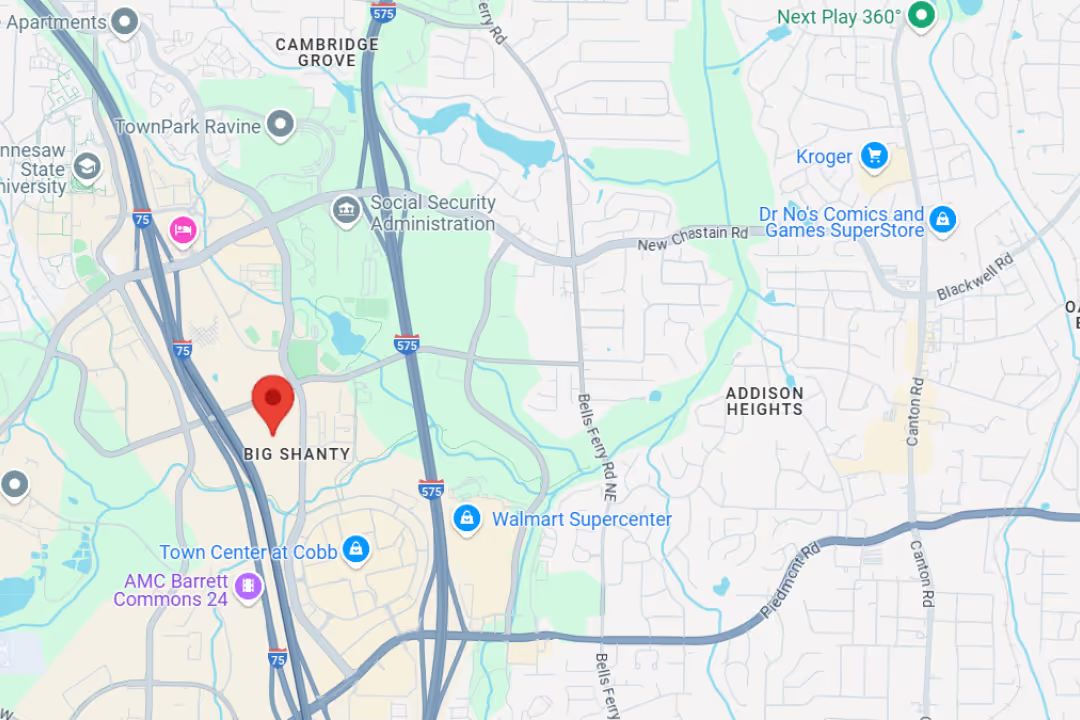
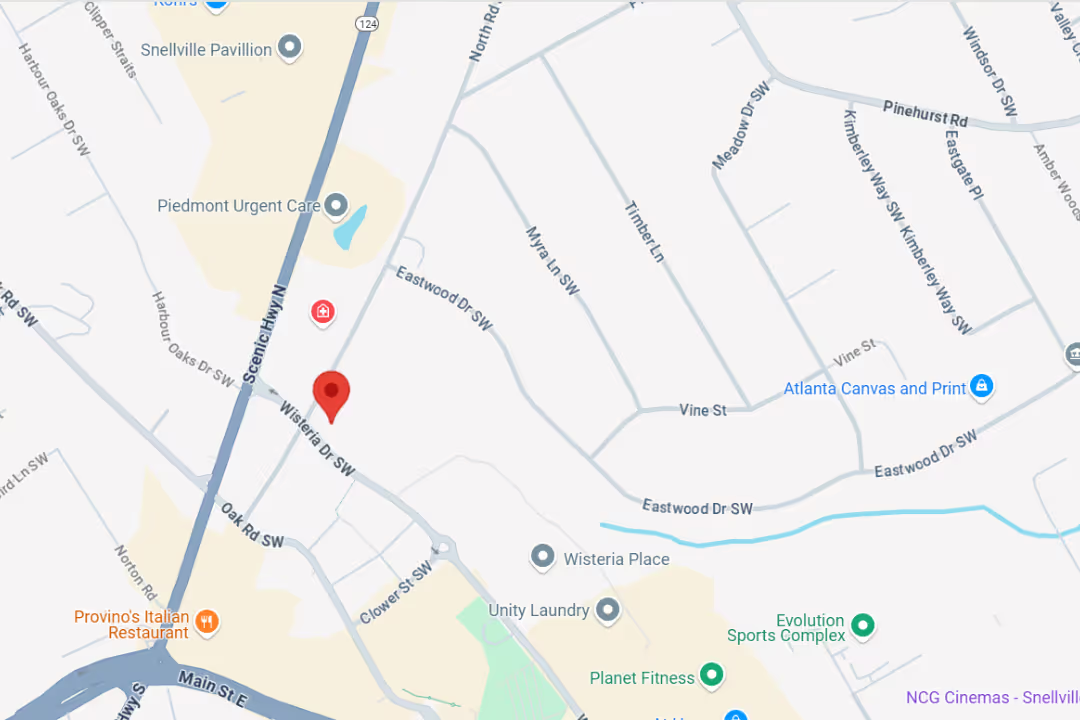
Ongoing care, whether that's follow-up visits, physical therapy, or imaging, is much easier when your provider is close to home. Our locations throughout Kennesaw, Snellville, Buckhead, and Marietta mean most Atlanta area patients don't have to drive far for quality shoulder care.
Pain is personal, and two people with the same diagnosis can experience completely different symptoms and limitations. A good surgeon takes time to understand how your shoulder pain affects your specific life, whether that's your job, your sport, or simply your ability to sleep through the night.
The rotator cuff is a group of muscles and tendons that stabilize the shoulder joint. Tears can happen suddenly from an injury or gradually from years of wear and tear. Tendinitis, an inflammation of these tendons, often develops from repetitive overhead motion.
This occurs when tendons in the shoulder become pinched during arm movement, especially overhead activities. It's common among athletes, painters, and anyone who performs repetitive reaching motions at work.
The labrum is a ring of cartilage that helps keep the shoulder joint stable. Tears here often result from falls, repetitive throwing motions, or direct trauma to the shoulder.
Osteoarthritis of the shoulder develops as cartilage wears down over time, leading to pain, stiffness, and reduced range of motion. It's more common in older adults but can also affect people with a history of shoulder injury.
Frozen shoulder causes the shoulder capsule to thicken and tighten, dramatically limiting movement. It often develops slowly and can take months to fully resolve, even with treatment.
Some patients experience shoulders that feel loose or that dislocate repeatedly. This is common in younger, active patients and athletes, particularly those involved in contact sports.
Your first step with us starts with understanding exactly what's happening inside your shoulder. We combine a hands on physical exam with imaging, such as X-ray or MRI when needed, to get a full picture of the joint. This thorough approach helps us avoid guesswork and build a treatment plan based on what's actually going on, not just where you feel pain.
We also take time to understand your daily life. A weekend tennis player and a construction worker might have similar injuries but very different recovery goals. That context shapes everything we recommend next.
For many patients, surgery is never necessary at all. We often begin with:
For shoulder injuries that need more than physical therapy but don't yet require surgery, we offer regenerative medicine options like platelet rich plasma (PRP) injections and prolotherapy. These treatments use the body's own healing mechanisms to encourage tissue repair. Many patients use these options to delay or entirely avoid surgical intervention.
Sometimes surgery genuinely is the best path forward, particularly for full thickness rotator cuff tears, significant labral tears, or advanced arthritis. When that's the case, our surgical team, including Dr. Newfield, uses arthroscopic and other minimally invasive techniques whenever possible. These approaches typically mean smaller incisions, less scarring, and often a faster recovery compared to traditional open surgery.
Whether or not surgery is part of your treatment, recovery doesn't stop once pain subsides. We build individualized physical therapy plans designed to restore strength, flexibility, and full function. Our goal isn't just pain relief, it's helping you get back to the version of life you had before your shoulder started limiting you.
Your visit starts with a real conversation, not a rushed checklist. We'll ask about when your pain started, what makes it better or worse, and how it's affecting your daily activities. We also want to know about any prior injuries, treatments you've already tried, and your overall health history, since all of this shapes what we recommend.
Next, we'll perform a hands on physical exam, testing your range of motion, strength, and stability in specific positions. Depending on what we find, we may recommend imaging such as X-ray or MRI to get a clearer look at the soft tissue and bone structure. We have imaging capabilities available to help streamline this process, so you're not left waiting weeks between appointments.
Once we understand what's causing your pain, we'll walk you through your treatment options in plain language, not medical jargon. This might include physical therapy, injections, regenerative medicine, or in some cases, minimally invasive surgery. We'll explain the reasoning behind each recommendation, including realistic expectations for what it can and can't do.
Your treatment plan is just that, yours. We take your goals, whether that's returning to a sport, getting back to physical work, or simply sleeping without pain, and build a plan around them. You'll leave your first visit with clear next steps and a real understanding of what to expect going forward.
Shoulder pain has a way of quietly shrinking your world, making you avoid the activities, sports, and small daily tasks you used to take for granted. Nobody should have to accept that as permanent. Whether your pain is new or something you've lived with for years, there's almost always a path toward meaningful relief.
We built Medici Orthopaedics & Spine around the belief that great care should be both highly skilled and genuinely personal. Our physicians combine advanced training with a real commitment to understanding each patient as an individual, not just a diagnosis. That combination is what allows us to help so many Atlanta area patients move, work, and live more comfortably again.
You don't have to keep adjusting your life around shoulder pain. Our team at Medici Orthopaedics & Spine is ready to help you understand your options and find a path toward lasting relief.
Call us at +1-844-328-4624 or visit mediciortho.com to schedule your consultation.
Our Locations:
Explore our library of patient support guides covering the conditions we treat, the treatments we offer, and the questions we hear most. Each one is written to help you understand your options and feel confident about your next step. Browse the topics below to learn more, or reach out to our team anytime.

At Medici, you’re more than your MRI.
We take time to hear your story, understand your pain, and create a plan that actually works for you.

Our team delivers specialist care at convenient locations across Metro Atlanta:
Get expert tips on injury recovery, pain relief, joint health, and movement strategies—straight from our Fellowship-Trained team.