It usually starts the same way. A knee that used to carry you through a full day now aches after ten minutes of walking. Stairs have become a negotiation. And somewhere between another round of ice packs and another missed workout, you find yourself searching for answers late at night, typing "robotic knee surgery near me" into your phone.
We understand why that search brings up more questions than answers. Robotic knee surgery gets talked about in headlines and hospital ads, but rarely explained in a way that actually helps you decide what's right for your body. You deserve to know what the technology does, who it's designed for, and what recovery really looks like before you ever sit down for a consultation.
The robotic arm used in knee replacement surgery is a guidance tool, not an independent surgeon. It assists a trained orthopedic surgeon by providing real-time data and precision control during specific parts of the procedure. Your surgeon remains in control of every cut, every adjustment, and every decision made during the operation.
Traditional knee replacement relies on manual instruments and the surgeon's visual judgment to align the implant. Robotic-assisted systems use pre-surgical imaging to build a 3D model of your knee before the procedure even begins. This allows for more precise planning around your specific bone structure, ligament tension, and joint alignment.
A few misunderstandings come up often in consultations:
Before surgery, imaging technology such as a CT scan is often used to create a detailed model of your knee. This map highlights your unique bone shape, joint alignment, and areas of wear. It gives your surgical team a clearer picture than X-rays alone typically provide.
Using that 3D model, your surgeon can plan the size, positioning, and alignment of your implant before you're ever in the operating room. This planning stage is where much of the precision advantage comes from. Every patient's knee wears differently, so a personalized plan matters.
Once surgery begins, your surgeon uses the robotic arm to help execute the bone preparation with the precision mapped out in the planning stage. The surgeon guides the instrument through each step. Nothing moves without the surgeon's direct control.
One advantage of these systems is the ability to make real-time adjustments. If your surgeon finds that ligament tension or joint alignment needs fine-tuning once the knee is actually visible, the system can help recalculate those measurements on the spot. This kind of intraoperative flexibility is part of what makes the approach appealing for certain patients.
Most patients considering this procedure are dealing with:
At Medici, our philosophy is rooted in trying the least invasive, least drug-dependent options before recommending surgery. That often includes physical therapy, injections, activity modification, or regenerative treatments. Surgery becomes part of the conversation when those options have been tried and haven't restored the function or relief a patient needs.
Several things affect whether robotic-assisted surgery makes sense for you, including your bone density, the severity of joint damage, prior surgeries, and your overall health. A thorough evaluation with your surgeon is the only way to know for certain. This isn't a one-size-fits-all decision, and it shouldn't be treated like one.
One of the most cited advantages is the ability to achieve more precise implant alignment. Better alignment may contribute to more natural movement after healing. It can also play a role in the long-term durability of the implant.
Because the surgical plan is mapped in advance, some patients experience less disruption to the surrounding soft tissue during the procedure. This may support a smoother early recovery for some patients, though individual results vary based on the extent of joint damage.
Some studies suggest that robotic-assisted knee replacement patients report favorable early recovery experiences compared to traditional methods, though long-term outcomes are often comparable between the two approaches. We encourage patients to view this data with realistic expectations rather than assuming any guaranteed advantage.
Regardless of the surgical method, both approaches require a skilled, experienced orthopedic surgeon making every decision. Both use an artificial implant designed to replace damaged joint surfaces. And both require a committed physical therapy and recovery process to achieve the best possible outcome.
In the initial days after surgery, you can expect swelling, some discomfort, and limited mobility. Most patients begin gentle movement and walking with assistance within the first day or two. Pain is typically managed with a combination of medication and non-drug approaches, in keeping with our least drug-dependent philosophy.
Physical therapy is one of the most important factors in a successful recovery. Consistent, guided therapy helps restore range of motion, rebuild strength, and support proper healing around the new joint. Skipping or minimizing this step often leads to slower, less complete recovery.
Many patients gradually return to normal daily activities over the following weeks, with continued improvement over several months. Low-impact activities like walking, swimming, or cycling are often reintroduced before higher-impact movement. Your care team will guide this timeline based on your specific healing progress.
While some patients feel significant improvement within six to eight weeks, full recovery and adaptation to the new joint can take several months. Recovery is rarely linear, and small setbacks along the way are normal. Patience and consistency matter more than speed.
Surgeons who perform a higher volume of robotic-assisted procedures tend to develop a deeper familiarity with the technology and its nuances. Ask any provider you're considering how often they perform this specific procedure. Experience directly affects both surgical precision and how confidently complications are handled if they arise.
Consider asking:
At Medici Orthopaedics & Spine, we start every conversation with a full evaluation of your condition, your history, and the treatments you've already tried. Surgery is never our default recommendation. When it is the right path, our team uses advanced imaging and planning tools to build a surgical approach centered on your specific anatomy.
Choosing to explore knee surgery isn't really about the procedure itself. It's about the hike you've been putting off, the grandchild you want to keep up with, or simply walking through your own home without wincing. That's the part that matters most, and it's the part we keep in focus throughout your care.
Our approach has always been to treat the whole person, not just the joint. That means we'll never rush you toward surgery, and we'll never leave you without options if surgery isn't the right fit yet. Whatever stage you're at in this decision, we want you to feel informed and supported rather than pressured.
If you're ready to explore whether robotic knee surgery, or any of our conservative treatment options, is right for you, our team is here to help.
📞 Phone: +1-844-328-4624
🌐 Website: mediciortho.com
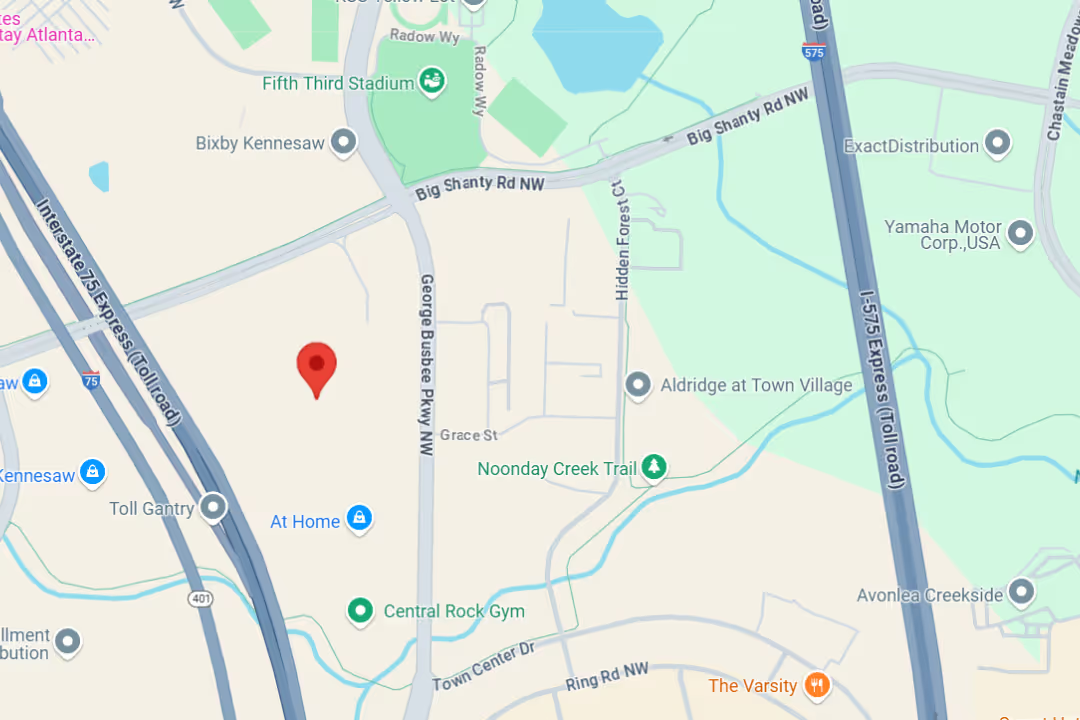
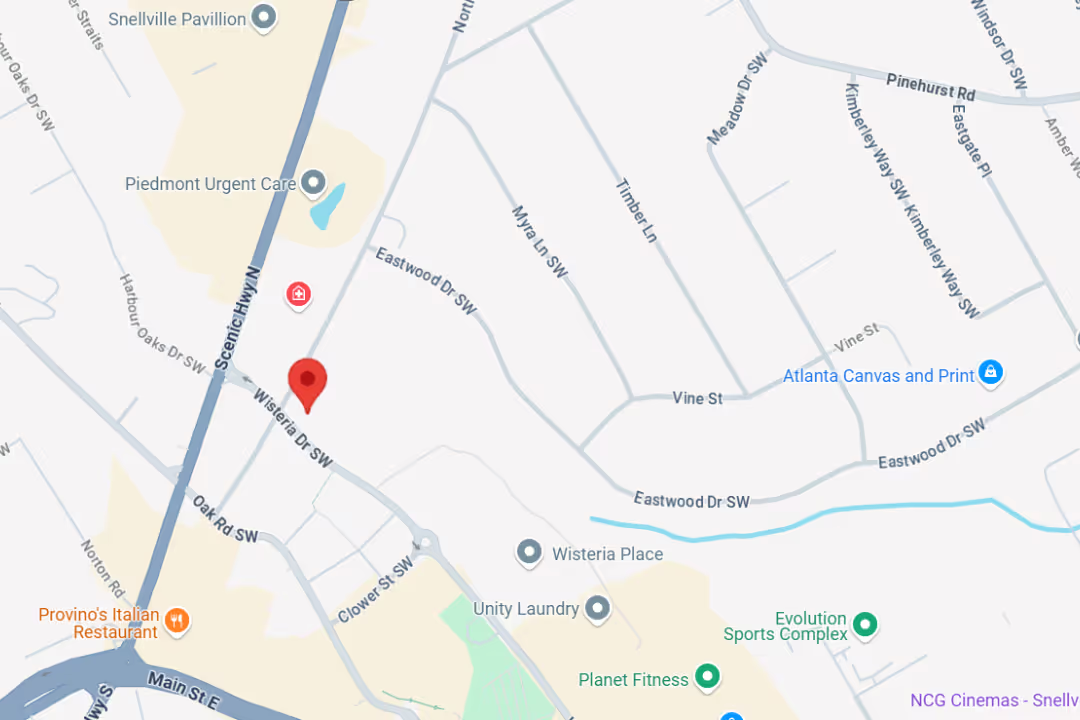
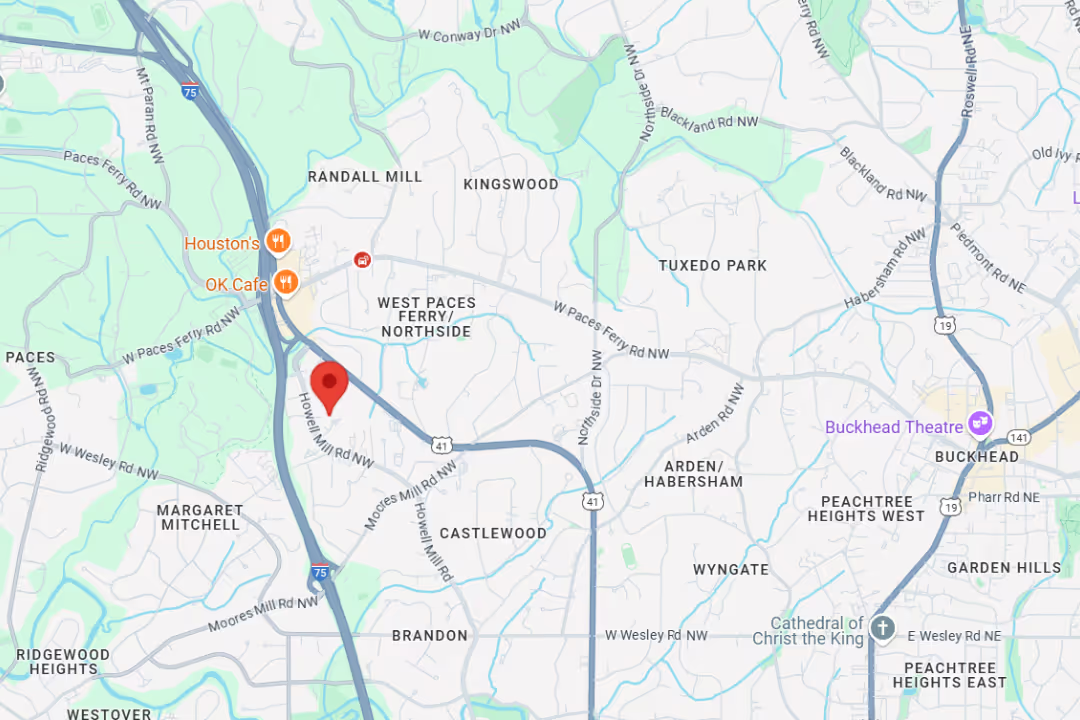
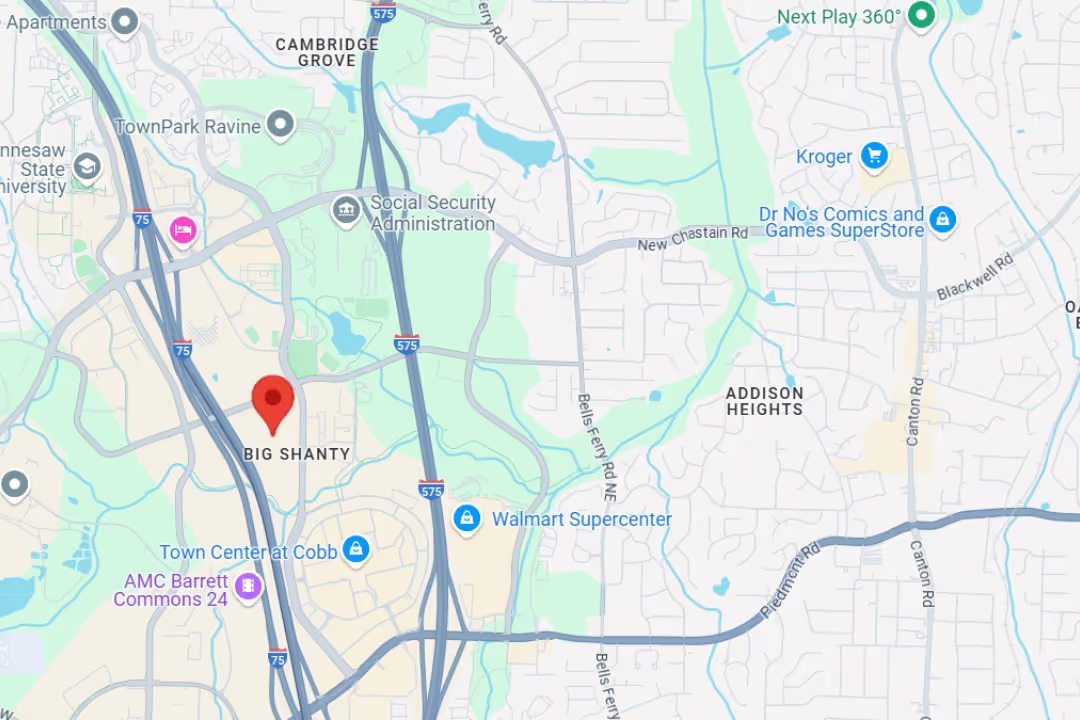
Locations:
Explore our library of patient support guides covering the conditions we treat, the treatments we offer, and the questions we hear most. Each one is written to help you understand your options and feel confident about your next step. Browse the topics below to learn more, or reach out to our team anytime.

At Medici, you’re more than your MRI.
We take time to hear your story, understand your pain, and create a plan that actually works for you.

Our team delivers specialist care at convenient locations across Metro Atlanta:
Get expert tips on injury recovery, pain relief, joint health, and movement strategies—straight from our Fellowship-Trained team.