It usually starts late at night. Your knee has been aching all week, maybe longer, and you finally give in and type "robotic knee replacement surgeons near me" into your phone. If that's how you found us, we want you to know something important right away. You're not overreacting, and you're not jumping to conclusions too fast.
Most people who search for robotic knee replacement have already tried the easier path. Physical therapy, injections, rest, ice, maybe even a brace. When those steps stop giving you your life back, it makes sense to ask what comes next. We built our practice around answering that question honestly, without rushing anyone toward surgery who isn't ready for it.
At Medici Orthopaedics & Spine, we combine advanced surgical technology with a philosophy that puts conservative care first. Surgery is never our default answer. But when a knee has genuinely reached the point where robotic assisted replacement is the right option, we want you to have a surgeon nearby who can do it well.
In a traditional knee replacement, the surgeon relies on manual instruments and their own visual judgment to size, align, and position the implant. Robotic assisted surgery adds a layer of precision on top of that skill. Before the procedure, imaging creates a 3D model of your unique knee anatomy.
During surgery, the robotic system helps guide the surgeon's instruments within a pre-planned range of motion. It does not perform the surgery independently. Think of it less like an autopilot and more like a highly advanced GPS system that helps a skilled driver stay exactly on course.
This is where a lot of people get the wrong idea. The robot doesn't replace the surgeon's judgment, training, or hands. It supports them.
A skilled surgeon still makes every meaningful decision in the operating room, including:
If your knee pain has moved beyond an occasional ache and started interfering with things like walking, climbing stairs, or getting in and out of a car, that's worth paying attention to. Many patients describe avoiding activities they used to enjoy simply because the pain isn't worth it anymore. When pain starts shrinking your world, that's a meaningful sign.
We always start with the least invasive options available, and most patients respond well to them. Physical therapy, anti-inflammatory approaches, and injections help a large percentage of people manage knee pain without surgery. When those treatments stop providing relief, or the relief doesn't last, surgery becomes a more reasonable next step.
Imaging often tells an important part of the story. Bone-on-bone contact, significant cartilage loss, or advanced joint degeneration are signs that the joint itself has changed in ways that therapy alone typically cannot reverse. In these cases, robotic assisted replacement may offer a more precise path forward.
Every knee is shaped a little differently. Robotic planning allows the surgical team to map your specific anatomy before ever making an incision. This personalized approach can help the implant sit and move more naturally within your joint, rather than relying on standard sizing alone.
One advantage many patients appreciate is the potential for more tissue-conserving surgery. Because the surgical plan is mapped out in advance, the surgeon can often work with more precision around healthy bone and soft tissue. Preserving as much natural structure as possible can matter for long-term joint function.
Every patient recovers differently, and we never promise a specific timeline. That said, many patients who undergo robotic assisted knee replacement report feeling encouraged by their early mobility. Precise alignment may also reduce certain stresses on the joint that can affect comfort down the road.
Surgeons who perform a high volume of robotic assisted knee replacements tend to develop a deeper, more intuitive command of the technology. Experience matters because every knee presents its own quirks, and a seasoned surgeon has likely seen a version of yours before.
Not every practice has an in-house ambulatory surgery center equipped for these procedures. Surgeons who operate out of dedicated surgical facilities often have more consistent access to the imaging, planning software, and equipment that robotic surgery depends on.
Your knee doesn't operate in isolation from the rest of your health. A strong surgical team looks at your overall condition, including things like:
Our mission has always centered on restoring quality of life through the most effective, least invasive, least drug-dependent care available. That means we explore physical therapy, regenerative medicine, and interventional treatments before recommending surgery. When surgery genuinely is the right answer, we move forward with confidence rather than hesitation.
Dr. Sonny Dosanjh leads our practice with a modern, patient-focused approach to orthopedic and spine care. Dr. Darren Newfield brings additional orthopedic surgical expertise to our team, with a strong focus on joint procedures. Together, they bring both surgical precision and a genuine commitment to conservative care first.
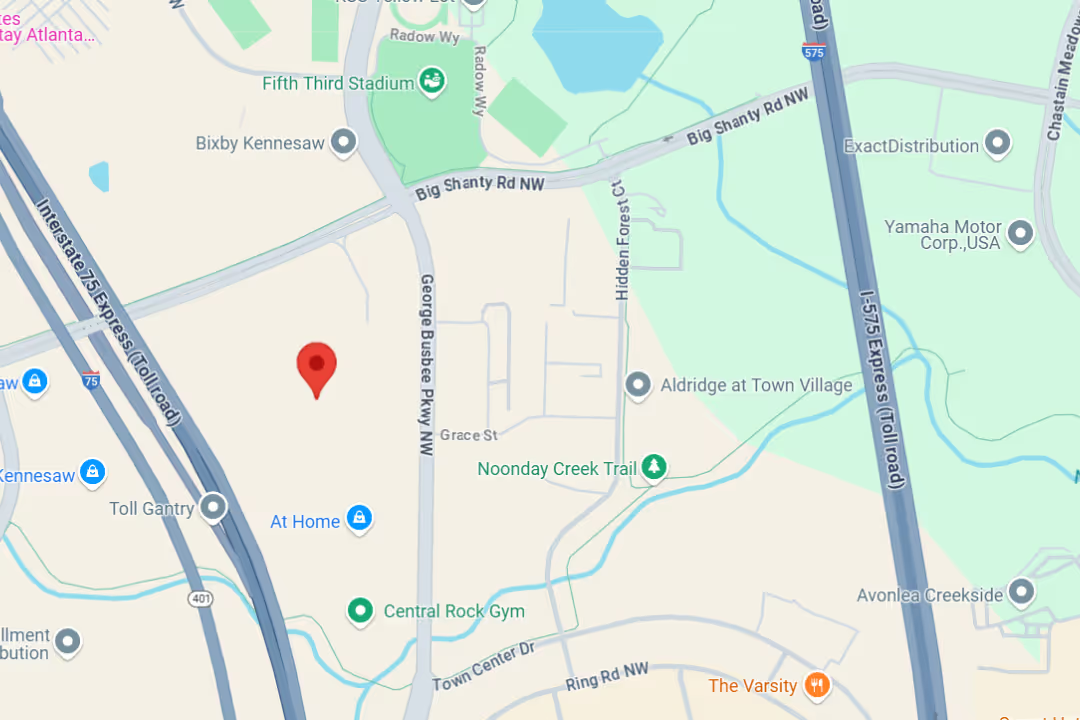
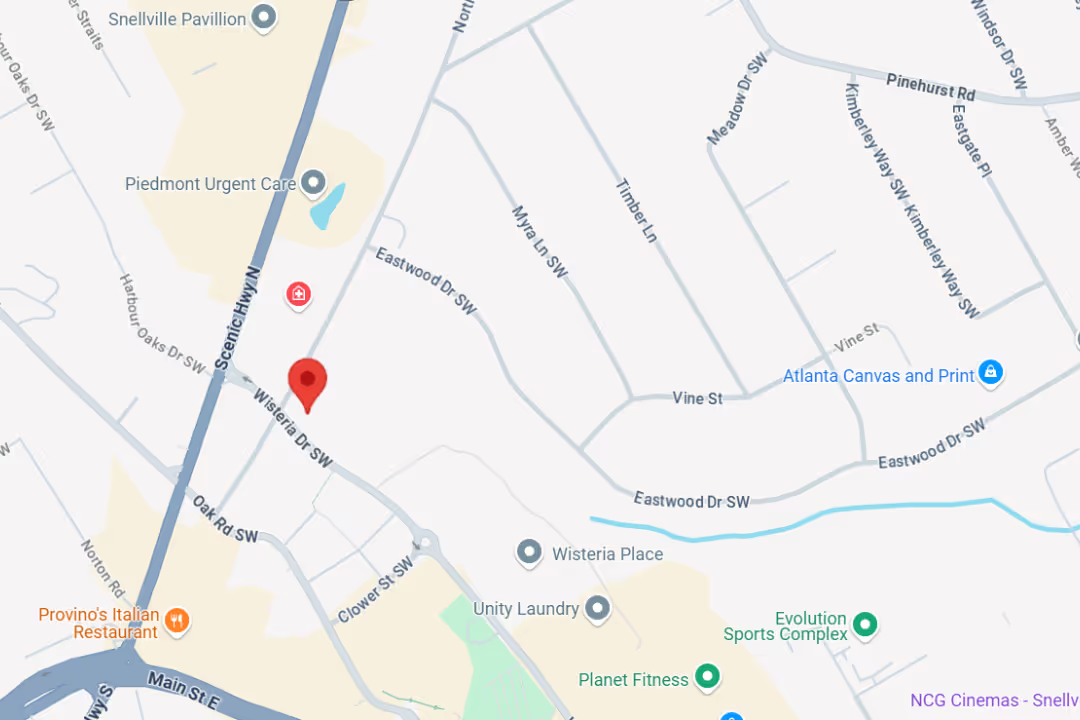
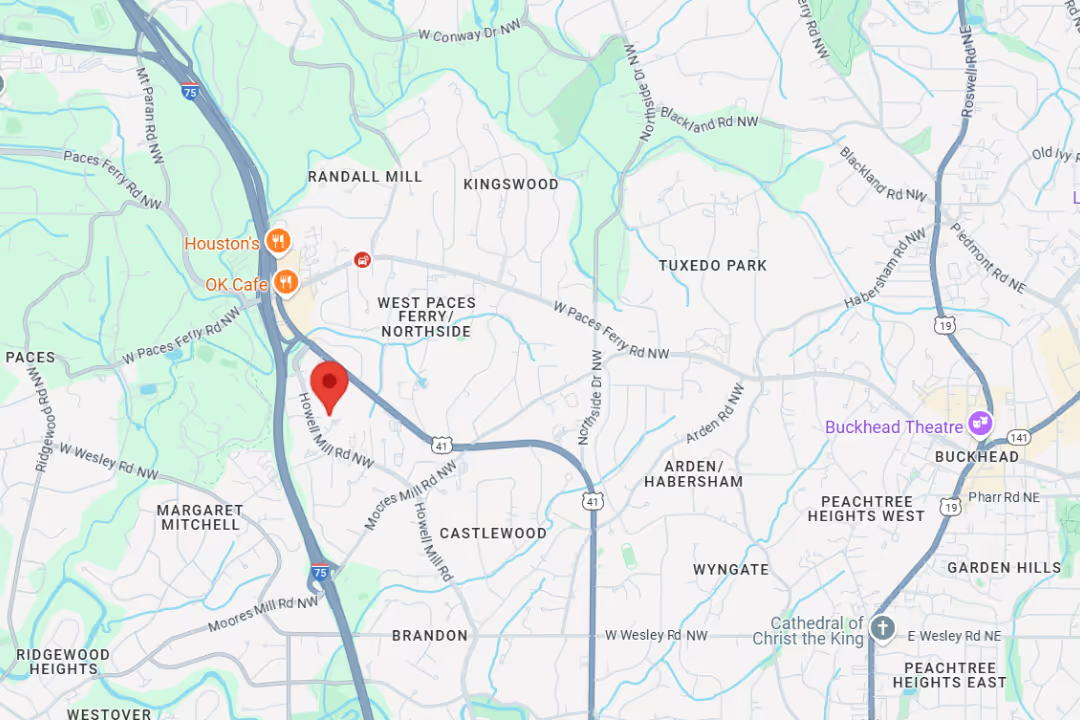
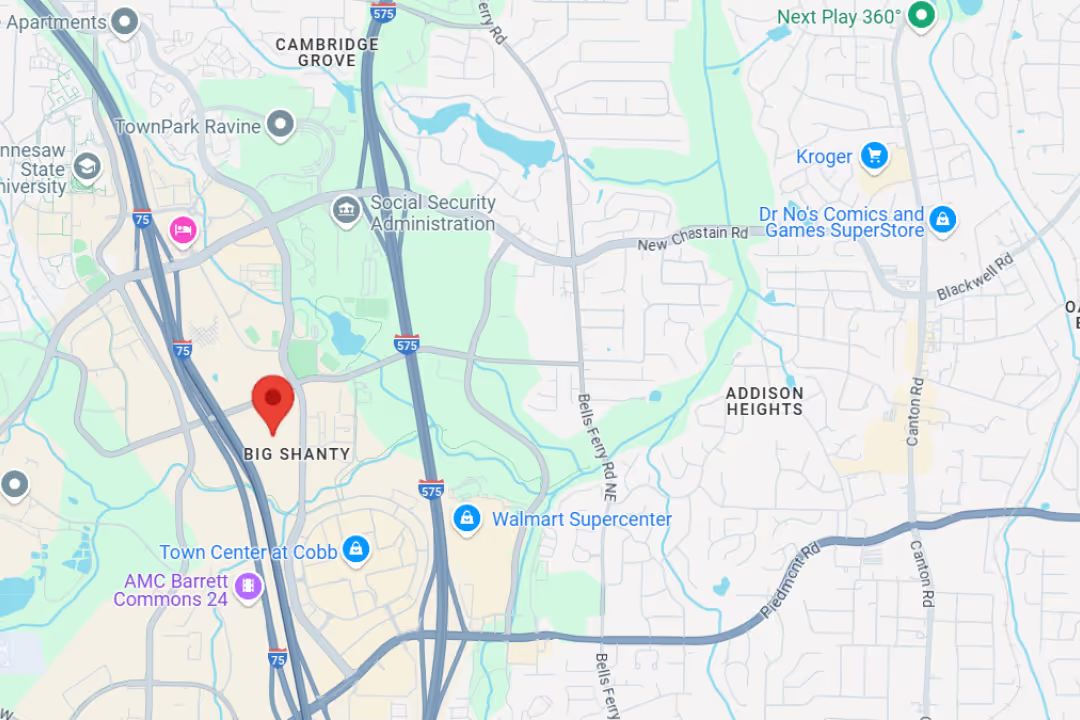
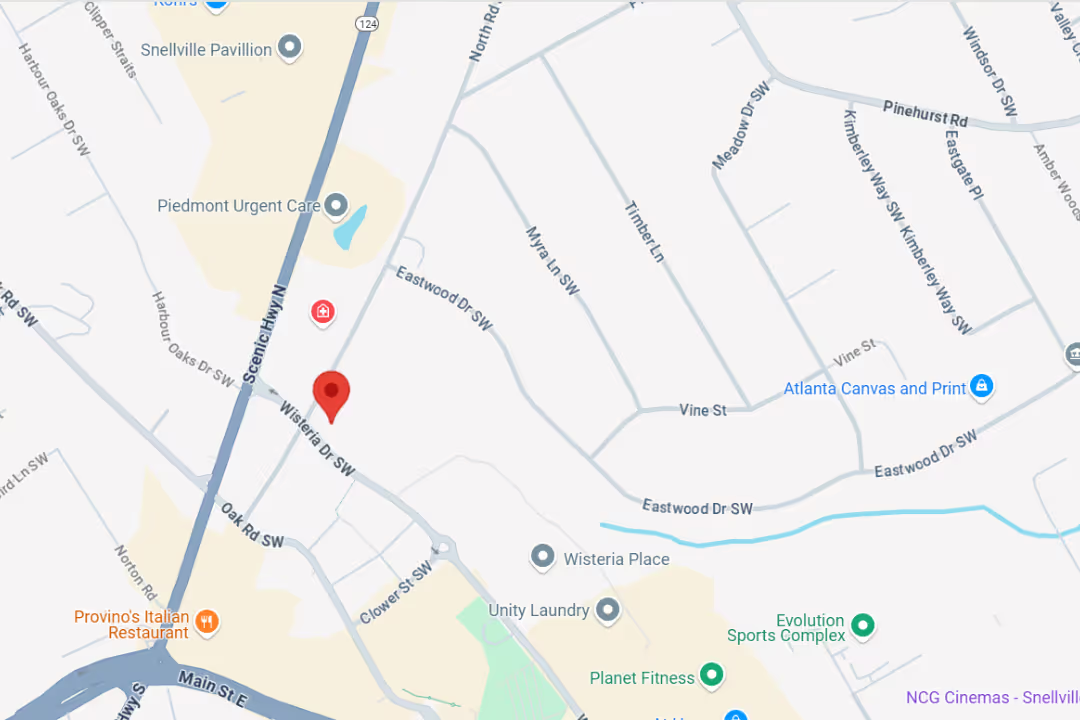
We operate ambulatory surgery centers in Marietta and Snellville, giving our surgical team consistent access to the technology robotic knee replacement requires. Our clinic locations in Kennesaw, Snellville, and Buckhead allow patients across the Atlanta area to begin care close to home.
Your first visit typically includes a physical exam, a review of your pain history, and imaging to assess the condition of your joint. This is also when we discuss whether conservative treatments have been fully explored or whether surgery makes more sense at this point.
If robotic assisted knee replacement is recommended, your surgery takes place at one of our surgery centers. The robotic system uses your pre-surgical imaging to help guide precise implant placement throughout the procedure. Most patients are able to begin light movement within the same day or the day following surgery.
Recovery is a partnership between your surgical team and your commitment to rehabilitation. Physical therapy typically begins soon after surgery to rebuild strength and range of motion. Every patient's timeline looks a little different, and our team stays involved throughout the process rather than stepping back after surgery day.
There's a particular kind of relief that comes with walking without calculating every step first. Climbing stairs without wincing, kneeling down to tie a shoe, playing with grandchildren on the floor. These small, ordinary moments are often what patients miss most, and they're often what brings people back to feeling like themselves again.
Choosing a surgeon for robotic knee replacement isn't a decision to make lightly, and it shouldn't be rushed. It deserves real conversation, honest imaging, and a team willing to walk through every option with you before recommending surgery. Whatever stage you're at in that process, we're glad you're taking it seriously.
If your knee pain has reached the point where daily life feels harder than it should, our team is ready to talk through your options. We'll review your history, discuss conservative treatments if you haven't exhausted them yet, and explain honestly whether robotic assisted knee replacement makes sense for you.
📞 Phone: +1-844-328-4624
🌐 Website: mediciortho.com
Locations:
Explore our library of patient support guides covering the conditions we treat, the treatments we offer, and the questions we hear most. Each one is written to help you understand your options and feel confident about your next step. Browse the topics below to learn more, or reach out to our team anytime.

At Medici, you’re more than your MRI.
We take time to hear your story, understand your pain, and create a plan that actually works for you.

Our team delivers specialist care at convenient locations across Metro Atlanta:
Get expert tips on injury recovery, pain relief, joint health, and movement strategies—straight from our Fellowship-Trained team.