Your knee does an enormous amount of work. It carries your weight up stairs, absorbs the impact of every step you take, and keeps you moving through all the activities that matter most to you. When something goes wrong with it, you feel the loss quickly. A knee that aches in the morning, locks up mid-stride, or gives out without warning doesn't just hurt. It interrupts your life in ways that ripple into everything else.
Most people spend longer than they should trying to manage knee pain on their own before they ever call a doctor. They rest, ice, stretch, and hope. And when that stops working, they're often unsure where to turn. Should they start with their primary care doctor? Go straight to a specialist? And what kind of specialist, exactly? The answer, for most people dealing with significant or persistent knee pain, is an orthopedic surgeon with a dedicated focus on knee care.
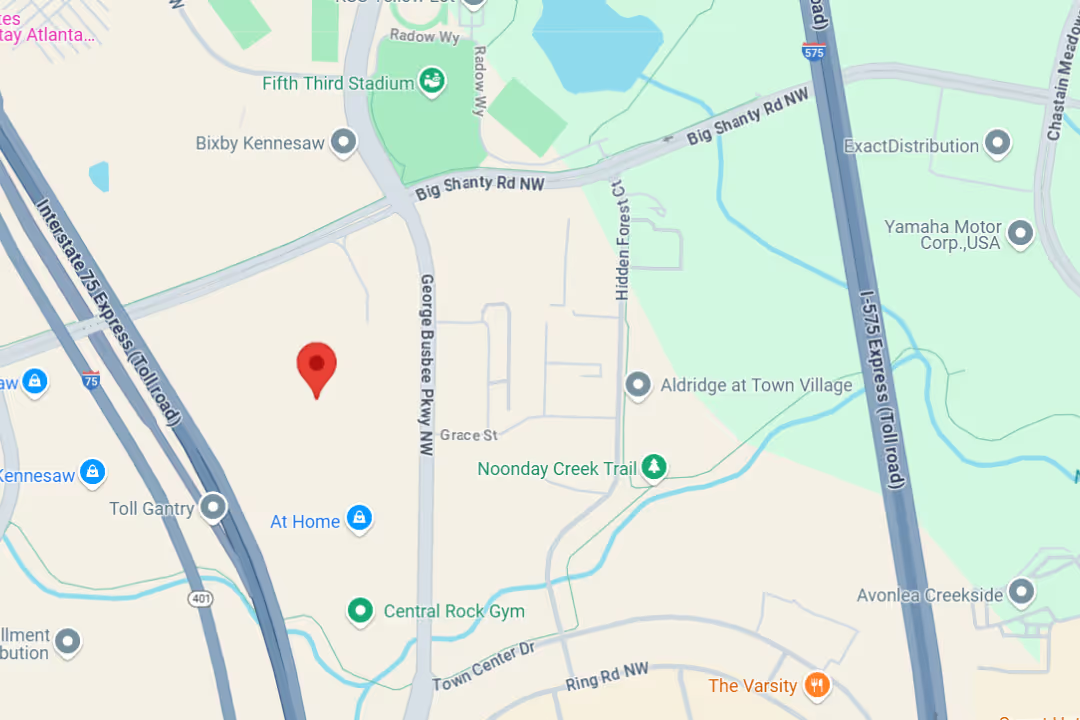
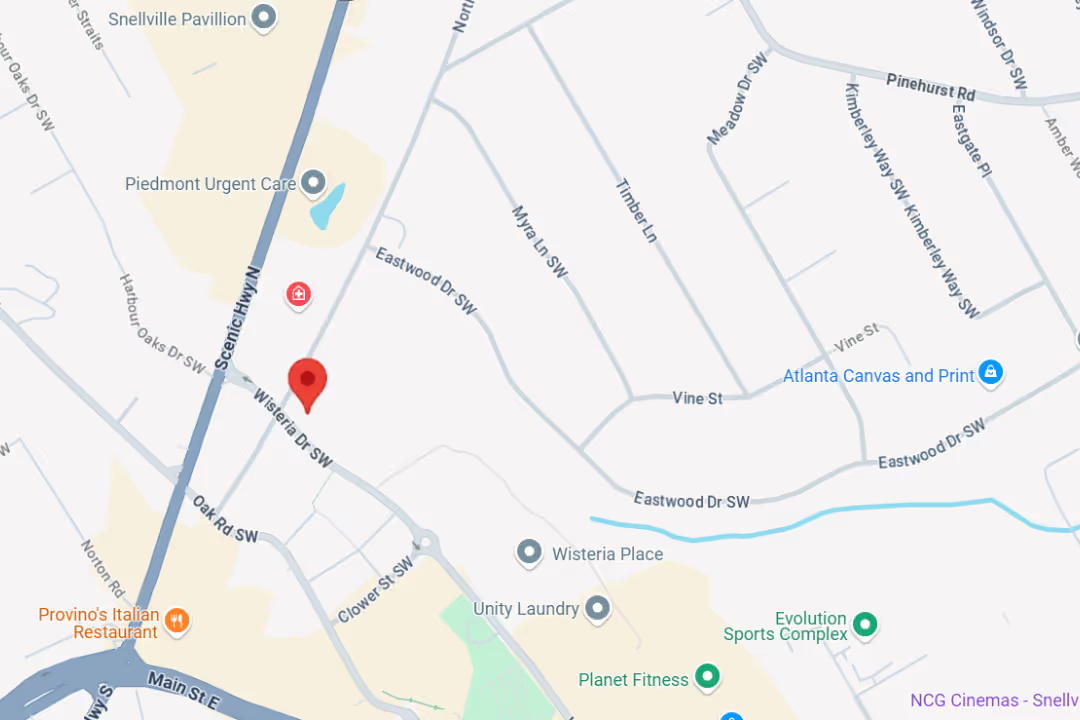
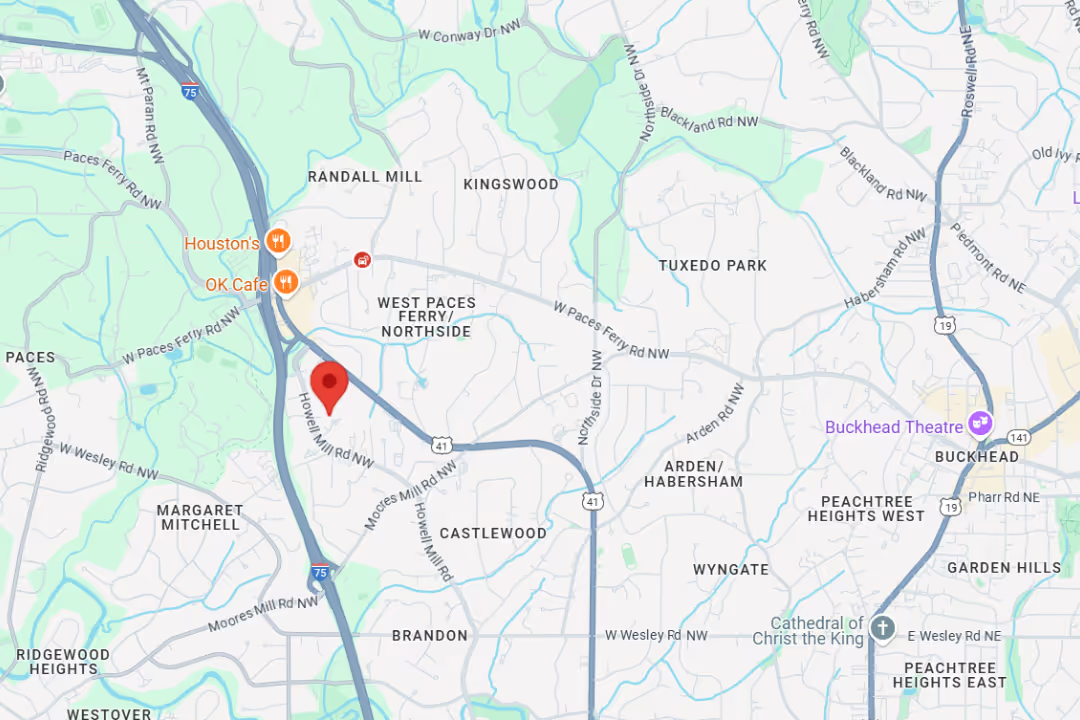
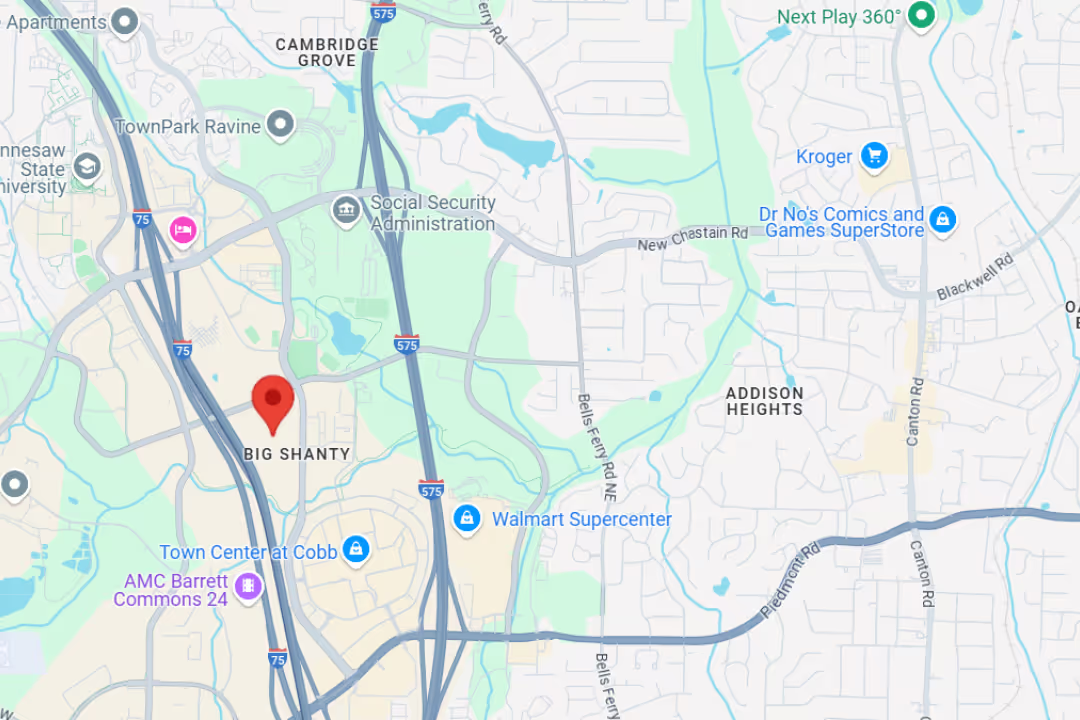
At Medici Orthopaedics & Spine, we work with knee patients every day across our metro Atlanta locations. We understand that most people aren't looking for the most aggressive treatment available. They want answers, a clear plan, and options that fit their life. That's what our team is here to provide.
All orthopedic surgeons complete medical school and a surgical residency focused on the musculoskeletal system. But the knee is a complex joint, and physicians who spend their careers focused on it develop a level of diagnostic precision and treatment depth that goes well beyond a generalist's scope. A knee-focused orthopedic surgeon has seen thousands of cases involving the same structures: cartilage, ligaments, tendons, menisci, and bone. That pattern recognition matters when it comes to finding the right diagnosis and the right treatment path.
When you're searching for a knee specialist, a few things are worth paying attention to:
Your primary care doctor can be a helpful first stop for acute, mild injuries. But there are situations where going directly to a knee specialist is the smarter move:
Knee osteoarthritis is the most common reason adults seek out an orthopedic knee specialist. It develops when the cartilage cushioning the joint gradually wears down, causing the bones to move against each other with less protection. The result is pain, stiffness, and swelling that tend to worsen over time, especially after periods of activity or long periods of sitting.
Ligament injuries are most common in athletes and physically active people, though they can happen to anyone. The ACL is one of the most frequently torn ligaments in the body, often injured during sudden pivots, stops, or landings. MCL tears tend to result from direct blows to the outer knee. Patellar tendon injuries are common in runners and jumpers and can range from tendinitis to partial or complete tears.
The menisci are two C-shaped pads of cartilage that act as shock absorbers between the thighbone and shinbone. Tears can happen suddenly during a twisting injury, or they can develop gradually over years of wear and degeneration. Symptoms typically include pain along the joint line, swelling, stiffness, and sometimes a catching or locking sensation.
Often called "runner's knee," patellofemoral pain syndrome involves pain around or behind the kneecap, usually related to how the kneecap tracks in its groove during movement. It's one of the most commonly mismanaged knee conditions because it can look like several other problems. A specialist can correctly identify what's happening and prescribe a targeted approach, which often doesn't require surgery at all.
Some patients come to us after a previous knee surgery that didn't go as planned. Persistent pain, stiffness, or instability after a procedure can have several causes, and sorting them out requires careful evaluation. Whether it's scar tissue, nerve involvement, or a structural issue that wasn't fully addressed the first time around, there are often additional options worth exploring.
Inflammation of the small fluid-filled sacs around the knee (bursae) or the tendons can cause significant pain and swelling. These conditions are often triggered by overuse, repetitive kneeling, or changes in activity level. They're typically very treatable without surgery, using targeted injections, physical therapy, and activity modification.
At Medici Orthopaedics & Spine, we lead with the least invasive, least drug-dependent approach that is medically appropriate for each patient. That means before anyone talks to you about surgery, we explore what can be accomplished through:
Regenerative medicine has expanded the range of options available to knee patients who haven't responded to conservative care but aren't ready for surgery or want to avoid it. We offer:
When conservative care alone isn't enough, targeted injections can provide significant pain relief and help patients engage more fully with physical therapy and rehabilitation. Options include:
When surgery is the right path, we favor minimally invasive approaches that reduce recovery time and surgical risk. Knee arthroscopy allows our surgeons to address a wide range of problems, including meniscus tears, loose bodies, and certain cartilage issues, through small incisions using a camera and specialized instruments. Recovery from arthroscopic procedures is generally faster and less disruptive than traditional open surgery.
Total and partial knee replacement are among the most successful surgical procedures in orthopedics, with high patient satisfaction rates when performed on the right candidates at the right time. We discuss knee replacement with patients when:
Choosing a knee specialist isn't just about credentials. It's about finding a team that will take your situation seriously, offer you a real range of options, and stay with you throughout your care, not just hand you off after a procedure. The relationship between patient and provider matters, especially when the condition you're dealing with has been affecting your life for months or years.
You don't have to figure this out alone, and you don't have to accept limitations that feel permanent. With the right evaluation and the right team, there's usually a path forward that makes life better than it is right now.
If knee pain has been slowing you down, limiting your activity, or simply making each day harder than it should be, an evaluation with our team is the place to start. We'll help you understand exactly what's happening with your knee, what your options are, and what a treatment plan built around your goals could look like.
Pain doesn't have to be your normal. The team at Medici Orthopaedics & Spine is here to help you explore the most effective, least invasive options available.
Explore our library of patient support guides covering the conditions we treat, the treatments we offer, and the questions we hear most. Each one is written to help you understand your options and feel confident about your next step. Browse the topics below to learn more, or reach out to our team anytime.

At Medici, you’re more than your MRI.
We take time to hear your story, understand your pain, and create a plan that actually works for you.

Our team delivers specialist care at convenient locations across Metro Atlanta:
Get expert tips on injury recovery, pain relief, joint health, and movement strategies—straight from our Fellowship-Trained team.