Most patients who walk into our office assuming they need a total knee replacement are surprised to learn that isn't always the case. When we look at their imaging, we often find the damage is isolated to one side of the knee, the outer or "lateral" compartment, while the rest of the joint remains healthy. That distinction matters more than people realize, because it opens the door to a more targeted, less invasive surgical option.
Lateral knee replacement, also called lateral unicompartmental knee replacement, is designed for exactly this situation. Instead of replacing the entire joint, we replace only the damaged portion, preserving healthy bone, cartilage, and ligaments wherever possible. For the right candidate, this can mean a shorter recovery, a more natural feeling knee, and less time away from the life they want to get back to.
If you're searching for lateral knee replacement near you in the greater Atlanta area, our team at Medici Orthopaedics & Spine has the surgical experience and diagnostic tools to determine whether this approach is right for your knee.
The knee joint is divided into three separate compartments: medial (inside), lateral (outside), and patellofemoral (behind the kneecap). Arthritis and cartilage damage don't always affect all three areas equally. In many patients, wear concentrates in just one compartment, most often the medial side, but a meaningful number of patients experience damage isolated to the lateral compartment instead.
When damage is confined to one compartment, replacing the entire knee may treat healthy tissue that didn't need to be touched. This is where partial, or unicompartmental, knee replacement comes in.
Lateral compartment arthritis behaves a bit differently than medial compartment arthritis, both in how it develops and how it's treated surgically. The lateral compartment has different anatomical considerations, including alignment patterns and ligament tension, that require a surgeon experienced specifically with this variation. Not every orthopedic surgeon performs lateral unicompartmental replacements regularly, since medial cases are more common.
This is one reason surgical experience matters so much when you're evaluating where to have this procedure done. A surgeon who has performed many lateral replacements will recognize nuances that a less experienced provider might miss.
Total knee replacement resurfaces all three compartments of the knee, along with the underlying bone. Lateral knee replacement resurfaces only the damaged outer compartment, leaving the medial compartment, patellofemoral joint, and most ligaments intact. Because more of your natural knee anatomy remains in place, many patients describe the joint as feeling more like their own knee after surgery.
One of the clearest indicators is pain that consistently locates to the outside of the knee, rather than pain that's diffuse or centered elsewhere. Patients often describe:
Standing X-rays, and sometimes MRI, allow us to see exactly where cartilage has worn down and how much bone remains healthy. In lateral compartment candidates, we typically see joint space narrowing concentrated on the outer side of the knee, while the medial compartment and patellofemoral joint show minimal wear. Imaging also helps us assess alignment, since some patients with lateral compartment arthritis develop a valgus, or knock-kneed, alignment pattern.
This imaging step isn't just a formality. It's the primary way we determine whether a lateral replacement is appropriate or whether a different approach makes more sense.
We always start with the least invasive option that makes sense for your situation. Many patients try physical therapy, anti-inflammatory medication, activity modification, or injections before surgery is ever discussed. Lateral knee replacement typically becomes a consideration when:
Before recommending lateral knee replacement, we conduct a thorough evaluation that includes weight-bearing X-rays, a physical exam assessing ligament stability and alignment, and often an MRI to confirm the extent and location of cartilage damage. This step protects you from having the wrong procedure recommended. It also gives us the information we need to plan implant sizing and positioning ahead of time.
Lateral knee replacement is performed through a smaller incision than total knee replacement, since only the outer compartment needs to be accessed. The damaged cartilage and a thin layer of bone are removed and replaced with a metal and plastic implant designed to recreate smooth joint movement. Because the medial compartment and most ligaments are left untouched, the surgery preserves much of the knee's original mechanics.
Many patients are candidates for this procedure on an outpatient or short-stay basis, depending on their overall health and how the surgery goes. Dr. Darren Newfield, our orthopedic surgeon, evaluates each case individually to determine the safest and most effective surgical plan.
Modern unicompartmental implants are built with durable metal alloys and high-grade polyethylene designed to withstand years of normal use. While no implant lasts forever, many patients get well over a decade of reliable function from a properly placed lateral knee replacement. Should the rest of the knee eventually develop arthritis, a partial replacement can often be converted to a total knee replacement later, giving patients flexibility down the road.
Most patients begin walking with assistance the same day as surgery or the day after. Swelling and soreness are expected during this window, and we typically recommend ice, elevation, and a structured physical therapy plan to restore motion early. Pain is usually more manageable than patients anticipate, partly because the surgery involves less tissue disruption than total knee replacement.
Many patients transition off assistive devices like a cane or walker within two to four weeks, though this varies by individual. Light daily activities, including walking and light household tasks, often resume within the first month. Higher impact activities, driving, and return to physically demanding work are typically evaluated on a case by case basis with guidance from your surgical team.
Physical therapy plays a central role in long-term success, helping patients rebuild strength and confidence in the joint. Most patients report significant pain relief and improved function within a few months of surgery. Continued follow-up allows us to monitor implant function and address any concerns early.
Living with knee pain that limits the things you love to do is frustrating, especially when you're not sure which treatment path actually fits your situation. Understanding that a more targeted option like lateral knee replacement exists can change the entire conversation about what's possible for your recovery. The right answer always starts with an accurate diagnosis, not an assumption about what surgery you'll need.
Every knee tells a different story through its imaging and symptoms, and that story is what should guide the treatment plan, not a one size fits all approach. Whether your damage turns out to be isolated to the lateral compartment or something else entirely, getting clarity is the first real step toward feeling better. Our team is here to help you find that clarity with a thorough, honest evaluation.
If outer knee pain has been limiting your daily life, it's worth finding out exactly what's causing it and which treatment options actually apply to you. Our team at Medici Orthopaedics & Spine will evaluate your knee, review your imaging, and walk you through every option available, from conservative care to lateral knee replacement when appropriate.
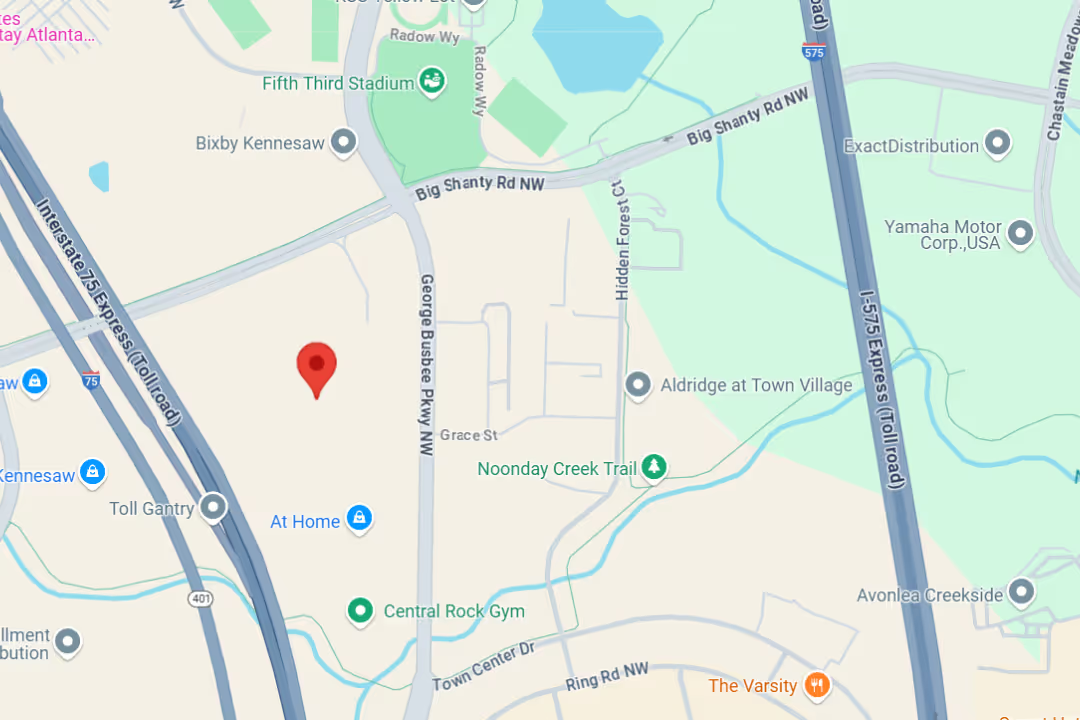
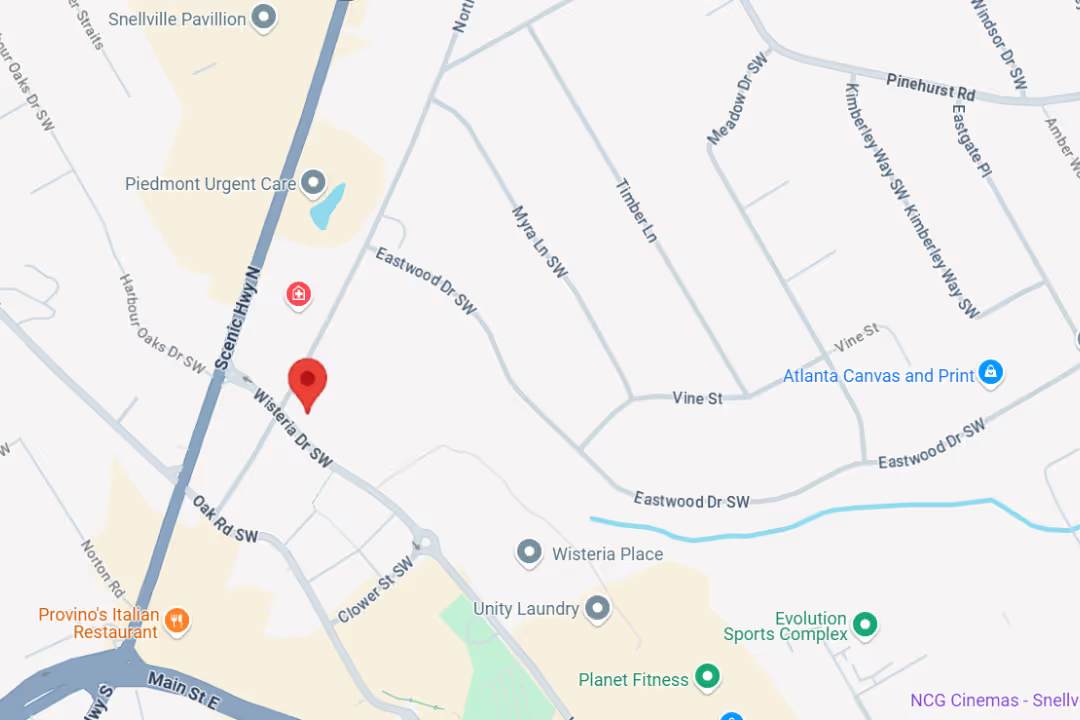
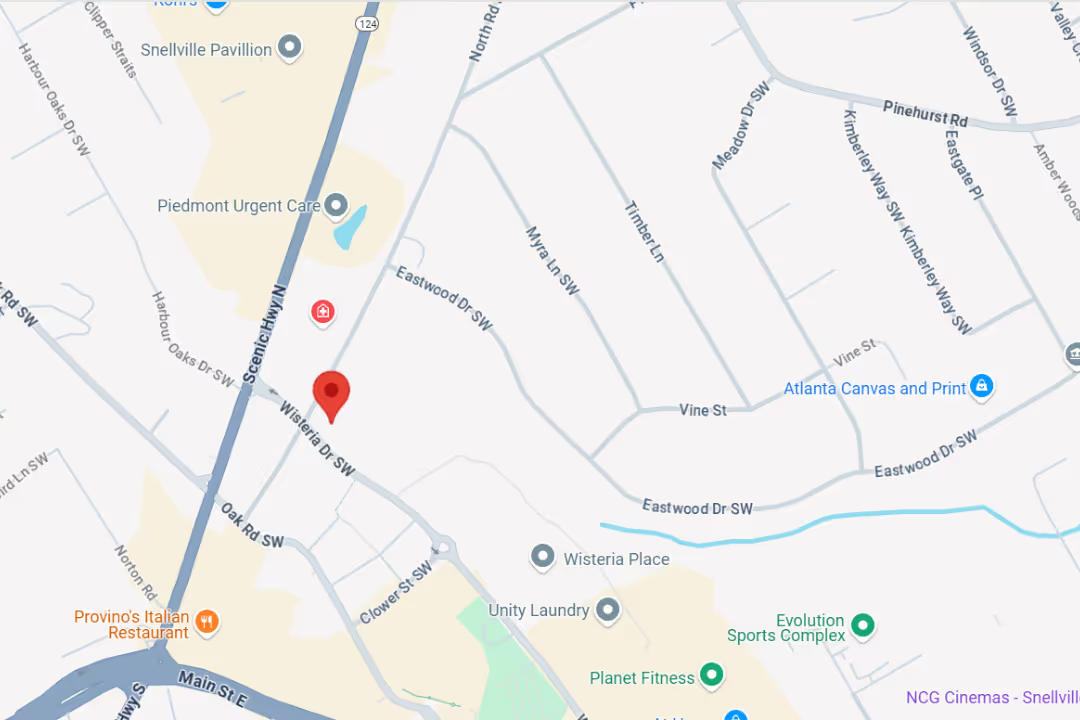
Locations:
Explore our library of patient support guides covering the conditions we treat, the treatments we offer, and the questions we hear most. Each one is written to help you understand your options and feel confident about your next step. Browse the topics below to learn more, or reach out to our team anytime.

At Medici, you’re more than your MRI.
We take time to hear your story, understand your pain, and create a plan that actually works for you.

Our team delivers specialist care at convenient locations across Metro Atlanta:
Get expert tips on injury recovery, pain relief, joint health, and movement strategies—straight from our Fellowship-Trained team.