Degenerative disc disease is one of the most common causes of chronic back and neck pain, affecting millions of people as they age. What often starts as mild discomfort can gradually evolve into persistent pain that interferes with movement, sleep, and overall daily function.
As the spine undergoes natural changes over time, the discs that once provided cushioning and flexibility begin to wear down. This process can lead to stiffness, instability, and ongoing discomfort that limits mobility and makes even simple tasks feel difficult.
For many individuals, this condition impacts more than just physical health—it can affect work performance, daily routines, and overall quality of life. Activities like sitting for extended periods, lifting, or even walking can become challenging.
That’s why a comprehensive, non-surgical-first approach to pain management is so important. Rather than jumping straight to invasive procedures, modern treatment focuses on relieving pain, improving function, and supporting long-term spinal health through minimally invasive and conservative therapies.
Degenerative disc disease refers to the gradual breakdown of the spinal discs—the soft, cushion-like structures that sit between each vertebra. These discs act as shock absorbers, allowing the spine to move smoothly and handle daily stress.
As these discs begin to deteriorate, they lose their ability to perform these functions effectively, leading to pain and reduced mobility.
Disc degeneration is often a natural part of aging. Over time:
While this process is common, not everyone experiences pain—symptoms typically arise when degeneration begins to affect surrounding structures.
Healthy discs are rich in water, which helps them remain flexible and absorb shock. As degeneration progresses:
This loss of cushioning can lead to increased pressure within the spine.
As discs deteriorate, several changes can contribute to pain:
Together, these factors can create a cycle of discomfort, instability, and limited mobility.
While aging is the most common factor, degenerative disc disease is often influenced by a combination of lifestyle, physical stress, and individual predispositions.
Physical therapy is a cornerstone of managing degenerative disc disease. It helps stabilize the spine and correct the underlying issues contributing to pain.
Over time, these changes can significantly reduce pain and improve function without invasive intervention.
Medication can be a helpful tool when used strategically and responsibly as part of a broader treatment plan.
At Medici, the emphasis is always on minimizing reliance on medication while maximizing results.
Small, consistent changes in daily habits can have a major impact on managing degenerative disc disease.
Epidural steroid injections are one of the most commonly used treatments for pain associated with degenerative disc disease, especially when nerves are involved.
These injections are often used to break the cycle of inflammation and pain, creating a window for healing and recovery.
Facet joints are small joints in the spine that can become painful as discs degenerate and spinal mechanics change.
This dual-purpose approach makes facet injections a valuable tool in both diagnosis and treatment.
Radiofrequency ablation is a longer-lasting solution for patients dealing with chronic pain related to degenerative disc disease.
RFA offers a way to manage ongoing pain without repeated reliance on medications or frequent procedures.
For patients with persistent or treatment-resistant pain, spinal cord stimulation provides an advanced, technology-driven solution.
At Medici Orthopaedics & Spine, regenerative therapies are carefully integrated into personalized care plans—helping patients move beyond pain management and toward meaningful healing.
Degenerative disc disease doesn’t have to define your life—but it does require the right approach. Too often, patients are left choosing between living with pain or considering major surgery. The reality is, there’s a more balanced and effective path forward.
By combining non-surgical therapies, minimally invasive treatments, and regenerative medicine, it’s possible to address both the symptoms and the underlying causes of your pain. This comprehensive approach not only reduces discomfort but also restores function, improves mobility, and supports long-term spinal health.
When treatment is tailored to your specific condition and guided by precision, you’re no longer just managing pain—you’re actively reclaiming your quality of life.
If you’re living with degenerative disc disease, you don’t have to accept chronic pain as your new normal—and you don’t have to navigate your options alone.
At Medici Orthopaedics & Spine, we specialize in advanced pain management solutions designed to relieve discomfort, restore mobility, and help you get back to doing what you love. Our team takes the time to understand your condition, your goals, and how your pain is affecting your life—so we can create a plan that truly works for you.
Using the most effective, least invasive treatments available, we focus on delivering real, lasting results—not temporary fixes. Whether you’re early in your symptoms or have been struggling for years, there is a path forward.
📞 Call us today: +1-844-328-4624
🌐 Visit us online: https://www.mediciortho.com/
Explore our library of patient support guides covering the conditions we treat, the treatments we offer, and the questions we hear most. Each one is written to help you understand your options and feel confident about your next step. Browse the topics below to learn more, or reach out to our team anytime.

At Medici, you’re more than your MRI.
We take time to hear your story, understand your pain, and create a plan that actually works for you.

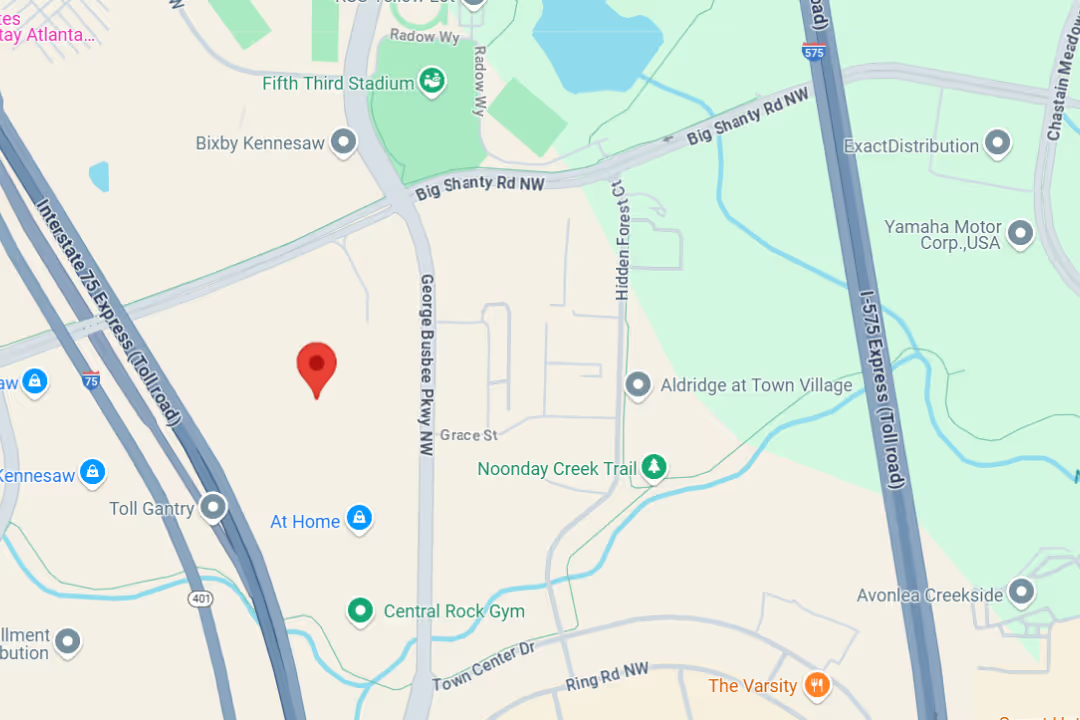
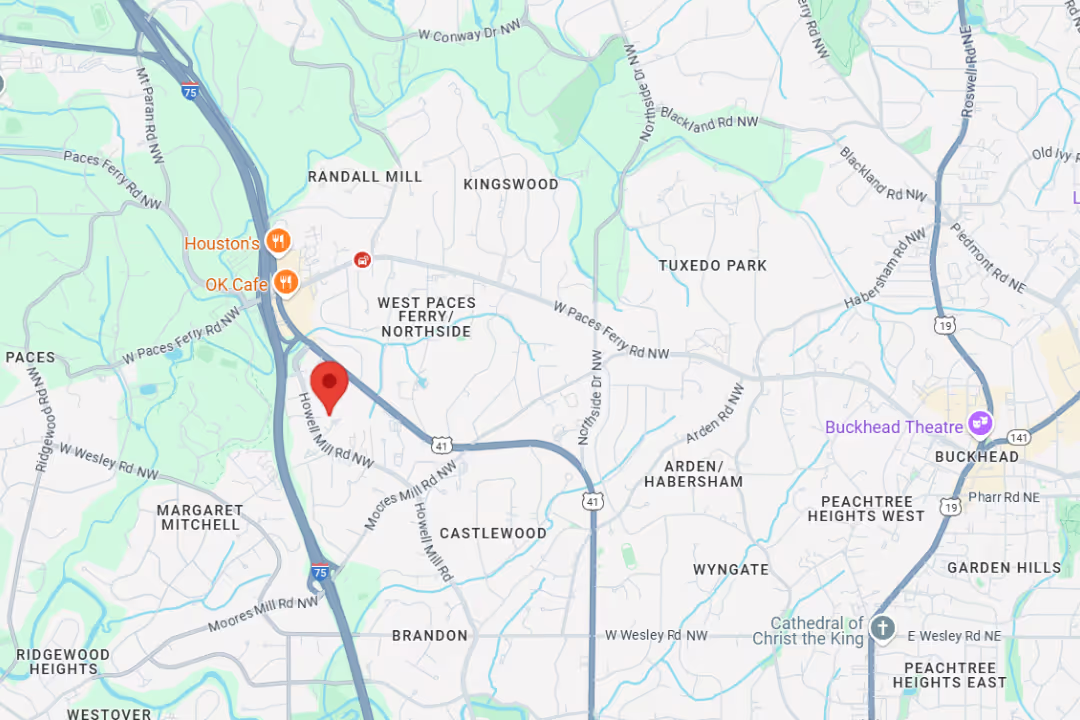
Our team delivers specialist care at convenient locations across Metro Atlanta:
Get expert tips on injury recovery, pain relief, joint health, and movement strategies—straight from our Fellowship-Trained team.