
Yes, a spinal cord stimulator may help if sciatica keeps causing leg and nerve pain despite other treatment. It sends mild electrical signals near the spinal cord to change how pain signals reach the brain. It does not fix the cause of sciatica, but a short trial lets you test whether it helps before you decide on an implant. A trial is usually considered successful when pain drops by at least 50%.
The first step is to confirm what is causing your pain and whether treatments such as physical therapy or injections could still help. Spinal cord stimulation is generally considered for persistent nerve pain, not as a first treatment for new sciatica.
I'm Sonny Dosanjh, M.D., a physician trained in physical medicine, rehabilitation, and pain management who treats sciatica and post-surgical nerve pain. At Medici Orthopaedics & Spine, I help patients assess whether a spinal cord stimulator for sciatica fits their goals and treatment history.
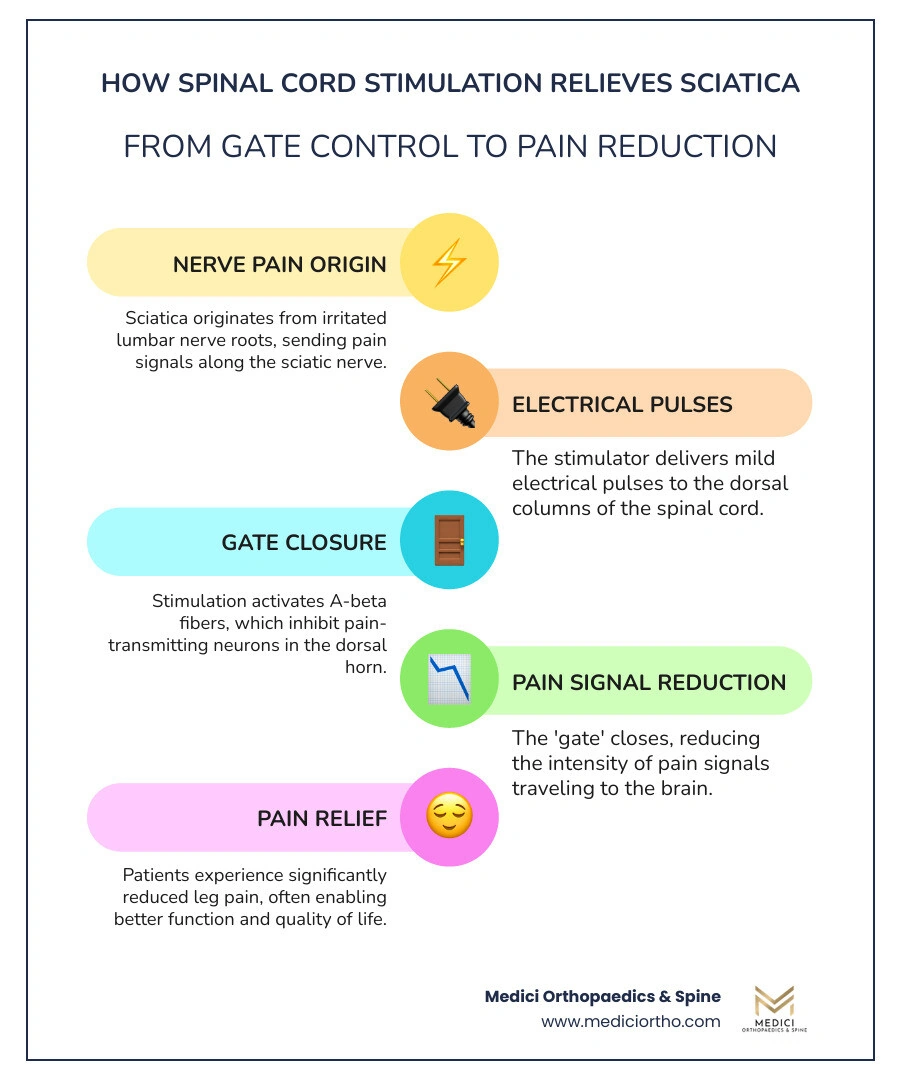
To understand how neuromodulation calms severe, burning nerve pain down the leg, we look at how the central nervous system processes sensory information. At its foundational level, spinal cord stimulation (SCS) relies on the classic Gate Control Theory of pain (NBK553154). The dorsal columns of the spinal cord act as a neural gateway. By delivering targeted, low-voltage electrical pulses to these pathways, SCS activates large-diameter, myelinated A-beta nerve fibers. These fibers carry non-painful sensory signals—such as light touch or vibration.
When these A-beta fibers are stimulated, they activate inhibitory interneurons within the superficial dorsal horn of the spinal cord. This effectively "closes the gate" on incoming nociceptive (pain) signals traveling along small, unmyelinated C-fibers and lightly myelinated A-delta fibers from the sciatic nerve. As a result, the intensity of the pain signal reaching the thalamus and cerebral cortex is markedly diminished.
Rather than experiencing a sharp, electric jolt traveling down the leg, the brain perceives a mild, soothing sensation (known as paresthesia) or, with modern subperception waveforms, no sensation at all—just profound pain relief. A comprehensive overview of these neuropathic pain management mechanisms highlights how electrical field stimulation disrupts the repetitive firing cycles characteristic of chronic radicular pain.

Beyond the classical electrical "gate," research reveals that neuromodulation triggers profound biological and chemical changes in the spinal cord microenvironment. Chronic sciatica is not simply a mechanical pinch on a nerve root; sustained compression and injury lead to robust neuroinflammation within the spinal dorsal horn, causing central sensitization and chronic hyperalgesia (Wong et al., 2022).
When peripheral nerves are irritated, non-neuronal glial cells (astrocytes and microglia) become hyperactive. This glial proliferation releases pro-inflammatory cytokines, including nuclear factor-kappa B (NF-κB), tumor necrosis factor-alpha (TNF-α), interleukin-1 beta (IL-1β), and interleukin-6 (IL-6), which heighten neuronal excitability and amplify pain perception.
Pre-clinical studies evaluating nerve stimulation protocols demonstrate that targeted electrical stimulation directly downregulates these inflammatory signaling cascades (Wong et al., 2022). In animal models of lumbar nerve root injury, low- and mid-frequency nerve stimulation (such as 2 Hz and 20 Hz) reduced the activation of dorsal horn astrocytes and microglia by up to 76.9% compared to sham stimulation (Wong et al., 2022). This glial suppression was accompanied by a 1.6-fold decrease in spinal NF-κB expression and significant reductions in TNF-α and IL-1β (Wong et al., 2022).
Simultaneously, stimulation engages the body's natural descending pain inhibition pathways. Targeted electrical impulses stimulate tryptophan hydroxylase 2 (TPH2+) serotonergic neurons located in the rostral ventromedial medulla (RVM) (Wong et al., 2022). This increases the release of endogenous inhibitory neurotransmitters, such as gamma-aminobutyric acid (GABA) and serotonin (5-HT), down into the dorsal horn, further dampening hyperexcitable sciatic pathways.
SCS engineering has evolved dramatically from the early days of basic, continuous buzzing. Today, we utilize multiple advanced waveform modalities tailored to a patient's unique nerve profile and lifestyle preferences:
Spinal cord stimulation is not an initial treatment for a sudden bout of sciatica. Instead, it serves as a powerful, evidence-based intervention for individuals suffering from chronic, unyielding radiculopathy who have exhausted traditional conservative options.
Common clinical indications include:
When addressing persistent sciatica and lumbar radiculopathy, our clinical goal is always to maximize conservative and interventional management first. However, when anti-inflammatory medications, physical rehabilitation, and fluoroscopic epidural steroid injections fail to provide lasting benefits, evaluating options for sciatica treatment without surgery leads naturally to neuromodulation.
Determining candidacy involves a structured, multi-step clinical assessment. We look for specific markers that predict long-term procedural success and improved quality of life:
Understanding who qualifies for spinal cord stimulation helps patients navigate the transition from managing symptoms with medications to adopting advanced bioelectric therapies.
Contraindications include active systemic or local skin infections, uncorrectable bleeding disorders, immunosuppression that elevates surgical risk, severe untreated cognitive impairment, or the ongoing need for non-compatible therapeutic modalities.
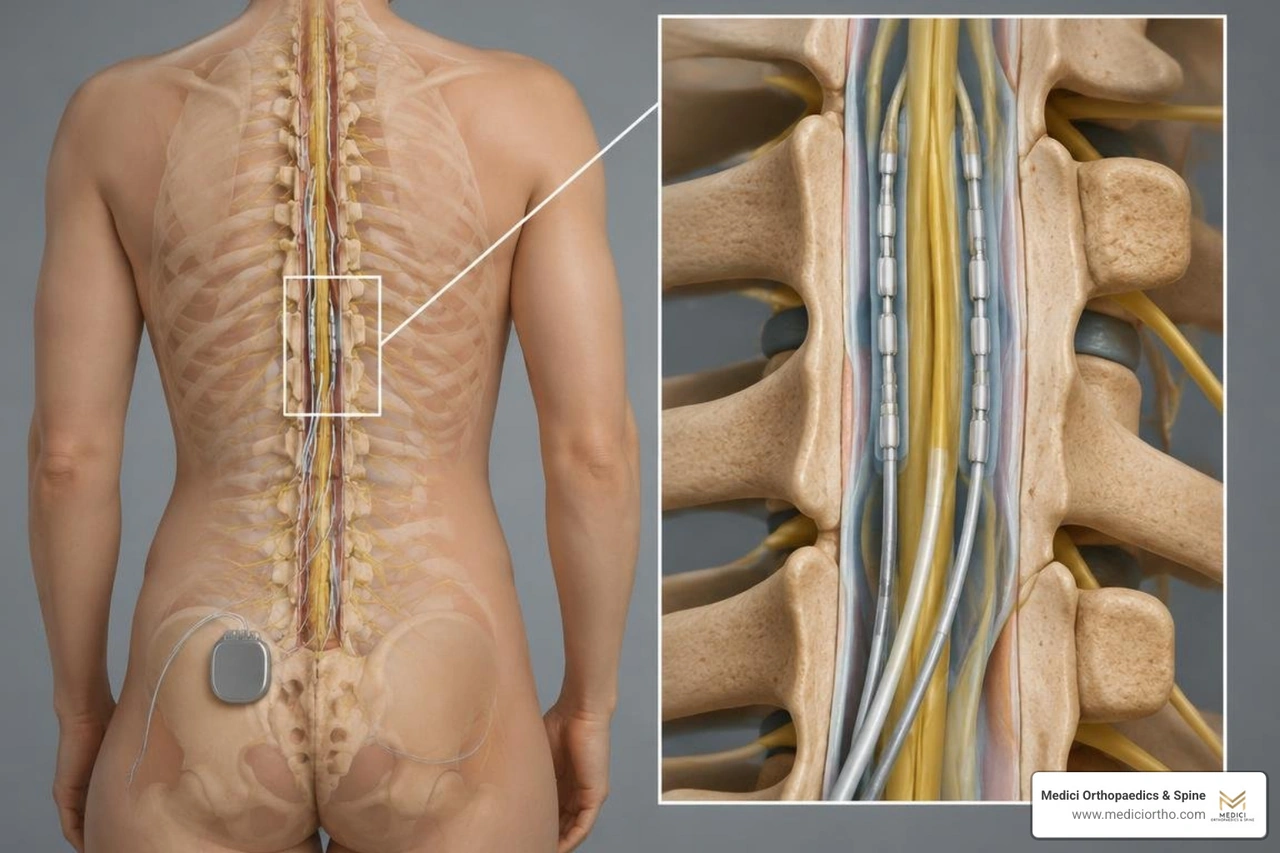
Targeting sciatica with SCS requires precise anatomical lead placement. Sciatic pain generally originates from the L4, L5, S1, and S2 nerve roots. However, the sensory fibers carrying these pain signals travel upward together within the posterior dorsal columns of the thoracic spine.
To achieve optimal therapeutic coverage of the low back, buttock, posterior thigh, calf, and sole of the foot, thin medical leads with electrical contacts are positioned in the epidural space, usually between the T8 and T11 vertebrae. By placing the leads at these mid-to-lower thoracic levels, the electrical field captures the convergent sensory pathways before they ascend toward the brain, ensuring broad, uniform coverage across the entire sciatic distribution.
One of the greatest advantages of neuromodulation is its reversible "test-drive" approach. Unlike irreversible spinal fusions or discectomies, patients can test a temporary stimulator during their regular daily activities before committing to a permanent implant. Our spinal cord stimulator complete guide details every stage of this patient-friendly process.
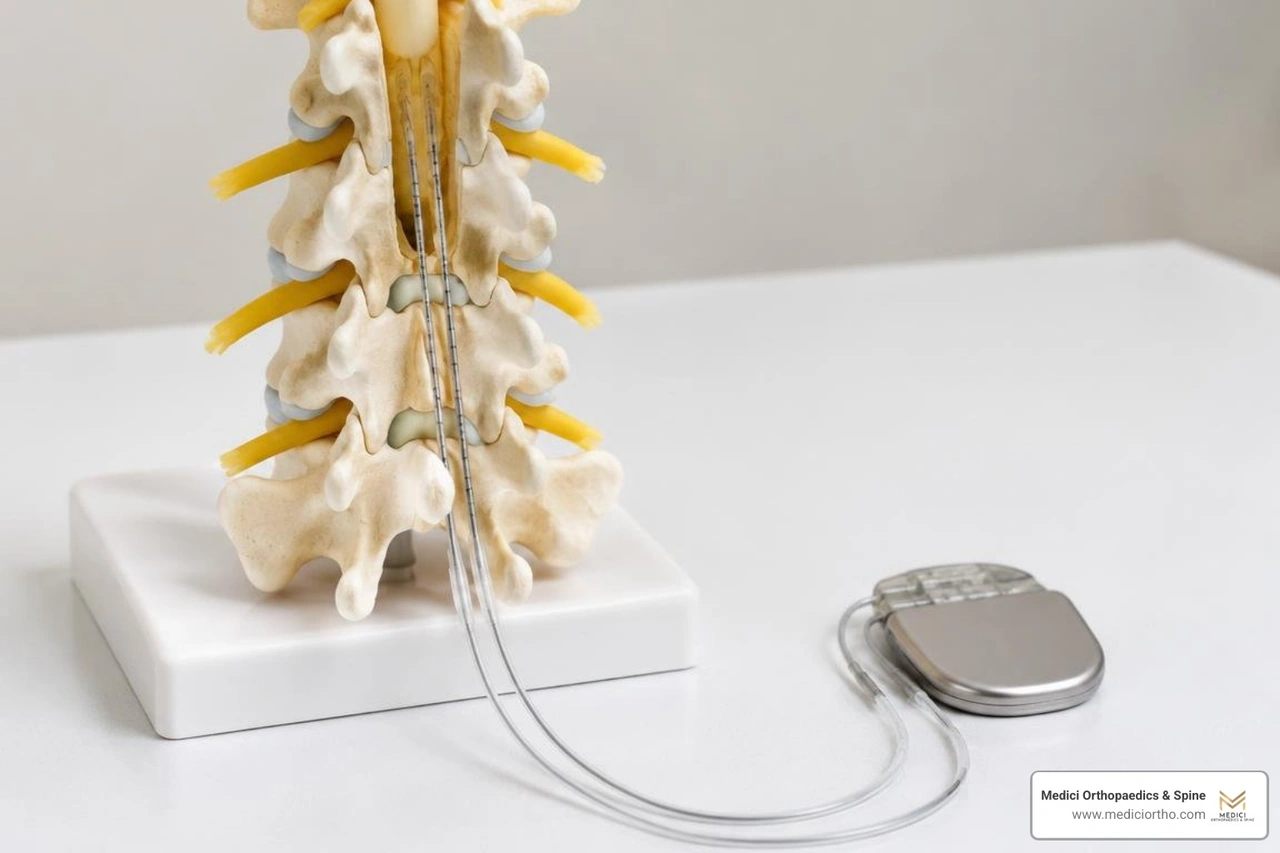
The trial phase is a minimally invasive outpatient procedure performed under local anesthesia with light sedation:
The benchmark for proceeding to permanent implantation is achieving at least a 50% reduction in pain, alongside measurable improvements in daily function (such as walking further or sitting without severe leg discomfort). The spinal stimulator trial process provides definitive proof of whether neuromodulation can quiet your specific nerve pain before a permanent decision is made.
If the trial is successful, the temporary leads are gently removed in the clinic, and the permanent procedure is scheduled.
During the permanent implantation:
Postoperative Recovery:Recovery typically takes 4 to 6 weeks (NBK553154). During this initial healing window, patients are advised to avoid heavy lifting (over 10 pounds), twisting, or excessive bending to allow natural scar tissue to form around the leads and lock them firmly into place. Most patients return to desk work within a week or two and gradually resume full physical activities by week six.
Longevity and Maintenance:Modern IPG batteries are engineered to last a minimum of 10 years, with many systems functioning well beyond that window depending on the selected waveform, frequency settings, and daily usage. Patients can choose between:
Routine clinical follow-ups allow our team to fine-tune stimulation programs via an external Bluetooth programmer, ensuring pain control remains optimized over the long term.
Long-term clinical studies demonstrate that pain relief from an SCS system remains durable for many years (NBK553154). Unlike oral medications that often require escalating doses due to pharmacological tolerance, spinal cord stimulation utilizes adaptable programming. If your pain patterns shift over time, our clinicians can non-invasively update your waveform, frequency, or electrode contact combinations during an office visit without additional surgery. With batteries lasting 10 years or more, neuromodulation provides sustained, multi-year support for active lifestyles.
An SCS does not physically unpinch a nerve, dissolve a herniated disc, or reverse severe arthritis. Instead, it functions as an advanced bioelectric shield, intercepting and altering the hypersensitive pain signals sent by damaged or irritated nerves before they reach the brain (NBK553154). By dampening nerve hyperexcitability and quieting local spinal cord inflammation (Wong et al., 2022), SCS lowers baseline pain enough to allow patients to participate in physical therapy, rebuild core strength, and regain functional independence. For individuals exploring initial conservative measures, reviewing common sciatica causes and conservative treatments can clarify the entire progression of care.
Yes. The vast majority of modern spinal cord stimulation devices are FDA-cleared as "MR Conditional." This means that under specific parameters—often including 1.5 Tesla and select 3.0 Tesla full-body MRI machines—patients can safely undergo necessary diagnostic imaging (NBK553154). Before any scan, your clinician uses your external controller to place the device into a dedicated "MRI Mode," temporarily suspending therapy to protect the internal circuitry and avoid lead heating during the imaging session.
Chronic sciatica and refractory leg pain do not have to dictate your daily routine or limit your quality of life. When conservative measures and traditional spine interventions have reached their limits, neuromodulation offers a clinically proven, reversible, and drug-sparing path forward. By addressing both the electrical signals and the inflammatory chemistry of chronic nerve irritation, a spinal cord stimulator helps you reclaim physical mobility and peace of mind.
At Medici Orthopaedics & Spine, our team specializes in comprehensive interventional pain care tailored to your individual health journey. We work collaboratively across our state-of-the-art facilities in Snellville, Kennesaw, Buckhead, Marietta, and throughout Metro Atlanta to deliver integrated therapies that help you move and live better.
If persistent leg pain is holding you back, reach out to our team to discover how our minimally invasive spinal cord stimulation therapies can help restore your active lifestyle.
Wong CE, Hu CY, Lee PH, Huang CC, Huang HW, Huang CY, Lo HT, Liu W, Lee JS. "Sciatic nerve stimulation alleviates acute neuropathic pain via modulation of neuroinflammation and descending pain inhibition in a rodent model.." Journal of neuroinflammation, 2022. PMCID PMC9199305.NBK553154.
At Medici, you’re more than your MRI.
We take time to hear your story, understand your pain, and create a plan that actually works for you.

Our team delivers specialist care at convenient locations across Metro Atlanta:
Get expert tips on injury recovery, pain relief, joint health, and movement strategies—straight from our Fellowship-Trained team.






