A Spinal Cord Stimulator is a small, implanted medical device that sends gentle electrical pulses to your spinal cord to block chronic pain signals before they reach your brain. Think of it like a volume knob for pain — it doesn't remove the source of pain, but it turns down the signal dramatically.
Quick answer: What is a Spinal Cord Stimulator?
| Question | Answer |
|---|---|
| What is it? | An implanted device that uses electrical pulses to interrupt chronic pain signals |
| Who is it for? | People with chronic pain who haven't found relief from medications, physical therapy, or other treatments |
| How much relief? | Most patients experience at least 50% reduction in pain |
| Is it reversible? | Yes — the device can be removed if needed |
| Is there a trial? | Yes — a short trial period (typically 3–7 days) lets you test it before committing to permanent implant |
| Battery life? | Rechargeable systems can last up to 10 years |
Chronic pain affects tens of millions of people — and for many, standard treatments like medications, injections, and surgery simply aren't enough. When pain becomes persistent and disabling, it doesn't just hurt. It disrupts sleep, limits mobility, strains relationships, and chips away at quality of life.
Spinal Cord Stimulation (SCS) was developed specifically for this group of patients. It's FDA-approved, minimally invasive, and backed by decades of clinical research. Over 100,000 people worldwide have found meaningful relief through SCS therapy, with studies showing patients with severe low-back pain experiencing a nearly 6-point drop in pain scores after two years.
This guide covers everything you need to know — how SCS works, who qualifies, what the procedure involves, the different types of systems available, risks, recovery, and life with an implant.
I'm Dr. Sonny Dosanjh, M.D., board-certified in Physical Medicine & Rehabilitation and fellowship-trained in Multidisciplinary Pain Management through Emory University, with extensive clinical experience evaluating and managing patients for Spinal Cord Stimulator therapy. At Medici Orthopaedics & Spine, I've helped patients across Metro Atlanta reclaim their lives from chronic pain using the most effective, least invasive approaches available.
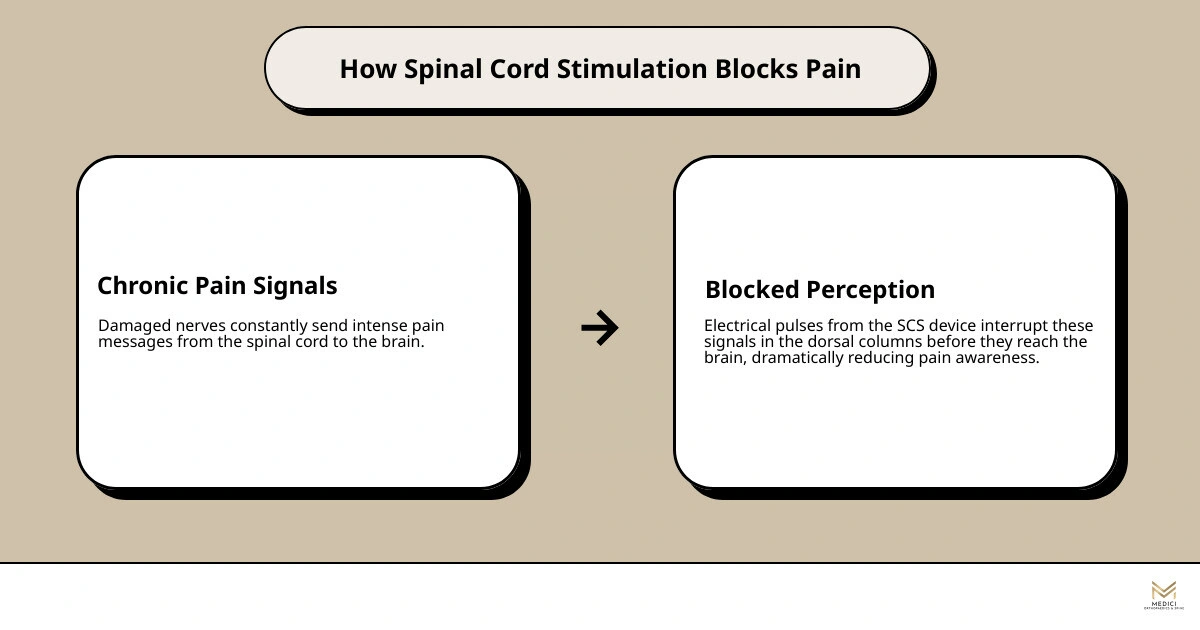
To understand how a Spinal Cord Stimulator works, it helps to think of it as a "white noise machine" for your nervous system. When you have chronic neuropathic pain, your nerves are constantly shouting pain messages up to your brain. The stimulator emits a safe, low-level electrical current that introduces a mild alternate signal. This signal interrupts and overrides the pain messages before they can reach your conscious awareness.
This therapy is rooted in the "Gate Control Theory of Pain," which was developed in the 1960s. The theory suggests that the spinal cord contains a neurological "gate" that either blocks pain signals or allows them to pass through to the brain. By stimulating the large nerve fibers in the dorsal columns of the spinal cord, we can effectively "close the gate" on pain.
Physically, the system consists of three main components:
For a deeper look at this mechanism, you can read more about How Does Spinal Cord Stimulation Work for Chronic Pain.
Spinal cord stimulation is highly effective for chronic, intractable neuropathic pain. It is not used to treat acute pain (like a sudden injury) or nociceptive pain (like arthritis in a joint), but rather pain caused by damaged, misfiring, or irritated nerves.
We frequently recommend SCS for patients dealing with:
While SCS is a life-changing option for many, it is not suitable for everyone. We carefully evaluate clinical indications and contraindications to ensure patient safety and high success rates.
Indications (Who is a good candidate?):
Contraindications (Who should avoid SCS?):
For more detailed clinical criteria, refer to the NCBI StatPearls on Spinal Cord Stimulation.
Determining qualification is a thorough, multi-step process designed to protect your health and maximize your chances of long-term pain relief.
First, we perform a comprehensive physical exam and review diagnostic imaging (such as MRIs or CT scans) to map out your spinal anatomy. Second, insurance providers require a psychological screening. This is a standard, routine step to ensure that chronic pain has not caused untreated mental health struggles that might affect your ability to manage the device or cope with the surgical process.
Once these evaluations are complete, you must undergo a temporary trial. If the trial successfully reduces your pain by half or more and improves your ability to function, you qualify for the permanent implant. Learn more about the specific criteria we look for in our guide on Who Qualifies for a Spinal Cord Stimulator.
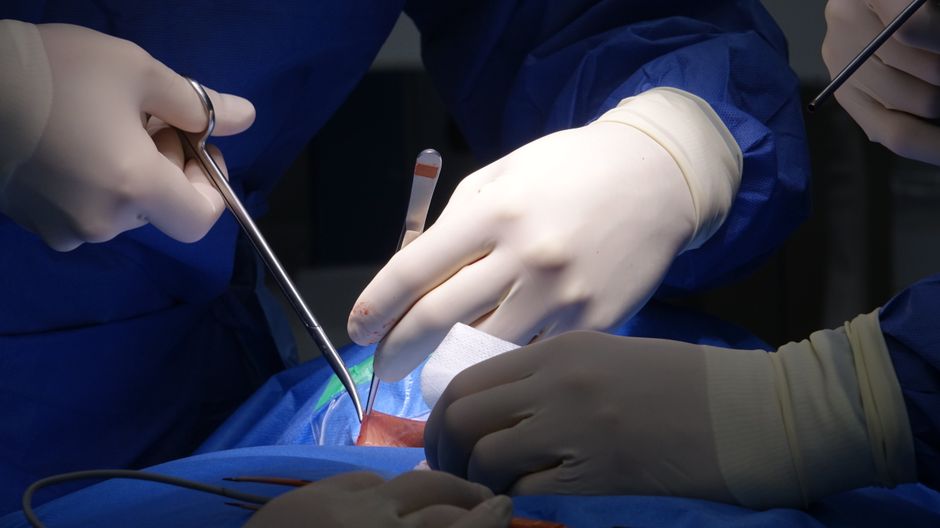
One of the greatest benefits of spinal cord stimulation is that you can "test drive" the system before making a long-term commitment. The entire journey is divided into two distinct surgical phases: the trial and the permanent implant.
During the trial phase, we place temporary leads into the epidural space using a specialized needle under local anesthesia and light sedation. This outpatient procedure takes about 1 to 2 hours. The leads are connected to an external generator that you wear on a belt around your waist.
You go home and live your normal life for 3 to 7 days, keeping a daily log of your pain levels and physical capabilities. If you experience a 50% or greater improvement in pain, sleep, and overall mobility, the trial is considered a success. Over 90% of trial participants report a successful experience and choose to proceed to the permanent implant.
To learn more about what to expect during this test period, read our guide on What Happens During a Spinal Cord Stimulator Trial.
The permanent implantation is a minor surgical procedure, also typically performed on an outpatient basis. We remove the temporary leads and replace them with permanent ones, anchoring them securely to the surrounding tissue to prevent movement. We then create a small "pocket" just beneath the skin—usually in the upper buttocks or abdomen—to house the permanent generator.
You can read a detailed breakdown of this transition in From Trial to Implant: The Journey of Spinal Cord Stimulation Patients.
Precise anatomical placement is critical to the success of SCS. We use continuous fluoroscopy (real-time X-ray guidance) to guide the leads into the epidural space, ensuring they align perfectly with the nerve pathways transmitting your pain. For back and leg pain, leads are typically positioned centrally over the dorsal spinal cord at the T8 to T10 vertebral levels.
We utilize two primary types of leads:
For more technical details on surgical techniques, you can explore the NCBI StatPearls on Spinal Cord Stimulator Implants.
Recovery after the permanent implant surgery takes about 4 to 6 weeks. While the incisions themselves typically heal within 2 to 4 weeks, it takes a bit longer for the tissue around the leads and generator to secure them in place.
During the first 6 weeks of recovery, you must strictly follow these activity restrictions:
Most patients can return to light desk work and resume driving within 1 to 2 weeks, provided they are no longer taking prescription pain medications. For a step-by-step recovery plan, check out What to Expect After Spinal Cord Stimulator Surgery.
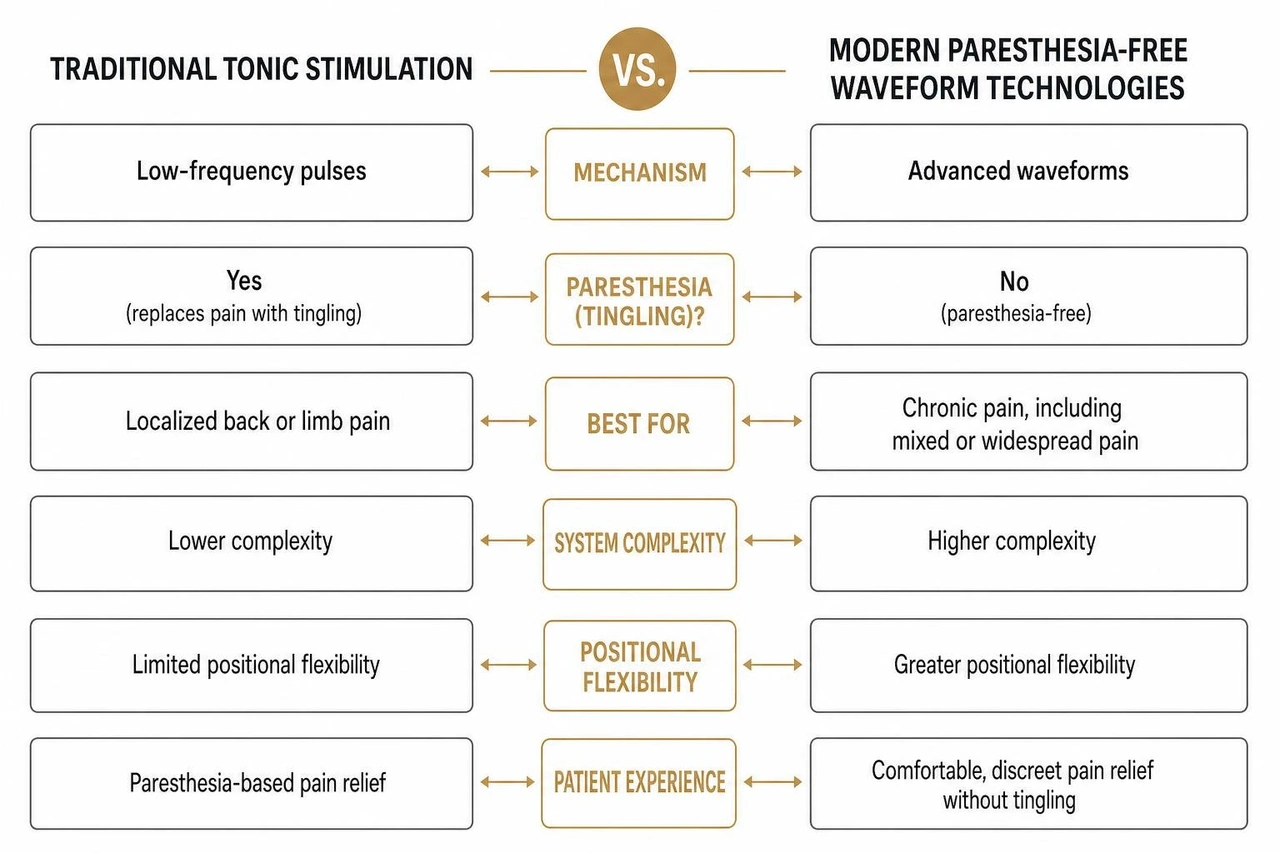
SCS technology has advanced rapidly over the last several years. Today, we can customize the type of electrical signal (waveform) delivered to your spinal cord to match your lifestyle and therapeutic needs.
| Stimulation Type | Mechanism | Paresthesia (Tingling)? | Best For |
|---|---|---|---|
| Traditional Tonic | Low-frequency pulses | Yes (replaces pain with tingling) | Localized back or limb pain |
| High-Frequency (10 kHz) | Rapid, sub-perception pulses | No | Severe back/leg pain, diabetic neuropathy |
| Burst Stimulation | Mimics natural brain firing patterns | No | Neuropathic pain, complex pain syndromes |
| Closed-Loop (ECAP) | Real-time adjustment based on movement | Varies | Active patients with shifting pain profiles |
Traditional Tonic Stimulation has been used for decades. It works by replacing pain signals with a mild, steady tingling sensation called paresthesia. While highly effective, some patients find the tingling sensation distracting, especially during transitions like sitting down or lying down.
High-Frequency Therapy (often delivered at 10,000 Hz or 10 kHz) operates completely below the threshold of human sensation. It provides paresthesia-free pain relief, meaning you won't feel any tingling at all. This technology is designed to modulate both neurons and glial cells (the support cells in your nervous system) to restore biological balance.
Burst Stimulation delivers closely spaced groups of electrical pulses designed to mimic the natural signaling patterns of the brain. Like high-frequency therapy, burst stimulation is paresthesia-free and is highly preferred by patients who want relief without feeling any device activity.
One common challenge with older stimulators is that when you move, bend, or cough, the distance between the spinal cord and the implanted leads changes. This can cause the stimulation to suddenly feel too strong or too weak.
Modern Closed-Loop Systems solve this problem by measuring Evoked Compound Action Potentials (ECAPs)—which are the real-time electrical responses of your spinal cord. The device measures these responses millions of times a day and automatically calibrates its output. If you stand up, sit down, or bend over, the system adjusts instantly to maintain a consistent, comfortable level of pain relief without any manual adjustment.

Like any surgical procedure, spinal cord stimulator implantation carries some risks. While the overall complication rate ranges from 5.3% to 40%, the vast majority of these issues are minor and related to the hardware rather than physical injury.
The most common complications include:
For an honest, balanced discussion of these factors, please read What are the Pros and Cons of Getting an SCS Near Snellville.
For the right candidates, the long-term success of SCS is outstanding. Most patients experience at least a 50% reduction in their chronic pain, and many report even higher levels of relief.
Clinical data shows that timing is key: SCS is up to 85% effective if implanted within two years of pain onset. However, its effectiveness drops to about 9% for patients who have lived with severe chronic pain for 15 years or more before receiving the implant. This highlights the importance of exploring neuromodulation early in your treatment journey rather than waiting until all physical function has declined.
Over time, about 20% to 40% of patients may develop a tolerance to the stimulation, meaning its effectiveness gradually decreases. If this occurs, we can often restore relief by reprogramming the device's waveform settings. In cases where the device no longer provides benefit, or if an infection occurs, the system can be completely removed (explanted) in a simple outpatient procedure.
To explore real-world patient outcomes and clinical success rates, see Discovering Relief with Spinal Cord Stimulation Therapy.
The true value of a Spinal Cord Stimulator is not just a lower number on a pain scale; it is the restoration of your daily life. By turning down the volume on chronic pain, patients routinely experience:
Once you have fully recovered from surgery, living with a Spinal Cord Stimulator is highly manageable. However, there are several practical lifestyle adjustments to keep in mind.
Because SCS is backed by robust clinical evidence, it is widely covered by almost all major insurance providers, including:
While the initial cost of the device and surgery is significant, clinical studies show that SCS is highly cost-effective over time. By reducing the need for ongoing physical therapy, repeat spinal surgeries, emergency room visits, and expensive prescription medications, the device typically pays for itself within two years. Our team handles the entire insurance pre-authorization process for you, including compiling the necessary documentation from your physical exams and psychological screening.
The field of neuromodulation is evolving rapidly. Some of the exciting developments shaping the future of SCS include:
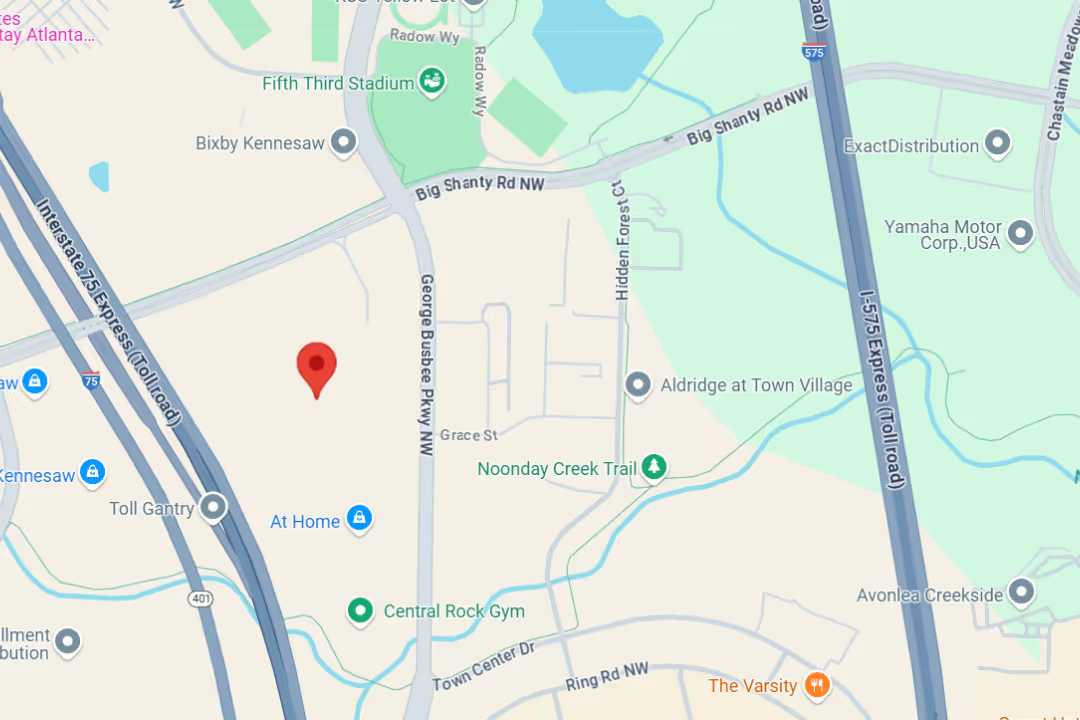
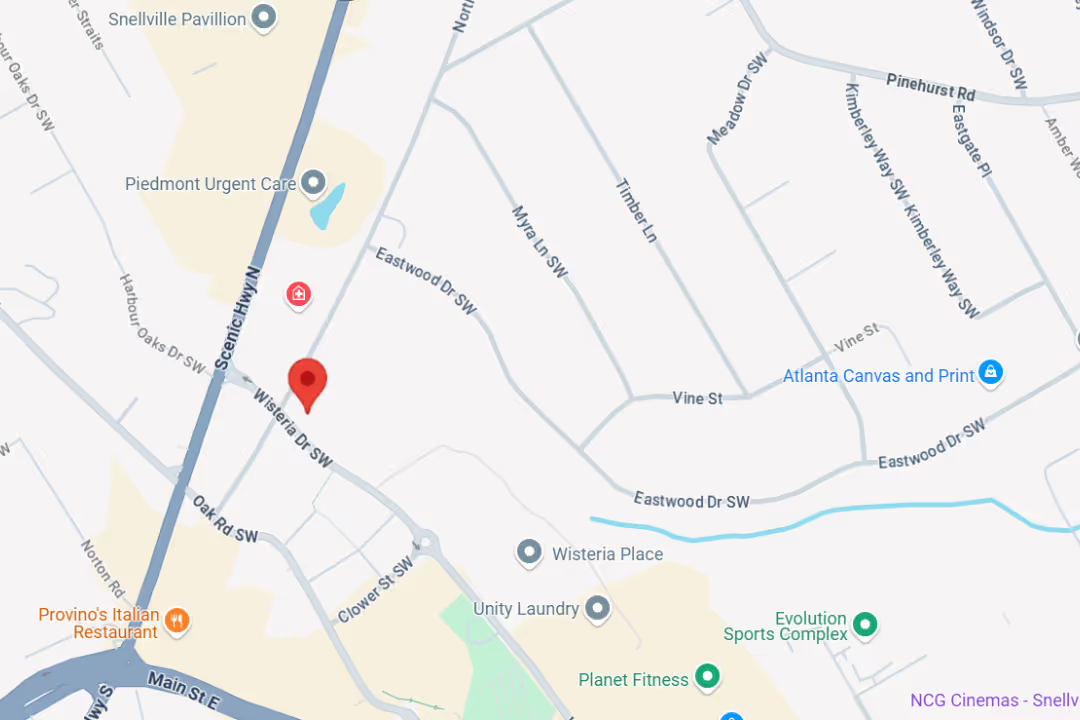
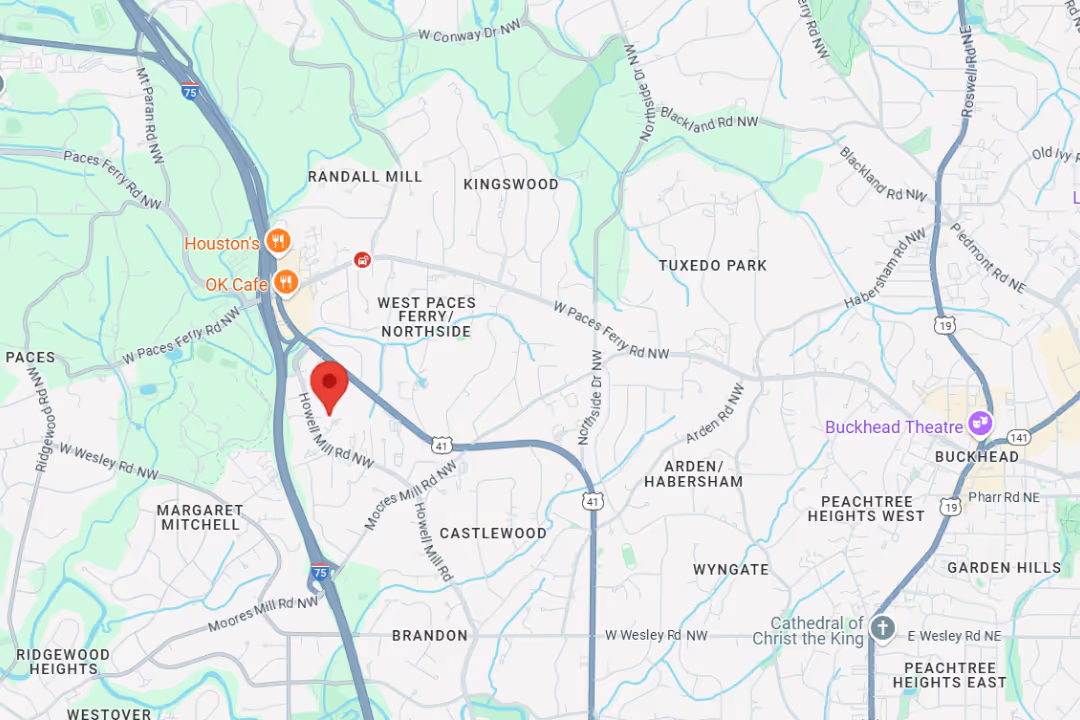
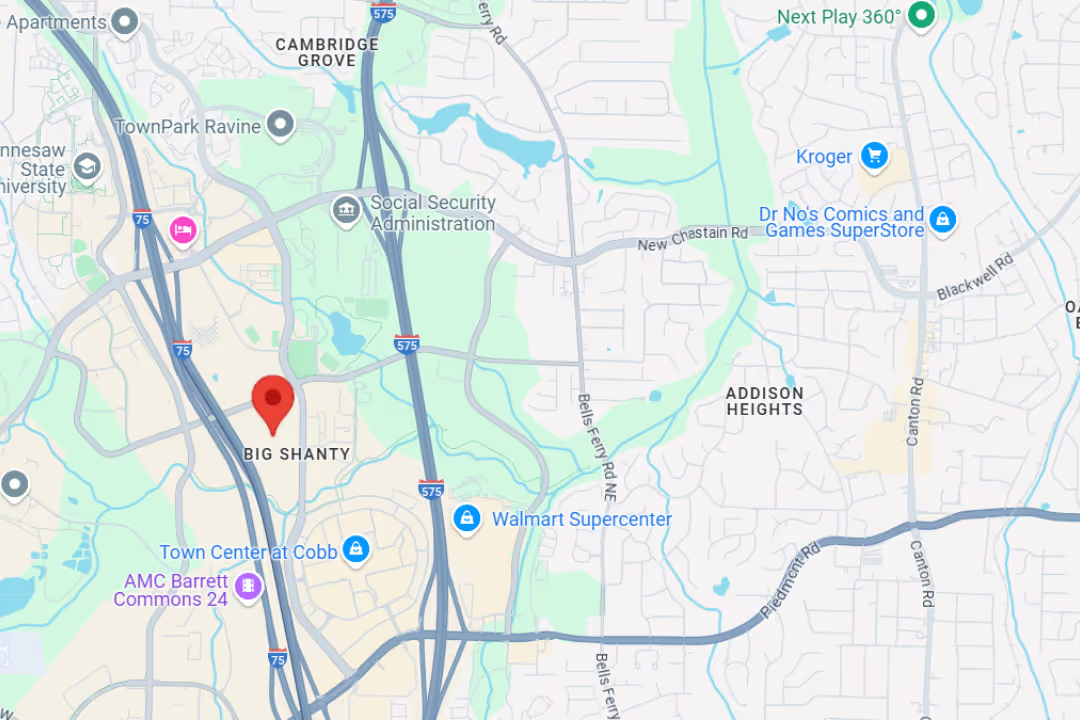
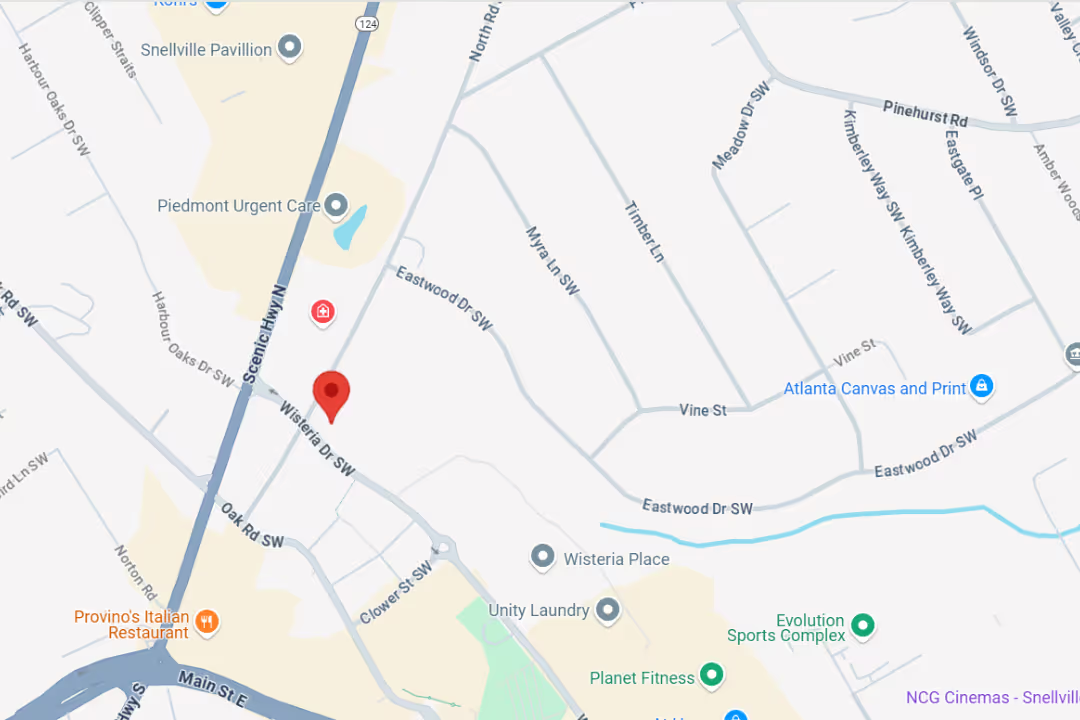
Yes. At Medici Orthopaedics & Spine, we perform both the temporary trial and the permanent implantation procedures at our state-of-the-art Ambulatory Surgery Centers in Snellville and Marietta. We also provide comprehensive consultations and follow-up care at our clinics in Kennesaw, Snellville, and Buckhead (Atlanta).
To learn more about local availability and our specialized facility, visit Is a Spinal Cord Stimulator Surgery Available Near Snellville.
The lifespan of your battery depends on whether you choose a rechargeable or non-rechargeable system:
Yes, but with specific precautions. Most modern SCS systems are "MRI-conditional," meaning you can safely undergo 1.5T or 3T MRI scans under specific manufacturer-defined conditions. You will need to have your device placed into a specialized "MRI Mode" before the scan. Always inform your imaging technician and contact your pain specialist to confirm compatibility before scheduling any MRI.
A Spinal Cord Stimulator is one of the most powerful tools we have in modern medicine to help patients reclaim their lives from severe, treatment-resistant chronic pain. By delivering targeted, gentle electrical pulses, this therapy offers a drug-free, reversible, and highly customizable path toward lasting relief.
At Medici Orthopaedics & Spine, our medical director, Dr. Sonny Dosanjh, M.D., and our entire clinical team are committed to optimally restoring your quality of life using the most effective, least invasive options available. We believe that many therapies work synergistically — combining advanced interventional treatments like spinal cord stimulation with physical therapy, exercise, and regenerative medicine to help you enjoy life at the highest possible level.
If you are ready to explore whether spinal cord stimulation is right for you, we invite you to take the next step. Learn more about our comprehensive approach to Spinal Cord Stimulation or schedule a consultation with a Spinal Cord Stimulator Specialist Snellville today. Let us help you turn down the volume on pain and get back to the activities you love.
At Medici, you’re more than your MRI.
We take time to hear your story, understand your pain, and create a plan that actually works for you.
Our team delivers specialist care at convenient locations across Metro Atlanta:
Get expert tips on injury recovery, pain relief, joint health, and movement strategies—straight from our Fellowship-Trained team.