Most people have limped through at least one painful stretch — a sore heel that made mornings miserable, an ankle that swelled up after a misstep, or a nagging ache that never quite went away no matter how much they rested it. Foot and ankle pain has a way of becoming background noise, something people adjust around rather than address. You change your shoes, skip the morning walk, and hope it improves on its own.
Sometimes it does. Often, it doesn't. And when it doesn't, the problem rarely stays contained to your foot.
The foot and ankle are among the most mechanically complex regions of the body, and pain in this area tends to be more layered than it appears on the surface. What feels like a simple ache can involve bones, tendons, ligaments, nerves, and joints working against each other in ways that only become clear with a proper evaluation. Getting that evaluation sooner rather than later is one of the most important decisions a patient can make.
The foot contains 26 bones, 33 joints, and more than 100 tendons, ligaments, and muscles. The ankle adds another layer of complexity, serving as the primary load-bearing joint between the leg and the ground beneath you. Every step you take sends force through this system, and that system has to absorb, distribute, and respond to that force thousands of times a day.
When something goes wrong in one part of that structure, neighboring structures compensate. A tendon that isn't functioning properly puts extra strain on a nearby joint. A joint that's been destabilized by an old sprain changes the way you walk, which eventually affects your knee, your hip, and your lower back. This is why foot and ankle pain is rarely as isolated as it feels, and why identifying the true source of the problem matters.
One of the most common causes of heel pain, plantar fasciitis involves inflammation of the thick band of tissue running along the bottom of the foot. The hallmark sign is sharp heel pain with the first steps of the morning.
The Achilles tendon connects the calf muscles to the heel bone. Overuse, tight calves, or sudden increases in activity can cause pain and stiffness along the back of the ankle, and left untreated, it can progress to a tear.
Ankle sprains are common and frequently undertreated. When ligaments don't heal properly, they leave the joint chronically unstable, increasing the risk of re-injury and long-term arthritis.
Small cracks in the bones of the foot can develop from repetitive impact or overtraining. They often feel like a dull, localized ache that worsens with activity and may not show up on a standard X-ray without careful imaging.
Both osteoarthritis and rheumatoid arthritis can affect the joints of the foot and ankle, causing stiffness, swelling, and progressive pain that limits daily movement.
Similar to carpal tunnel in the wrist, tarsal tunnel syndrome involves compression of the tibial nerve as it passes through a narrow space on the inside of the ankle, producing burning, tingling, or numbness in the foot.
When the arch of the foot collapses, it alters the mechanics of the entire lower extremity. Many patients with knee, hip, or back pain are surprised to learn the origin is in their feet.
There's a tendency to treat foot and ankle pain as something to push through. It's a foot. It doesn't seem serious. Life is busy. But delayed care for musculoskeletal injuries has real consequences, and the foot and ankle are no exception.
When pain changes the way you walk, your body compensates. Those compensations travel up the chain:
Rest and ice are reasonable first responses to minor injuries. But these situations call for a professional evaluation:
Many patients searching for an orthopedic surgeon near me assume that seeing a specialist means they're already on the path to surgery. That's a misconception worth clearing up. Orthopedic evaluation is primarily a diagnostic process, and the goal is to understand what's happening so the right treatment, at the right level, can begin.
A thorough evaluation for foot and ankle pain typically includes:
Targeted physical therapy addresses the muscle imbalances, mobility deficits, and movement dysfunctions that contribute to foot and ankle pain. A structured rehab program is the foundation of most treatment plans.
Custom or semi-custom orthotics can redistribute load across the foot, correct mechanical imbalances, and reduce stress on injured structures. Bracing is often used during the recovery phase of ligament injuries.
Corticosteroid injections can reduce inflammation in the short term and are often used as part of a broader treatment strategy. For patients interested in regenerative approaches, platelet-rich plasma (PRP) and prolotherapy are available options that use the body's own biology to support tissue healing.
When conservative care isn't producing the results a patient needs, minimally invasive procedures offer a middle path between injections and open surgery. These approaches target specific structures with precision and typically involve significantly less downtime than traditional surgical techniques.
For conditions that require structural correction, such as significant ligament reconstruction, advanced arthritis, or tendon rupture, surgical care may be the most appropriate path. The orthopedic surgery team at Medici brings strong surgical capabilities to cases that genuinely warrant it, with a focus on techniques that minimize tissue disruption and support faster recovery.
The relationship between early intervention and better outcomes in musculoskeletal care is well established. Patients who get an accurate diagnosis and begin appropriate treatment earlier in the course of their condition generally experience shorter recovery times, lower treatment burden, and less risk of secondary complications.
A general practitioner can rule out infection or serious systemic disease, but the depth of musculoskeletal assessment that comes from an orthopedic evaluation is different. An ankle pain specialist brings subspecialty training in the mechanics, imaging interpretation, and treatment options specific to this region of the body. That expertise changes what gets found, what gets recommended, and how efficiently a patient gets better.
For anyone who has been typing "orthopedic surgeon foot near me" into a search bar and hesitating, the hesitation is understandable. Seeing a specialist feels like escalating something, as if going means committing to a course of action you're not ready for. But the evaluation itself is just information. It tells you what you're dealing with and what your actual options are. That information almost always makes the path forward clearer and less intimidating, not more.
The team at Medici Orthopaedics & Spine specializes in the kind of comprehensive, least-invasive care that gets patients real answers and real results. From initial evaluation through physical therapy, regenerative medicine, interventional procedures, and surgical care when it's truly needed, Medici offers a full spectrum of orthopedic and pain management expertise under one practice.
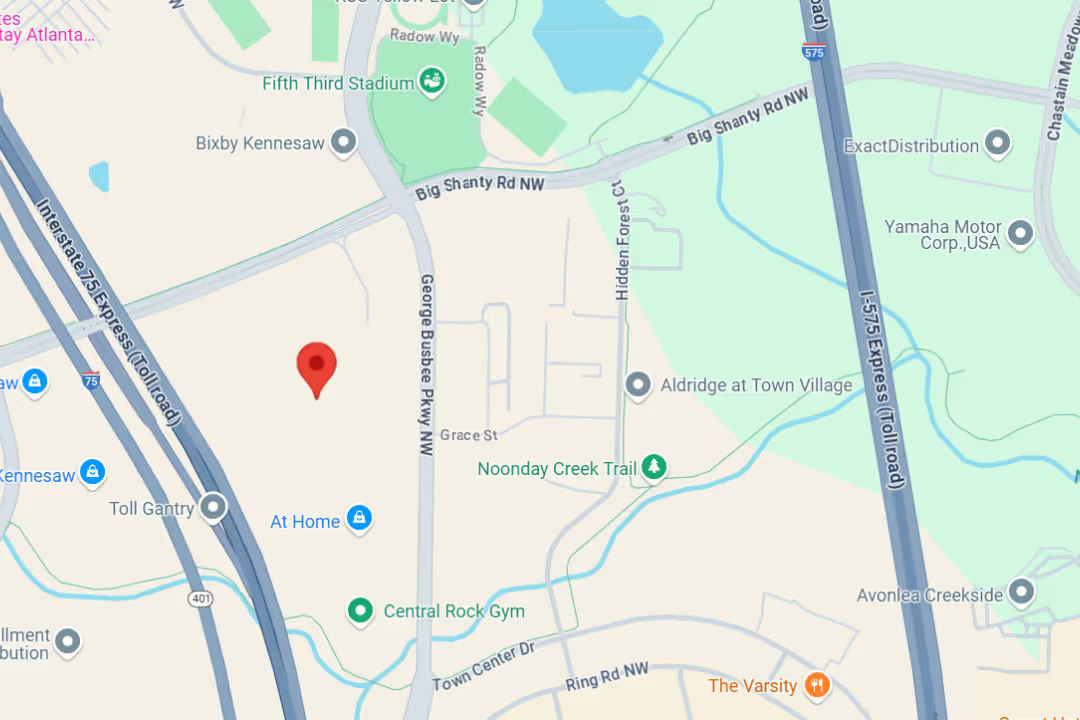
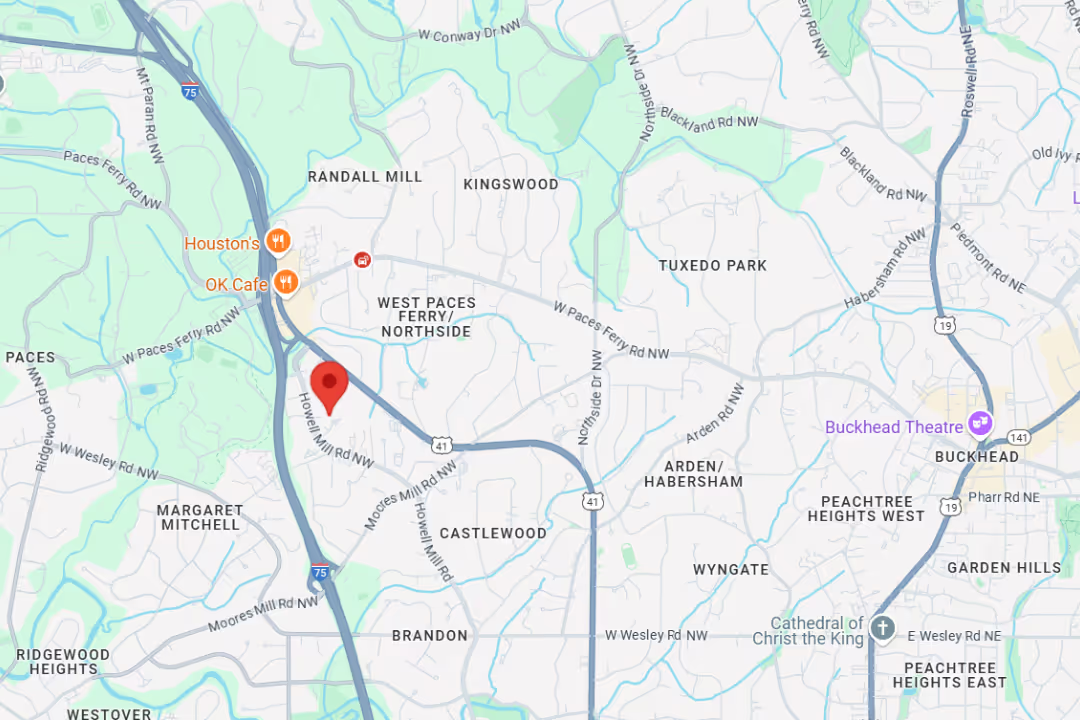
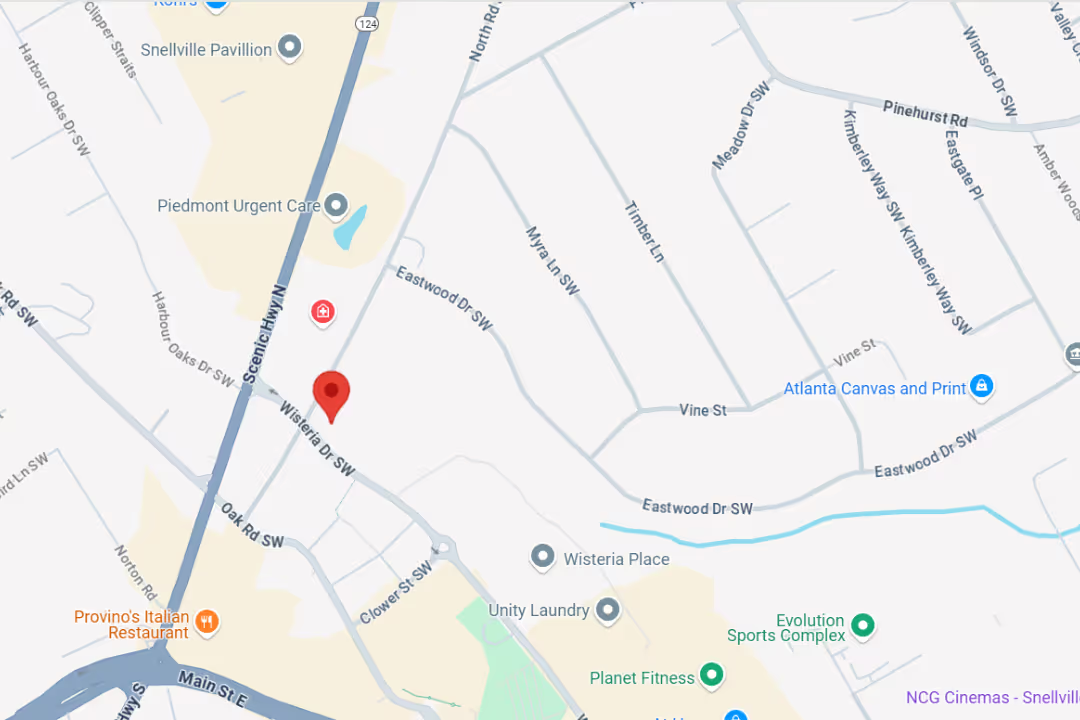
Clinics are located across the greater Atlanta area, including Kennesaw, Snellville, and Buckhead. Whether your pain started last week or has been building for years, an evaluation with a specialist is the right next step.
At Medici, you’re more than your MRI.
We take time to hear your story, understand your pain, and create a plan that actually works for you.

Our team delivers specialist care at convenient locations across Metro Atlanta:
Get expert tips on injury recovery, pain relief, joint health, and movement strategies—straight from our Fellowship-Trained team.