

Experiencing burning, tingling feet at night often points to irritated nerves, but it does not always mean you have permanent nerve damage. Diabetes or prediabetes, low vitamin B12, thyroid problems, skin irritation, and circulation issues are common contributors. Quiet surroundings and warm bedding can make nighttime sensations more noticeable, even when your feet feel fine during the day. Whether you notice isolated bottom foot tingling or widespread foot tingling, understanding your symptom patterns helps identify the underlying cause.
If these sensations persist, see a clinician to evaluate your feet and determine a targeted treatment plan. Get urgent care if a foot suddenly turns cold or pale, or you develop new muscle weakness.
I'm Sonny Dosanjh, M.D., a board-certified physical medicine and rehabilitation physician with fellowship training in pain management. At Medici Orthopaedics & Spine, I help evaluate nerve-related discomfort and build personalized treatment plans centered around long-term relief.
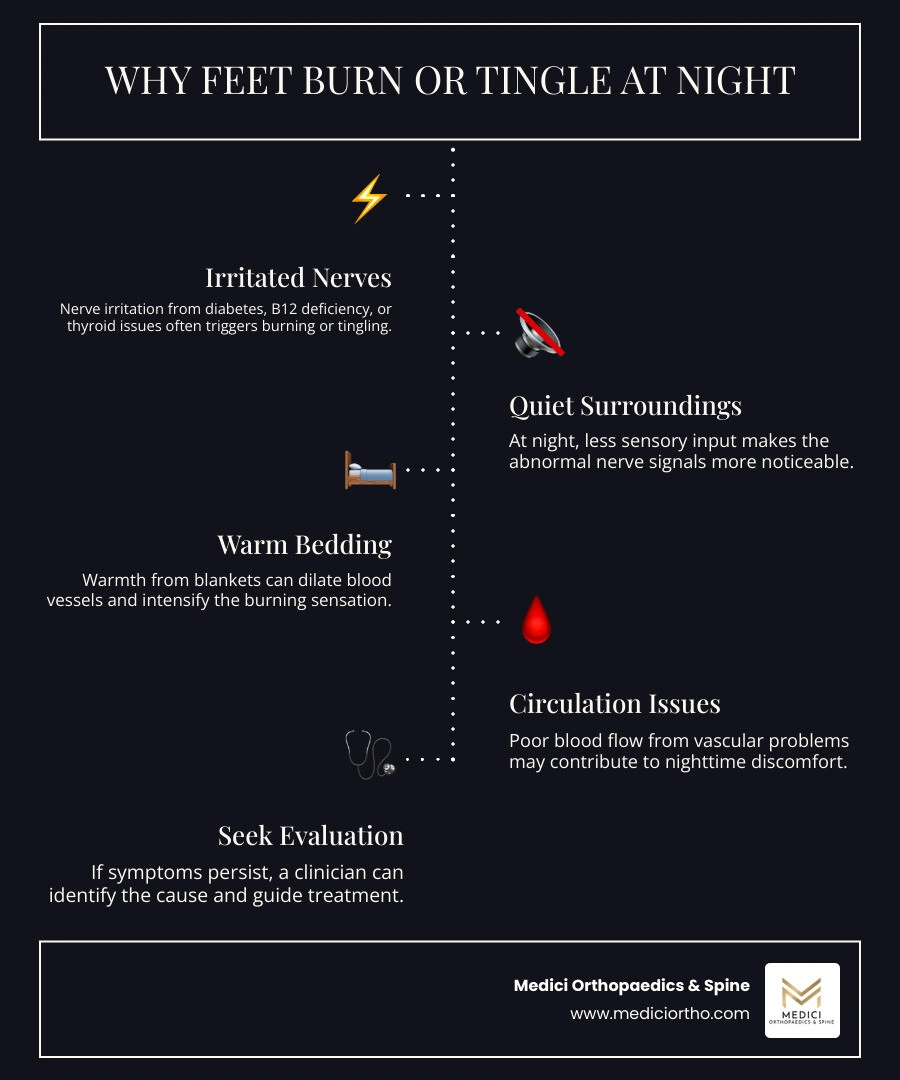
It is 2:00 a.m. You are exhausted from a long day, but as soon as your head hits the pillow, your feet feel as if they are resting on hot coals. Your feet are not actually catching fire—your internal wiring is simply sending faulty emergency signals straight to your brain.
To understand why this happens, we must look at how the nervous system operates between day and night. During waking hours, your brain relies on a process known as sensory gating. Your feet are constantly interacting with the ground, your shoes, and varying temperatures. This steady flow of normal sensory input essentially "masks" weaker, abnormal pain signals.
When you lie down in a quiet, dark bedroom, those daytime distractions vanish. Without competing sensory inputs, your central nervous system focuses directly on the misfiring nerves. Furthermore, human circadian rhythms naturally lower nighttime cortisol levels and alter temperature regulation, creating an environment where peripheral nerve excitability peaks.
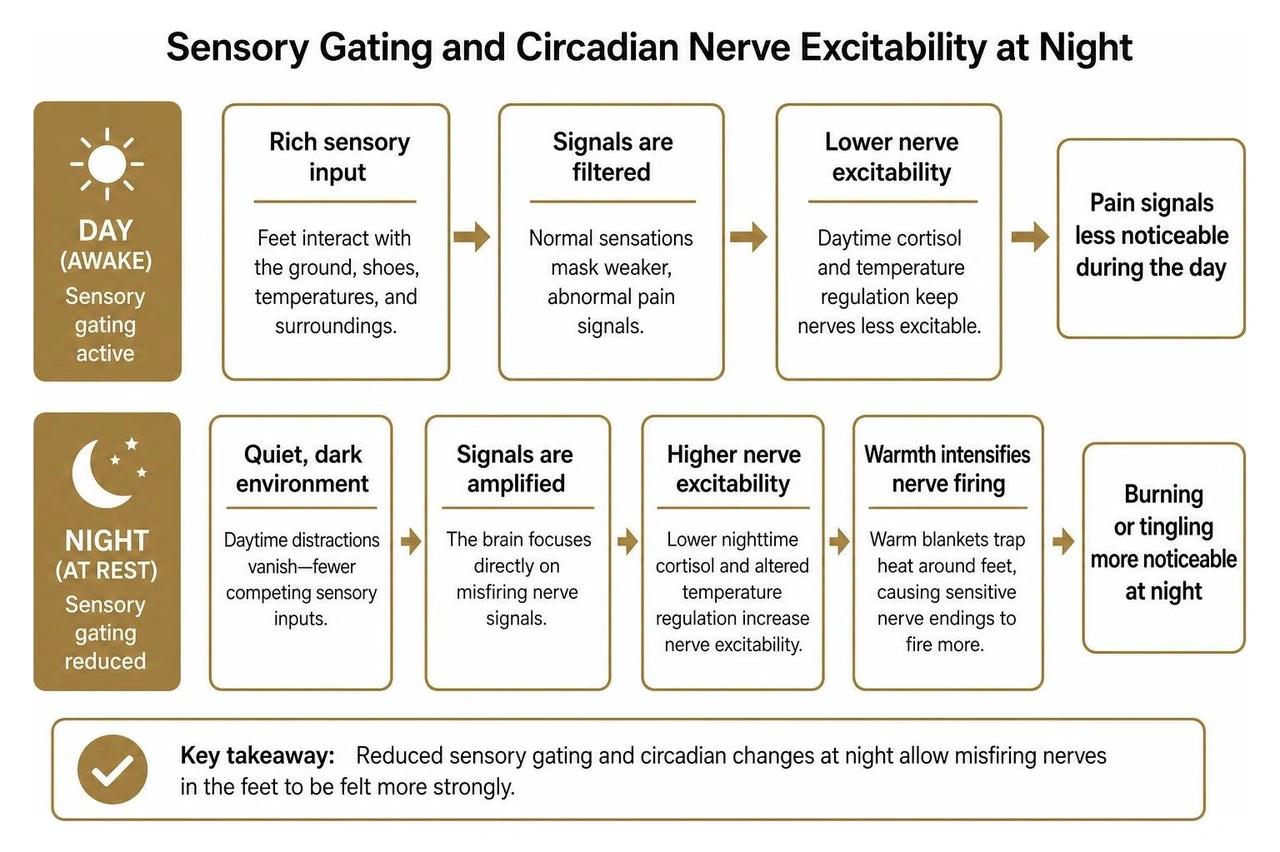
When warm blankets trap body heat around your lower extremities, that added warmth can cause sensitive, hyperactive nerve endings to fire even more vigorously. Research into nighttime sensory mechanisms demonstrates that when resting metabolic rates decline, these misfiring electrical impulses dominate our perception. If you have spent months understanding what causes tingling and numbness in hands and feet, you know that nocturnal flare-ups are one of the clearest clinical signs of an irritated peripheral nervous system.
Nerves in your peripheral system are divided into different categories based on size and function. Large-fiber nerves are insulated with a thick myelin sheath, controlling muscle movement, deep touch, vibration, and balance. Small-fiber nerves (specifically unmyelinated C-fibers and thinly myelinated A-delta fibers) branch out into the outermost layers of your skin to transmit pain and temperature sensations.
When small fibers undergo axonal degeneration or metabolic stress, their protective insulation thins out, leading to erratic signal leakage. This presents as intense burning, pins and needles, electric shocks, or extreme sensitivity to light touch—a state where even lightweight bedsheets feel painful. Because routine Electromyography (EMG) and Nerve Conduction Studies (NCS) only evaluate large motor and sensory fibers, patients with small-fiber neuropathy frequently receive normal test results despite genuine discomfort.
Because both conditions worsen after bedtime, people often confuse Restless Legs Syndrome (RLS) with neuropathy. However, their underlying mechanisms and presentations are distinct:
Peripheral neuropathy affects an estimated 20 million people in the United States, and across the Atlantic, nearly 1 in 10 adults aged 55 and older manage similar symptoms. While up to 30 percent of cases are categorized as idiopathic (meaning the exact root mechanism remains unverified despite extensive testing), most instances trace back to identifiable metabolic, nutritional, or mechanical stressors. Clinical research on small-fiber neuropathy emphasizes the importance of evaluating systemic root causes rather than simply dulling the sensation.
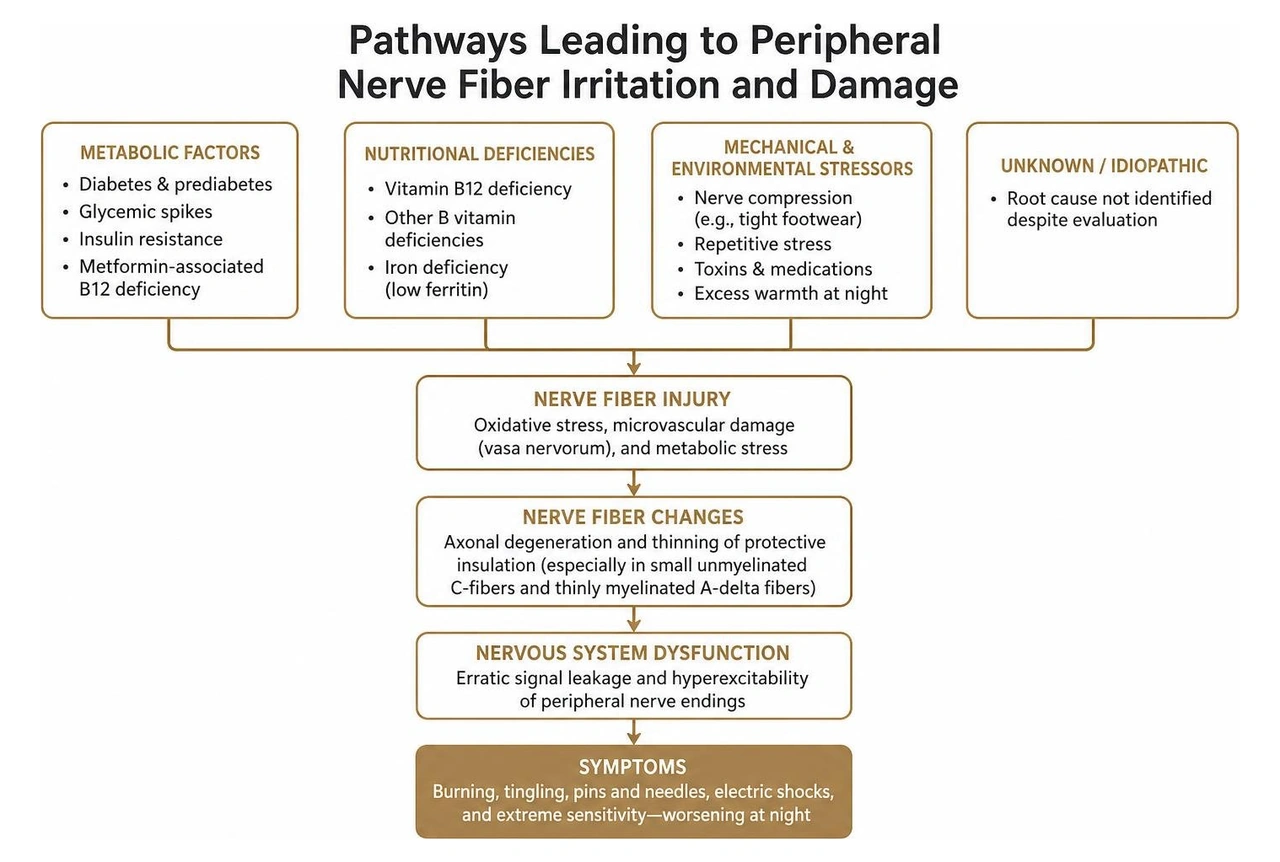
Elevated blood sugar is the single most frequent driver of peripheral nerve distress. When circulating glucose remains high, it triggers oxidative stress and microvascular damage within the vasa nervorum—the tiny capillary network supplying oxygen and nutrients to distal nerve fibers.
Importantly, nerve damage often begins well before a patient receives an official type 2 diabetes diagnosis. Prediabetes and transient post-meal blood sugar spikes can injure the vulnerable endings of small unmyelinated nerves. If you are experiencing early diabetic neuropathy symptoms, subtle tingling in the toes often serves as the initial warning sign. Additionally, individuals taking long-term metformin should monitor their status closely, as the medication can reduce intestinal absorption of vitamin B12 over time.
Nerve signaling can also be disrupted by several other treatable medical conditions:
A common dilemma is determining whether nighttime burning stems from damaged nerves or restricted blood flow. While both conditions affect the feet and legs, their symptoms and clinical indicators differ.
If poor vascular tone is contributing to your discomfort, learning how to improve circulation for peripheral neuropathy through gentle movement and proper positioning can help. In cases involving venous pooling or fluid buildup, wearing supportive compression socks for neuropathy during the day can minimize tissue congestion before bedtime.
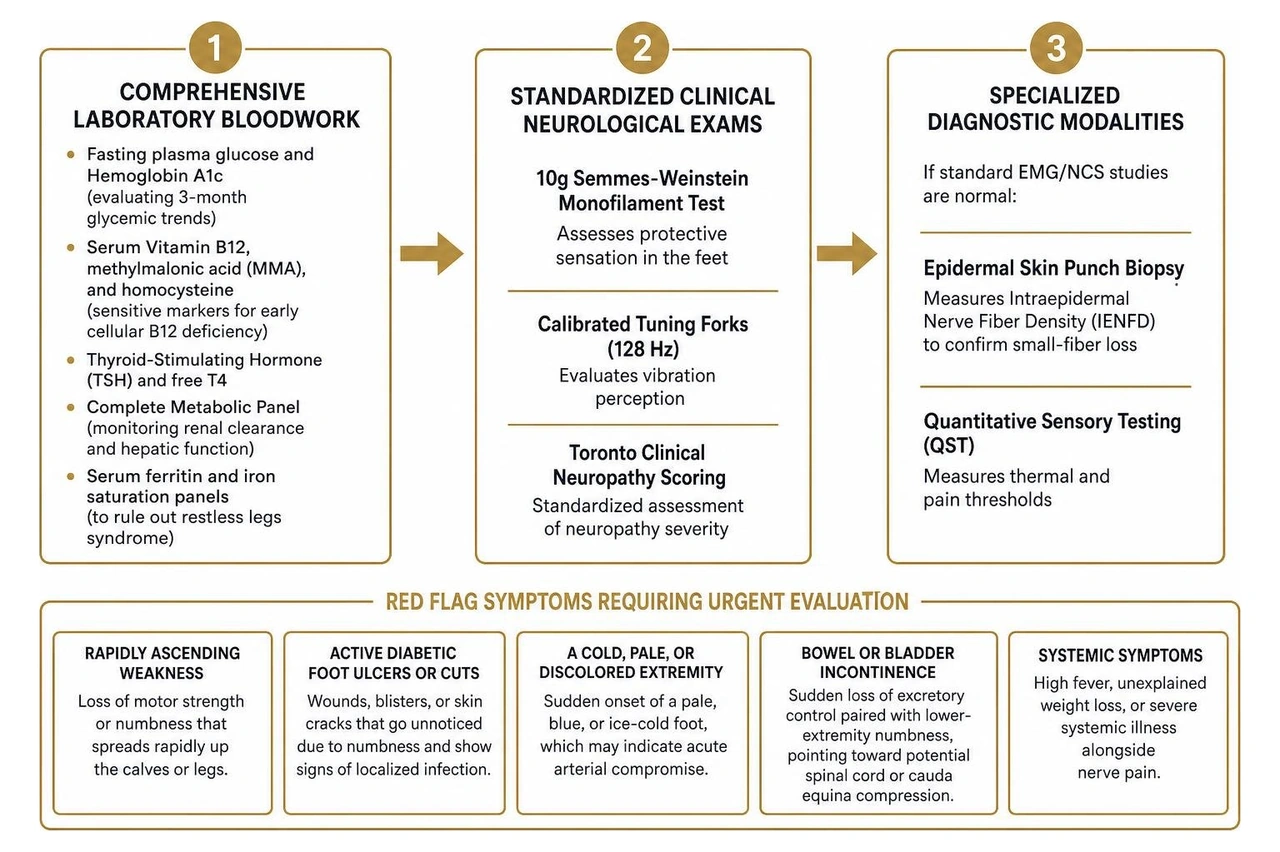
Accurately identifying the root cause of nerve pain requires a structured diagnostic workup. Because a basic examination may overlook small-fiber involvement, a comprehensive clinical evaluation typically includes:

While burning feet usually develop gradually, certain symptoms demand urgent medical evaluation:
Relieving nighttime nerve pain requires a balanced approach: quick interventions to help you sleep tonight, paired with comprehensive therapies that target the underlying source of nerve irritation over time.
At Medici Orthopaedics & Spine, we believe in a multidisciplinary strategy. Our clinical team—led by Dr. Sonny Dosanjh across our Atlanta, Snellville, Buckhead, Marietta, and Kennesaw locations—combines non-surgical options to calm hyperactive nerves and support function. Exploring advanced diabetic neuropathy treatments helps patients stabilize their symptoms without over-relying on medications. In addition, innovative modalities like targeted laser therapy for neuropathy and spinal cord stimulation are frequently used to help reduce chronic discomfort.
When symptoms flare right as you are trying to sleep, these practical adjustments can help ease the burn:
Whether peripheral nerve symptoms can be reversed depends on the underlying cause and how early treatment begins. Unlike central nervous system tissues, peripheral nerves have a modest capacity to repair and regenerate—growing at a rate of roughly 1 millimeter per day—provided their cellular environment is healthy.
When burning sensations stem from vitamin B12 deficiency, thyroid imbalance, or early prediabetes, correcting the metabolic trigger can halt axonal damage and allow small fibers to recover. However, if chronic hyperglycemia or prolonged mechanical compression has caused structural nerve loss over many years, complete reversal may not be possible. In these scenarios, management focuses on preventing further progression, dampening pain signaling, and restoring restorative sleep.
During daytime hours, movement and continuous sensory input from your environment activate natural sensory-gating pathways in the spinal cord, masking low-grade pain signals. At night, this competing stimulation disappears. Coupled with natural circadian shifts in core body temperature and the insulating warmth of bed linens, misfiring signals from irritated nerves become much more prominent.
No. While diabetes and prediabetes are the most common metabolic drivers, burning feet can also stem from vitamin B12 deficiencies, hypothyroidism, alcohol-induced nerve injury, renal dysfunction, pinched lumbar nerves, chemotherapy side effects, or idiopathic small-fiber neuropathy.
A normal EMG or Nerve Conduction Study (NCS) rules out significant damage to large, myelinated motor and sensory nerves, but it cannot evaluate the tiny unmyelinated C-fibers responsible for burning pain and temperature perception. If your tests are normal yet symptoms persist, talk to your clinician about an epidermal skin punch biopsy to assess Intraepidermal Nerve Fiber Density (IENFD) or specialized quantitative sensory testing.
Waking up to burning, tingling feet can disrupt your sleep and impact your overall quality of life. Whether your symptoms stem from early metabolic shifts, nutritional imbalances, or localized peripheral nerve irritation, nighttime burning is a clear sign from your body that should not be ignored.
Finding lasting relief starts with an accurate diagnosis that addresses the root cause of your discomfort, rather than simply masking it. At Medici Orthopaedics & Spine, our team specializes in multimodal, non-surgical approaches tailored to your needs. If nighttime foot discomfort is keeping you awake, explore our comprehensive care for neuropathy and neuralgia or connect with one of our Georgia clinics today to take the next step toward better sleep and healthy nerve function.
At Medici, you’re more than your MRI.
We take time to hear your story, understand your pain, and create a plan that actually works for you.

Our team delivers specialist care at convenient locations across Metro Atlanta:
Get expert tips on injury recovery, pain relief, joint health, and movement strategies—straight from our Fellowship-Trained team.






