When you experience bottom foot tingling, the underlying source often stems from mechanical irritation, metabolic imbalances, or spinal nerve root compression. The foot's sole is packed with sensitive nerve endings that relay sensory signals up through the leg to the brain. When these pathways become compressed, inflamed, or damaged, signals distort into pins and needles, electric zaps, or burning sensations.
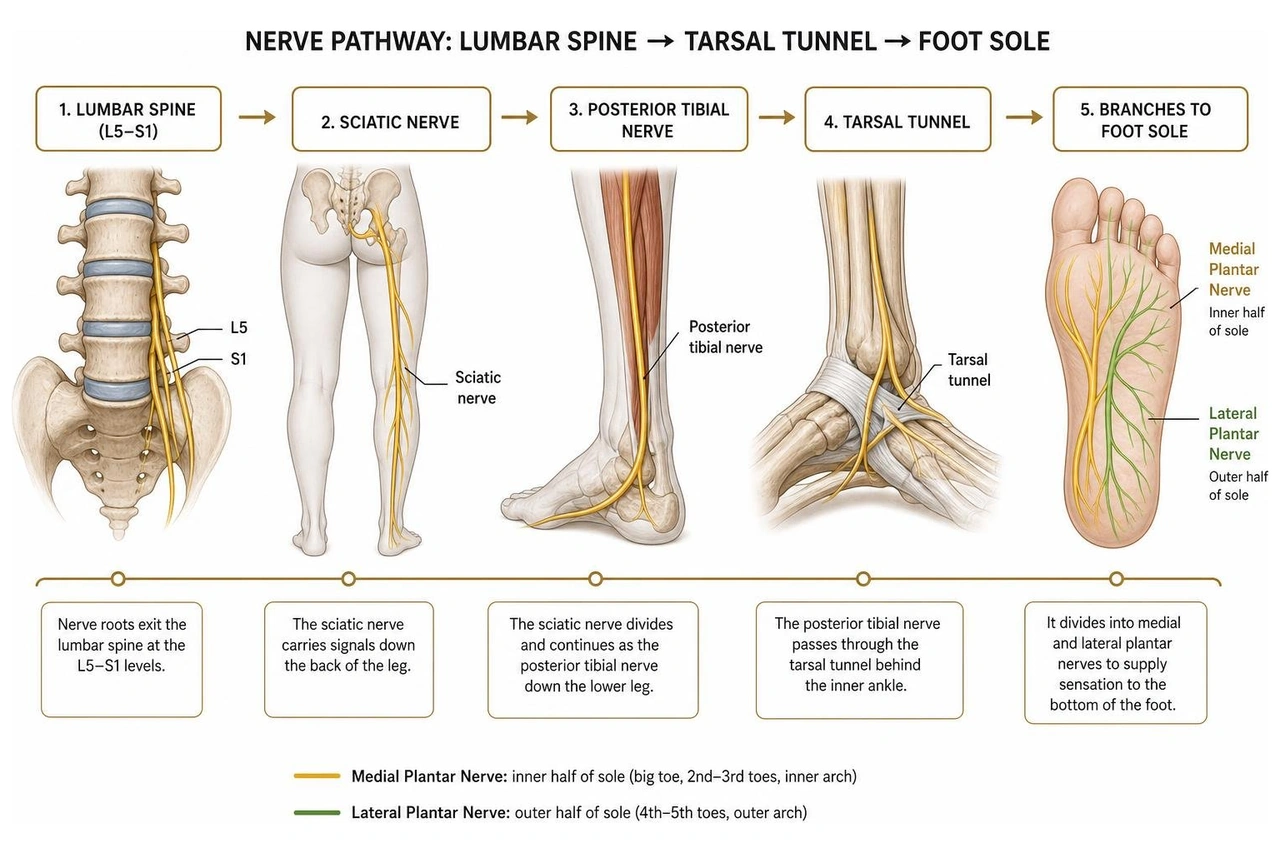
One of the main culprits of isolated sole paresthesia is localized entrapment of the posterior tibial nerve. As this major nerve travels down the lower leg and wraps around the inner ankle, it passes through a tight fibrous space known as the tarsal tunnel before branching out to supply the bottom of your foot. When pressure builds within this canal, conditions like tarsal tunnel syndrome can develop, leading to sharp, burning sensations or numbness across the heel and arch.
However, the source of foot symptoms isn't always located in the foot itself. A pinched nerve in the lower back—frequently caused by a herniated disc or spinal stenosis in the L5 or S1 spinal segment—can send radiating sensations all the way down the sciatic nerve into the outer border or bottom of the sole. Sciatica affects up to 40% of people at some stage in their lives, making lumbar spine issues a frequent root cause of unexplained lower extremity paresthesia.
To understand why nerve entrapment causes bottom foot tingling, it helps to look closely at lower extremity anatomy. The posterior tibial nerve is responsible for transmitting sensation to nearly the entire bottom surface of your foot. After traveling down the back of your calf, it bifurcates into two main terminal branches inside or just beyond the tarsal tunnel:
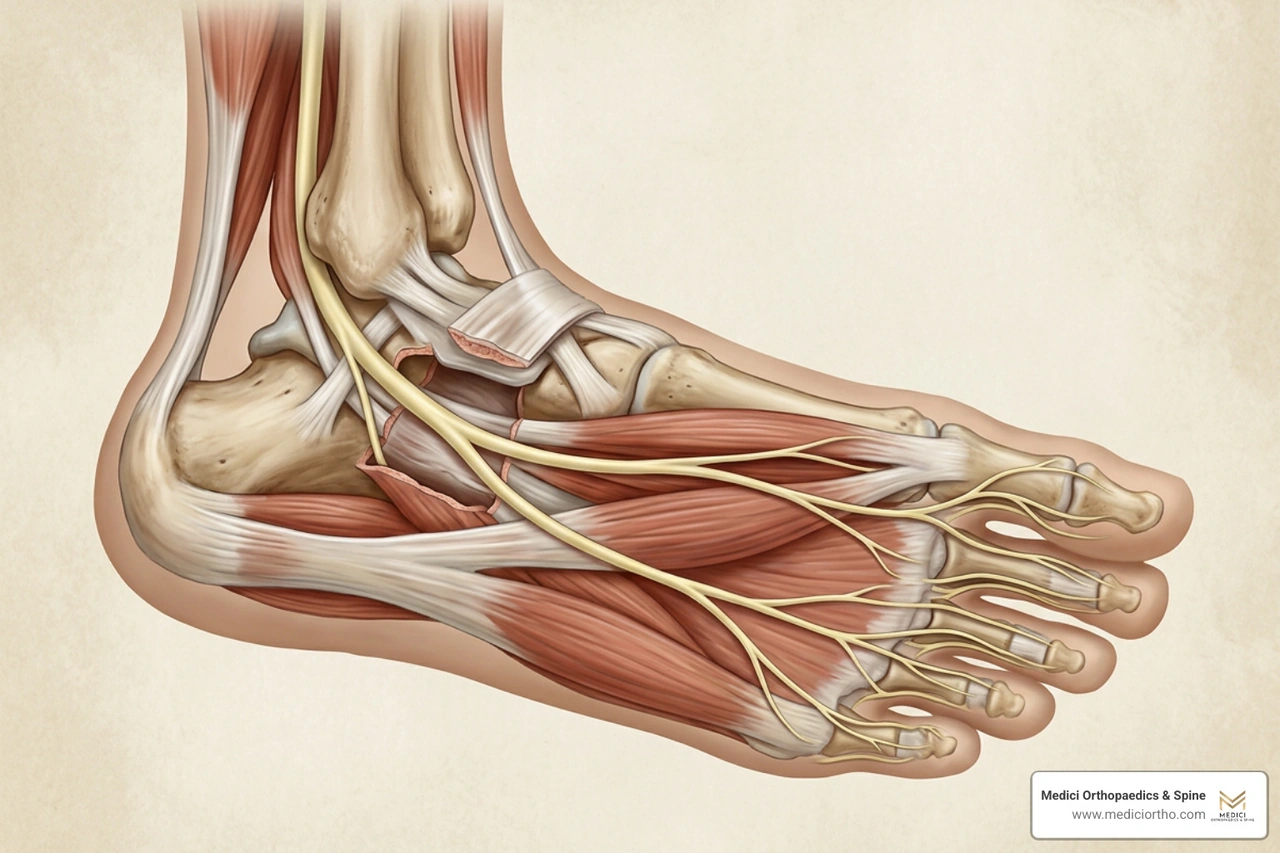
When mechanical pressure squeezes these branches—whether from localized swelling, repetitive stress, hyper-pronation, or bony spurs—nerve signals falter. Patients often report that standing for long periods or wearing rigid shoes exacerbates the tingling because mechanical force directly compresses the entrapment site.
Metabolic health plays a critical role in peripheral nerve function. High blood sugar levels associated with uncontrolled diabetes or prediabetes can gradually erode the delicate blood vessels (vasa nervorum) that supply oxygen and nutrients to peripheral nerves. Over time, this leads to diabetic neuropathy.
Statistics show that peripheral neuropathy affects up to 66% of patients with diabetes, making it one of the most widespread causes of bilateral foot tingling. When blood sugar remains elevated over extended periods, microcirculation deteriorates. Starved of oxygen, the longest nerve fibers in the body—those reaching down to the soles of your feet—begin to misfire panic signals.
In the early stages, diabetic paresthesia typically affects both feet symmetrically, beginning in the toes before creeping upward in a classic "stocking-like" pattern. Patients often describe the feeling as a low hum, buzzing, or uncomfortable burning at night. As detailed in clinical reviews on pins and needles in feet, managing blood glucose and restoring blood flow early is essential to prevent irreversible nerve cell loss.
Beyond nerve entrapment and systemic conditions, physical structures within the foot can directly irritate adjacent nerve branches:
To better understand these common causes, paying attention to early warning signs is essential for recognizing when to seek medical evaluation.
Not all foot paresthesia signals permanent nerve damage. We frequently see patients who panic over a sudden onset of pins and needles, only to find it was caused by crossing their legs too tightly during a movie. Differentiating temporary positional paresthesia from chronic nerve distress is crucial for knowing when to seek medical care.
Temporary tingling is usually mechanical and short-lived. Resting your leg in an awkward position compresses blood vessels and nerves, blocking signal transmission. Once you stand up, flex your ankles, and walk around, normal sensation usually returns within seconds or minutes.
In contrast, persistent bottom foot tingling lingers for days or weeks, recurs regularly without positional triggers, or progressively worsens. This signals an underlying medical issue—such as nerve root entrapment, microvascular damage, or systemic illness—that demands a thorough clinical evaluation.
Duration:
Primary cause:
Location:
Associated signs:
Relief factors:
While an occasional "asleep" foot is benign, certain red-flag symptoms indicate that you should schedule a specialist evaluation right away:
Determining the exact origin of bottom foot tingling requires a structured, step-by-step evaluation. Because symptoms in the foot sole can stem from the lumbar spine, systemic circulation, or localized entrapment, our medical team uses precise diagnostic tools to pinpoint the root cause.

During an initial clinical consultation, we evaluate your complete medical history, lifestyle habits, and symptom timeline. We perform sensory mapping across the medial, lateral, and heel portions of your foot to identify which specific nerve pathways are misfiring.
Standard physical examination steps include:
If the physical exam points to underlying nerve or structural issues, advanced diagnostic testing provides definitive clarity:
If you are currently experiencing persistent lower extremity symptoms, explore our guide on ankle and foot pain to understand how comprehensive orthopedic evaluations help guide effective care.
Relieving bottom foot tingling requires addressing the underlying mechanism rather than simply masking the sensation. At Medici Orthopaedics & Spine, we emphasize non-surgical, minimally invasive treatments tailored to your unique diagnosis.
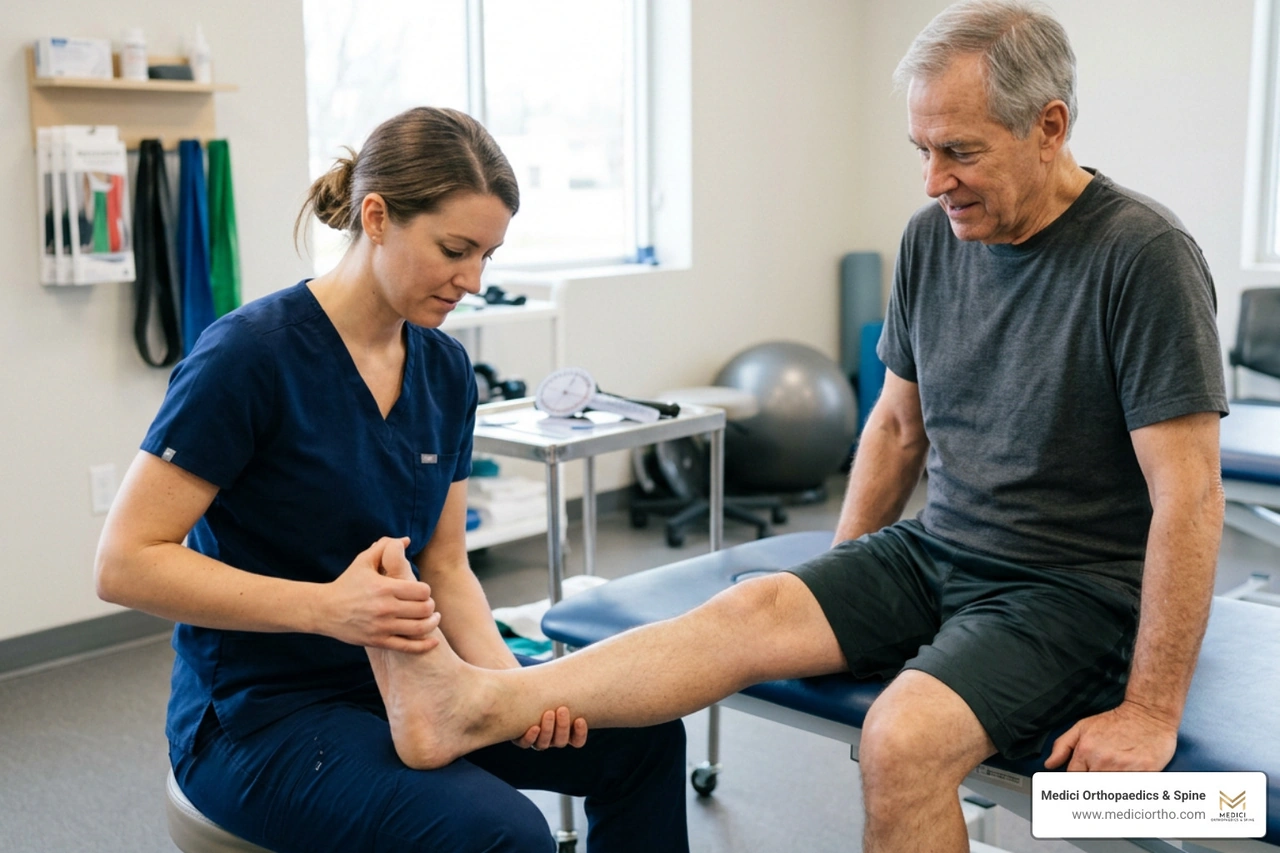
For mechanical entrapment, structural strain, or early-stage neuropathy, conservative care is often highly effective:
When conservative measures aren't enough, advanced interventional therapies can restore nerve function and relieve discomfort:
Complementing medical care with safe home routines can also help support relief. Explore our insights on stretch soak or stim home remedies for practical techniques you can try at home.
Understanding the crucial role microcirculation plays in nerve health is key. Deprived of oxygen-rich blood flow, peripheral nerve endings send distress signals to the brain in the form of burning or pins and needles. You can also review comprehensive medical summaries on numbness and tingling in legs and feet to better understand your treatment options.
The most common cause of chronic, bilateral tingling on the sole of the foot is peripheral neuropathy, most frequently linked to elevated blood sugar from diabetes or prediabetes. Up to 50% of people with diabetes experience peripheral neuropathy at some point. For single-sided (unilateral) sole tingling, the most frequent causes are localized mechanical nerve entrapment—such as tarsal tunnel syndrome—or nerve root irritation in the lower back (sciatica).
You should consult a physician if your foot tingling lasts longer than two weeks, gradually worsens, affects both feet symmetrically, or interferes with your sleep or daily balance. Seek immediate medical evaluation if you notice sudden muscle weakness (such as an inability to lift your foot), loss of feeling that leads to unnoticed sores or cuts, or if the tingling is accompanied by severe back pain or bowel/bladder changes.
Yes. The sciatic nerve originates in the lower back and travels down the back of the leg before splitting into nerves that supply the bottom of the foot. Compression or irritation of the S1 nerve root in the lumbar spine—often due to a herniated disc, bone spur, or spinal stenosis—can radiate sharp, electric, or tingling sensations directly into the heel, outer sole, or bottom of the toes.
Persistent bottom foot tingling is your body's way of signaling that a nerve pathway is compressed, starved of oxygen, or inflamed. Whether your symptoms stem from local entrapment in the tarsal tunnel, microvascular damage from diabetes, or a pinched nerve root in your lower back, early diagnostic evaluation is essential to prevent long-term nerve damage.
At Medici Orthopaedics & Spine, our team—led by Dr. Sonny Dosanjh—is committed to restoring your quality of life using the most effective, least invasive options available. Serving patients across Atlanta, Snellville, Kennesaw, Marietta, and Buckhead, GA, we combine state-of-the-art diagnostic testing with personalized care plans—including physical therapy, targeted injections, hyperbaric oxygen therapy, and spinal cord stimulation.
Don't let unexplained foot paresthesia limit your mobility or peace of mind. Explore our comprehensive neuropathy and neuralgia treatment options today, or contact our team directly to schedule your consultation.
At Medici, you’re more than your MRI.
We take time to hear your story, understand your pain, and create a plan that actually works for you.

Our team delivers specialist care at convenient locations across Metro Atlanta:
Get expert tips on injury recovery, pain relief, joint health, and movement strategies—straight from our Fellowship-Trained team.