Hip pain has become an increasingly common issue among runners whether you’re training for your first 5K or logging miles as a seasoned athlete. What often starts as a mild discomfort can gradually evolve into persistent pain that affects not only your performance, but also your everyday mobility.
Even experienced runners aren’t immune. In fact, the more consistently you run, the more your body is exposed to repetitive stress. Without proper recovery, balance, and mobility, small inefficiencies can build into larger problems over time.
Listening to your body is key. Addressing hip pain early and understanding where it’s coming from can make the difference between staying active and being sidelined. True recovery begins when you stop masking symptoms and start targeting the root cause.
Each step places load on the hip joint, surrounding muscles, and connective tissues. Over time, this repeated stress can strain the area—especially without proper recovery.
Even small amounts of stress, when repeated thousands of times, can lead to micro-injuries. These tiny strains may not be noticeable at first but can build into chronic pain if left unaddressed.
Without adequate rest, the body doesn’t have time to repair and adapt. This increases the likelihood of inflammation, tightness, and overuse injuries.
Some muscles naturally take over more work than others. Over time, dominant muscles become tight and overworked, while underactive ones weaken.
This is one of the most common patterns seen in runners. Weak glutes fail to stabilize the pelvis, forcing hip flexors to compensate—leading to tightness and discomfort in the front of the hip.
When one area isn’t functioning properly, the body compensates. These altered movement patterns can throw off alignment and place excessive stress on the hips.
Overstriding or landing incorrectly can increase the load on your hips, making each step less efficient and more stressful on the joints.
If the pelvis isn’t stable, the hips must work harder to control motion—leading to fatigue and pain over time.
A weak core reduces overall stability, forcing the hips to compensate. This added strain can contribute to both tightness and injury.
These muscle groups play a major role in hip movement. When they become tight, they limit motion and increase tension across the joint.
Limited mobility shortens your stride and alters your mechanics, forcing your body to work harder and less efficiently often leading to pain.
Targeted stretching helps release tight muscles, reducing tension and improving comfort during and after runs.
When your hips move freely, your stride becomes more efficient, placing less strain on surrounding structures.
Stretching allows overactive muscles—like hip flexors and IT bands—to relax, reducing their dominance.
By restoring flexibility, stretching helps rebalance how muscles work together, improving overall movement patterns.
Regular stretching reduces the risk of overuse injuries by keeping muscles supple and responsive.
When your body moves the way it’s designed to, you conserve energy, improve performance, and decrease unnecessary stress on your hips.
Tight hip flexors are one of the most common contributors to hip pain in runners, especially for those who sit for long periods during the day.
These muscles play a major role in lifting your leg during each stride. When tight, they can pull on the pelvis and create imbalance.
This stretch targets deep hip muscles that are often involved in tightness and sciatic-like discomfort.
The piriformis muscle can compress nearby nerves when tight, leading to pain that radiates through the hip or leg.
Releasing tension here can reduce pressure on the sciatic nerve and improve overall hip mobility.
Tight hamstrings can limit hip movement and place extra strain on the pelvis during running.
These muscles assist in hip extension and knee movement, making flexibility essential for proper stride mechanics.
The IT band runs along the outside of the thigh and is a frequent source of hip and knee discomfort in runners.
Tightness here can create pulling along the outer hip and contribute to inefficient movement patterns.
Improving flexibility in the IT band can decrease tension on both the hip and knee joints during running.
The glutes are essential for hip stability and power. When tight, they can restrict movement and contribute to pain.
These muscles stabilize the pelvis and control hip movement during each stride.
Flexible and properly functioning glutes help maintain alignment and reduce strain on surrounding muscles.
The inner thigh muscles play a key role in stabilizing the hips during movement.
Tight adductors can restrict lateral movement and contribute to imbalance.
Improving adductor flexibility helps maintain proper alignment and reduces compensatory strain.
Before running, dynamic stretching prepares your body for movement by increasing blood flow and activating key muscle groups.
Hip pain doesn’t have to be part of your running journey—but ignoring it can quickly turn a minor issue into a long-term setback. Addressing discomfort early is one of the most important steps you can take to protect your performance, mobility, and overall quality of life.
With the right guidance and a comprehensive, personalized approach, it’s absolutely possible to move freely again, run with confidence, and stay pain-free for the long haul.
If hip pain is slowing you down or keeping you from the activities you love, you don’t have to push through it alone. At Medici Orthopedics & Spine, we specialize in helping runners identify the true cause of their pain and recover with personalized, minimally invasive treatment plans.
📞 Call us today: +1-844-328-4624
🌐 Visit us online: https://www.mediciortho.com/
Locations:
Marietta Surgery Center
792 Church Street, Unit 101
Marietta, GA 30060
(470) 795-8398
Snellville Surgery Center
2220 Wisteria Dr, Unit 100
Snellville, GA 30078
(470) 795-8398
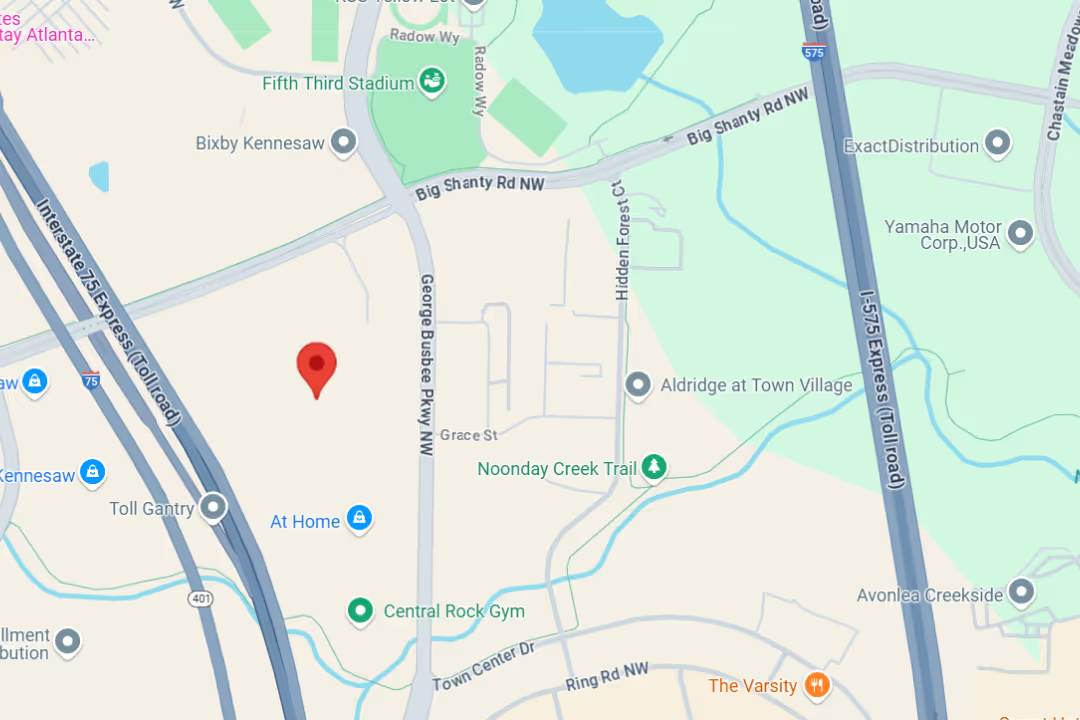
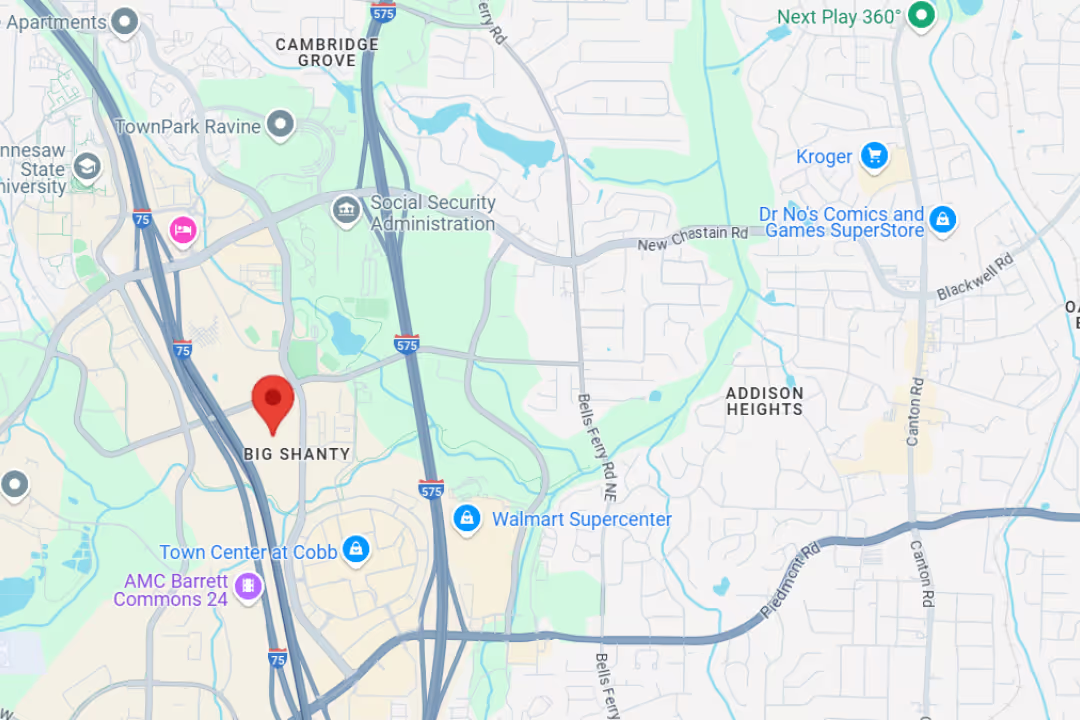
Kennesaw Clinic
2911 George Busbee Parkway, Suite 50
Kennesaw, GA 30144
(770) 545-6404
Snellville Clinic
2220 Wisteria Drive, Unit 101
Snellville, GA 30078
(470) 645-9297
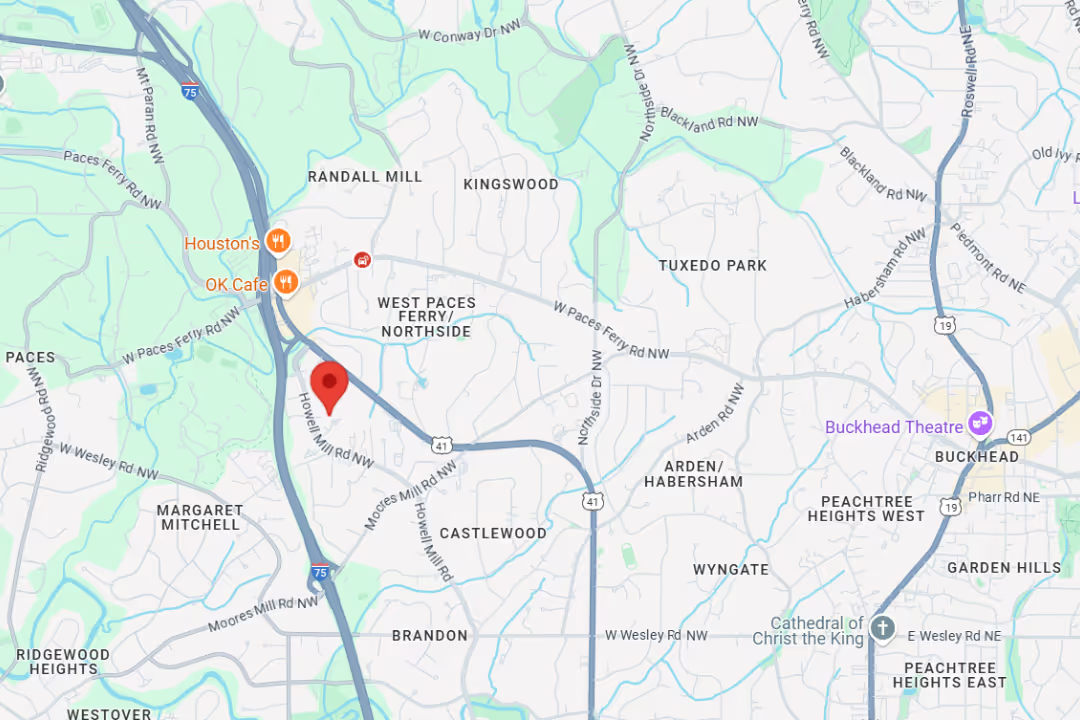
Buckhead PM&R
3200 Downwood Circle NW, Suite 520
Atlanta, GA 30327
(770) 872-7549
At Medici, you’re more than your MRI.
We take time to hear your story, understand your pain, and create a plan that actually works for you.

Our team delivers specialist care at convenient locations across Metro Atlanta:
Get expert tips on injury recovery, pain relief, joint health, and movement strategies—straight from our Fellowship-Trained team.