Knee surgery is often a major step toward reducing pain and restoring mobility—but for many patients, the recovery process comes with lingering discomfort, stiffness, and uncertainty. Whether you’ve undergone ACL repair, meniscus surgery, arthroscopy, or a partial or total knee replacement, post-surgical knee pain is extremely common. In many cases, the right knee brace can play a critical role in protecting the joint, easing pain, and helping you move forward with confidence.
That said, there is no one-size-fits-all solution when it comes to knee braces after surgery. The “best” brace depends on several factors, including the type of surgery performed, your unique anatomy, your activity level, and the stage of your recovery. A brace that works well for someone recovering from ACL reconstruction may be inappropriate—or even counterproductive—for someone healing after a knee replacement.
At Medici Orthopaedics & Spine, post-surgical knee care is guided by a patient-centered, physician-led approach. Rather than recommending generic solutions, our specialists focus on understanding why pain persists and how targeted support—such as the right knee brace—can be safely integrated into a broader recovery plan designed to restore strength, stability, and quality of life.
Hinged knee braces are among the most commonly prescribed braces after ligament repairs, including ACL, MCL, and PCL surgeries. These braces feature metal or composite hinges on one or both sides of the knee, allowing controlled bending while preventing excessive side-to-side motion.
Why hinged braces are effective after ligament surgery:
Doctors typically recommend hinged knee braces during the early to mid-stages of recovery, especially when joint stability is compromised. They are often worn while walking, standing, or beginning physical therapy to reduce the risk of reinjury while strength and control are being restored.
Post-operative knee braces—often referred to as ROM (Range of Motion) braces—are designed for patients recovering from major knee surgeries or reconstructions, including complex ligament repairs and some knee replacement procedures.
These braces allow physicians to precisely control how much the knee can bend or straighten by adjusting locking mechanisms or motion limits.
Key benefits of ROM knee braces:
ROM settings are especially important in the first weeks after surgery, when excessive movement could damage sutures, grafts, or newly repaired structures. As recovery advances, the brace can be adjusted to allow more natural movement under medical supervision.
Compression knee braces and sleeves are lightweight, flexible supports designed primarily to manage swelling, mild pain, and stiffness. These are often used after less invasive procedures, such as arthroscopy, or later in recovery once stability has improved.
Best uses for compression braces:
However, compression sleeves have significant limitations after surgery. They do not provide structural stability and are not appropriate when instability is present. For patients recovering from ligament repairs or major joint reconstruction, compression alone is often insufficient without physician approval.
Functional knee braces are designed for patients who are transitioning back to daily activities, work, or sports after completing key rehabilitation milestones. These braces provide support during higher-level movement without overly restricting motion.
When functional braces are typically prescribed:
Proper fitting is critical. A poorly fitted functional brace can shift during movement, reduce effectiveness, or cause discomfort. At Medici Orthopaedics & Spine, brace selection and fit are carefully evaluated to ensure the brace supports—not hinders—long-term recovery.
Unloader (or offloader) knee braces are commonly used when surgery involves arthritis, cartilage damage, or uneven joint stress, particularly in patients who have undergone partial knee replacement or cartilage-preserving procedures.
These braces work by shifting pressure away from the damaged or painful area of the knee, redistributing load to healthier cartilage.
How unloader braces help after surgery:
Unloader braces are especially valuable for patients who continue to experience pain due to mechanical stress rather than instability alone.
Type of Surgery Performed
Different surgeries place different demands on the knee. An ACL reconstruction typically requires stabilization and motion control, while a knee replacement may require alignment support and swelling management. The best brace for knee pain after surgery must be tailored to the structures that were repaired or replaced.
Stage of Recovery (Early, Mid, or Late Rehab)
In the early phase, protection and controlled motion are critical. As healing progresses, the focus shifts toward strength, flexibility, and functional movement. A brace that is helpful early on may become restrictive later if not adjusted or discontinued at the appropriate time.
Stability vs. Mobility Needs
Some patients need maximum stability to protect healing ligaments, while others need a brace that allows greater freedom of movement to support rehabilitation exercises. The ideal brace balances support with mobility based on individual recovery goals.
Swelling Level
Persistent swelling can increase pain and limit motion. Compression and support must be matched to swelling severity, ensuring circulation is supported without causing discomfort or restricting healing.
Daily Activity Demands
A patient returning to desk work will have different bracing needs than someone standing for long hours or preparing to return to sports. Daily movement patterns play a major role in determining which brace will be most effective.
Choosing the wrong brace without professional input can compromise recovery and prolong knee pain.
Better Alignment
Custom braces are designed to match your unique anatomy, improving joint positioning and reducing uneven stress on the knee.
Improved Comfort
A brace that fits properly is less likely to shift, pinch, or restrict circulation—making it easier to wear consistently throughout the day.
Reduced Skin Irritation
Custom-fit braces minimize friction and pressure points, which is especially important for post-surgical skin that may be sensitive or healing.
Custom bracing is often recommended after complex surgeries, in cases of instability, or when long-term support is needed.
Off-the-shelf braces can be effective for:
However, these braces should still be selected with medical guidance to ensure proper fit and function.
Choosing the best brace for knee pain after surgery is not about finding the most popular product or the tightest support—it’s about finding the right solution for your body, your surgery, and your stage of recovery. Every knee heals differently, and what works well for one patient may be ineffective or even harmful for another.
Expert guidance ensures that bracing is used as a tool for healing, not a shortcut or a crutch. With the right medical oversight, knee bracing becomes part of a smarter, safer path toward restoring strength, mobility, and confidence—today and for years to come.
If you’re struggling with knee pain after surgery—or unsure whether the brace you’re wearing is truly helping—expert care can make all the difference. At Medici Orthopaedics & Spine, patients receive compassionate, physician-led care backed by advanced diagnostics and minimally invasive treatment options designed to support real healing.
Schedule a consultation today and take the next step toward lasting knee relief.
Medici Orthopaedics & Spine
🌐 Website: https://www.mediciortho.com/
📞 Main Appointment Line: +1-844-328-4624
Marietta
792 Church Street, Unit 101
Marietta, GA 30060
📞 (470) 795-8398
Snellville
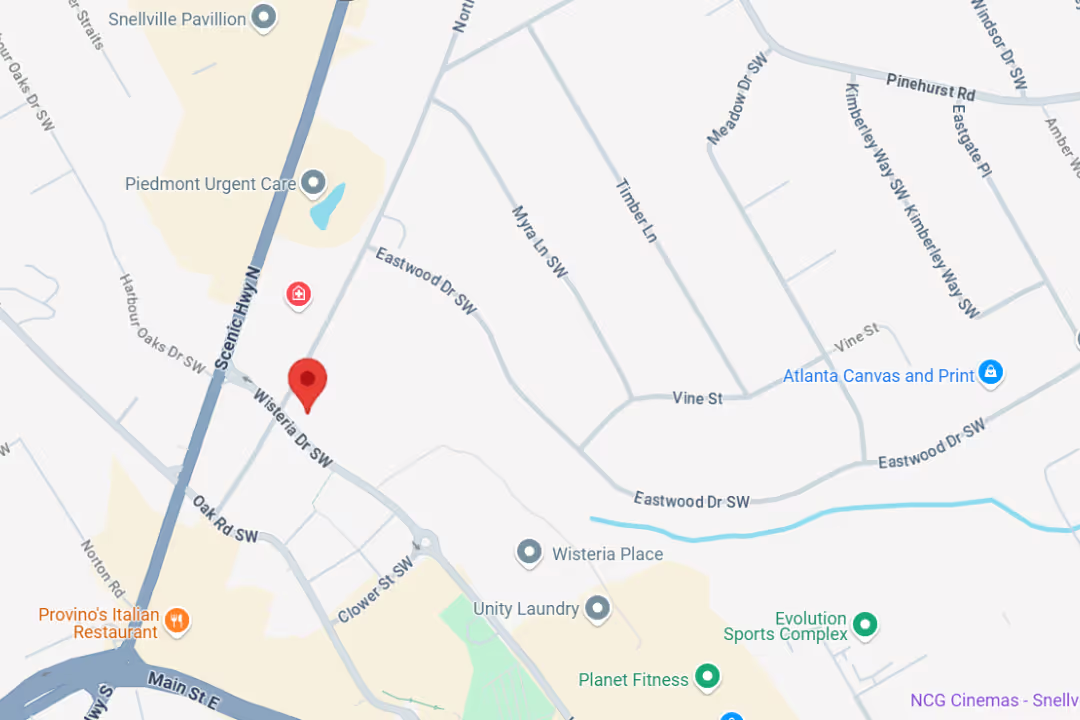
2220 Wisteria Dr, Unit 100
Snellville, GA 30078
📞 (470) 795-8398
Kennesaw
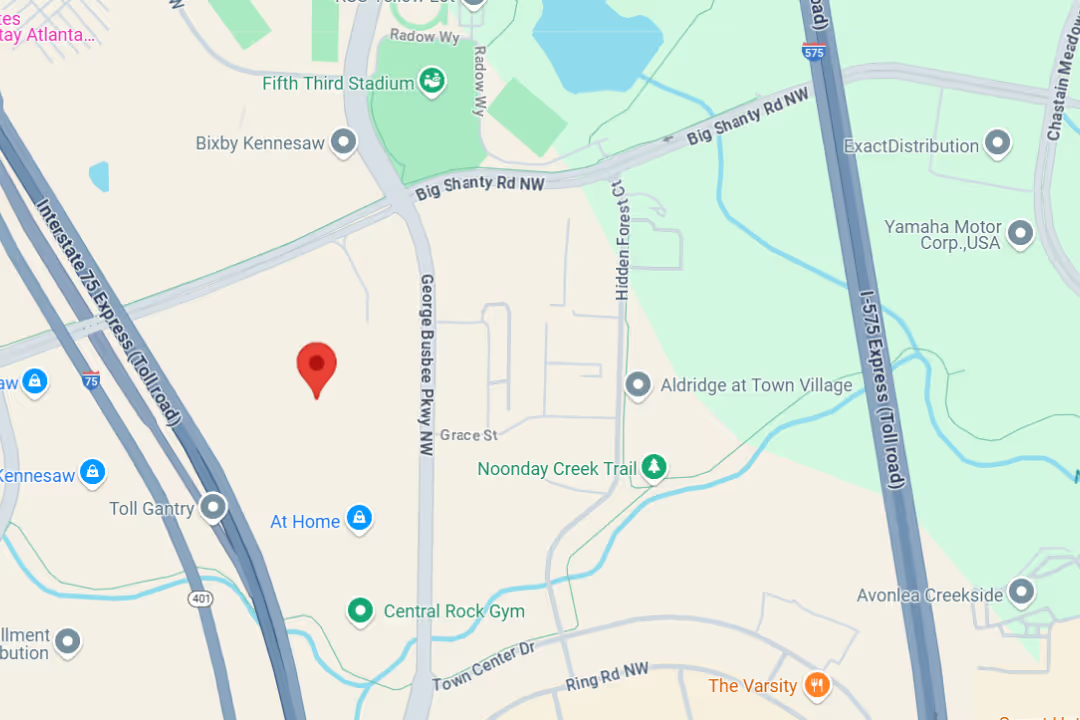
2911 George Busbee Parkway, Suite 50
Kennesaw, GA 30144
📞 (770) 545-6404
Snellville
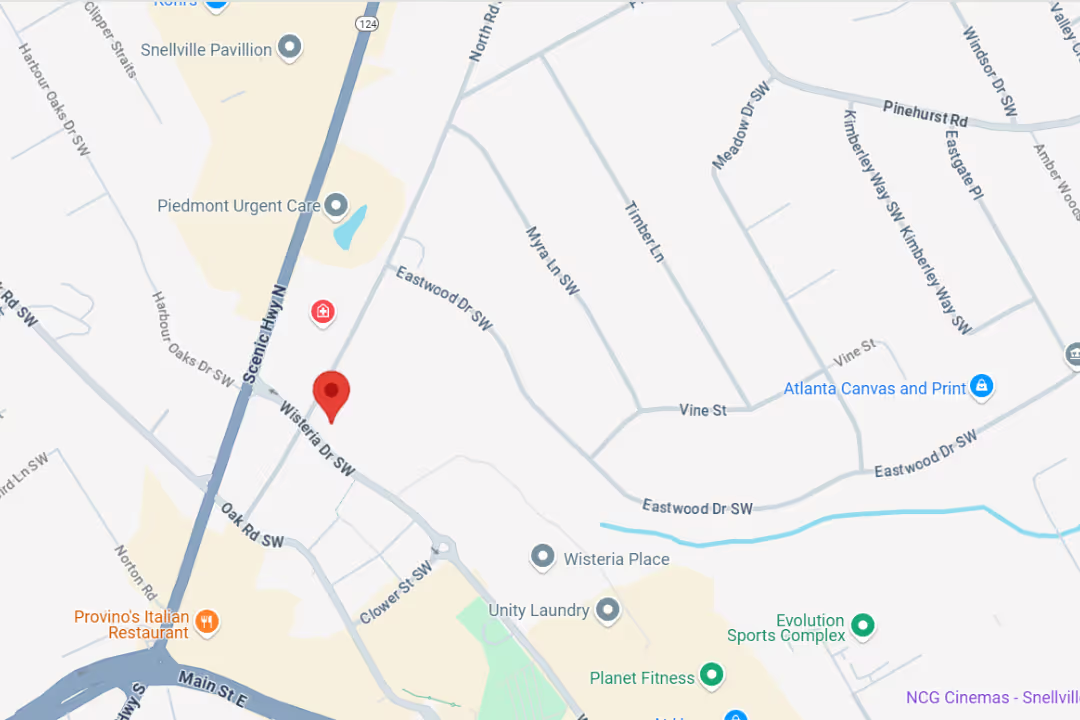
2220 Wisteria Drive, Unit 101
Snellville, GA 30078
📞 (470) 645-9297
Buckhead PM&R
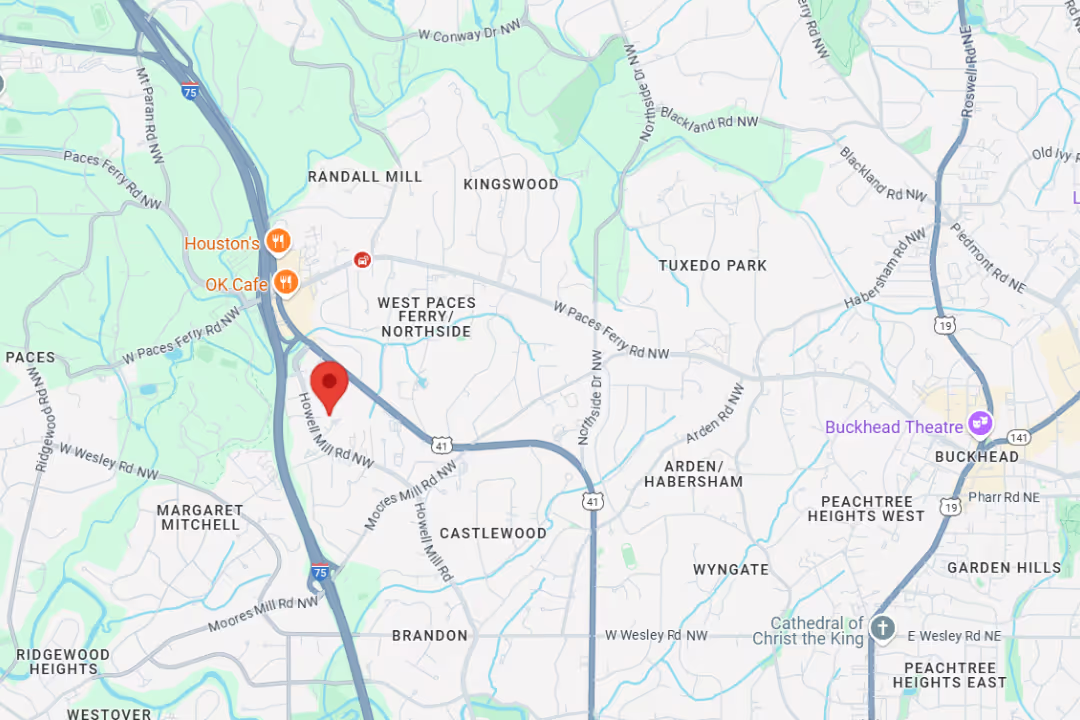
3200 Downwood Circle, NW, Suite 520
Atlanta, GA 30327
📞 (770) 872-7549
Explore our library of patient support guides covering the conditions we treat, the treatments we offer, and the questions we hear most. Each one is written to help you understand your options and feel confident about your next step. Browse the topics below to learn more, or reach out to our team anytime.

At Medici, you’re more than your MRI.
We take time to hear your story, understand your pain, and create a plan that actually works for you.

Our team delivers specialist care at convenient locations across Metro Atlanta:
Get expert tips on injury recovery, pain relief, joint health, and movement strategies—straight from our Fellowship-Trained team.