Joint replacement is designed to give you your life back—to ease pain, restore mobility, and help you walk, climb stairs, sleep, and stay active with less limitation. So when pain returns years after surgery, it can feel confusing, frustrating, and even a little scary.
Late pain after a hip, knee, shoulder, ankle, or other joint replacement can affect every part of your day. It can make walking distances harder, stairs more intimidating, sleep more restless, and hobbies or work more difficult to enjoy.
Some mild stiffness or occasional soreness can be expected as we age, especially with weather changes or increased activity. But new, worsening, or persistent pain years after joint replacement is not something to ignore. This can happen after primary joint replacements and after revision surgeries as well.
At Medici Orthopaedics & Spine, we approach this kind of pain with compassion and curiosity. Our philosophy is to provide a thorough evaluation, favor minimally invasive solutions, and use the least drug-dependent care possible—so you can truly understand what’s going on and what can be done to help.
Types of Late Post-Joint Replacement Pain
Mechanical Issues with the Implant
Some causes of pain are directly related to the implant and how it interacts with your bone:
- Aseptic loosening
Over time, the bond between the implant and bone can gradually weaken, even without infection. This “loosening” can lead to deep, aching pain, often with more discomfort during weight-bearing activities. - Wear and tear of implant surfaces
As artificial joint surfaces move against each other, tiny particles can be released. These particles may irritate bone and soft tissue, sometimes causing inflammation and bone loss around the implant. - Instability or micro-instability
Even small amounts of abnormal motion in the joint can create a sense of “giving way,” shifting, or catching. This is sometimes subtle but very noticeable to the person living with it. - Malalignment or malposition of components
If components are slightly off in angle or position—or if alignment changes over years—joint mechanics can be altered. This can cause uneven wear, pain with certain movements, or difficulty with activities like stairs or squatting. - Leg length discrepancy (most common after hip replacement)
A meaningful difference in leg length can change your gait, leading to low back pain, hip pain, knee pain, or foot problems over time. - Joint-specific issues
- Knee replacements: patellar tracking problems (the kneecap not gliding correctly) can cause front-of-knee pain.
- Hip replacements: impingement, where bone or soft tissues pinch during certain motions, can create sharp pain with bending or rotation.
Infection (Acute or Low-Grade)
Infection around a joint replacement can occur months or even years after the original surgery.
- Acute or obvious infection may present with:
- Redness, warmth, or swelling around the joint
- Drainage from the incision or nearby tissues
- Fever, chills, or feeling unwell
- Low-grade or chronic infection can be much subtler:
- Persistent pain that doesn’t match imaging findings
- Mild swelling or warmth
- Stiffness and aching without dramatic redness or high fever
Periprosthetic Fractures and Bone Problems
The bone around a joint replacement can also be a source of pain:
- Periprosthetic fractures
Fractures occurring around the implant, often after a fall or trauma, can be painful and may affect the stability of the joint replacement. - Bone loss (osteolysis)
Chronic reaction to wear particles can cause the bone to erode around the implant, leading to pain and loosening. - Osteoporosis and weakened bone
If bone density decreases with age or medical conditions, the bone supporting the implant may become more vulnerable, which can cause pain and increased risk of fracture.
Soft Tissue, Tendon, and Muscle Sources
Even when the implant itself is doing well, the surrounding soft tissues can become a source of pain:
- Tendonitis or tendon tears near the joint
- Gluteal tendon issues near hip replacements
- Patellar or quadriceps tendon problems near knee replacements
These can cause sharp or aching pain, especially with certain movements or weight-bearing.
- Bursitis
Inflammation of the small, fluid-filled sacs that cushion joints can lead to tenderness, swelling, and pain with pressure or motion. - Muscle weakness or imbalance
If certain muscles haven’t fully recovered their strength or if compensation patterns develop over time, abnormal movement can stress the joint and surrounding tissues, leading to discomfort.
Nerve-Related and Neuropathic Pain
Nerves can become irritated or damaged during surgery, from scar tissue, or from changes that happen later:
- Nerve irritation or entrapment around the surgical area or within scar tissue can cause sharp, shooting, or burning pain.
- Neuroma formation
A neuroma is a localized bundle of nerve tissue that can be very sensitive, causing pain when touched or with certain movements. - Neuropathic pain
Often described as burning, tingling, electric, or hypersensitive to touch. This type of pain behaves differently from mechanical or inflammatory pain and often requires more specialized management.
Referred Pain from the Spine or Other Joints
Sometimes the problem isn’t in the joint replacement at all. Instead, pain may be referred from another source:
- Lumbar spine arthritis, disc disease, or spinal stenosis
These conditions can radiate pain into the hip, thigh, knee, or leg, and may be mistaken for joint replacement problems. - Adjacent joints
Pain from the back, ankle, foot, or the opposite hip or knee can alter how you walk, shifting stress to the replaced joint and causing secondary pain.
Inflammatory and Autoimmune Conditions
If you have conditions such as rheumatoid arthritis, psoriatic arthritis, lupus, or other autoimmune diseases, they can still affect your body even after a joint is replaced.
- Systemic flares can cause pain and stiffness in tissues around the implant.
- Multiple joints may be involved, which can change how you move and put secondary stress on the replaced joint.
Central Sensitization and Chronic Pain Syndromes
For some people, especially after multiple surgeries or years of pain, the nervous system can remain in a state of “high alert.”
- This is sometimes referred to as central sensitization, where the brain and spinal cord become more reactive to pain signals.
- Conditions like fibromyalgia or complex regional pain syndrome (CRPS) can amplify pain around a joint replacement.
How Medici Orthopaedics & Spine Evaluates Pain Years After Joint Replacement
Detailed History and Symptom Mapping
Getting to the root of pain years after a joint replacement starts with listening. At Medici Orthopaedics & Spine, we take time to understand:
- When the pain started in relation to your original surgery, any revisions, and key life events (falls, new jobs, major activity changes).
- The location, type, and timing of pain – whether it feels sharp or dull, constant or only with certain activities, deep in the joint or more on the surface.
- Functional limitations, such as how far you can walk, how you manage stairs, how long you can stand, and how pain interferes with sleep.
- Any prior surgeries, complications, or revisions on the same joint, including infections, blood clots, or stiffness issues.
Physical Examination
Next, we perform a focused, hands-on evaluation of the joint and surrounding areas:
- Visual inspection of the joint, scars, swelling, and overall alignment.
- Range of motion, strength, and flexibility testing to see how well the joint moves and how the muscles are supporting it.
- Gait analysis and assessment of balance and posture – how you walk, stand, and transfer weight can reveal a lot about underlying mechanics.
- Targeted tests to help distinguish joint, tendon, muscle, or nerve pain – for example, specific positions or resisted movements that reproduce your symptoms.
Imaging Studies
When needed, imaging gives us a clearer picture of what’s happening beneath the surface:
- X-rays to evaluate implant position, alignment, and early signs of loosening, wear, or fractures.
- CT scans in select cases for highly detailed views of bone and the interface between bone and implant.
- MRI or ultrasound (using metal-safe techniques when appropriate) to look at soft tissues—tendons, muscles, bursae, and surrounding structures that may be driving pain.
- Bone scans or nuclear imaging for more complex cases where loosening, infection, or increased bone activity needs clarification.
Laboratory Evaluation and Infection Workup
Because infection changes everything about the treatment plan, we take it seriously, even if signs are subtle. When indicated, we may order:
- Blood tests, including inflammatory markers such as ESR and CRP, to screen for infection or significant inflammation.
- Joint aspiration, where a small amount of joint fluid is drawn and analyzed if infection is suspected.
- Cultures and advanced tests on the fluid to detect low-grade or atypical infections that might otherwise be missed.
Diagnostic Injections and Nerve Blocks
Sometimes the best way to find out where pain is coming from is to temporarily numb a specific area or structure:
- Targeted joint or soft tissue injections can help us differentiate whether pain is coming from the implant, nearby bursa, or tendons.
- Nerve blocks can determine whether symptoms are primarily nerve-driven or referred from the spine or another region.
Find Answers for Joint Replacement Pain—Even Years Later
Pain years after a joint replacement can be worrying, but it’s also a signal that deserves attention—not resignation. With a careful, whole-person evaluation, it’s often possible to discover why you’re hurting and create a plan that reduces pain, improves function, and helps you feel more confident in your movement again.
At Medici Orthopaedics & Spine, Dr. Sonny Dosanjh and our team are dedicated to using the most effective, least invasive, and least drug-dependent options available—whether your joint replacement is new, several years old, or was done elsewhere.
If you’re ready to understand what’s causing your joint pain and explore tailored treatment options, we’re here to help.
Contact Medici Orthopaedics & Spine
📞 Main Line: +1-844-328-4624
🌐 Website: https://www.mediciortho.com/
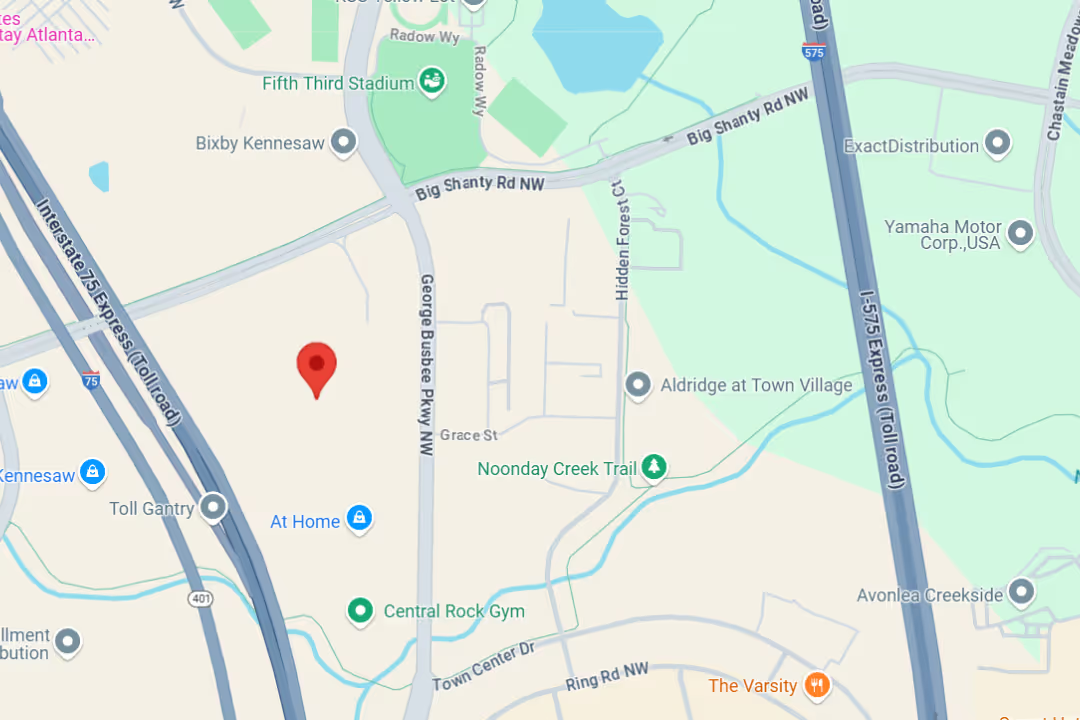
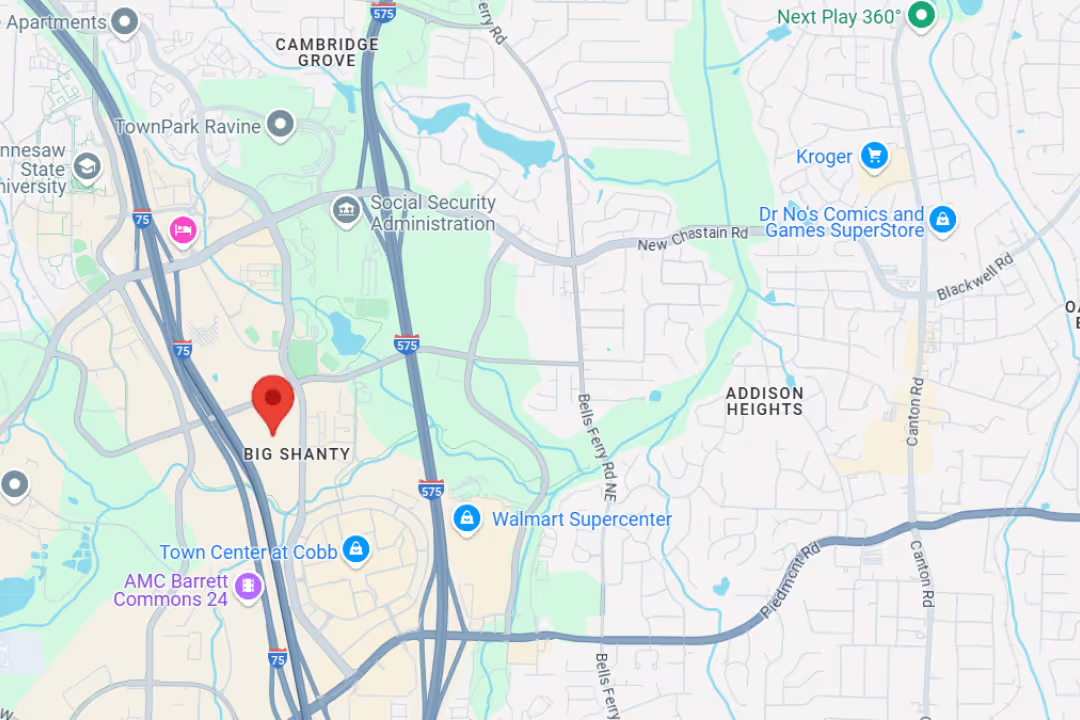
Kennesaw Clinic
2911 George Busbee Parkway, Suite 50
Kennesaw, GA 30144
(770) 545-6404
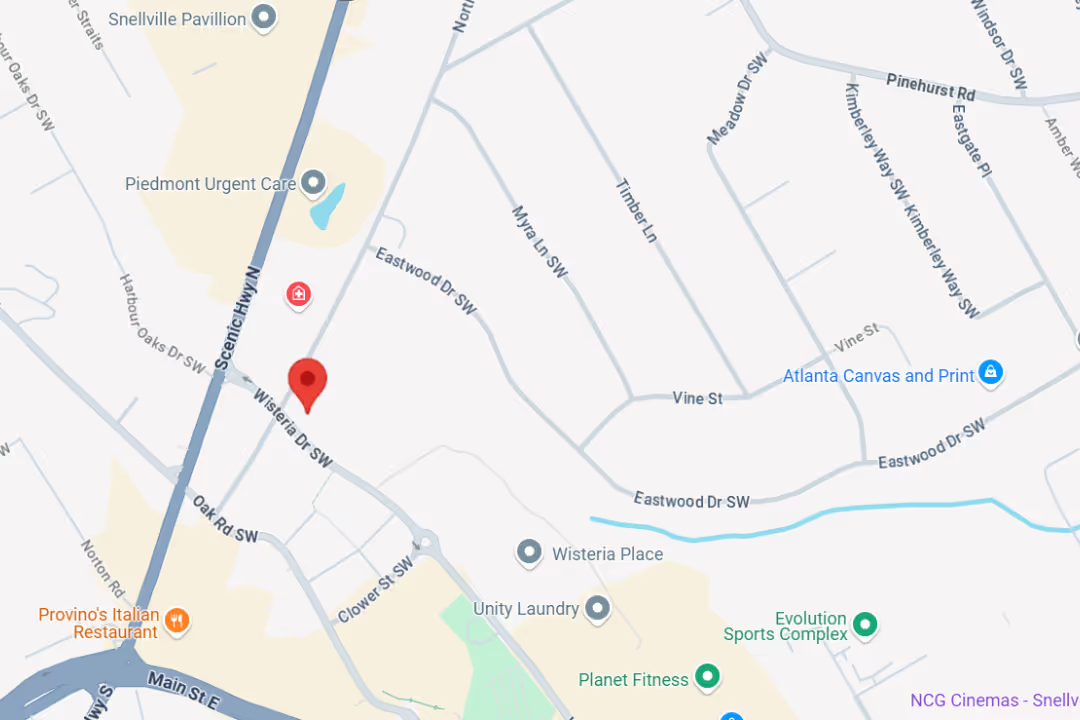
Snellville Clinic
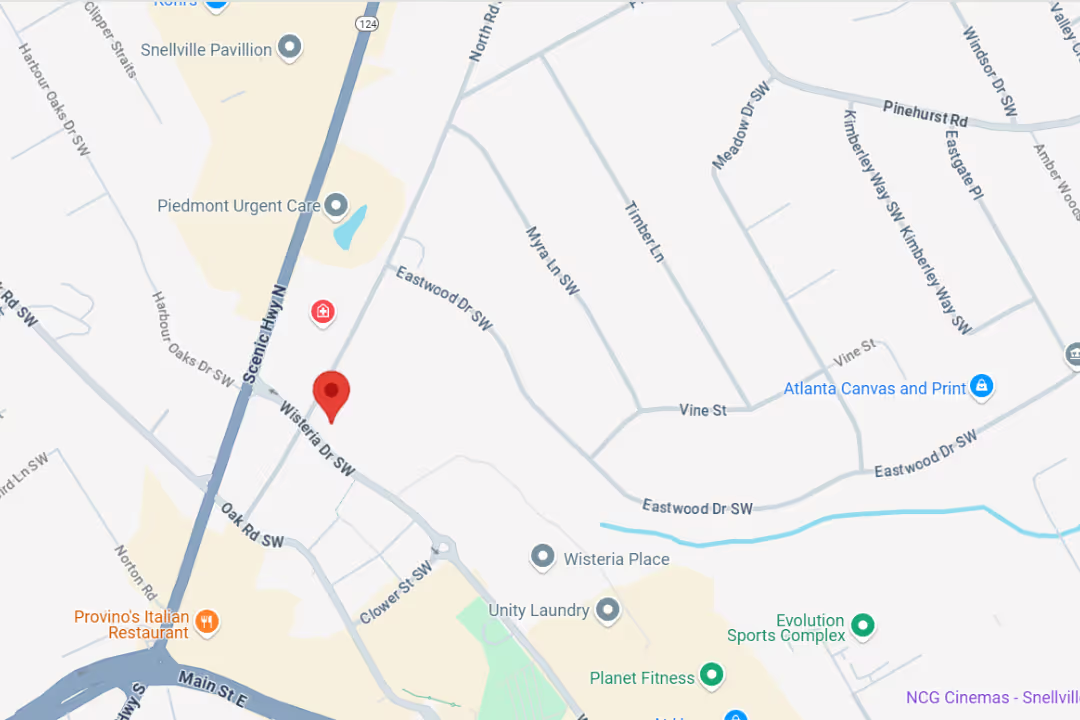
2220 Wisteria Drive, Unit 101
Snellville, GA 30078
(470) 645-9297
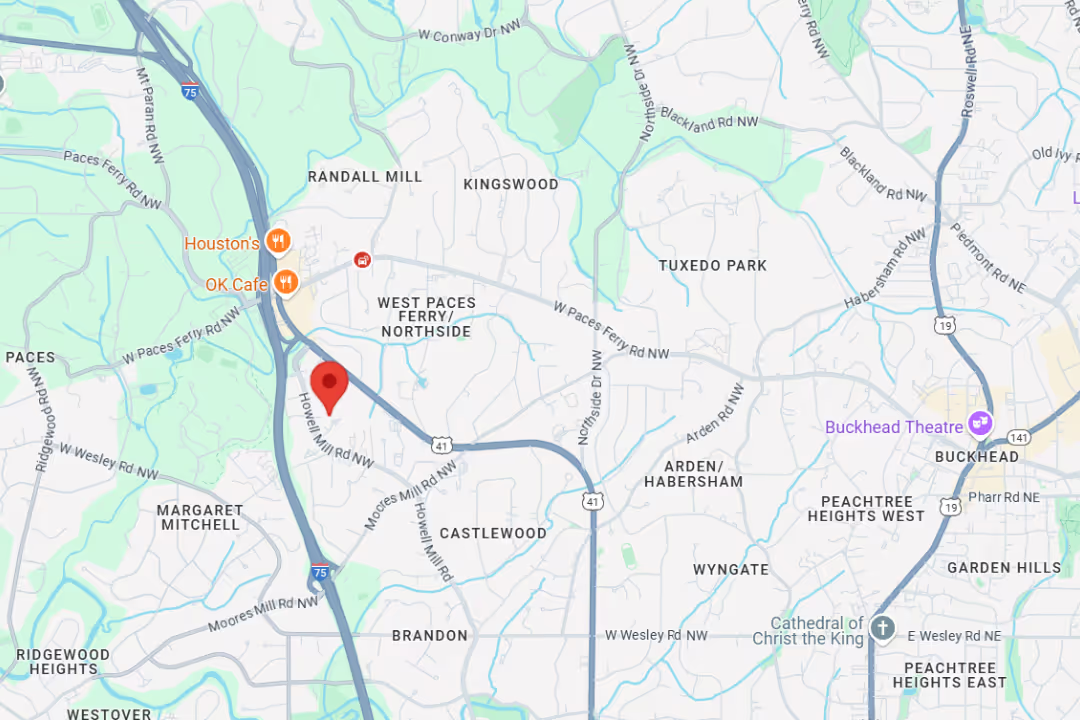
Buckhead PM&R Clinic
3200 Downwood Circle, NW, Suite 520
Atlanta, GA 30327
(770) 872-7549