You bend down to grab a bag of groceries, and something in your lower back catches. Or maybe the pain crept in slowly, a dull ache that turned into a sharp pull down your leg when you sit too long. Either way, once someone mentions the words "bulging disc," the questions start piling up faster than the answers.
Here is something worth knowing right away. Most bulging discs do not require surgery. For the majority of patients, the path back to comfortable movement starts with physical therapy, not an operating room. At Medici Orthopaedics & Spine, we build recovery plans around your specific pain, your goals, and the least invasive options that can genuinely help.
Your spine is made up of vertebrae stacked on top of each other, cushioned by soft discs that act like shock absorbers. Each disc has a tougher outer layer and a gel-like center. This design lets your spine bend, twist, and absorb impact throughout the day.
When a disc bulges, its outer layer weakens and pushes outward slightly, without the center leaking through. It is a structural shift rather than a rupture. That distinction matters, because it often means the disc still has room to heal with the right support.
Patients often use these two terms interchangeably, and it is easy to see why. Both involve a disc that is no longer sitting exactly where it should.
Bulging discs rarely appear out of nowhere. They usually develop from a combination of factors that build up over time, including:
Bulging disc symptoms depend heavily on location. A bulge in the lower back, or lumbar spine, often causes localized pain along with radiating discomfort down one leg, sometimes called sciatica. A bulge in the neck, or cervical spine, may send pain, numbness, or tingling into the shoulder and arm instead.
Some patients notice pain only during certain movements, like bending forward or sitting for long stretches. Others feel a constant ache that flares with activity. Both patterns are common and both are worth mentioning to your care team.
Most bulging disc symptoms are uncomfortable but manageable, and many people improve steadily with guided care. That said, certain signs deserve a prompt evaluation rather than a wait and see approach.
Signs to bring to a provider's attention quickly:
Discs have a surprising ability to settle back into a healthier position over time. Inflammation decreases, surrounding muscles adjust, and pressure on nearby nerves often eases. Physical therapy supports this natural process rather than working against it.
Guided movement, targeted stretching, and strengthening exercises help create the right conditions for healing. Instead of masking pain, this approach addresses the mechanics behind it.
At Medici Orthopaedics & Spine, we believe in starting with the most effective, least invasive, least drug-dependent program medically available. Physical therapy fits naturally into that philosophy. It gives your body the chance to recover through movement and mechanics before considering injections or surgical options.
Ignoring a bulging disc rarely makes it disappear. Left unaddressed, many patients develop compensatory movement patterns, favoring one side of the body or avoiding certain motions altogether. Over time, this can lead to secondary issues like hip or shoulder strain, chronic pain cycles, and reduced overall mobility. Early, guided treatment tends to prevent this snowball effect.
Your first physical therapy session at Medici starts with a thorough evaluation. Your therapist will review your medical history, discuss your symptoms, and assess your movement patterns, posture, and strength.
Physical therapy for a bulging disc typically blends several techniques rather than relying on just one. Depending on your evaluation, your plan may include:
Physical therapy is rarely static from week to week. Early sessions usually focus on reducing pain and calming inflammation. As symptoms ease, the plan shifts toward rebuilding strength and improving function.
By the later stages, many patients are working on movements that mirror their daily activities, whether that means lifting safely at work or returning to a favorite sport. This progression is intentional, not incidental.
Physical therapy is often the starting point in a broader, synergistic care model. Here is how it generally compares to other common options for bulging disc pain.
Myth: Rest is always best for a bulging disc. Fact: Prolonged rest can actually weaken supporting muscles. Guided movement, under professional supervision, generally supports faster recovery.
Myth: A bulging disc always requires surgery. Fact: Most bulging discs improve with conservative treatment like physical therapy. Surgery is typically considered only when symptoms persist despite consistent conservative care.
Myth: Physical therapy is only useful after surgery. Fact: Physical therapy is frequently the primary treatment itself, not just a recovery step afterward.
In the early weeks, the goal is calming pain and inflammation. Many patients notice gradual improvement in daily comfort during this stage, though the pace varies from person to person.
As pain settles, therapy shifts toward rebuilding strength around the spine. This phase often takes several weeks and focuses on preventing the same strain from recurring.
Recovery does not end when pain fades. Many patients continue simple maintenance exercises and posture habits to protect their spine long term. Timelines vary widely, and your therapist can offer a more specific outlook based on your progress.
Can a bulging disc heal without surgery?
Yes, in most cases. Many bulging discs improve significantly with physical therapy and other conservative treatments.
How long does physical therapy take to help a bulging disc?
Many patients notice initial improvement within several weeks, though full recovery timelines depend on the individual and the severity of the bulge.
Is walking good for a bulging disc?
Gentle walking is often encouraged, since movement supports circulation and healing. Your therapist can advise on pacing based on your symptoms.
Will physical therapy alone be enough?
For many patients, yes. Others benefit from combining therapy with additional treatments as part of a broader plan.
Bulging discs are common, and for most people, they are also treatable without surgery. The combination of guided movement, targeted strengthening, and professional support gives your body a genuine chance to heal on its own terms.
You do not have to figure out the right approach alone. A clear evaluation and a personalized plan can make the difference between guessing at solutions and actually making progress.
Pain does not have to dictate what your week looks like. Our team at Medici Orthopaedics & Spine can evaluate your symptoms and build a physical therapy plan designed around your specific needs and goals.
Medici Orthopaedics & Spine
Locations:
Explore our library of patient support guides covering the conditions we treat, the treatments we offer, and the questions we hear most. Each one is written to help you understand your options and feel confident about your next step. Browse the topics below to learn more, or reach out to our team anytime.

At Medici, you’re more than your MRI.
We take time to hear your story, understand your pain, and create a plan that actually works for you.

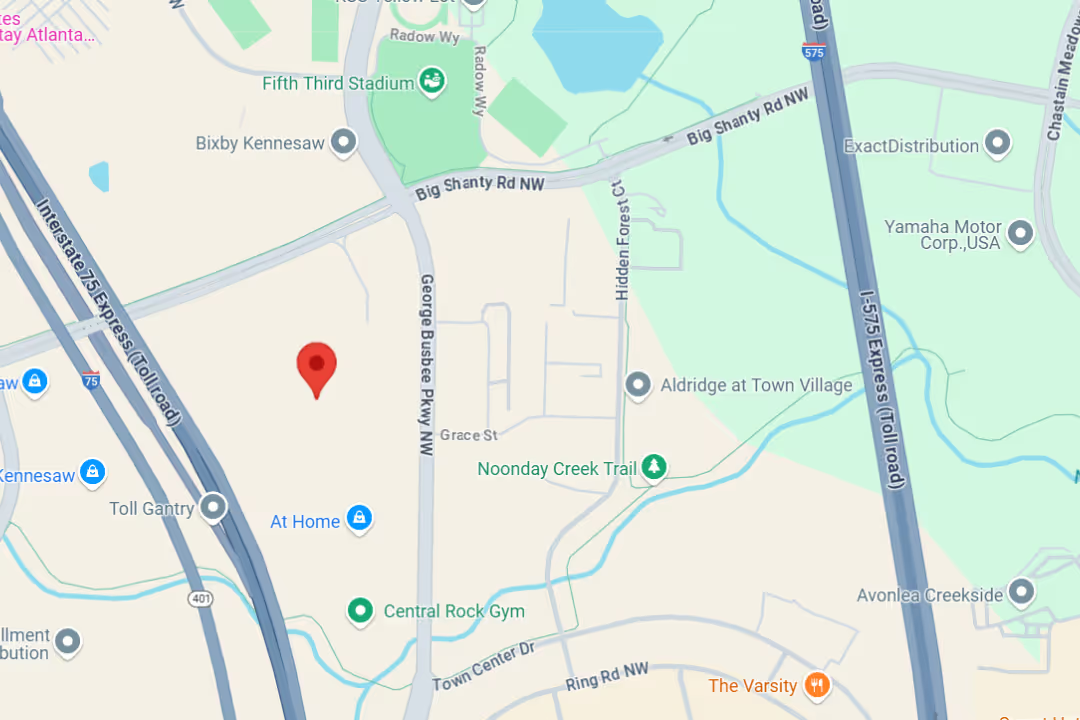
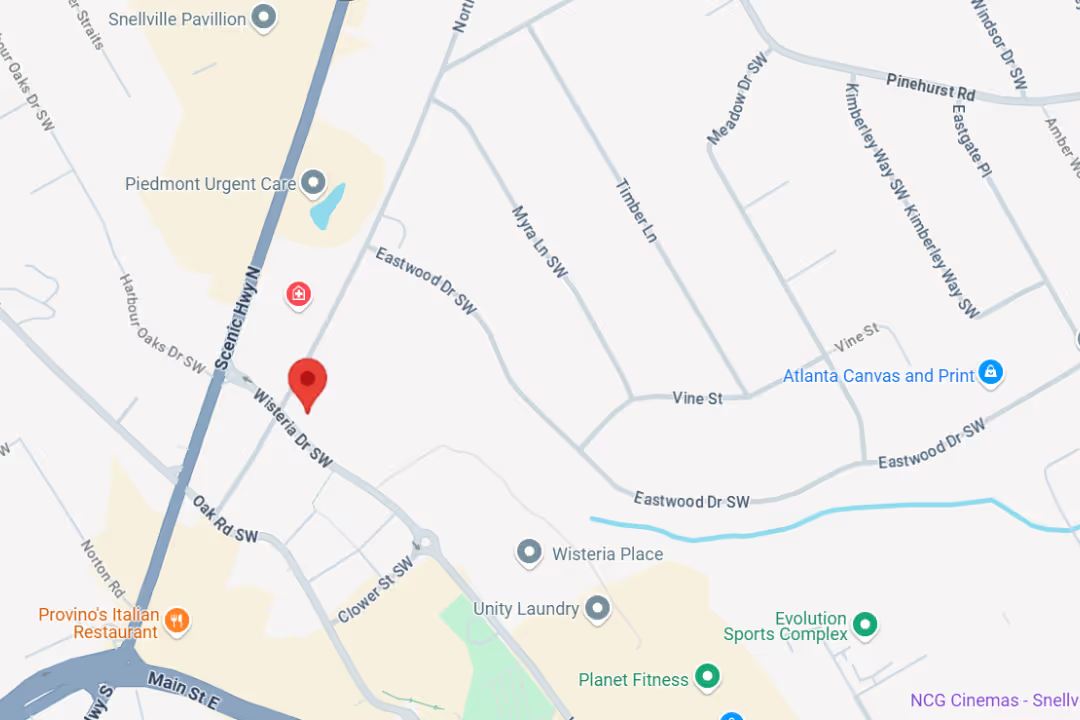
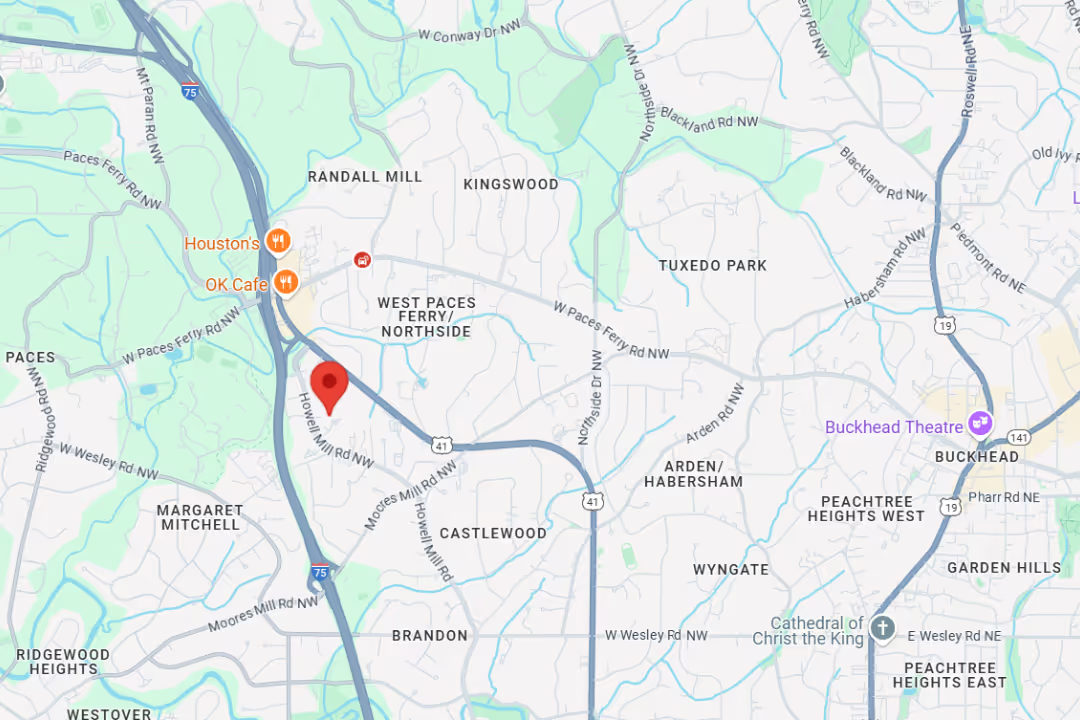
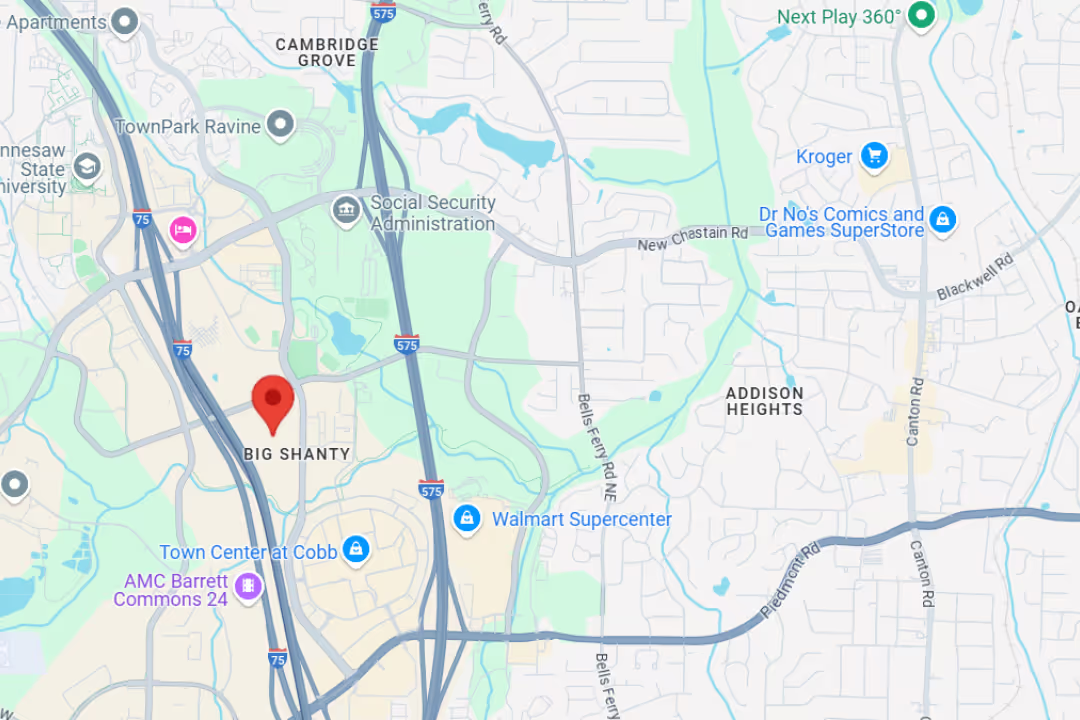
Our team delivers specialist care at convenient locations across Metro Atlanta:
Get expert tips on injury recovery, pain relief, joint health, and movement strategies—straight from our Fellowship-Trained team.