When your job depends on your hands, wrist and hand pain isn’t just uncomfortable—it’s disruptive. Maybe you’re waking up at night with numbness and tingling. Maybe your fingers feel “asleep” when you drive, type, or hold a phone. Maybe you’ve started dropping tools or struggling to grip, lift, or open containers. For many working people, these symptoms don’t stay small—they can turn into missed shifts, reduced productivity, and constant worry about whether the problem will become permanent.
At Medici Orthopaedics & Spine, our focus is on identifying what’s truly causing your symptoms and building a plan that’s least invasive and least drug-dependent whenever possible. We regularly care for Snellville-area workers in offices, warehouses, healthcare, construction, manufacturing, retail, and service industries—and we understand that treatment needs to fit real job demands, not just a textbook diagnosis. When appropriate, we also coordinate documentation and work restrictions to support a safe, realistic return-to-work plan.
What Is Carpal Tunnel Syndrome?
Carpal tunnel syndrome happens when the median nerve—a major nerve that supplies sensation and strength to parts of the hand—gets compressed at the wrist. The “carpal tunnel” is a narrow passageway in the wrist made of bones and a strong ligament. When tissues inside that tunnel become irritated or swollen, pressure increases, and the median nerve can become pinched.
Carpal tunnel vs. other common problems
A big reason people struggle to improve is that wrist/hand symptoms can look similar across conditions. Getting it right matters because the best therapy plan depends on the true cause.
- Carpal tunnel vs. tendonitis
Tendonitis is inflammation of tendons (often causing pain with movement, tenderness, and sometimes swelling). Carpal tunnel often includes numbness/tingling and can be worse at night. You can have both, but treatment priorities differ. - Carpal tunnel vs. a “pinched nerve” in the neck (radiculopathy)
A neck problem can cause numbness, tingling, weakness, or radiating pain into the arm/hand. If symptoms are coming from the neck (or both neck and wrist), treating only the wrist may give incomplete relief. - Carpal tunnel vs. peripheral neuropathy (such as diabetes-related nerve issues)
Peripheral neuropathy often affects both sides and can involve feet and hands, with more diffuse tingling, burning, or numbness. Carpal tunnel tends to follow a more specific pattern and is linked to wrist positioning and repetitive use.
Work Injury Documentation and Workers’ Compensation Support
If your symptoms are related to work duties, it’s common to need documentation that supports both your medical care and your ability to work safely. At Medici Orthopaedics & Spine, we understand that work injury care needs to be clinically solid and practical, especially when workers’ compensation is involved.
What patients typically need (varies by case)
Many work injury cases require:
- A clear diagnosis and a documented treatment plan
- Work restrictions or modified duty recommendations that reflect real job demands (not generic instructions)
- Progress notes showing objective improvement over time
How therapy supports a claim medically
Therapy is not just “exercises”—it’s measurable, functional care. Documentation often includes:
- Functional deficits (what you can’t do safely right now)
- Grip strength and pinch strength changes
- Endurance and task tolerance (how long you can perform work tasks before symptoms flare)
- Progress toward return-to-work milestones
Coordination when appropriate
When needed and appropriate, coordination may include:
- Communication aligned with your case requirements (e.g., employer/adjuster/case manager)
- Return-to-work planning with updated restrictions as you improve
- A stepwise plan to transition from modified duty to full duty safely
Work Injury Therapy Options for Carpal Tunnel
Activity Modification and Ergonomics
This is often the fastest way to reduce flare-ups because it targets the “why” behind the symptoms.
- Job-task review
- We look at the specific motions that trigger symptoms: repetitive scanning, gripping tools, prolonged typing, lifting, pinching, vibration exposure, or sustained wrist bending.
- We identify aggravators like forceful grips, awkward angles, or long stretches without breaks.
- Ergonomic changes
- Neutral wrist positioning: keeping the wrist as straight as possible reduces tunnel pressure.
- Tool/handle modifications: larger grips, padded handles, trigger positioning, or grip technique changes to reduce pinch force.
- Vibration reduction strategies: limiting vibration time, using anti-vibration gloves where appropriate, rotating tasks, and using better-balanced tools.
- Office workstation setup: keyboard/mouse position, desk height, arm support, and posture so you’re not “living” in wrist extension or flexion.
- Micro-breaks and pacing
- Short, scheduled breaks can be more effective than one long break.
- Task rotation and “mini resets” reduce cumulative irritation—especially in high-repetition jobs.
Splinting and Bracing
Bracing isn’t about “immobilizing forever.” It’s a tool to calm symptoms while healing starts.
- Night splints
- Often one of the most helpful early steps, because many people sleep with wrists bent—raising carpal tunnel pressure.
- Night splints keep the wrist closer to neutral to reduce compression during sleep.
- Work splints (when appropriate)
- Some jobs benefit from short-term work bracing, especially during high-trigger tasks.
- We’re careful here: wearing a brace all day every day can sometimes create stiffness or weakness, so it’s individualized.
- Education on fit and wear schedule
- Proper fit matters (too tight can worsen symptoms).
- Clear guidance on when to wear it, how to adjust it, and when to stop or modify.
Physical Therapy and Occupational Therapy Techniques
Therapy is where we build long-term change: symptom control + mobility + strength + tolerance.
- Nerve glides / median nerve mobilization
- Done correctly, these can help reduce nerve irritation and improve mobility of the nerve pathway.
- Key point: they must be taught and progressed carefully—overdoing them can flare symptoms.
- Tendon gliding exercises
- Helps tendons move more smoothly in the tunnel and can reduce stiffness and swelling patterns.
- Stretching and forearm flexibility
- Focus on forearm muscles that can contribute to tension and compressive load at the wrist.
- Strengthening (graded, symptom-guided)
- Grip/pinch progression when symptoms allow—starting light and building tolerance safely.
- Shoulder/scapular posture work to reduce the “strain chain” from neck/shoulders down into the forearm and wrist (especially important for computer-heavy jobs).
- Manual therapy options (as appropriate)
- Soft tissue work / myofascial release to reduce forearm flexor tension that can contribute to symptoms.
- Scar/tissue mobility work if there’s a prior injury or surgery impacting movement patterns.
Pain and Inflammation-Reduction Modalities
We take an education-first approach—modalities can help, but they shouldn’t be the whole plan.
- Education-first symptom control
- Knowing what positions and loads trigger symptoms helps patients take control faster.
- Heat/ice guidance
- Used strategically based on your symptom pattern and what calms your flare-ups.
- Activity-based symptom control
- Simple adjustments to duration, grip technique, and wrist angle can make a big difference.
- Functional taping
- Sometimes used to support positioning and reduce strain during specific tasks.
Medications and Least Drug-Dependent Strategies
When medications are needed, the goal is conservative, safe support—not long-term dependence.
- Medication optimization when necessary
- Used to help you sleep, function, and participate in therapy when symptoms are high.
- Avoiding long-term dependence
- We emphasize strategies that address the cause: mechanics, nerve irritation, endurance, and work modifications—so medication isn’t the main “solution.”
Interventional Options When Therapy Alone Isn’t Enough
Some patients need an added step to calm symptoms enough for therapy to work.
- Targeted injections (when appropriate)
- A corticosteroid injection may reduce inflammation and pressure in the tunnel for certain patients.
- Clear positioning
- Injections can be a “window of relief” that makes rehab more effective.
- They are typically not a replacement for therapy, ergonomics, and prevention strategies—especially when work exposure continues.
When Surgery May Be Discussed
Therapy helps many cases, but we’re also honest about when nerve compression appears severe.
- Signs of severe compression
- Constant numbness
- Worsening weakness
- EMG/NCS showing significant median nerve impairment
- Visible muscle wasting near the thumb base
- When conservative care fails
- If symptoms persist despite a solid trial of therapy and appropriate care, the next step may be discussing referral and options for carpal tunnel release.
- Therapy still matters before and after surgery
- Prehab can improve readiness and reduce compensations.
- Post-op therapy can restore mobility, strength, endurance, and safe return-to-work mechanics.
Getting Back to Work Without Living in Pain
If your job has triggered carpal tunnel symptoms, it can feel like you’re stuck between two bad options—work through the pain or miss work and fall behind. The good news is that work-related carpal tunnel can often improve with the right plan, especially when it’s addressed early and managed with a strategy that fits your actual job demands.
Effective work injury therapy isn’t just “a few exercises.” It’s a combination of getting the diagnosis right, protecting the irritated nerve, and using targeted rehab to rebuild strength and tolerance—while also correcting the ergonomic and task factors that caused the flare in the first place. Because severity can vary from mild irritation to significant nerve compression, an evaluation matters. Early action can protect nerve function, shorten recovery time, and support a safer return-to-work path.
Work Injury Carpal Tunnel Help in Snellville
At Medici Orthopaedics & Spine, our focus is on minimally invasive options, coordinated work injury care, and helping you optimally restore your quality of life with the most effective, least drug-dependent approach medically appropriate for you.
Main Contact: +1-844-328-4624
Website: https://www.mediciortho.com/
Medici Orthopaedics & Spine – Snellville
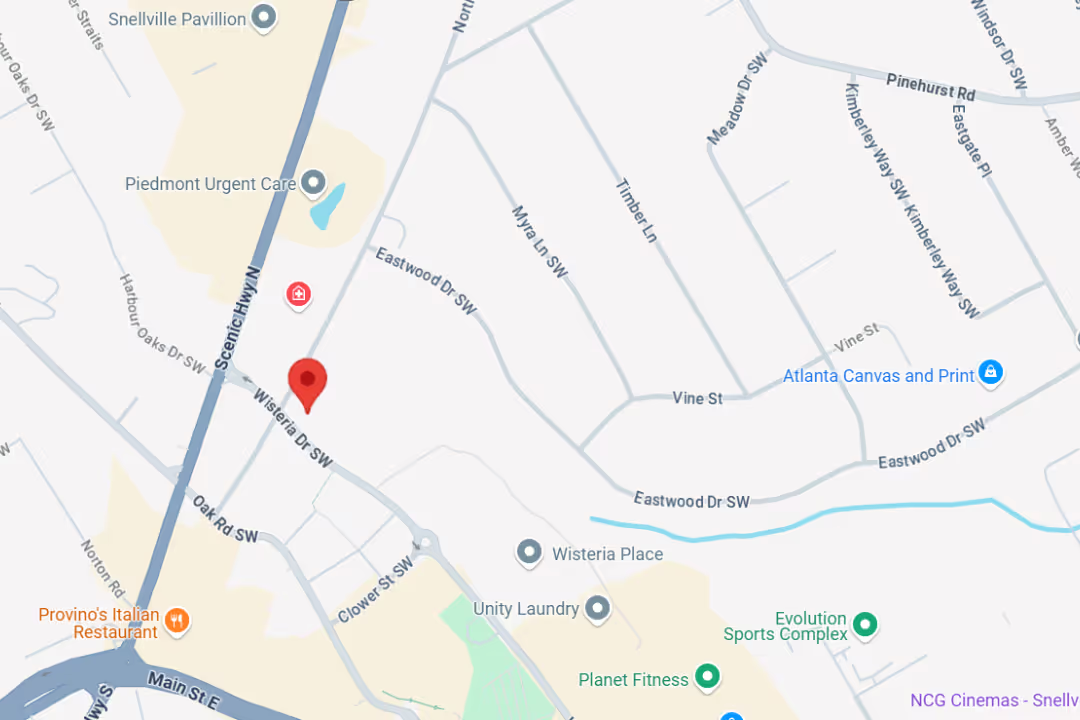
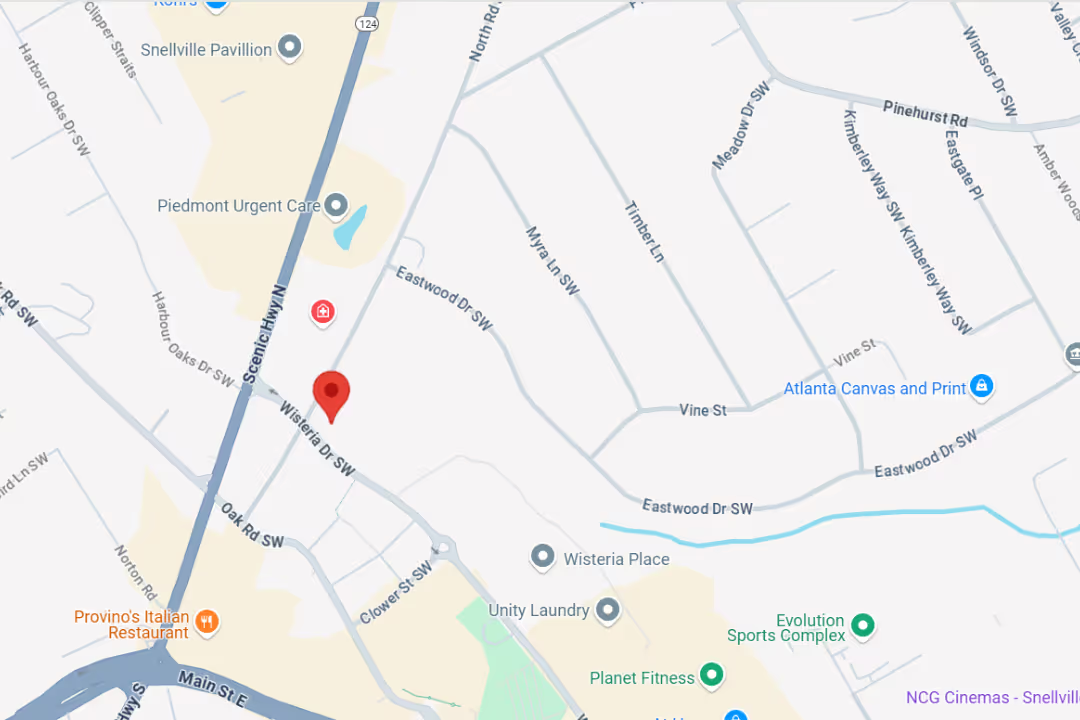
2220 Wisteria Drive, Unit 101, Snellville, GA 30078
(470) 645-9297