Living with chronic pain can wear you down in ways other people don’t always see. It’s the daily ache or burning that never fully shuts off. The sleep loss that turns into fatigue and irritability. The limited walking, standing, or sitting that makes work and family time feel like a negotiation with your body. And the frustration that comes after you’ve already tried physical therapy, medications, injections, rest, and “pushing through”—only to end up right back where you started.
If that sounds familiar, a spinal cord stimulator (SCS) trial in Snellville may be a next step worth exploring—especially for certain nerve-related pain patterns. The most important thing to know is this: the trial is designed to help you decide with real-world evidence before committing to a permanent implant. In other words, it’s a “test drive” to see whether this therapy actually improves your pain and your daily function.
At Medici Orthopaedics & Spine, we take a careful, patient-centered approach that prioritizes the least invasive, least drug-dependent plan medically appropriate for you. Not everyone is an SCS candidate—and that’s okay. The right match depends on your diagnosis, your pain pattern, your health history, and your goals. Here in the Snellville area, our team provides coordinated pain management and interventional spine services, so you can get a complete plan—evaluation, trial, and next steps—without feeling bounced around.
A spinal cord stimulator (SCS) is an implanted system designed to help reduce pain signaling before those signals reach the brain. Many patients describe it as a way to “turn down the volume” on chronic pain—particularly pain that behaves like nerve pain (burning, shooting, electric, radiating).
A spinal cord stimulation system typically includes:
A spinal cord stimulator trial is a short-term test period where temporary leads are placed and used for several days to see how well spinal cord stimulation helps your pain and function.
During the trial:
If the trial is clearly successful and you choose to proceed, that’s when a permanent implant may be discussed as the next step.
A spinal cord stimulator (SCS) trial is most often used when chronic pain behaves like nerve pain—the kind that burns, shoots, tingles, or radiates—especially after other reasonable treatments haven’t brought lasting relief. In a trial, we’re looking for a measurable improvement in both pain and function.
An SCS trial may be considered for:
Success depends heavily on matching the therapy to the type of pain. SCS tends to help most when pain is primarily neuropathic/radicular. If your pain is mainly mechanical (for example, driven by instability, severe structural compression, or a clearly correctable mechanical issue), SCS may not be the best first choice.
At Medici Orthopaedics & Spine, we start with a thorough conversation and exam, including:
If you’ve had imaging, we review it to understand the full picture and rule in/out other priorities:
If updated imaging is needed, we’ll explain why—because the goal is making sure we’re treating the correct pain generator.
SCS trials are usually considered after a patient has already made a good-faith effort with conservative and interventional options, such as:
Depending on your case, additional steps may include:
This is not a “pass/fail” judgment. It’s a standard part of many SCS pathways because chronic pain affects sleep, mood, coping, and outcomes. The purpose is to support safety and long-term success—not to dismiss anyone’s pain.
Before we ever place trial leads, we help you define what success would actually look like, such as:
Before the procedure, we’ll review:
You’ll also receive clear instructions on what to do the day before and day of the trial.
On the day of your trial, the process generally includes:
Most trials are done efficiently, and patients typically go home the same day with:
Trial duration is typically several days (exact length can vary by practice and individual plan).
To reduce the chance of lead displacement and to protect the trial accuracy, you’ll usually be asked to:
Depending on the system/settings used, you may notice:
It’s very common to need tweaks during the trial. If coverage isn’t ideal at first, small adjustments can make a big difference—so communication during the trial helps optimize results.
Living with chronic pain can make you feel like your world is shrinking—less sleep, less movement, less freedom, and more frustration. But chronic pain doesn’t mean you’re out of options. The key is finding an approach that matches your pain pattern and goals.
That’s exactly why a spinal cord stimulator (SCS) trial can be so valuable. Instead of guessing, the trial gives you real-world evidence—how you sleep, walk, sit, and function while stimulation is on—so you can see whether this treatment is truly likely to help before you ever consider a permanent implant. When the diagnosis fits and the goals are clear, an SCS trial can be a meaningful step toward better function and a better quality of life.
If you’re ready for a clearer plan—and you want to explore whether an SCS trial is appropriate for your chronic pain—our team at Medici Orthopaedics & Spine is here to help. We’ll walk you through candidacy, answer your questions, and coordinate next steps with a minimally invasive, coordinated, least drug-dependent approach whenever medically appropriate.
Main Contact: +1-844-328-4624
Website: https://www.mediciortho.com/
Medici Orthopaedics & Spine – Snellville
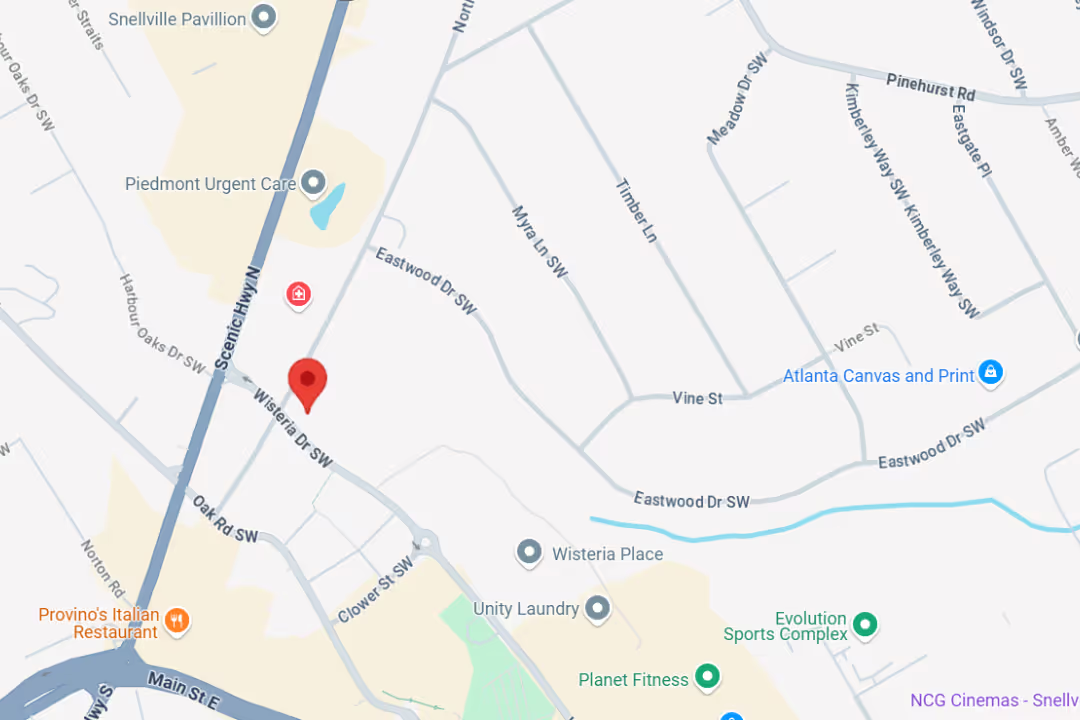
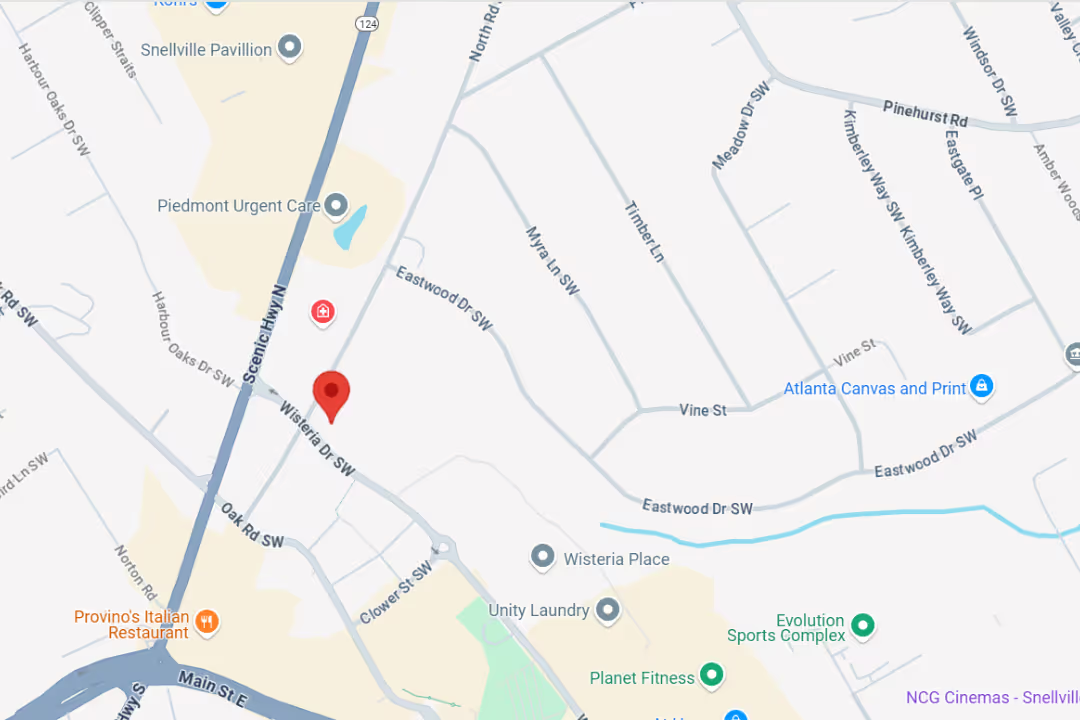
2220 Wisteria Drive, Unit 101, Snellville, GA 30078
(470) 645-9297
Explore our library of patient support guides covering the conditions we treat, the treatments we offer, and the questions we hear most. Each one is written to help you understand your options and feel confident about your next step. Browse the topics below to learn more, or reach out to our team anytime.

At Medici, you’re more than your MRI.
We take time to hear your story, understand your pain, and create a plan that actually works for you.

Our team delivers specialist care at convenient locations across Metro Atlanta:
Get expert tips on injury recovery, pain relief, joint health, and movement strategies—straight from our Fellowship-Trained team.