Joint pain is one of the most common reasons people seek orthopedic and pain management care. It affects active adults who want to keep training, older adults who want to stay independent, and anyone living with past injuries or arthritis. When every step, reach, or twist reminds you of your joints, it doesn’t just slow you down—it changes the way you live.
That’s where regenerative medicine can come in. Regenerative treatments focus on supporting the body’s natural healing processes in joints, tendons, and ligaments. They are not magic cures and they’re not right for every situation, but when carefully selected and combined with proper rehabilitation and lifestyle changes, they can be powerful tools for the right patients.
At Medici Orthopaedics & Spine, our philosophy is simple: we are committed to optimally restoring your quality of life with the most effective, least invasive, least drug-dependent treatments available today. Regenerative medicine is one part of that toolbox. With a thoughtful diagnosis and personalized plan, many patients are able to reduce pain, improve function, and, in some cases, delay or avoid more aggressive surgery.
Regenerative Medicine Options at Medici Orthopaedics & Spine
Prolotherapy for Ligaments and Joint Support
Prolotherapy is a regenerative injection technique aimed at stimulating strengthening and stabilization in lax or painful soft tissues:
- What it is
Prolotherapy involves injecting a solution into specific areas around ligaments, tendons, or joint capsules. This is intended to encourage a healing response in tissues that have become overstretched or weakened. - How it may help
By promoting tissue repair and tightening in key stabilizing structures, prolotherapy may improve joint stability and reduce pain related to lax ligaments or chronic strain. - Who might benefit
Prolotherapy may be considered for select patients with joint instability patterns—such as recurring sprains or “loose” joints—after a comprehensive evaluation.
Biologic/Cellular-Based Therapies (If Offered)
Depending on your specific condition and Medici’s current offerings, other biologic or cellular-based therapies may be discussed:
- General concept
These treatments use biologic materials derived from the patient or carefully selected sources to support healing in injured tissues. - Application in joint and tendon issues
In carefully chosen cases, biologic therapies may be considered for tendon or joint conditions that have not responded adequately to standard conservative care. - Emphasis on safety and evidence
At Medici, any biologic or cellular treatment is evaluated through the lens of safety, current evidence, and realistic expectations. We will clearly explain what is known, what is still being studied, and what that means for your situation.
Viscosupplementation for Arthritic Joints
Viscosupplementation is another option for certain arthritic joints, most commonly the knee:
- What it is
Hyaluronic acid (“gel”) injections are used to help restore some of the lubrication and cushioning inside the joint. - How it may help
In select patients, viscosupplementation can reduce pain, improve joint glide, and make walking and activity more comfortable. - When it’s considered
These injections are typically used for mild to moderate osteoarthritis when other conservative measures haven’t been enough, and before or alongside other interventional or regenerative treatments.
How Medici Evaluates Patients for Regenerative Joint Treatments
Comprehensive History and Symptom Review
Your evaluation starts with a detailed conversation. We’ll discuss:
- Where it hurts, how long, and how strongly
The location, duration, and severity of your joint pain help guide diagnosis and treatment choices. - What makes it better or worse
We look at how activities like walking, stairs, kneeling, standing, or sports affect your symptoms. - Prior injuries, surgeries, or injections
Past events involving the joint can influence which treatments make sense now. - Your overall health picture
Medical conditions, medications, and general health factors are important in deciding whether regenerative options are appropriate and safe.
Physical Examination and Functional Assessment
Next, we perform a focused exam to understand how your joint and body are working:
- Joint alignment, motion, and tenderness
We assess how well the joint moves, where it’s tender, and whether there are signs of swelling, thickening, or joint deformity. - Stability testing
Ligaments are tested to determine how stable the joint is and whether laxity may be contributing to your pain. - Surrounding muscles, tendons, and movement patterns
We evaluate strength, flexibility, and how you move—since muscle weakness or poor mechanics can overload a joint and limit the benefits of any treatment. - Impact on daily life
We look at how your joint pain affects walking, stairs, work tasks, recreation, and sleep so that any plan we create is meaningful in your real world.
Imaging and Diagnostic Work-Up
When needed, imaging helps clarify what’s happening inside the joint:
- X-rays
These show joint space, alignment, and the presence and severity of osteoarthritis or other bone changes. - MRI or other imaging
Advanced imaging may be used to evaluate cartilage, meniscus, labrum, tendons, and other soft tissues if we need more detail. - Lab work or additional tests
If there’s concern for inflammatory or autoimmune disease, bloodwork or referral to a rheumatologist or other specialist may be recommended.
Determining Candidacy for Regenerative Care
Not everyone is an ideal candidate for regenerative treatments—but many people are worth evaluating:
- Factors that support moving forward
Mild to moderate joint degeneration, reasonable mechanical stability, good overall health, and a commitment to rehab and lifestyle changes often support the case for trying regenerative options. - When other options may be better
Severe, end-stage arthritis, severe deformity, or significant mechanical problems may be better addressed with traditional interventional or surgical approaches. In those cases, we’ll explain why and outline alternative plans. - Honest, transparent conversations
We take the time to walk you through the potential benefits, risks, costs, and alternatives—including non-regenerative options—so you can make an informed decision that aligns with your goals and values.
Who Can Benefit from Regenerative Medicine for Joint Pain?
Active Adults with Early to Moderate Arthritis
- Staying ahead of progression
For adults who are starting to feel the impact of arthritis but want to remain active, regenerative treatments may help reduce pain and delay the need for more invasive procedures. - Supporting everyday function
The focus is on making walking, exercise, work, and family activities more comfortable and sustainable.
Athletes and Active Individuals with Chronic Joint Soreness
- Managing overuse and old injuries
For those with lingering joint pain from sports, training, or past injuries, regenerative options may help quiet stubborn problem areas that haven’t responded to standard conservative care alone. - Protecting long-term joint health
The goal is to keep you moving and performing safely, not just short-term symptom relief that encourages overuse.
Older Adults Wanting to Stay Mobile
- Supporting independence
Many older adults want to keep walking, traveling, and living life on their own terms. Regenerative treatments may help reduce pain enough to maintain mobility and function. - Minimizing medication reliance
When appropriate, regenerative options can be part of a plan to manage pain while reducing long-term reliance on certain medications.
Patients Seeking Alternatives Before Joint Replacement
- A potential “bridge” option
For patients who are not ready for joint replacement—or who want to explore every reasonable non-surgical option first—regenerative care may be considered as part of a comprehensive plan. - Honest conversations about surgery
We will always be straightforward: if your joint is too damaged for regenerative medicine to help in a meaningful way, we’ll say so and discuss other options, including when surgery may truly be the better path.
Take the Next Step Toward Healthier, Happier Joints
Joint pain is incredibly common, but it doesn’t have to control your schedule, your mood, or your future. Whether your pain has crept up over time with arthritis or lingered after an old injury, you deserve more than “just live with it.” With the right plan, many people find they can walk farther, move more freely, and get back to the activities that make life feel like their life again.
When regenerative medicine is used thoughtfully—as part of a comprehensive approach that includes proper diagnosis, movement retraining, and lifestyle support—it can offer meaningful relief and better function for many patients. It isn’t about chasing a miracle cure; it’s about giving your joints the best possible environment to heal, adapt, and keep you moving.
If joint pain is starting to shape your days, this is a good time to explore your options—not years from now. We’d be glad to sit down with you, review your history and imaging, and talk honestly about whether regenerative medicine for joint pain is a good fit, as well as any other approaches that might help.
Contact Medici Orthopaedics & Spine
Take a step toward healthier, happier joints—reach out to schedule a consultation today.
Clinics
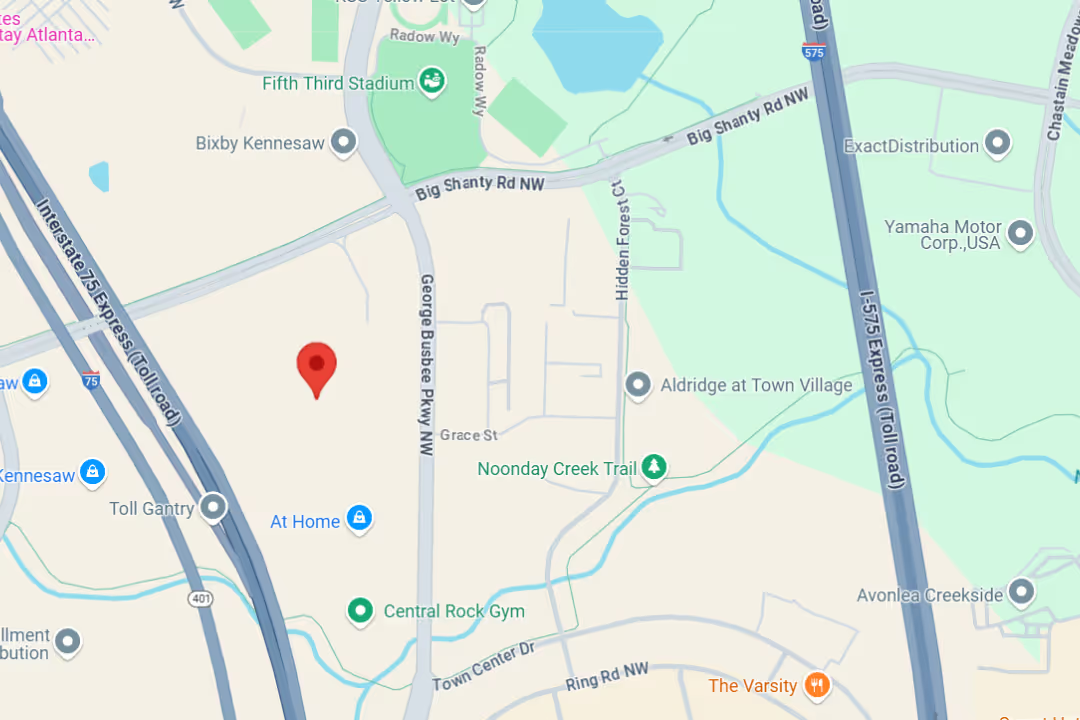
- Kennesaw Clinic
2911 George Busbee Parkway, Suite 50
Kennesaw, GA 30144
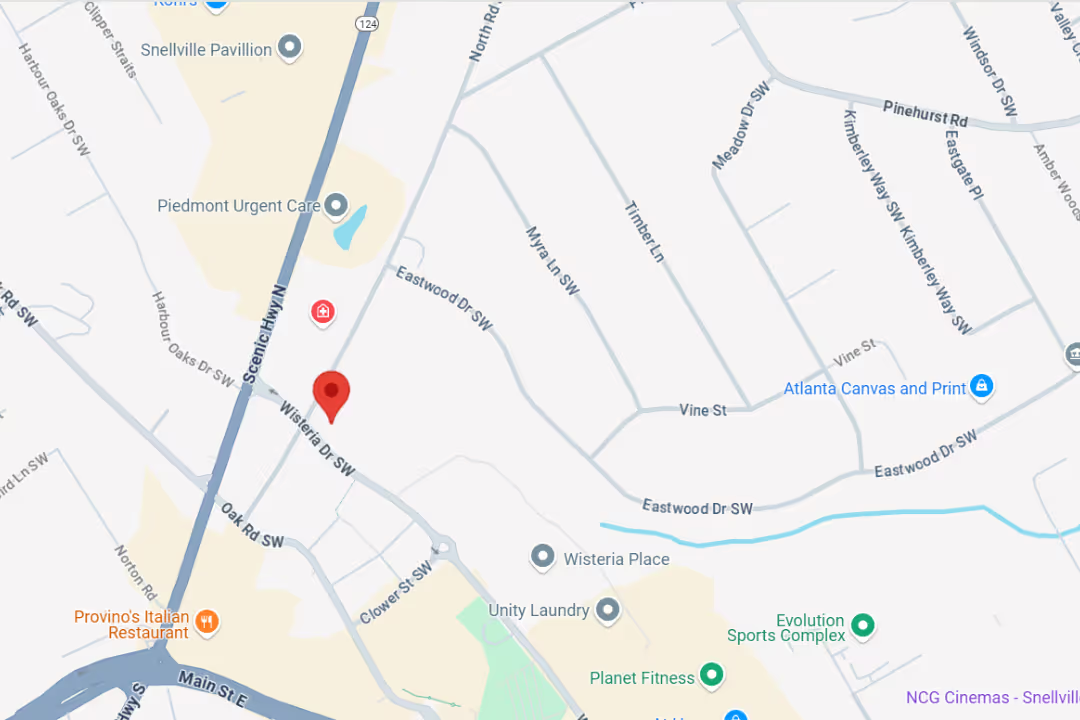
Phone: (770) 545-6404 - Snellville Clinic
2220 Wisteria Drive, Unit 101
Snellville, GA 30078
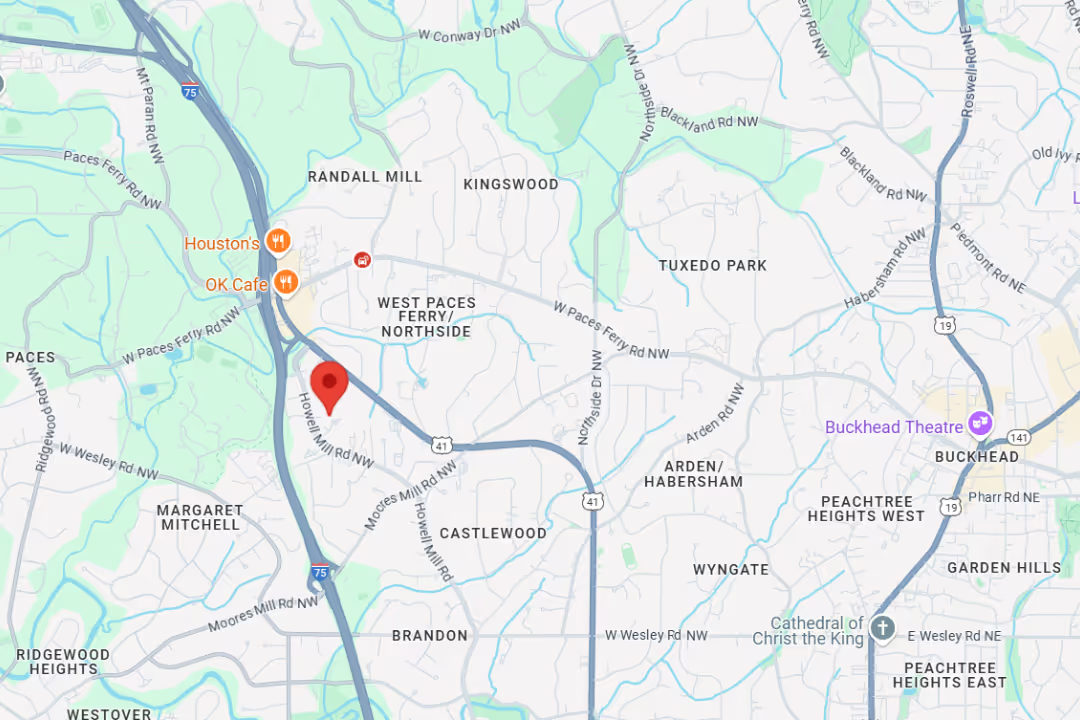
Phone: (470) 645-9297 - Buckhead PM&R Clinic
3200 Downwood Circle, NW, Suite 520
Atlanta, GA 30327
Phone: (770) 872-7549