Hip pain can be one of the most frustrating setbacks for runners. Whether it starts as a mild tightness or develops into persistent discomfort, it can interfere with stride, performance, and overall enjoyment of running. Many runners try to push through the pain, only to find that it worsens over time—affecting not just their runs, but daily movement as well.
The hips play a central role in running mechanics, connecting the upper and lower body while stabilizing each step. When muscles surrounding the hip joint become tight, weak, or imbalanced, it places excess strain on the joint and nearby structures. Over time, this can lead to inflammation, reduced mobility, and compensatory movement patterns that increase the risk of further injury.
Fortunately, targeted stretching exercises can play a powerful role in relieving hip pain, improving flexibility, and restoring proper movement. When done correctly and consistently, stretching can help runners move more efficiently, reduce discomfort, and get back to doing what they love—without unnecessary downtime or invasive treatments.
Hip pain in runners rarely comes from a single issue. More often, it develops from a combination of muscle imbalances, overuse, and mechanical inefficiencies.
Several specific conditions are commonly associated with hip pain in runners. Understanding these can help guide proper treatment and prevention strategies.
Flexibility is a critical yet often overlooked component of running performance and injury prevention. When the muscles around the hip are flexible and balanced, they allow for smoother, more efficient movement.
Incorporating stretching into your routine can have a profound impact on both how you feel and how you perform.
Understanding when and how to stretch is just as important as the stretches themselves.
The hip flexors are heavily engaged during running and are especially prone to tightness—particularly for those who spend long hours sitting.
How to perform:
Consistently stretching this area can relieve pressure on the front of the hip and improve running mechanics.
The piriformis muscle, located deep in the gluteal region, can become tight and irritated with repetitive activity like running.
How to perform:
This stretch is especially helpful for runners experiencing tightness or discomfort that radiates from the hip into the glutes.
A staple for runners, the figure-four stretch effectively opens up the hips and targets multiple muscle groups at once.
How to perform:
Incorporating this stretch regularly can help correct imbalances and reduce stress on the hip joint.
Tightness along the iliotibial (IT) band can contribute to both hip and knee pain in runners.
How to perform:
While the IT band itself is not highly stretchable, targeting the surrounding muscles can significantly reduce discomfort.
The hamstrings play a critical role in running and are closely connected to hip function.
How to perform:
Tight hamstrings can limit hip movement, so maintaining flexibility in this area is essential for pain-free running.
Strong and flexible glutes are key to stabilizing the hip during running.
How to perform:
When the glutes are properly stretched and activated, they can better support the hip joint and improve overall performance.
Hip pain doesn’t have to sideline your running journey. With the right stretching routine and a balanced approach to mobility and strength, many runners can relieve discomfort, improve performance, and prevent future injuries. Tightness, weakness, and movement imbalances are often at the root of the problem—and when addressed early, they can be corrected before they lead to more serious conditions.
Consistency is key. By making stretching and recovery a regular part of your routine, you not only reduce pain but also improve how your body performs with every step. The goal isn’t just to get back to running—it’s to run stronger, more efficiently, and with greater confidence.
If hip pain is holding you back from running or enjoying your daily activities, you don’t have to figure it out on your own. The right guidance and treatment plan can make all the difference in how quickly—and how fully—you recover.
At Medici Orthopaedics & Spine, we specialize in helping active individuals relieve pain, restore mobility, and return to peak performance using the most advanced, least invasive treatments available. Every plan is tailored to your body, your goals, and your lifestyle.
📞 Call us today: +1-844-328-4624
🌐 Visit: https://www.mediciortho.com/
Clinic Locations:
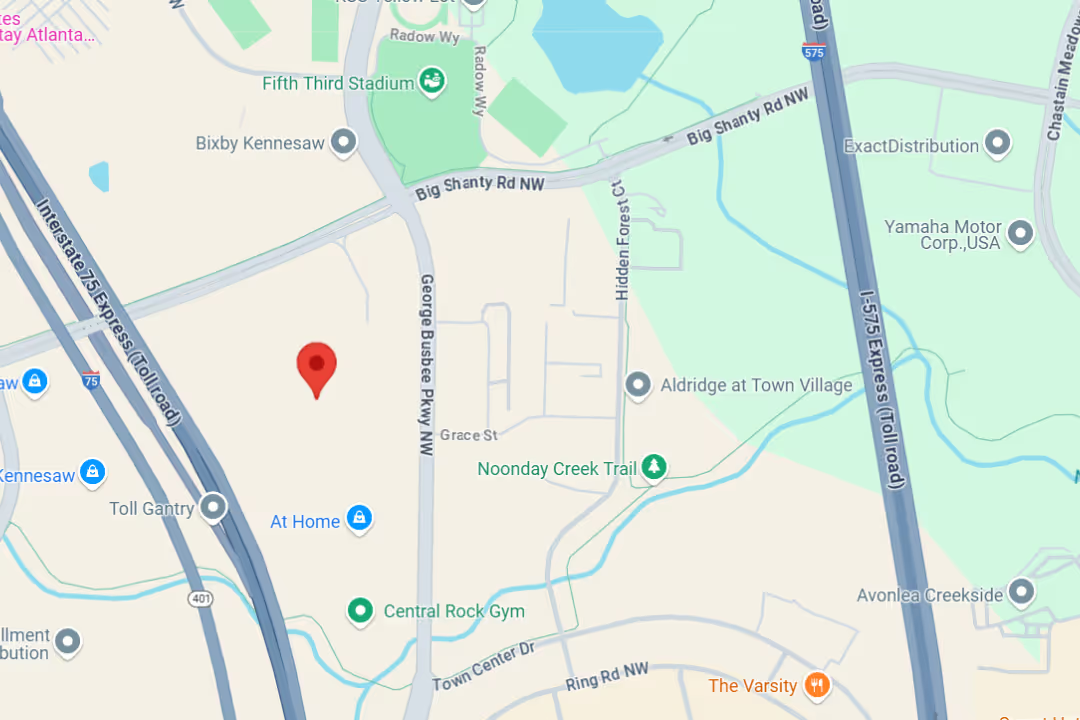
Kennesaw: 2911 George Busbee Parkway, Suite 50, Kennesaw, GA
Snellville: 2220 Wisteria Drive, Unit 101, Snellville, GA
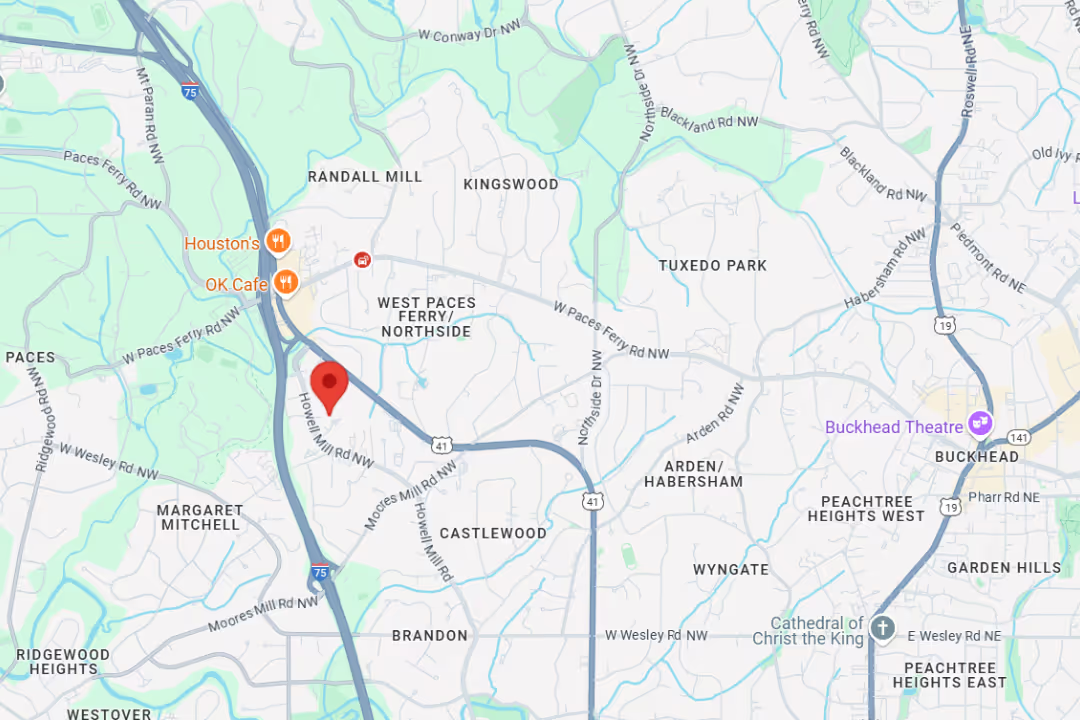
Buckhead (Atlanta): 3200 Downwood Circle NW, Suite 520, Atlanta, GA
Surgical Centers:
Marietta: 792 Church Street, Unit 101, Marietta, GA
Snellville: 2220 Wisteria Dr, Unit 100, Snellville, GA
At Medici, you’re more than your MRI.
We take time to hear your story, understand your pain, and create a plan that actually works for you.

Our team delivers specialist care at convenient locations across Metro Atlanta:
Get expert tips on injury recovery, pain relief, joint health, and movement strategies—straight from our Fellowship-Trained team.