
If you wake up with aching shoulders, the right shoulder pain mattress topper may be one of the simplest, most affordable fixes available — no surgery, no prescriptions, no new mattress required.
Quick Answer: Best Mattress Topper Choices for Shoulder Pain
| Priority | Best Choice | Why It Helps |
|---|---|---|
| Best overall material | Memory foam or natural latex | Contours to shoulder, reduces joint pressure |
| Best thickness | 2–3 inches | Deep enough to cushion without losing spinal alignment |
| Best firmness | Medium-soft to medium | Lets shoulder sink in without spinal misalignment |
| Best feature | Zoned support | Softer at shoulders, firmer at midsection |
| Best for hot sleepers | Gel or graphite-infused foam | Reduces heat buildup from dense foam |
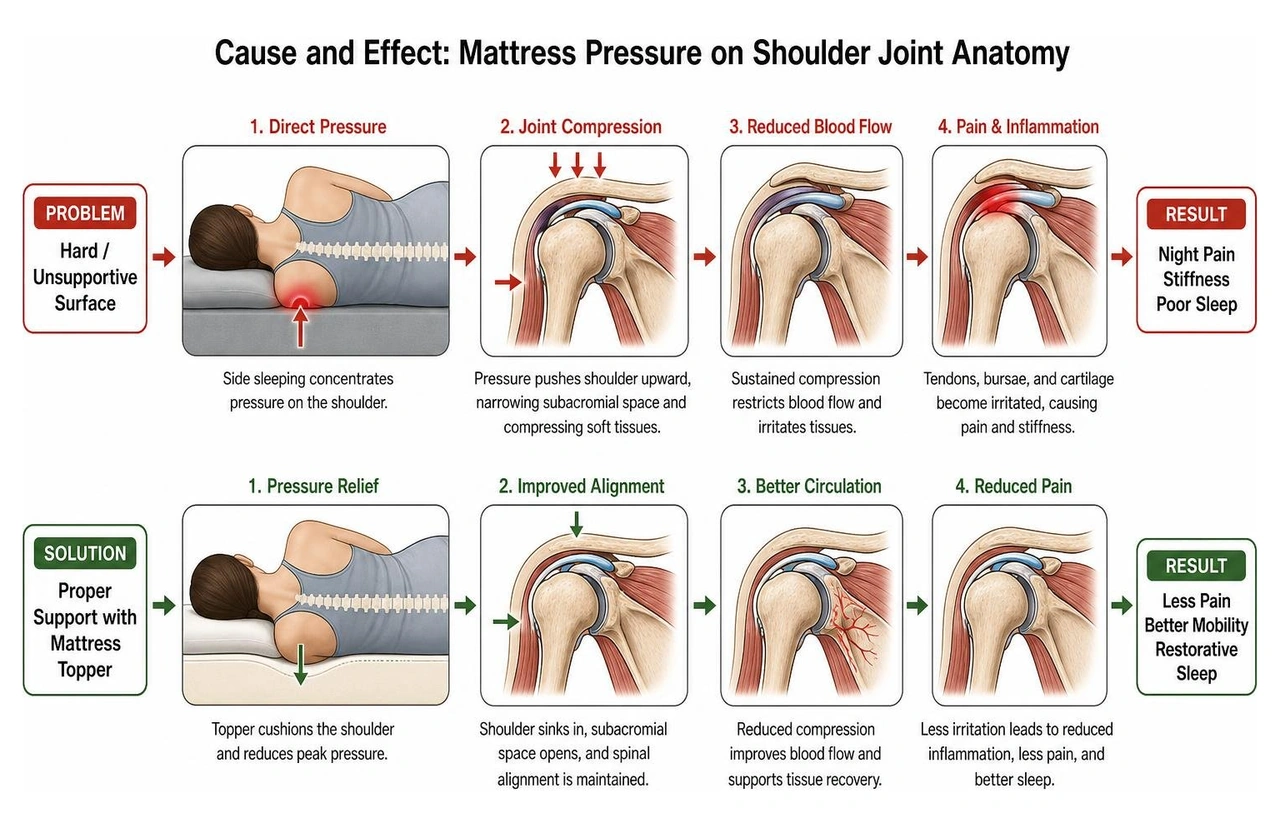
Side sleeping is by far the most common sleep position — about 66% of people prefer it. But it also concentrates roughly 33% of your total body weight directly onto your shoulder and hip. Night after night, that pressure compresses the shoulder joint, restricts blood flow, and can inflame already sensitive tendons, bursae, or cartilage.
The result? You wake up stiff, sore, and frustrated — even if your mattress felt fine when you bought it.
A good mattress topper works by cushioning those pressure points and redistributing load away from the shoulder joint, while keeping your spine in a neutral line from your neck to your lower back. But not every topper does this well. Material, thickness, and firmness all matter — and the wrong choice can actually make shoulder pain worse.
I'm Dr. Sonny Dosanjh, M.D., a board-certified physiatrist and fellowship-trained pain management specialist at Medici Orthopaedics & Spine, where I regularly help patients find non-surgical, drug-light solutions for shoulder pain — including practical sleep environment changes like finding the right shoulder pain mattress topper to reduce overnight joint stress. In the sections below, I'll walk you through exactly what to look for.

To understand why a shoulder pain mattress topper works, we first have to look at shoulder biomechanics. The shoulder is a shallow ball-and-socket joint designed for mobility rather than load-bearing. When you lie on your side on a hard or unyielding surface, that surface forces your arm into internal rotation and pushes the shoulder blade upward toward your collarbone.
This compression narrows the subacromial space — the tiny corridor where sensitive tendons and fluid-filled sacs reside. Over eight hours, sustained compression reduces blood flow and irritates structural tissues. Several specific orthopedic conditions worsen significantly from poor sleep support:
When lateral pressure combines with a misaligned spine, your downside shoulder absorbs up to 40% more force than it would on a properly contoured bed. Learning How to Prevent Shoulder Pain from Sleeping Wrong begins with softening those contact points so delicate joint structures can rest without constant mechanical pressure.
Picking a mattress topper isn't just about grabbing the softest foam off the shelf. In fact, an overly soft topper can cause your hips to sink too deeply, throwing your lumbar and thoracic spine out of alignment and causing more strain on your upper back and shoulders.
The primary goal of a shoulder pain mattress topper is targeted offloading: allowing the pointed joint of your shoulder to sink in just far enough to spread your body weight over a larger surface area while maintaining a straight spine. According to detailed research in this Guide on Best Mattress for Shoulder Pain, balancing contouring foam with supportive core resistance is the key to lasting joint relief.
The two primary material champions for joint pressure relief are memory foam and natural latex, though open-cell polyfoam and hybrid microcoil designs also play distinct roles:
Thickness directly dictates how much cushioning space your shoulder has before hitting the hard mattress underneath.
Firmness for shoulder pain should generally land between medium-soft (3–4 out of 10) and medium (5 out of 10). A medium-soft feel softens sharp pressure points without letting your midsection sag.
Zoned ergonomic designs represent a major leap forward in sleep health. These toppers feature varied density patterns across their length—softer plush foam around the head and shoulder zones, paired with firmer, reinforced foam under the lower back and hips. This allows your shoulder to sink comfortably while keeping your pelvis elevated.
Because dense pressure-relieving foams can retain body heat, look for cooling innovations:
| Feature / Material | Pressure Relief Score | Temperature Control | Ideal Sleeper Profile |
|---|---|---|---|
| Gel Memory Foam | 9.5 / 10 | Moderate to High | Side sleepers wanting deep cushion & pressure relief |
| Natural Dunlop Latex | 8.5 / 10 | High (Naturally Breathable) | Combination sleepers needing bounce & hypoallergenic materials |
| Graphite Memory Foam | 9.0 / 10 | Excellent | Hot side sleepers seeking deep joint contouring |
| Microcoil Hybrid | 8.0 / 10 | High | Heavier side sleepers needing structural lumbar lift |
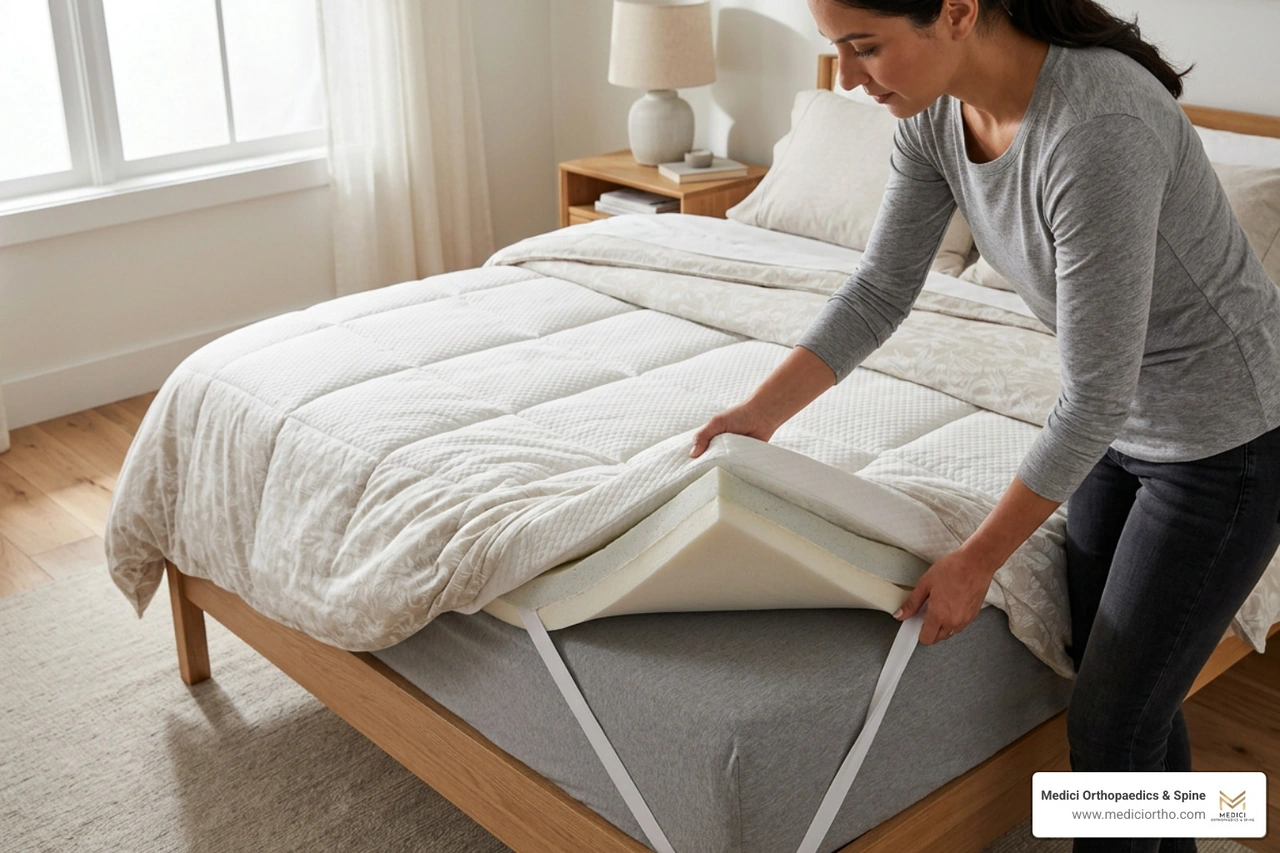
A frequent question we hear in our clinics is whether buying a shoulder pain mattress topper can save an old, sagging bed.
The honest answer? A mattress topper is a surface modifier, not a structural repair.
If your current mattress has a deep center ridge or visible sagging exceeding 1.5 inches, placing a flexible foam topper over it will simply mirror the underlying dip. Your shoulder might feel slightly softer, but your spine will remain bent into an unnatural hammock angle all night, worsening both neck and lower back discomfort.
However, if your existing mattress is structurally firm and flat, but simply too hard on your shoulder joints, a 3-inch topper is an ideal, budget-friendly solution. It adds the missing comfort layer without requiring you to invest thousands in a brand-new mattress setup.
When selecting a topper, look for brands offering a minimum 30-to-100-night trial period and a multi-year warranty. It typically takes 7 to 14 days for tense upper back muscles to adapt to a new support surface. If overnight pain persists despite upgrading your sleeping surface, exploring professional Shoulder Pain Conditions and Treatments becomes an essential next step.

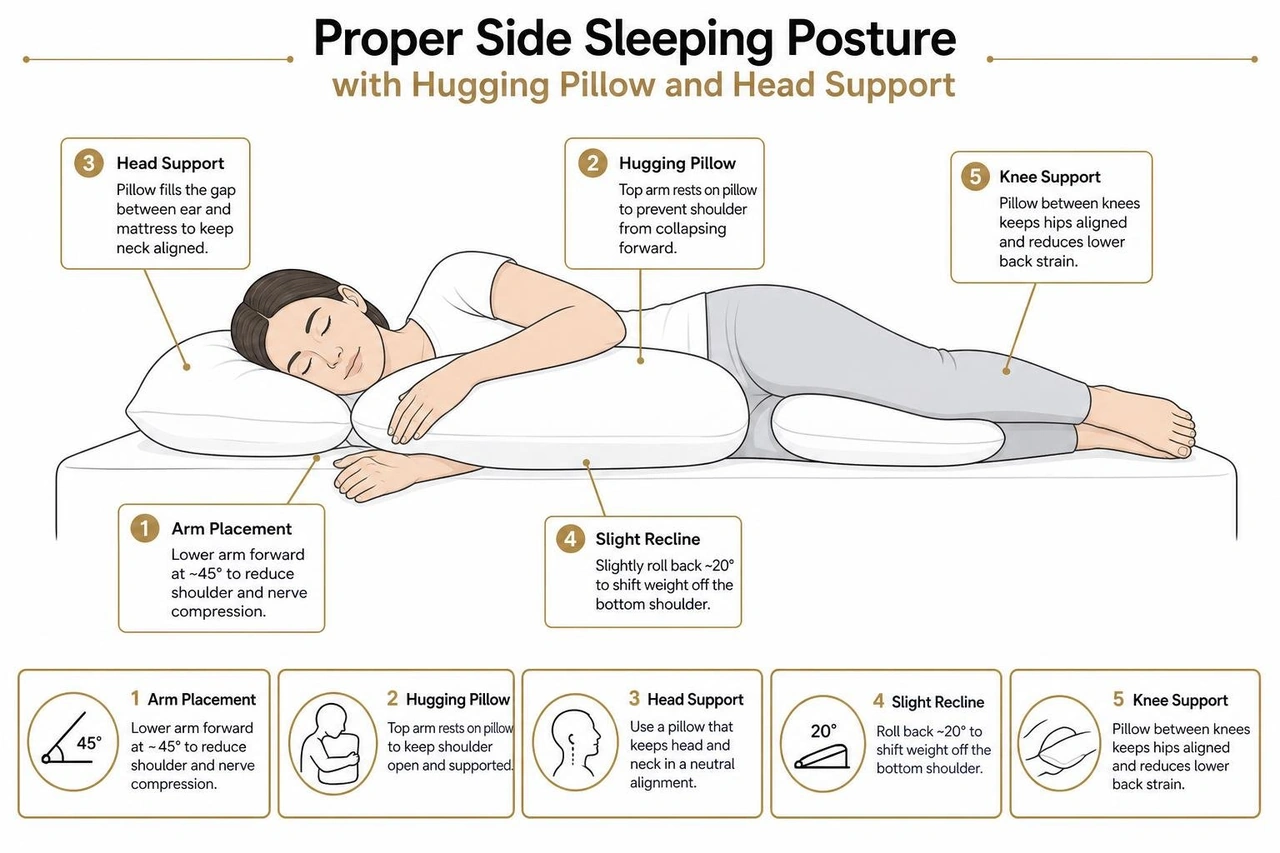
A high-performance shoulder pain mattress topper handles half of the sleep equation; proper sleep posture hygiene handles the rest. Even on the best surface, poor arm positioning or an incorrect pillow height can maintain joint strain.
Follow these doctor-recommended sleep posture adjustments:
Combining these posture habits with expert guidelines, such as these Doctor-Reviewed Tips on Mattresses for Shoulder Pain, ensures complete relief across your entire spine and neck.
A medium-soft to medium firmness level is generally best for shoulder pain. A topper that is excessively soft lets your heavy hips sink too far, pulling your lower back out of alignment and causing secondary spine pain. Conversely, a firm topper does not offer enough give, concentrating pressure directly on the shoulder point. A medium feel allows the shoulder joint to sink in just far enough to relieve pressure while maintaining a straight spine.
For most side sleepers, a 3-inch mattress topper offers the perfect balance of pressure relief and structural support. Sleepers weighing under 130 lbs may do well on a 2-inch plush topper, while sleepers weighing over 230 lbs often require a 4-inch high-density topper to prevent bottoming out against the firm mattress underneath.
While an ergonomic bed setup resolves mechanical pressure issues, mattress changes alone cannot repair structural joint damage. You should seek an evaluation from a pain management or orthopedic specialist if you experience:
Waking up with shoulder pain doesn't have to be your normal routine. Upgrading your sleep environment with a high-quality shoulder pain mattress topper—specifically one featuring 3 inches of contouring memory foam or buoyant latex—can dramatically reduce joint compression, restore healthy blood flow, and give you back a restful night's sleep.
However, when conservative home changes like new toppers, ergonomic pillows, and posture adjustments fail to relieve persistent joint pain, underlying structural conditions may require medical care.
At Medici Orthopaedics & Spine, we specialize in delivering minimally invasive, non-surgical solutions tailored to your life. Led by Dr. Sonny Dosanjh, M.D., our team offers integrated pain management programs—combining image-guided joint injections, physical therapy, regenerative medicine, myofascial release, and interventional therapies that work synergistically to restore your mobility without heavy dependence on medications or complex open surgeries.
If chronic joint discomfort is robbing you of restful sleep, visit our Shoulder Pain Specialist Near Marietta page or schedule an evaluation at any of our Atlanta, Kennesaw, Buckhead, or Snellville clinics. You can also explore our comprehensive clinical guide on How to sleep better with spinal conditions to protect your neck and lower back. Let us help you optimally restore your quality of life so you can wake up feeling refreshed and pain-free every day.
At Medici, you’re more than your MRI.
We take time to hear your story, understand your pain, and create a plan that actually works for you.

Our team delivers specialist care at convenient locations across Metro Atlanta:
Get expert tips on injury recovery, pain relief, joint health, and movement strategies—straight from our Fellowship-Trained team.