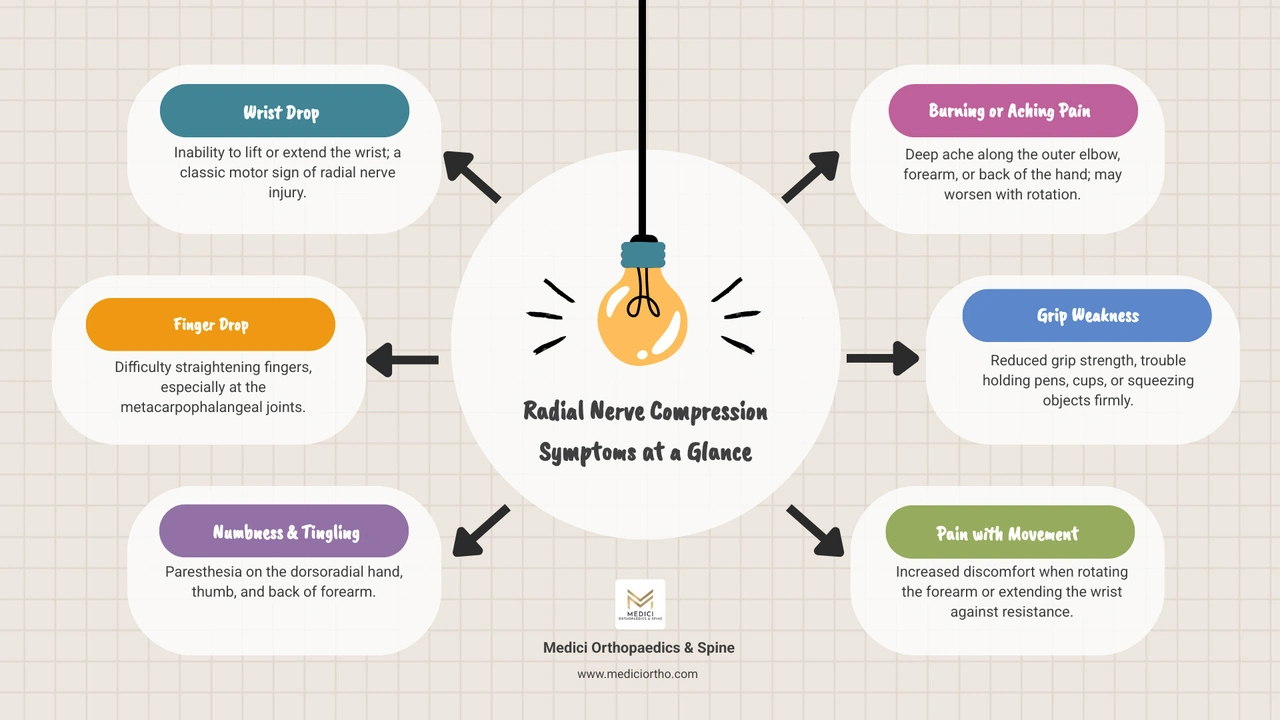
Radial nerve compression symptoms can range from a nagging ache in your forearm to a sudden, alarming inability to lift your wrist — and many people live with them for years without ever getting the right diagnosis.
Here is a quick overview of the most common symptoms:
| Symptom | What It Feels Like |
|---|---|
| Wrist drop | Unable to lift or extend your wrist |
| Finger drop | Difficulty straightening your fingers |
| Numbness or tingling | On the back of the hand and thumb side of the forearm |
| Burning or aching pain | Along the outer elbow, forearm, or back of the hand |
| Grip weakness | Trouble holding or squeezing objects |
| Increased pain with movement | Worse when rotating the forearm or extending the wrist |
These symptoms don't always show up together, and they can easily be mistaken for tennis elbow, a muscle strain, or general fatigue. That confusion is part of what makes this condition so frustrating — and so often under-treated.
The radial nerve runs from your neck all the way down to your fingers, and anywhere along that path it can get compressed, pinched, or trapped. Approximately 300,000 people worldwide are affected by radial nerve entrapment each year, yet many go undiagnosed for months or even years.
I'm Dr. Sonny Dosanjh, M.D., founder of Medici Orthopaedics & Spine, board-certified in Physical Medicine & Rehabilitation, and fellowship-trained in Multidisciplinary Pain Management at Emory University. Over the course of my career, I've helped many patients finally get answers after years of unexplained arm pain tied to radial nerve compression symptoms — and in most cases, surgery is not the first answer. In this guide, I'll walk you through everything you need to know so you can recognize what's happening, understand your options, and take the right next step.
To understand why your arm feels like it is "shorting out," it helps to look at the anatomy of the arm. The radial nerve is one of the major peripheral nerves supplying the upper limb. It originates from the posterior cord of the brachial plexus, carrying nerve fibers from the C5 to T1 nerve roots of your spinal cord.
As it exits the neck and shoulder area, the radial nerve winds its way down the back of the arm, traveling through a tight channel in the upper arm bone called the spiral groove of the humerus. From there, it wraps around the outside of the elbow and continues down into the forearm, ultimately branching out to supply sensation to the back of your hand and motor commands to the muscles that let you extend your elbow, wrist, fingers, and thumb.
When this nerve is pinched, squeezed, or stretched anywhere along this complex pathway, it results in radial nerve compression (often classified as a compressive radial mononeuropathy). Because the nerve is compressed, the protective myelin sheath that insulates the nerve can become irritated or damaged. This slows down or completely blocks the electrical signals traveling between your brain and your hand.
According to Scientific research on radial nerve entrapment, peripheral nerve entrapment is an under-recognized source of chronic pain. If you are struggling with unexplained discomfort in your upper extremity, exploring More info about arm pain can help you understand how nerve issues differ from standard muscle or joint injuries.
While "radial nerve compression" is a broad umbrella term for any pinch along the nerve, Radial Tunnel Syndrome is a very specific type of compression that occurs in the proximal forearm.
The "radial tunnel" is a narrow, three-inch-long passage made of muscles, tendons, and bones located just below the outer side of your elbow. As the radial nerve enters this tunnel, it divides into two main branches:
The clinical distinction between radial tunnel syndrome and other forms of radial nerve compression is highly important:
According to clinical studies published in the Radial Tunnel Syndrome - StatPearls - NCBI Bookshelf, the annual incidence of radial tunnel syndrome is estimated to be extremely rare at 0.003%, affecting approximately 2.97 per 100,000 men and 1.42 per 100,000 women annually. It is most common in people between the ages of 30 and 50, and women are significantly more likely to develop this condition than men.
Because the radial nerve has both sensory and motor responsibilities, radial nerve compression symptoms can present in a variety of ways depending on exactly where the nerve is pinched. When the compression is severe, it can result in a dramatic loss of function, such as paresthesia (abnormal sensations like "pins and needles"), finger drop, and the classic sign of severe radial neuropathy: wrist drop.
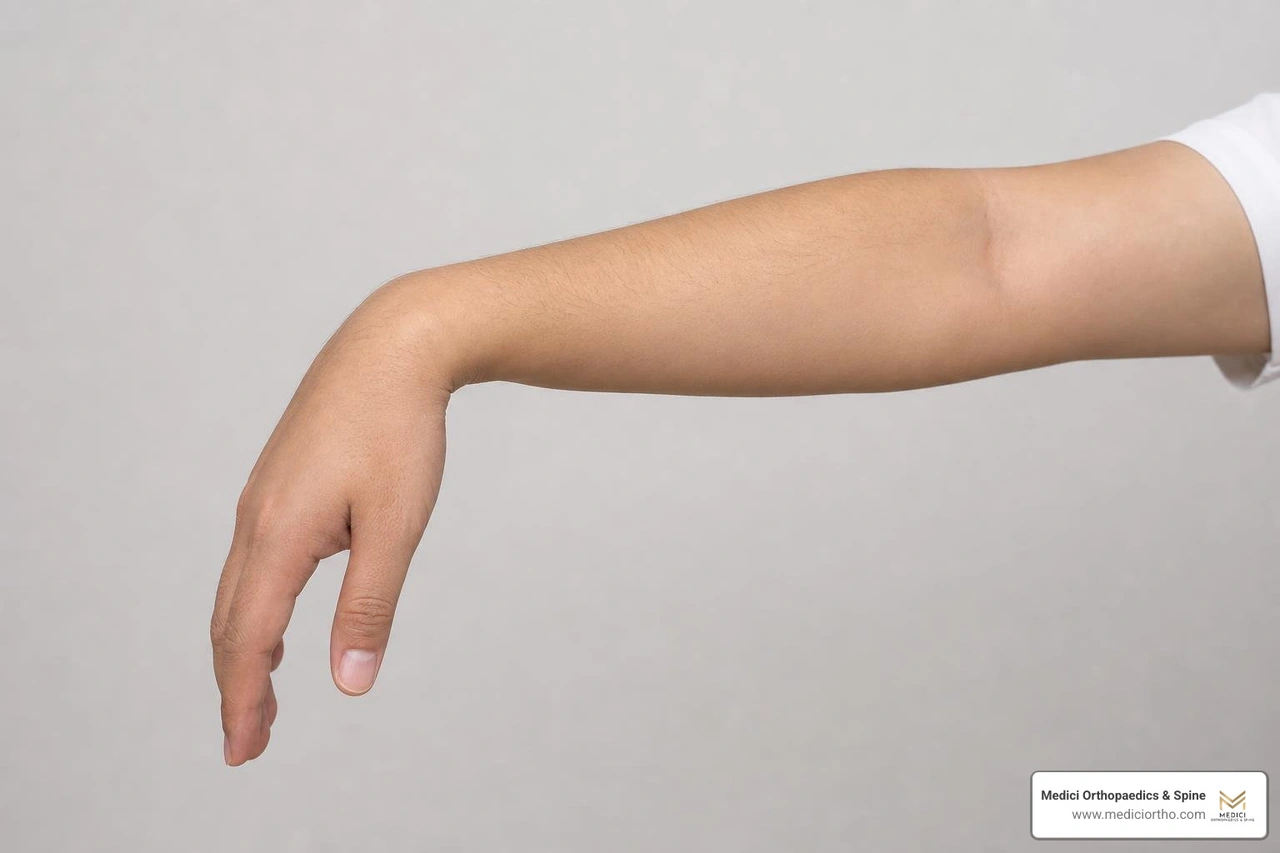
Wrist drop occurs when the motor fibers of the radial nerve are compromised, leaving you unable to lift or extend your hand at the wrist. When you hold your arm out, your hand hangs limply downward. This doesn't just affect your ability to wave or point; it severely impairs your grip strength. Mechanically, your finger flexors require the wrist to be extended to generate maximum squeezing power. Without that extensor support, your hand loses its functional leverage, making it incredibly difficult to open a jar, turn a doorknob, or hold a cup of coffee.
To help you identify what you might be experiencing, we have compiled a comparison of sensory and motor deficits based on the specific location of the nerve compression:
| Anatomical Level of Compression | Sensory Deficits | Motor Deficits | Common Causes |
|---|---|---|---|
| High Compression (Axilla / Shoulder) | Numbness & tingling on the back of the arm, forearm, and hand | Loss of elbow extension (triceps paralysis), wrist drop, and finger drop | Improper crutch use, sleeping with arm draped over a chair |
| Mid-Arm Compression (Spiral Groove) | Sensation preserved in the upper arm, but lost on the back of the hand | Normal triceps strength, but severe wrist drop and finger drop | Humerus fracture, "Saturday night palsy" (pressure on mid-arm) |
| Forearm Compression (Radial Tunnel / PIN) | None (if isolated PIN) or aching pain in the outer elbow | Weakness in finger and thumb extension; wrist may deviate when extending | Repetitive twisting, supinator muscle tightness |
| Wrist Compression (Superficial Branch) | Numbness, tingling, and burning on the dorsoradial hand | None (fully preserved motor strength) | Tight watch straps, handcuffs, repetitive wrist bending |
If the compression primarily affects the superficial sensory branch of the radial nerve, you will experience symptoms concentrated on the dorsoradial hand (the back of the hand, specifically the web space between your thumb and index finger).
These symptoms include:
When the superficial branch is compressed near the wrist, it is clinically referred to as Wartenberg syndrome or cheiralgia paresthetica. This is often triggered by simple, everyday habits like wearing an overly tight fitness tracker, smartwatch, or jewelry. If you are experiencing these specific sensations, you can read more about managing them in our guide to Hand & Wrist Pain and Injuries.
When the motor fibers of the radial nerve are compressed, the muscles that control extension of the upper extremity lose their electrical supply. This leads to a distinct set of physical limitations:
It is interesting to note that even with severe radial nerve compression, patients can typically still extend the middle and end joints (interphalangeal joints) of their fingers. This is because those specific movements are controlled by the ulnar nerve, not the radial nerve. If you want to learn more about the mechanics behind hand nerve pain, check out our article on What Causes Nerve Pain in Your Hands: Symptoms, Causes, Treatments.
The radial nerve is highly resilient, but its long and winding path makes it vulnerable to external pressure, trauma, and repetitive strain. According to the Compressive Radial Mononeuropathy - StatPearls - NCBI Bookshelf, radial nerve compression is the fourth most common mononeuropathy in the United States.
Some of the most common causes and risk factors include:
At Medici Orthopaedics & Spine, we believe that an accurate diagnosis is the cornerstone of effective treatment. Because radial nerve compression symptoms can mimic other conditions like lateral epicondylitis (tennis elbow) or even a pinched nerve in the neck (cervical radiculopathy), we perform a comprehensive clinical evaluation.
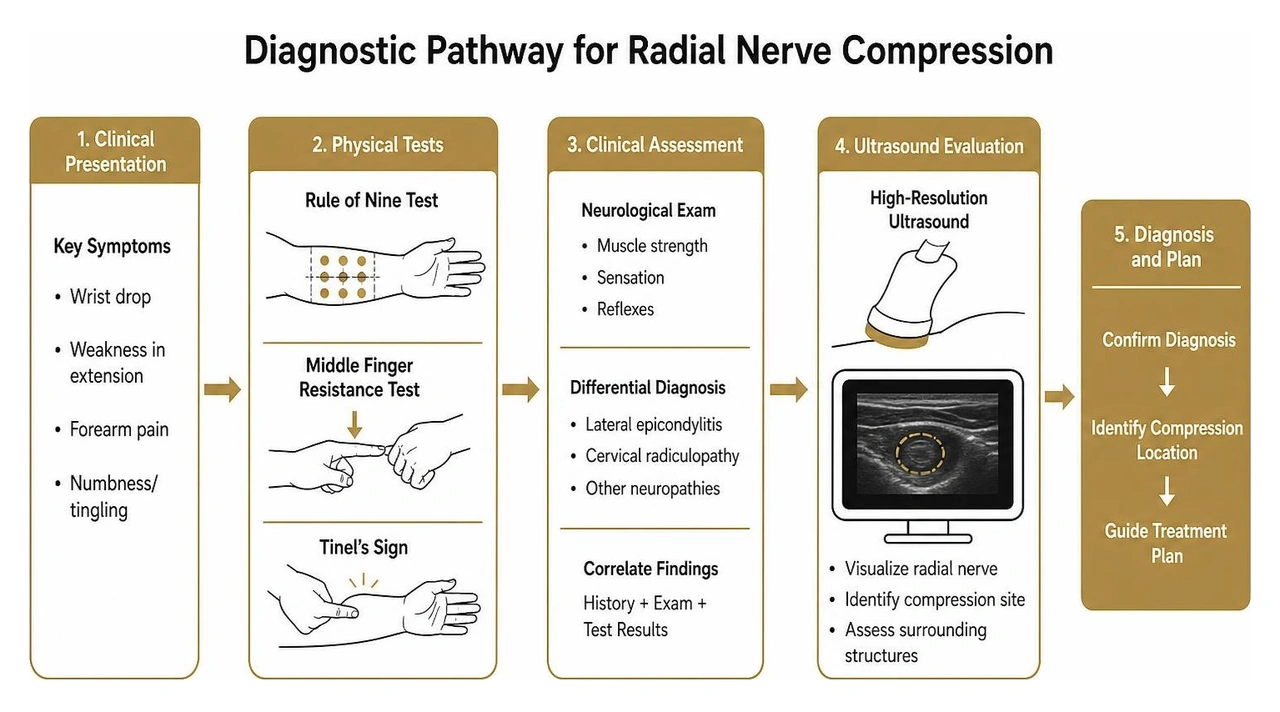
Our diagnostic process includes several specialized physical examination maneuvers:
In addition to physical tests, we utilize advanced diagnostic technology:
The good news is that the vast majority of radial nerve issues do not require surgery. According to clinical data, up to 92% of acute compressive radial nerve palsies resolve completely within 3 to 4 months with conservative observation and non-surgical care alone.
At Medici Orthopaedics & Spine, we specialize in delivering minimally invasive, non-surgical treatments designed to relieve pain and restore function. In our experience, combining multiple therapies synergistically produces the best outcomes.
Our non-surgical treatment approach for Neuropathy & Neuralgia includes:
While conservative care is highly successful — with most patients finding relief within about six weeks — surgery may be recommended if you have severe nerve disruption, progressive muscle weakness, or if your symptoms fail to improve after 6 to 12 months of non-surgical treatment.
The surgical procedure is known as a radial tunnel release. It is typically performed under local anesthesia on an outpatient basis. During the procedure, the surgeon makes a small incision in the forearm and carefully divides any tight structures or bands of tissue that are compressing the nerve. The most common site of compression addressed during this surgery is the arcade of Frohse (the upper edge of the supinator muscle).
According to the Radial Nerve Injury - StatPearls - NCBI Bookshelf, surgical decompression of mild-to-moderate nerve compression (neurapraxia) results in an 80% to 90% rate of complete functional recovery. However, the post-operative recovery timeline requires patience:
Yes, many mild cases of radial nerve compression (known as neuropraxia, where the nerve is temporarily bruised or compressed but not structurally torn) can heal on their own once the source of pressure is removed. With rest, splinting, and simple activity modifications, mild cases typically resolve completely within 2 to 8 weeks.
However, more severe nerve injuries (such as axonotmesis, where the internal nerve fibers are damaged) require a structured recovery plan. Regenerating nerve fibers heal at a very predictable rate of approximately 1 millimeter per day (about 1 inch per month). If a nerve is severely compressed or left untreated, it is highly unlikely to heal on its own and can lead to permanent damage.
This is one of the most common diagnostic challenges we see. Both conditions cause pain on the outside of the elbow that can radiate down the forearm, and both can cause pain during the middle finger extension test.
However, there are a few key differences:
If left untreated for a prolonged period, severe radial nerve compression can lead to permanent complications. Over time, the lack of electrical signals to the muscles can cause muscle atrophy (wasting away of the forearm and hand muscles), permanent weakness, and irreversible sensory loss. This is why early clinical intervention is so critical. Recognizing radial nerve compression symptoms early allows for conservative, non-surgical treatments that prevent long-term damage.
Living with a nagging ache in your forearm, a weak grip, or the frustration of "wrist drop" can severely impact your daily life. But you do not have to live with the discomfort or face the prospect of invasive surgery.
At Medici Orthopaedics & Spine, Dr. Sonny Dosanjh, M.D., and our dedicated medical team are committed to Optimally Restoring your Quality of Life using the most effective, least invasive, and least drug-dependent programs available today. We believe in a patient-centered approach, combining state-of-the-art diagnostics with synergistic therapies — like physical therapy, nerve glides, targeted injections, and advanced ultrasound-guided hydrodissection — to help you heal naturally and quickly.
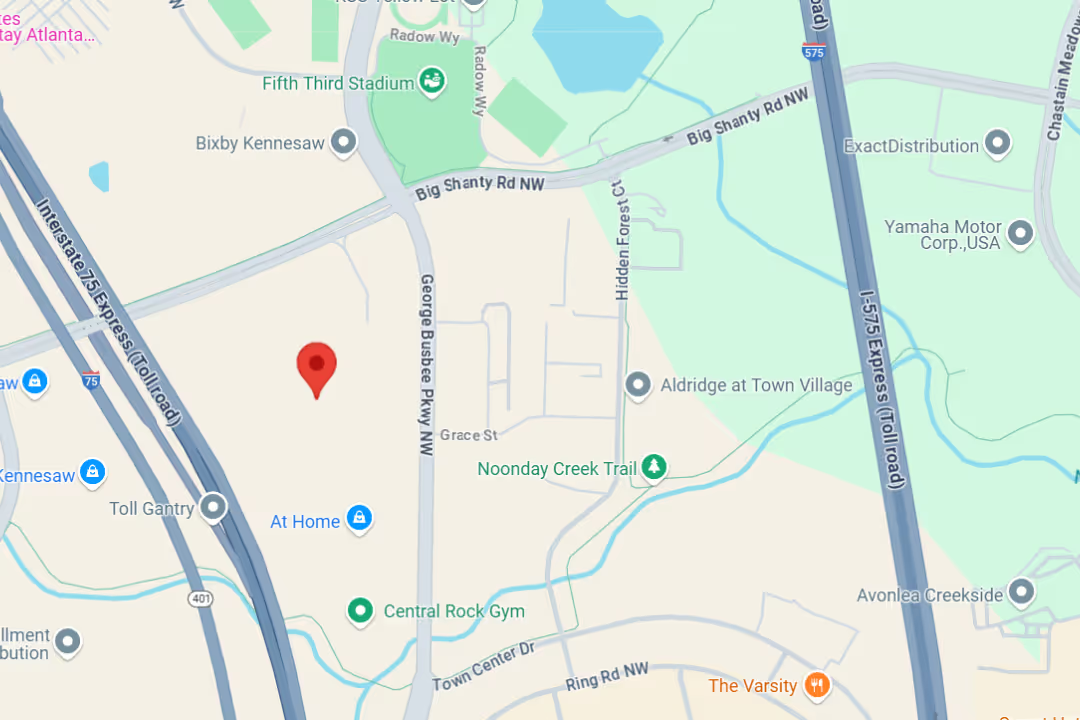
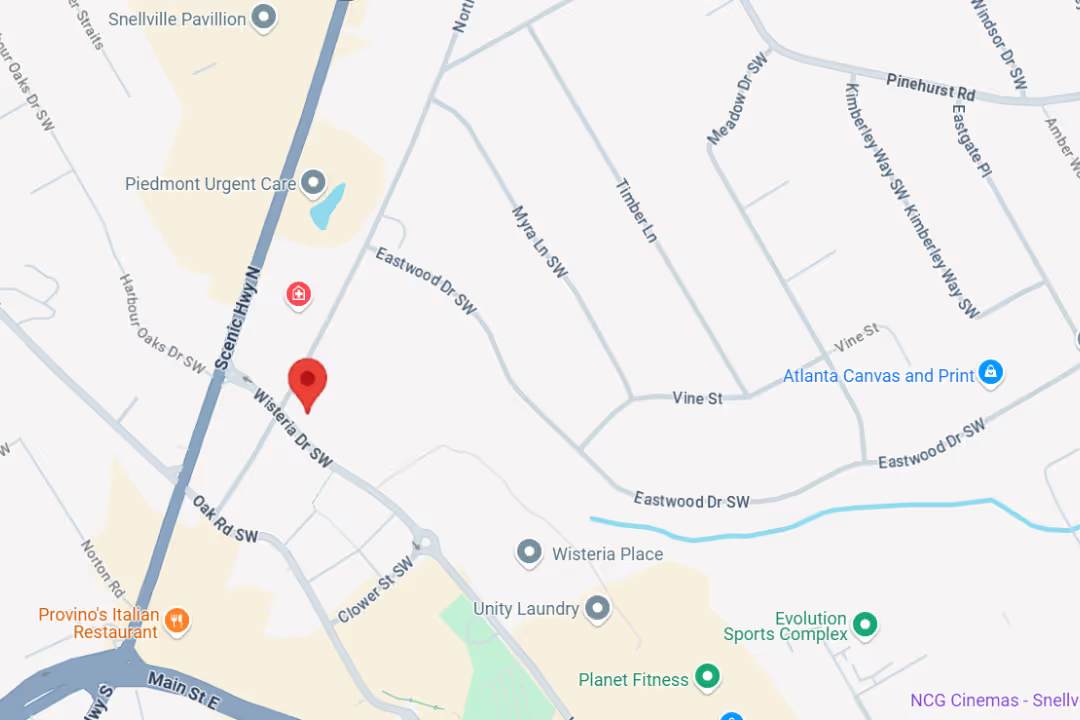
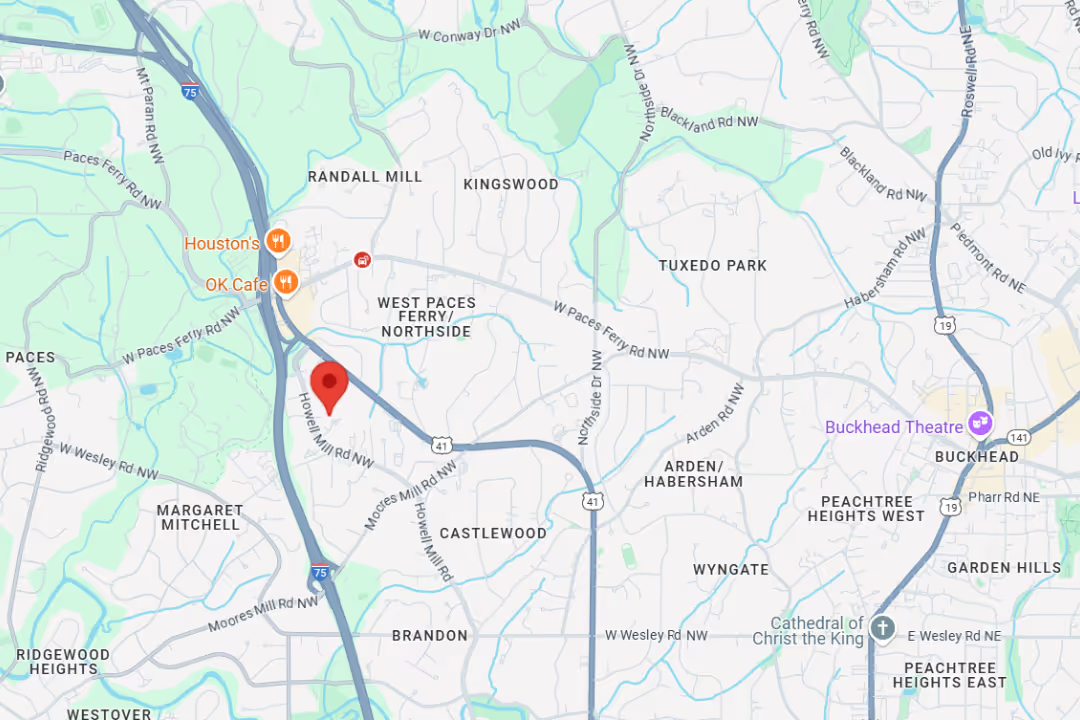
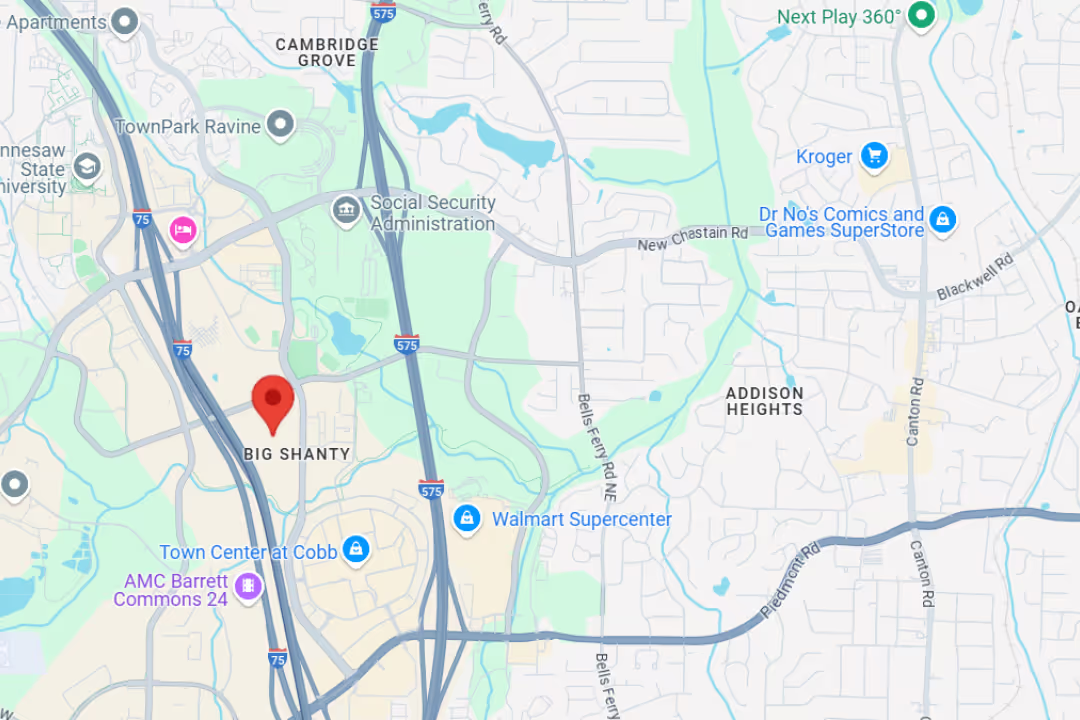
If you are experiencing persistent arm pain, numbness, or weakness, don't wait for your symptoms to worsen. We invite you to schedule a comprehensive evaluation at one of our convenient Metro Atlanta locations:
Let us help you get back to doing what you love. Schedule a consultation for radial tunnel syndrome with our team today.
At Medici, you’re more than your MRI.
We take time to hear your story, understand your pain, and create a plan that actually works for you.

Our team delivers specialist care at convenient locations across Metro Atlanta:
Get expert tips on injury recovery, pain relief, joint health, and movement strategies—straight from our Fellowship-Trained team.