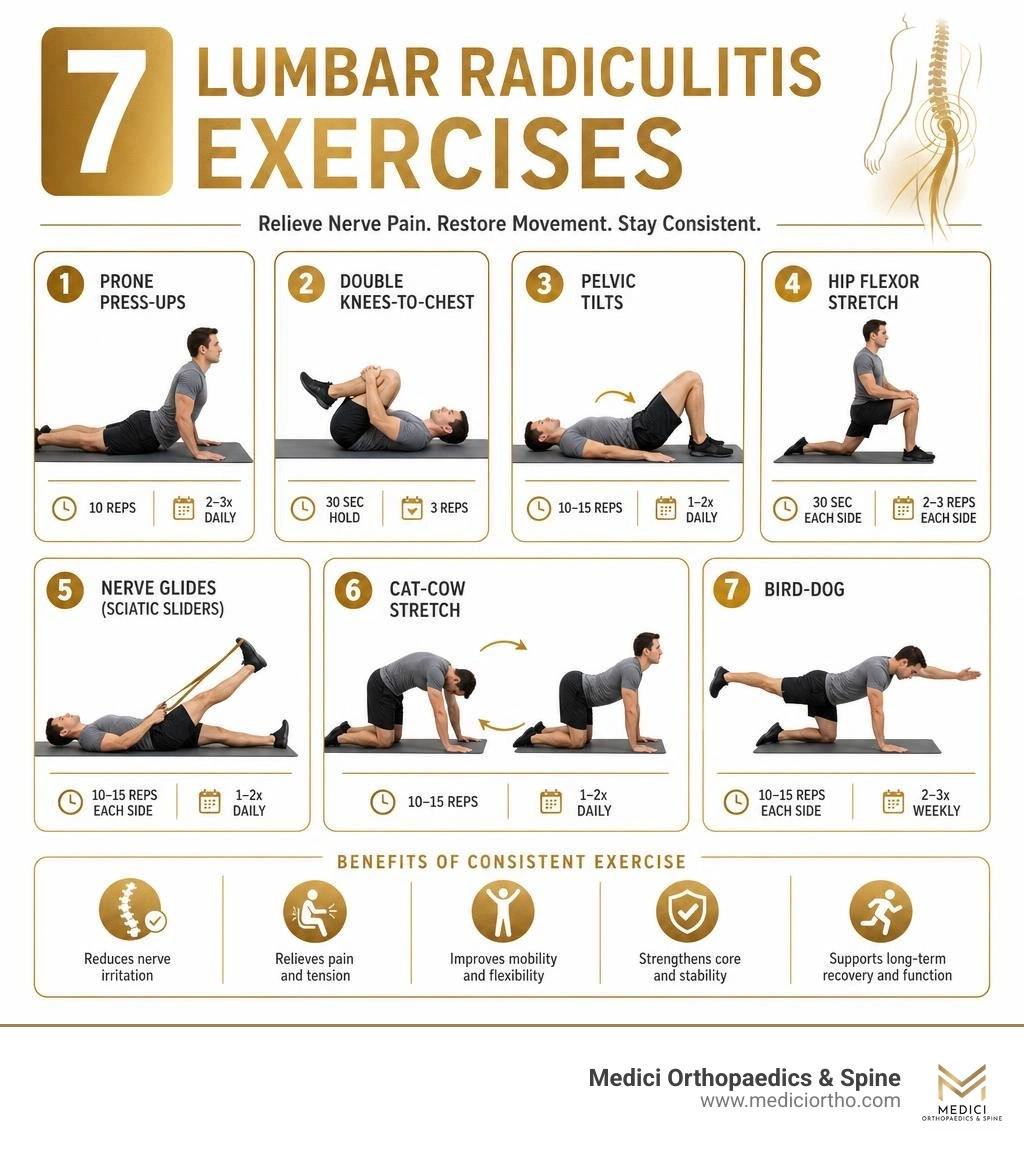
Lumbar radiculitis exercises are one of the most effective ways to relieve the shooting, burning pain that travels from your lower back down your leg — and the research backs this up. The majority of cases recover without surgery when the right movements are done consistently.
Here are the key exercises that help most:
Up to 90% of people will experience lower back pain in their lifetime. When that pain radiates down the leg — with tingling, numbness, or weakness — it often points to lumbar radiculitis or radiculopathy: a compressed or irritated nerve root in the lower spine. About 3–5% of adults deal with this condition, and it is most common between ages 30 and 50.
The good news? Most cases improve significantly within 4 to 8 weeks with the right exercise program.
I'm Dr. Sonny Dosanjh, M.D., CEO and Founder of Medici Orthopaedics & Spine, board certified in Physical Medicine & Rehabilitation and fellowship trained at Emory University in Multidisciplinary Pain Management — and helping patients recover from sciatica and nerve compression through targeted lumbar radiculitis exercises and non-surgical care is central to my clinical practice. In this guide, I'll walk you through exactly what works, what to avoid, and when to seek professional help.
To understand how lumbar radiculitis exercises can help, we must first look at the anatomy of your lower back. Your spine is a marvelous structure composed of 33 vertebrae stacked on top of each other, cushioned by intervertebral discs that act as shock absorbers.
As nerves exit the spinal cord, they pass through small openings between the vertebrae. In the lower back—particularly at the L4-L5 and L5-S1 levels, which bear the brunt of your body weight—these nerve roots are highly vulnerable to irritation and compression.
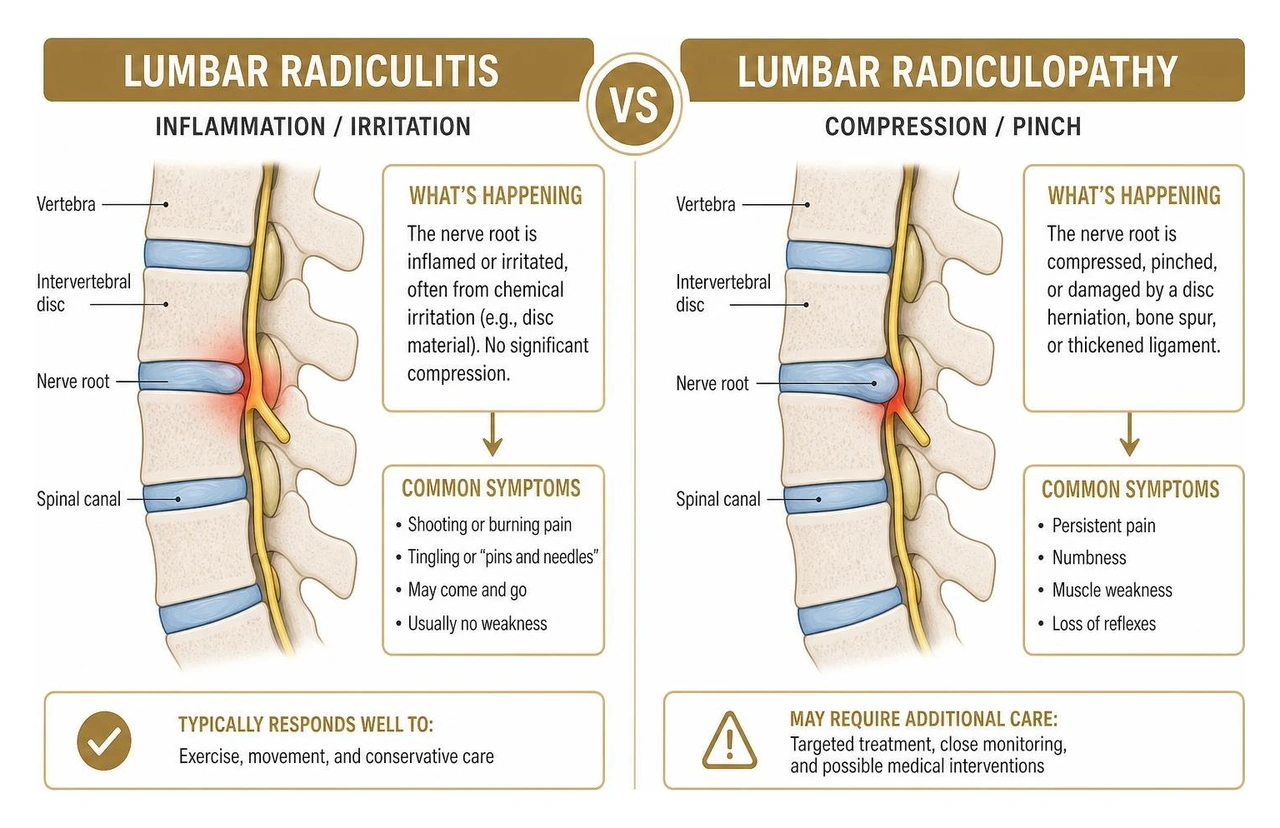
While people often use the terms interchangeably, there is a distinct clinical difference between radiculitis and radiculopathy:
The most common culprit behind both conditions is a herniated disc, where the soft inner gel of a disc leaks out and chemically irritates or physically presses against the nerve. Other common mechanical causes include:
When these conditions irritate the sciatic nerve—the largest nerve in the body, formed by the joining of several lumbar and sacral nerve roots—it causes the classic radiating leg pain known as sciatica. To explore these mechanical causes in deeper detail, read our comprehensive guide on Sciatica and Lumbar Radiculopathy.
How do you know if your back pain is just a simple muscle strain or a pinched nerve?
General low back pain is typically localized. It feels like a dull, aching soreness across your lower back that worsens when you bend or twist, but it stays in your back.
In contrast, lumbar radiculopathy behaves very differently. It sends electrical, burning, or shooting pain past your hip, down your thigh, and often below the knee into your calf and foot. This radiating pain is frequently accompanied by:
If you are experiencing these radiating symptoms, you can learn more about clinical diagnosis on our dedicated page for Lumbar Radiculopathy (Pinched Nerve).
Differentiating between referred pain and true radicular pain is critical because they require entirely different treatment strategies.
Referred pain occurs when an injured muscle, ligament, or joint in your lower back sends pain signals to a nearby area, such as your buttock or upper thigh. This pain is usually dull, aching, does not follow a strict path, rarely travels below the knee, and does not cause numbness or weakness.
True radicular pain follows a strict dermatomal pattern—a specific pathway of skin supplied by a single spinal nerve. For example, compression of the S1 nerve root typically sends a sharp, electric shock down the back of your thigh and calf, wrapping around to the outer edge of your foot and little toe.
During a physical examination, we use specialized tests to confirm true radicular pain:
When dealing with a highly sensitive nerve, a "one-size-fits-all" approach to exercise can backfire. In physical therapy, we design exercise programs based on a patient’s directional preference—the movement direction that centralizes and relieves their leg pain.
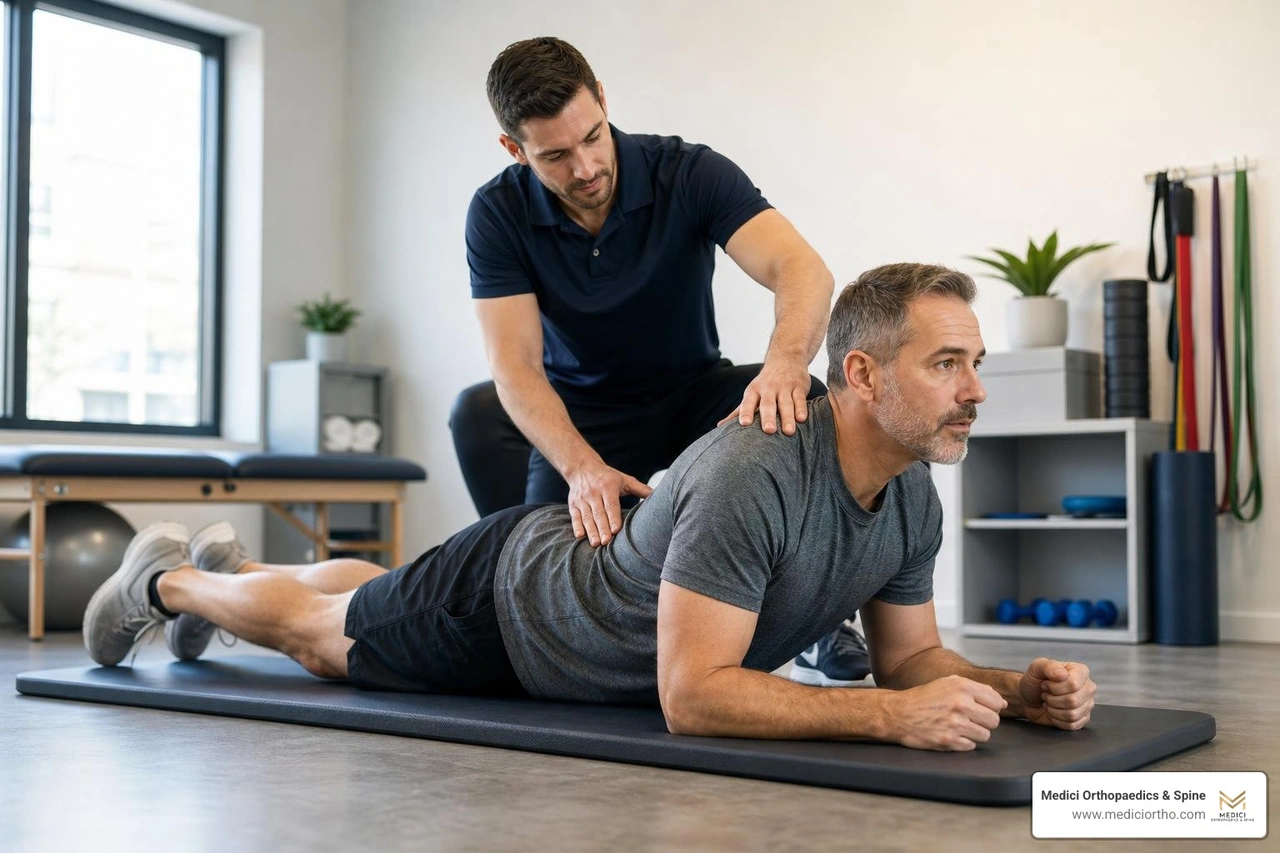
Among patients who respond to repeated movements, 83% have an extension preference (meaning backward-bending movements relieve their pain), while about 10% prefer side glides, and only 7% prefer flexion (forward-bending movements). Finding your directional preference is the first step toward safe recovery. To discover more about how we identify these patterns, check out our resources on Exercises for Lower Back Pain Relief.
How do simple stretches relieve a pinched nerve? It all comes down to biomechanics.
Lower back rehabilitation often begins with the hips. Tight hip flexors pull your pelvis into an anterior tilt, which increases the arch of your lower back and pinches the spinal joints. Performing a hip flexor stretch restores pelvic alignment, taking the mechanical stress off your lumbar spine.
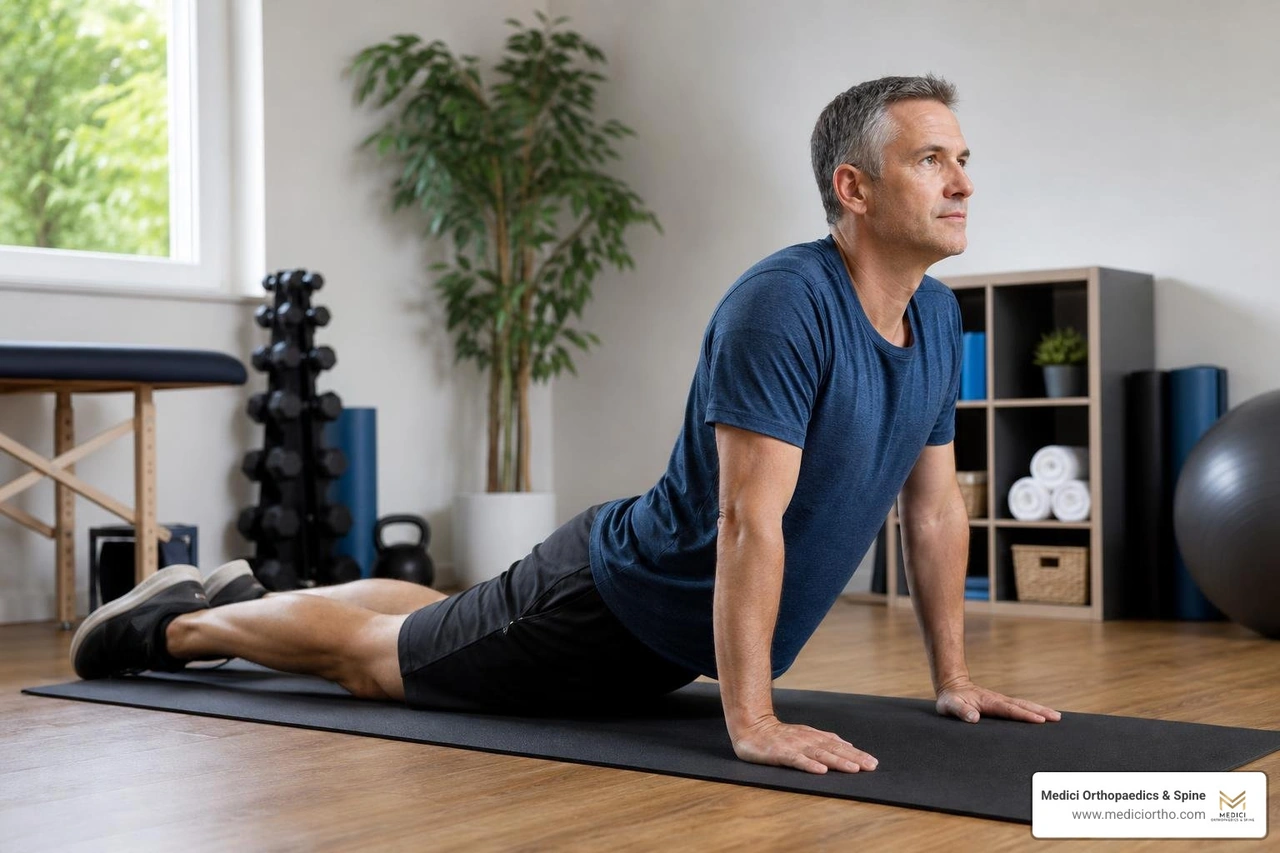
For those with an extension preference, exercises like the upward dog or prone press-ups gently arch the back. This movement creates an anterior pressure on the spinal discs, helping to coax herniated disc material forward and away from the pinched nerve root.
Conversely, for patients who suffer from spinal stenosis or spondylolisthesis, extension can pinch the joints further. For these individuals, flexion-biased movements like the double knees-to-chest stretch are highly therapeutic. This movement opens up the spinal canal, immediately relieving pressure on the compressed nerve.
Finally, a basic pelvic tilt acts as the foundation for all core stabilization. By flattening your lower back against the floor, you engage your deep abdominal muscles, creating a natural "corset" that supports the spine. You can read more about these therapeutic mechanisms in this clinical guide on 5 Exercises for Lumbar Radiculopathy: Core Strengthening and Increased Flexibility Help Reduce Lower Back Pain .
Before starting, remember this golden rule: never push into sharp, radiating leg pain. Work to the point of comfortable tension, and stop immediately if your symptoms travel further down your leg.
Here is a step-by-step guide to five highly effective exercises you can perform at home:
https://www.youtube.com/watch?v=LIVJZZyZ2qM
For more helpful home movements, explore The 7 Best Exercises for Sciatica Nerve Pain You Can Do at Home and watch this clinical video demonstration on Leg Nerve Pain Exercises (Lumbar Radiculopathy) . You can also find additional variations in this guide on 10 lumbar radiculopathy exercises for more comfort and less pain .
When a nerve root is compressed, it can become physically "stuck" in its surrounding tissue due to inflammation and micro-scarring. Nerve glides, also known as neural mobilization or nerve flossing, are specialized exercises designed to gently slide the nerve back and forth through its anatomical pathway, restoring its mobility and reducing sensitivity.
However, a critical distinction must be made based on your level of pain:
To ensure you are performing these movements safely and effectively, read the detailed clinical breakdown in 7 Proven Pinched Nerve Exercises (Lower Back Pain Relief) - Facts & Physio .
Relieving your acute pain is only half the battle. If you stop exercising as soon as your leg pain disappears, you are highly likely to experience a painful recurrence.
A landmark randomized controlled trial published in F1000Research evaluated 70 patients suffering from lumbar disc herniation and sciatica. The study compared a group performing active back and hip strengthening exercises against a control group receiving passive therapies.
The results were staggering:
To read the full scientific data and clinical outcomes of this trial, review the study at Effectiveness of strengthening exercise plus... | F1000Research .

To protect your spine from future injury, we focus on three core-building exercises:
While conservative care is highly effective, safety must always come first. When performing lumbar radiculitis exercises, you must closely monitor how your body responds.
| Safe Exercise Sensations | Red Flag Symptoms (Stop & Seek Immediate Care) |
|---|---|
| A mild, comfortable muscular stretch | Progressive weakness in your leg (e.g., your knee giving way or foot dragging) |
| Centralization (pain moving out of the leg and up into the back) | Loss of bowel or bladder control (incontinence or urinary retention) |
| Mild muscular fatigue after exercises | Saddle Anesthesia (numbness in your groin, buttocks, or inner thighs) |
| Temporary, mild soreness that resolves quickly | Ataxia (sudden loss of balance or coordination when walking) |
| Pain levels that remain stable or decrease | Fever, chills, or unexplained weight loss accompanying back pain |
During an acute flare-up of radiculitis, it is crucial to avoid axial loading—any exercise that places a vertical, compressing weight on your spine. This means you should completely avoid standing squats, heavy overhead presses, standing hip hinges, and running until your nerve irritation has resolved.
If your symptoms do not begin to improve after 2 to 3 weeks of consistent home exercises, or if your pain actively worsens, it is time to seek professional evaluation.
At Medici Orthopaedics & Spine, we believe in a highly integrated approach. We often pair targeted physical therapy with advanced, non-surgical interventional treatments to achieve optimal results. For instance, an epidural steroid injection can dramatically cool down an inflamed nerve root, opening a "window of pain relief" that allows you to perform your physical therapy exercises comfortably and effectively.
To find expert, hands-on care near you, explore our specialized services:
Many patients assume they need an MRI the moment their back starts hurting. However, clinical guidelines advise against early imaging.
An MRI is only indicated immediately if you exhibit "red flag" symptoms (such as progressive neurological deficits or suspected infection). In the absence of red flags, an MRI is typically only recommended if your symptoms fail to improve after 4 to 6 weeks of structured conservative care. Remember: many completely healthy, pain-free individuals have disc bulges on their MRIs. We treat the patient, not the scan!
To give your inflamed nerve the best environment to heal, your daily habits must support your exercise routine.
Yes, but you must modify your routine. If you have active, sharp nerve pain, focus exclusively on non-weight-bearing, axially unloaded movements (like lying pelvic tilts, gentle single knee-to-chest stretches, or gentle nerve sliders). Never push into a movement that triggers a sharp, electric shock down your leg.
Most patients begin to experience a noticeable reduction in pain and improved mobility within 4 to 8 weeks of starting a consistent, daily exercise program. Complete resolution of symptoms typically occurs within six weeks to three months of conservative care.
You should completely avoid standing squats, heavy lifting, deadlifts, forward bending (touching your toes while standing), and aggressive hamstring stretches. These movements either compress the spine vertically or place immense traction on an already irritated nerve, which can severely worsen your symptoms.
Dealing with the burning, shooting pain of lumbar radiculitis can feel incredibly overwhelming, but you do not have to suffer in silence or rush into spinal surgery. With a structured program of lumbar radiculitis exercises, dedicated core strengthening, and smart lifestyle modifications, the vast majority of patients achieve complete, lasting recovery.
At Medici Orthopaedics & Spine, led by board-certified specialist Dr. Sonny Dosanjh, M.D., we are fully committed to Optimally Restoring your Quality of Life. We specialize in delivering the most effective, least invasive, and least drug-dependent programs medically available today. By combining physical therapy, advanced interventional pain management, and regenerative medicine, we design customized care plans tailored to your unique lifestyle.
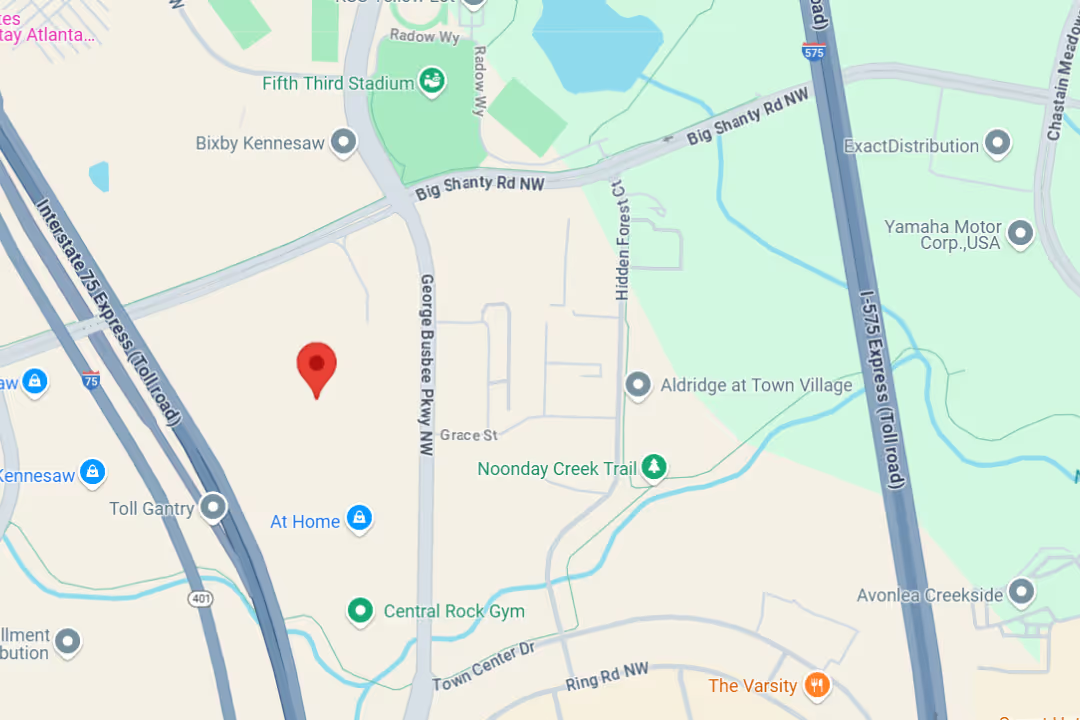
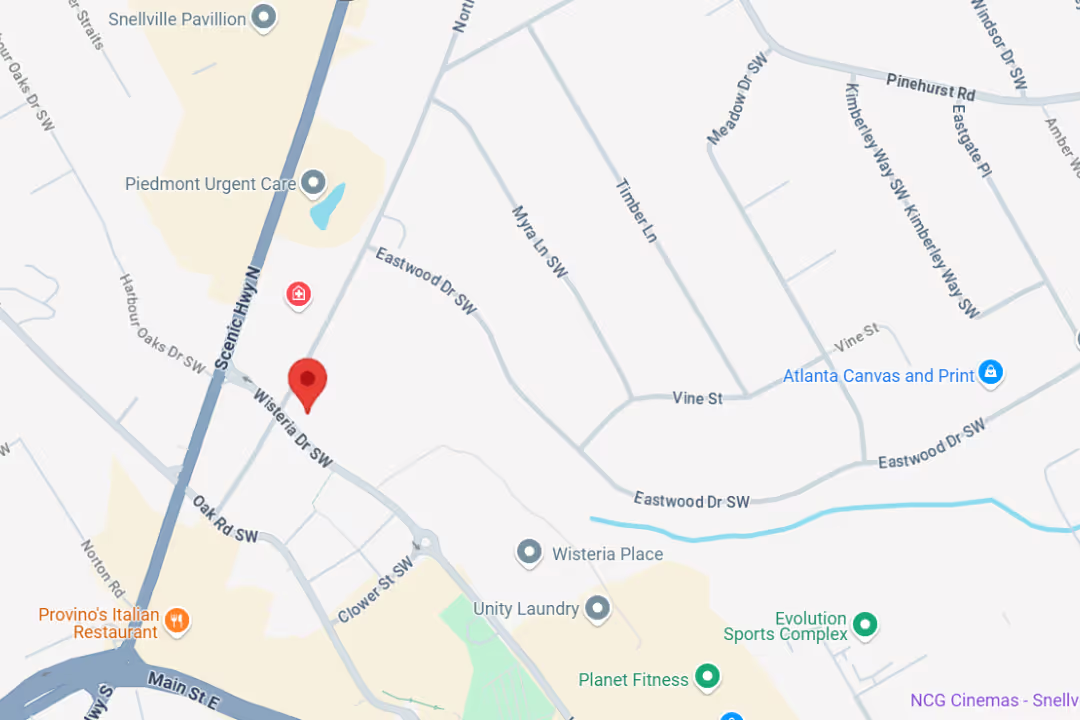
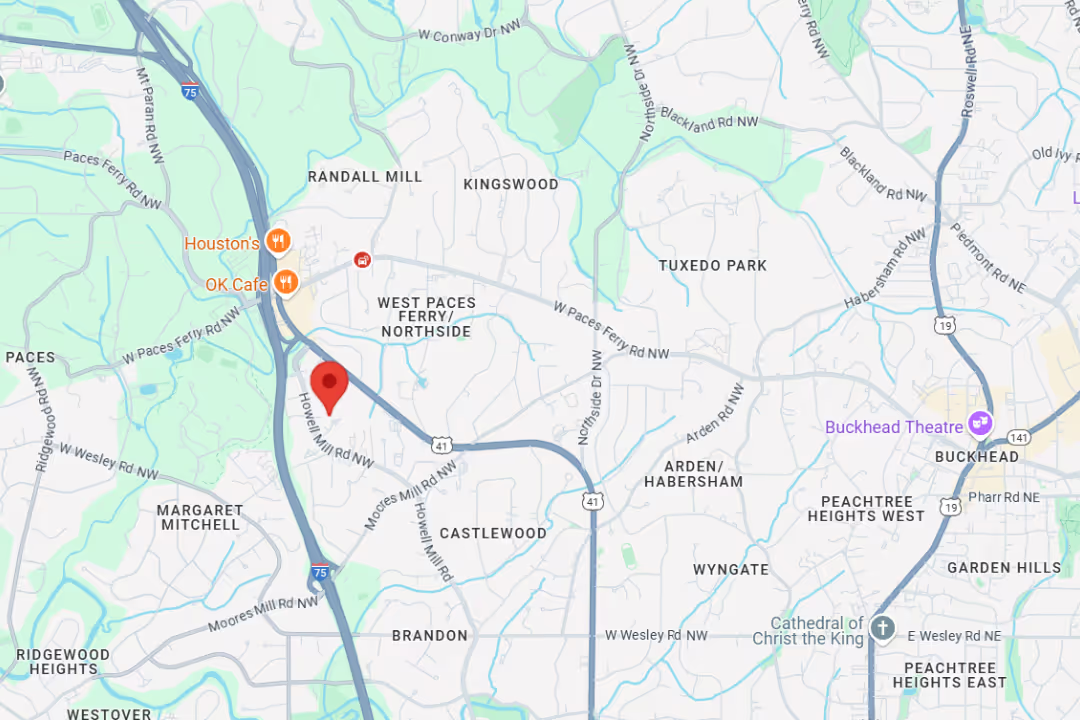
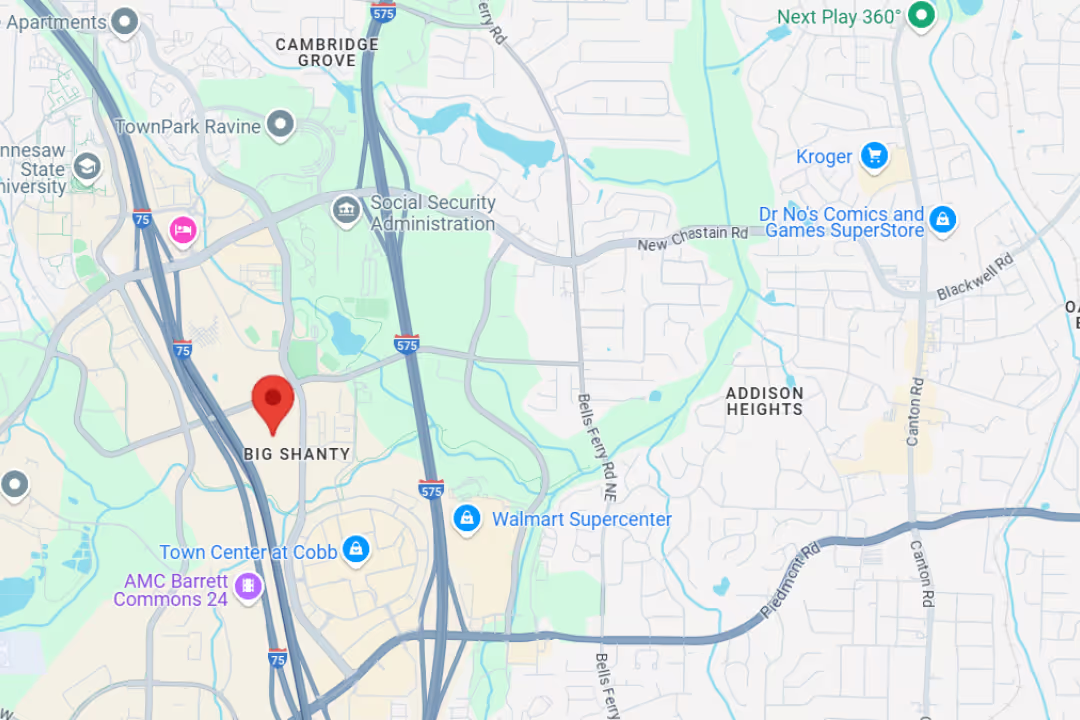
If you are struggling with persistent lower back or leg pain, we are here to help you find lasting relief. Visit us at one of our convenient Metro Atlanta locations:
Let us help you take your first pain-free step forward. To learn more about our comprehensive spinal care options, visit our Lumbar Radiculopathy (Pinched Nerve) page today.
At Medici, you’re more than your MRI.
We take time to hear your story, understand your pain, and create a plan that actually works for you.

Our team delivers specialist care at convenient locations across Metro Atlanta:
Get expert tips on injury recovery, pain relief, joint health, and movement strategies—straight from our Fellowship-Trained team.