

Hyperbaric oxygen therapy (HBOT) may help some exercise-related muscle injuries, but it has not been shown to reliably relieve everyday post-workout soreness. Small studies have found changes in signs of muscle damage and inflammation, while clinical trials show mixed results. If you are considering HBOT, think of it as a possible addition to a recovery plan, not a replacement for rest, nutrition, or rehabilitation.
HBOT involves breathing oxygen in a pressurized chamber. Pressure may matter: in a mouse study, a higher-pressure session slowed the return of muscle fuel after exercise. This guide separates those early findings from what we know about recovery in people.
I'm Sonny Dosanjh, M.D., a board-certified physical medicine and rehabilitation physician with experience treating sports injuries and guiding rehabilitation. I bring that perspective to hyperbaric oxygen for muscle recovery, starting with how it works and what the evidence can tell us.
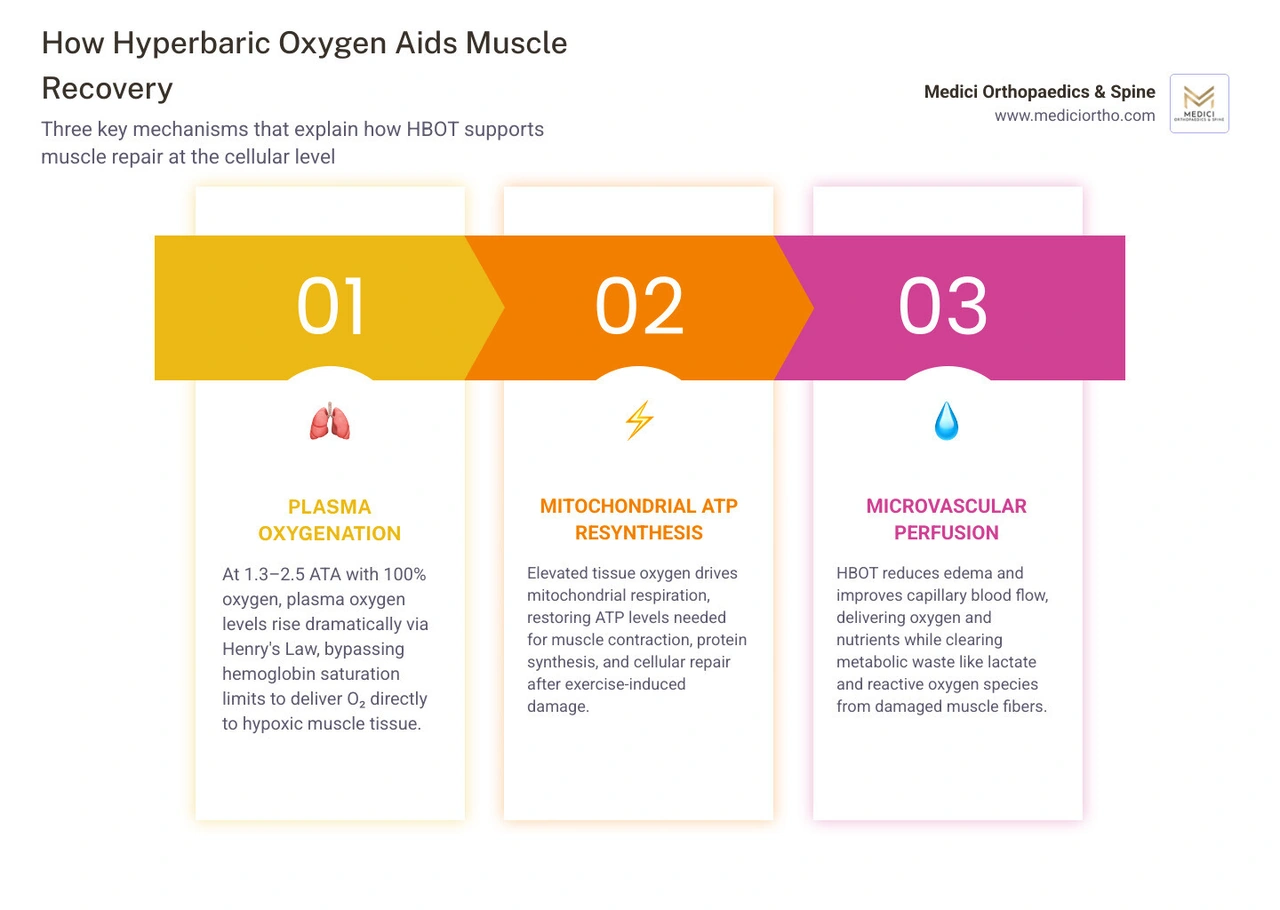
To understand how hyperbaric oxygen therapy influences musculoskeletal recovery, we have to look at cellular bioenergetics and microvascular physiology. Under normal atmospheric conditions (1.0 atmosphere absolute, or ATA) breathing ambient air (21% oxygen), your red blood cells are already nearly saturated with oxygen. The amount of oxygen dissolved directly in your blood plasma remains minimal.
HBOT fundamentally alters this dynamic. By placing a patient inside a specialized, pressurized chamber at pressures typically between 1.3 ATA and 2.5 ATA while delivering up to 100% medical-grade oxygen, we dramatically elevate the partial pressure of oxygen in arterial blood. According to Henry’s Law, the volume of gas dissolved in a liquid is directly proportional to the partial pressure of that gas. As a result, oxygen dissolves abundantly into blood plasma, independent of hemoglobin binding.
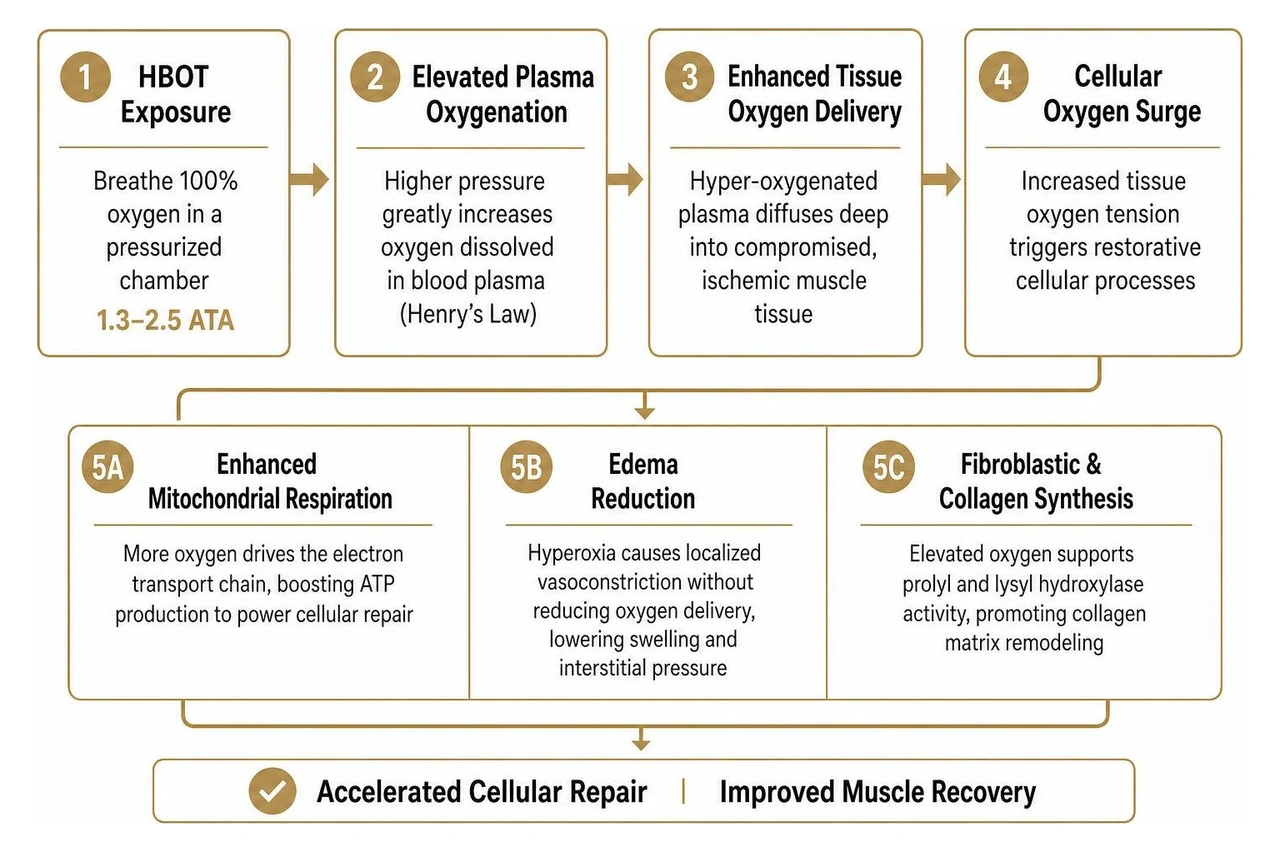
This hyper-oxygenated plasma diffuses deep into compromised, ischemic tissues and regions with restricted microvascular perfusion—such as swollen, micro-torn muscle fibers following strenuous exercise. At the cellular level, this surge in tissue oxygen tension drives several restorative processes:
Learning how hyperbaric oxygen therapy works reveals that it operates as a systemic cellular catalyst rather than just an isolated, passive resting environment.
Skeletal muscle repair relies heavily on satellite cells—specialized myogenic stem cells residing between the basal lamina and the sarcolemma of myofibers. Following acute mechanical overload or eccentric exercise-induced structural microtrauma, these quiescent stem cells must activate, proliferate, differentiate into myoblasts, and fuse to repair damaged fibers.
Research indicates that hyperbaric oxygen treatment accelerates this myogenic program. In animal models of skeletal muscle trauma, HBOT increased satellite cell proliferation by roughly 22% compared to controls. By elevating local tissue oxygen partial pressure, HBOT stimulates key transcription factors (such as MyoD and myogenin) that orchestrate myogenesis and accelerate extracellular matrix reorganization, shortening the window required for structural fiber regeneration.
Intense muscular exertion triggers a systemic and local inflammatory cascade characterized by cytokine release, leukocyte infiltration, and the accumulation of reactive oxygen species (ROS). While a controlled inflammatory response is necessary for adaptation, excessive or prolonged inflammation worsens secondary tissue damage.
A clinical pilot study published in MDPI evaluating HBOT after acute exercise demonstrated clear biomarker shifts following a 60-minute session at 2.5 ATA with intermittent air breaks:
Understanding how HBOT helps reduce systemic inflammation provides valuable insight into why athletes and clinical patients alike use these pressurized treatments to suppress excessive muscular inflammation.
Despite clear physiological mechanisms, clinical trials evaluating hyperbaric oxygen for exercise-induced muscle damage (EIMD) and delayed onset muscle soreness (DOMS) show nuanced outcomes.
In a comprehensive systematic review of clinical studies published in BMC Musculoskeletal Disorders, researchers analyzed 19 studies involving 612 patients across various musculoskeletal conditions. The findings revealed a distinct contrast: while HBOT demonstrated clear, consistent efficacy for chronic bone pathologies like avascular necrosis (AVN) and bone marrow edema (BME) over 20 to 80 sessions, evidence for isolated EIMD and DOMS in randomized controlled trials was more mixed. Many standard trials utilizing only 1 to 3 sessions showed minimal impact on subjective pain scales or immediate isometric peak torque recovery.
A larger meta-analysis focusing on muscle injury versus perceived soreness highlighted that HBOT significantly accelerates physiological tissue repair from structural muscle injuries (mean difference range -76.19 to -33.11, $p < 0.0001$). However, its overall effect on reducing subjective soreness ratings alone was not statistically significant ($p = 0.54$). In short: HBOT is far more effective at repairing true structural muscle damage than it is at simply masking post-workout muscle soreness.
When applied to actual sport-related muscle strains and high-level athletic fatigue, multi-session HBOT protocols demonstrate measurable clinical benefits (Chen et al., 2019). In a randomized, double-blind, sham-controlled clinical trial investigating elite baseball athletes published on PMC, 41 athletes received 10 HBOT sessions (2.5 ATA for 100 minutes, twice weekly over five weeks) or a sham protocol.
The findings demonstrated significant therapeutic advantages:
Athletic conditioning and tactical training frequently occur under hypobaric or hypoxic conditions (such as altitude training). Hypoxia elevates baseline metabolic strain, increases cellular fatigue, and can prolong muscular recovery timelines.
Comparative pilot research highlights that acute exercise under hypoxic conditions does not inherently exacerbate mechanical muscle damage compared to sea-level normoxia, but post-exercise HBOT at 2.5 ATA significantly accelerates serum CK and LDH clearance in hypoxic-exercise groups ($p < 0.05$). This indicates that athletes transitioning from altitude camps or high-strain hypoxic environments may experience accelerated metabolic clearance when incorporating hyperbaric chamber sessions.
Not all hyperbaric treatments deliver the same physiological stimulus. Chamber pressures, oxygen fractions, and session durations vary significantly between mild wellness chambers and hospital-grade medical chambers.
For acute musculoskeletal recovery and sports injuries, meta-analyses demonstrate that higher pressures (>2.0 ATA) and longer session durations (100 minutes) outperform shorter, low-pressure protocols. To prevent pulmonary and central nervous system oxygen toxicity during high-pressure protocols, clinical facilities implement 5-minute ambient air breaks every 20 to 30 minutes.
Reviewing a detailed hyperbaric oxygen recovery guide can help patients identify the specific dosage schedules required for soft-tissue healing versus routine conditioning.
One of the most critical recent discoveries in sports physiology involves the relationship between hyperbaric pressure and post-workout carbohydrate metabolism. Muscle glycogen replenishment is vital for athletes engaged in back-to-back training sessions.
An animal study on post-exercise muscle glycogen resynthesis revealed an unexpected metabolic trade-off:
Researchers noted elevated AMP-activated protein kinase (AMPK) phosphorylation alongside lower blood glucose levels at the 2-hour recovery mark under 2.5 ATA. This suggests that high ambient pressures shift peripheral glucose consumption toward active oxidative pathways rather than glycogen storage. Clinical takeaway: If you undergo high-pressure HBOT (2.0–2.5 ATA) immediately after grueling exercise, consume adequate carbohydrates after the chamber session to avoid impairing your glycogen re-synthesis window.

When administered in accredited clinical settings, hyperbaric oxygen therapy maintains an exceptional safety profile. Across clinical studies involving hundreds of musculoskeletal patients, severe adverse events are practically nonexistent, with mild middle ear or sinus barotrauma occurring in less than 1% of patients.
To ensure safe administration, our medical team screens for essential contraindications:
Patients are taught simple Valsalva and autoinflation maneuvers to equalize middle ear pressure during chamber pressurization and depressurization.
Evaluating hyperbaric therapy for post-injury recovery begins with an individualized diagnostic assessment to ensure you are an appropriate candidate.
At Medici Orthopaedics & Spine, we believe no single therapy operates best in isolation. While hyperbaric oxygen accelerates cellular energetics and modulates inflammation, structural healing requires an integrated continuum of care.
We combine hyperbaric protocols alongside:
Exploring dedicated clinical hyperbaric oxygen for recovery support allows you to address acute structural strains and chronic pain with a comprehensive medical plan.
No. Clinical evidence demonstrates that HBOT does not instantly erase subjective post-exercise soreness (DOMS). While HBOT accelerates microscopic tissue repair, stem cell differentiation, and inflammatory cytokine clearance, subjective muscle tenderness may still persist for 24 to 48 hours following severe unaccustomed eccentric loading.
For acute grade I or grade II muscle strains, clinical protocols generally recommend 5 to 10 sessions administered at 2.0 to 2.5 ATA for 60 to 100 minutes, scheduled two to three times per week. Chronic musculoskeletal injuries or severe bone-related pathologies often require extended courses of 20 or more sessions.
Yes, high-pressure clinical protocols (2.5 ATA) have been shown in laboratory models to attenuate immediate post-exercise muscle glycogen resynthesis by increasing systemic glucose oxidation via AMPK pathways. Athletes should focus on rehydrating prior to entering the chamber and schedule their primary carbohydrate-loading meal immediately after completing their hyperbaric treatment.
Hyperbaric oxygen therapy represents a powerful, scientifically validated therapeutic tool for accelerating structural muscle repair, lowering systemic inflammatory markers like IL-6 and fibrinogen, and clearing catabolic enzymes after severe physical strain. While it is not an instant cure for standard post-workout muscle soreness, its ability to enhance tissue oxygenation and stimulate satellite cell activity makes it a valuable asset for recovering from sports-related muscle injuries.
At Medici Orthopaedics & Spine, Dr. Sonny Dosanjh and our multidisciplinary team specialize in non-surgical orthopedic care, interventional pain management, and advanced recovery modalities. Across our clinics and surgery centers in Kennesaw, Marietta, Snellville, and Buckhead (Atlanta), we tailor customized treatment plans that help you recover faster and perform at your highest level.
Explore our specialized hyperbaric oxygen therapy programs to schedule your comprehensive consultation.
Chen CY, Chou WY, Ko JY, Lee MS, Wu RW. "Early Recovery of Exercise-Related Muscular Injury by HBOT.." BioMed research international, 2019. PMCID PMC6560326.
At Medici, you’re more than your MRI.
We take time to hear your story, understand your pain, and create a plan that actually works for you.

Our team delivers specialist care at convenient locations across Metro Atlanta:
Get expert tips on injury recovery, pain relief, joint health, and movement strategies—straight from our Fellowship-Trained team.






