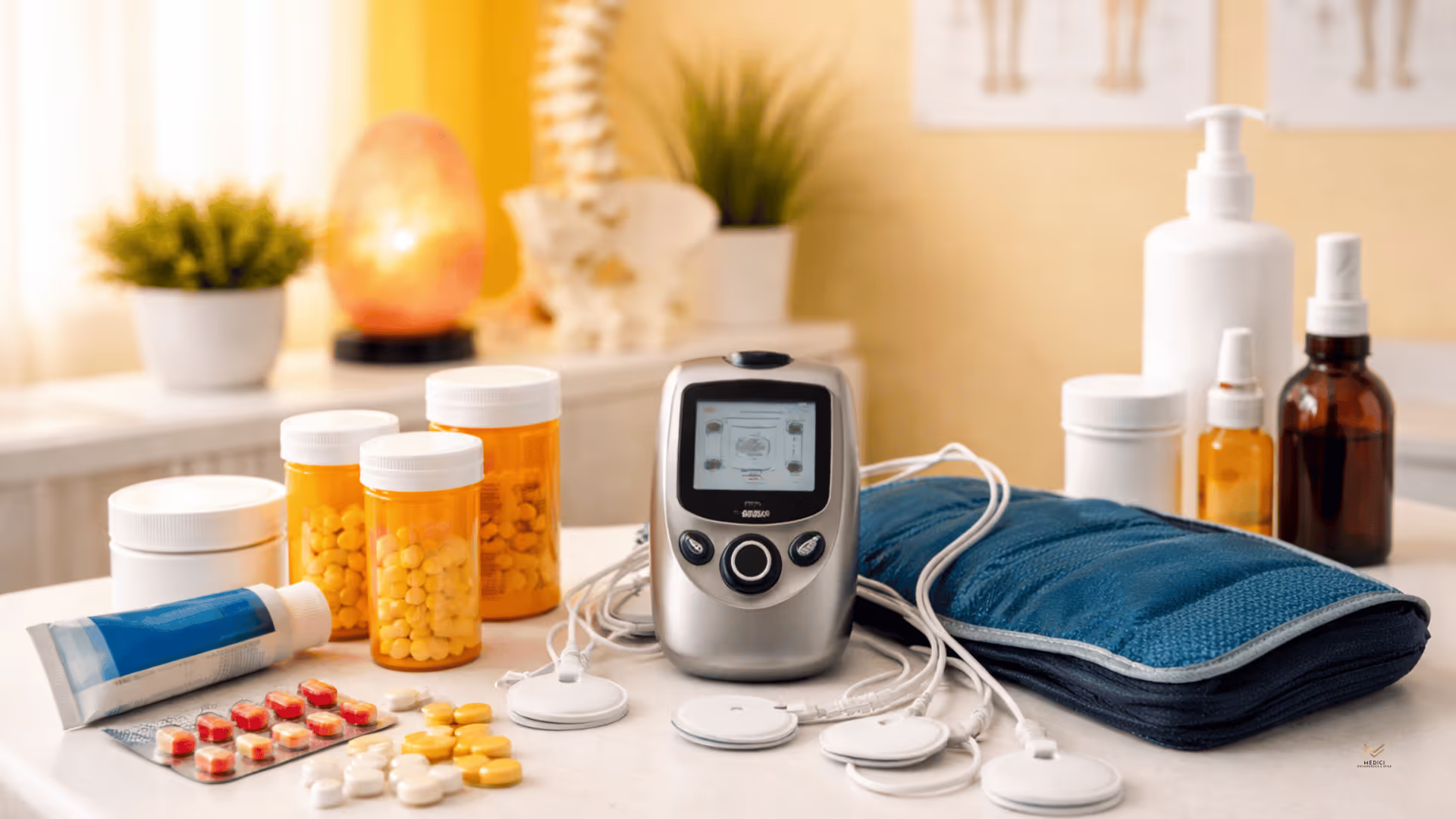
Pain doesn’t always arrive with a dramatic moment. Sometimes it creeps in quietly—an ache that lingers after a long day, stiffness that doesn’t fully go away, or a sharp “catch” that makes you move differently without even thinking about it. Over time, that discomfort can start reshaping your routine in ways you didn’t expect.
When pain starts shrinking your life, many people assume surgery is the next step—or they feel stuck between “toughing it out” and relying on medications long-term. But for a large number of patients across Georgia, there’s another path: least-invasive, conservative-first care designed to reduce pain, restore function, and help you get back to living.
Many pain conditions respond to conservative care when properly diagnosed, especially when the real driver is identified (inflammation, muscle guarding, joint irritation, nerve sensitivity, or movement mechanics). If you’ve been trying to “push through” pain—waiting for it to pass, avoiding activities, or bouncing between quick fixes—you’re not alone. But you also don’t have to keep guessing.
The most effective non-surgical plans start with clarity: understanding what’s driving your pain and matching treatment to the real cause. That’s how conservative-first care becomes powerful—not because it’s minimal, but because it’s precise, personalized, and built to help you move forward with confidence.
Georgia’s Least-Invasive Pain Relief Options
Lifestyle, Self-Care, and Movement Foundations
These aren’t “small things.” They’re often the difference between short-term relief and lasting improvement.
- Activity modification without deconditioning
- Avoid the “bed rest trap” that weakens muscles and stiffens joints
- Keep gentle movement in the plan—even during flares
- Sleep positioning + basic ergonomics
- Desk, car, and phone posture changes that reduce daily irritation
- Pillow and sleep position guidance that supports recovery overnight
- Pacing strategies for chronic pain
- Reduces flare cycles by balancing activity and recovery
- Helps you build tolerance without “overdoing it”
- Weight, stress, and inflammation considerations
- Simple, realistic changes that reduce overall load on joints and the nervous system
- Stress reduction matters—because tension and guarding amplify pain
Physical Therapy and Corrective Exercise
PT and corrective exercise are often the cornerstone because they address why pain keeps returning.
- Improve mobility + restore range of motion
- Gentle motion first, then stronger movement patterns
- Stabilization where it counts
- Core strengthening for back pain
- Deep neck flexors for neck pain
- Scapular control to unload neck/shoulder strain
- Posture retraining + movement mechanics
- Lifting, bending, reaching, sitting—done in a spine/joint-friendly way
- Home program that fits real life
- “Micro-sessions” that are easy to repeat
- Consistency over intensity for long-term success
Myofascial Release and Sports Massage Therapy
When muscles guard after injury or chronic strain, they can become a primary pain driver—or keep pain going even after the original issue improves.
- Trigger point relief for protective muscle spasm
- Targets “knots” that refer pain into other areas
- Reducing guarding that perpetuates pain
- Helps restore normal movement patterns and reduces stiffness
- Improving tolerance for rehab and daily activity
- Often makes exercise, posture work, and daily tasks more comfortable
Medication Management
Medication should support recovery—not replace it.
- Anti-inflammatory strategies when appropriate
- Helps reduce swelling and pain sensitivity so you can move and rehab
- Nerve-pain medications in select cases
- Considered when symptoms strongly suggest nerve-related pain patterns
- Short-term muscle relaxants for acute spasm (select cases)
- Used carefully to improve sleep and mobility during severe spasm phases
- Minimizing long-term dependency
- The goal is function, mobility, and durability—not staying on meds indefinitely
- Safe expectations
- Medications are often a bridge, not the destination—best paired with movement-based recovery
Targeted, Minimally Invasive Procedures
Injections That Calm Inflammation and Help Rehab Work Better
These treatments are designed to be precise—aimed at the structure most responsible for your symptoms (nerve, joint, or muscle), rather than “numbing everything.”
- Epidural steroid injections for radiating arm/leg pain (radiculopathy/sciatica)
- Often considered when nerve irritation causes burning, tingling, or shooting pain down an arm or leg
- Goal: reduce inflammation around the nerve so walking, sitting, and therapy become more tolerable
- Selective nerve root blocks (diagnostic + therapeutic)
- Targets one specific nerve level
- Helps in two ways:
- Therapeutic: calms nerve inflammation
- Diagnostic: confirms whether that nerve is the true pain driver
- Facet joint injections for joint-based spine pain
- Helpful when pain is coming from the small stabilizing joints of the spine
- Often associated with pain that worsens with twisting, arching, or prolonged standing
- SI joint injections for pelvic/SI pain patterns
- Considered when pain is centered low in the back/pelvis, sometimes referring into the buttock or groin
- Aims to reduce inflammation and improve tolerance for strengthening/stabilization work
- Joint injections (shoulder/hip/knee) when appropriate
- Often used for arthritis flares, joint inflammation, or injury-related irritation
- Goal: decrease pain and improve function so you can keep moving and strengthening
- Trigger point injections for stubborn myofascial pain
- Targets painful muscle “knots” that keep pulling you into guarding patterns
- Can improve range of motion and reduce referred pain (like neck-to-headache patterns)
How these injections help:
- Reduce inflammation at the source (nerve/joint/muscle)
- Decrease pain signals so your body stops “protecting” and tightening up
- Help you re-engage in PT and daily movement—often where lasting recovery happens
Radiofrequency Ablation (RFA) for Chronic Facet-Mediated Pain
For some patients, chronic spine pain is driven primarily by facet joints. When that’s the case, RFA can be a powerful tool—especially when pain keeps returning despite strong conservative care.
- Medial branch blocks to confirm the pain source
- Before RFA, small “test” injections are used to confirm that facet joints are truly the driver
- If blocks provide clear, temporary relief, it supports the diagnosis
- RFA to interrupt pain signals from facet joints
- Uses controlled energy to disrupt pain signaling from the targeted facet joint nerves
- Often considered when facet pain is chronic and recurring
- Positioning: not a “cure,” but a tool to restore function and reduce flare-ups
- The goal is better movement tolerance, better sleep, and fewer setbacks
- Most effective when paired with strengthening, posture, and mechanics work that protects the spine long-term
Regenerative Medicine Options
Regenerative and restorative treatments can be helpful for the right patient—especially when pain is tied to tissue support issues and recurring strain patterns. The key is candidacy and realistic expectations.
- Prolotherapy (select ligament/tendon support cases)
- Considered when ligament/tendon support contributes to instability or repeated flare cycles
- Often paired with strengthening to build durable support around the painful area
- Regenerative medicine approaches based on candidacy
- Used selectively based on diagnosis, health history, and treatment goals
- Best viewed as part of a broader plan, not a replacement for rehab
Advanced Non-Surgical Options for Complex or Persistent Pain
Spinal Cord Stimulation (SCS)
SCS may be considered when pain is primarily nerve-related and has not responded sufficiently to other conservative and interventional approaches.
- Who it may help
- Chronic nerve pain
- Post-surgical pain (including post-laminectomy syndrome)
- Refractory symptoms where function and quality of life are significantly impacted
- Trial process and goal
- Typically includes a trial phase to see whether symptoms improve before any longer-term decision
- Focus: improved function, fewer flare-ups, better sleep, and better day-to-day quality of life
Hyperbaric Oxygen Therapy (HBOT)
HBOT can be a supportive therapy in select cases, particularly when tissue stress and inflammation are part of the pain picture.
- When it may support healing
- Select pain scenarios tied to tissue stress, inflammation, or recovery challenges
- Often considered as part of a coordinated plan—not a standalone fix
- Clear expectations
- Supportive therapy, not a universal pain cure
- Works best when matched to the right diagnosis and combined with rehab and functional restoration
Get a Conservative-First Plan Built Around You
If you’ve been living with pain long enough, it’s easy to start believing it’s just something you have to “manage” forever—by avoiding activities, pushing through rough days, or relying on short-term fixes. But you don’t have to stay stuck in that cycle, and you don’t have to guess your next step.
The most effective non-surgical plans don’t start with random treatments—they start with an accurate diagnosis and a stepwise strategy. That’s how you choose the least-invasive options that make sense for your body and your life, and how you build results that last beyond a temporary flare-up.
If you’re looking for the least-invasive path to feeling and functioning better, we’re here to help you understand your options and choose a plan that fits your goals—without pressure, and without rushing you into anything you don’t need.
Contact Medici Orthopaedics & Spine
Clinics
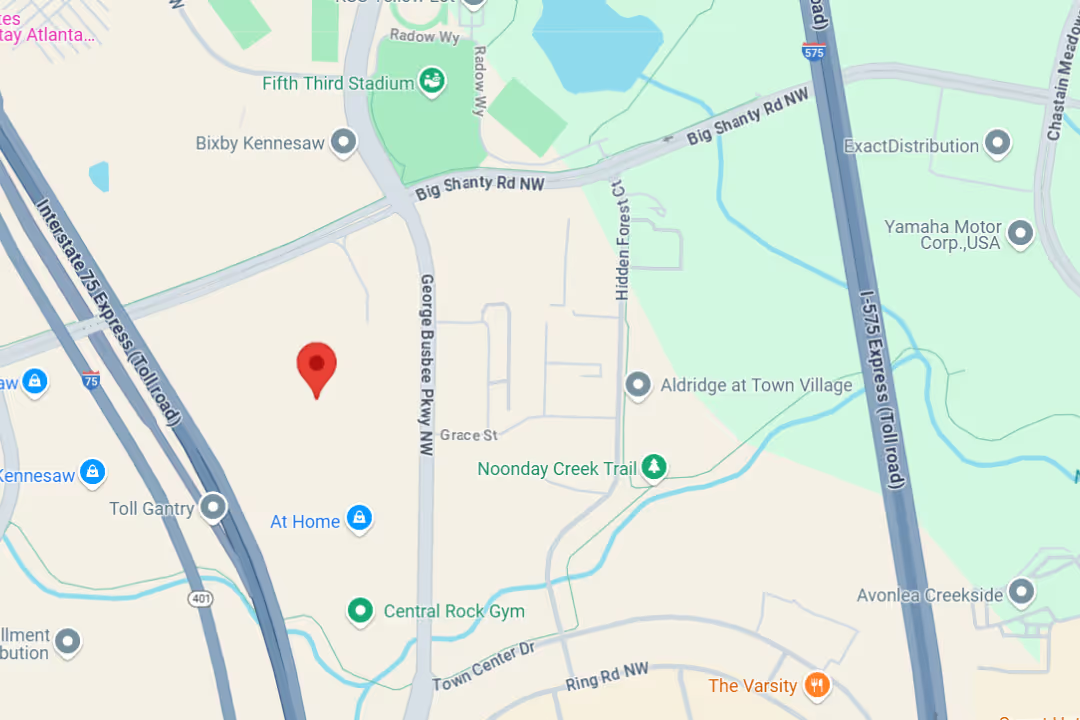
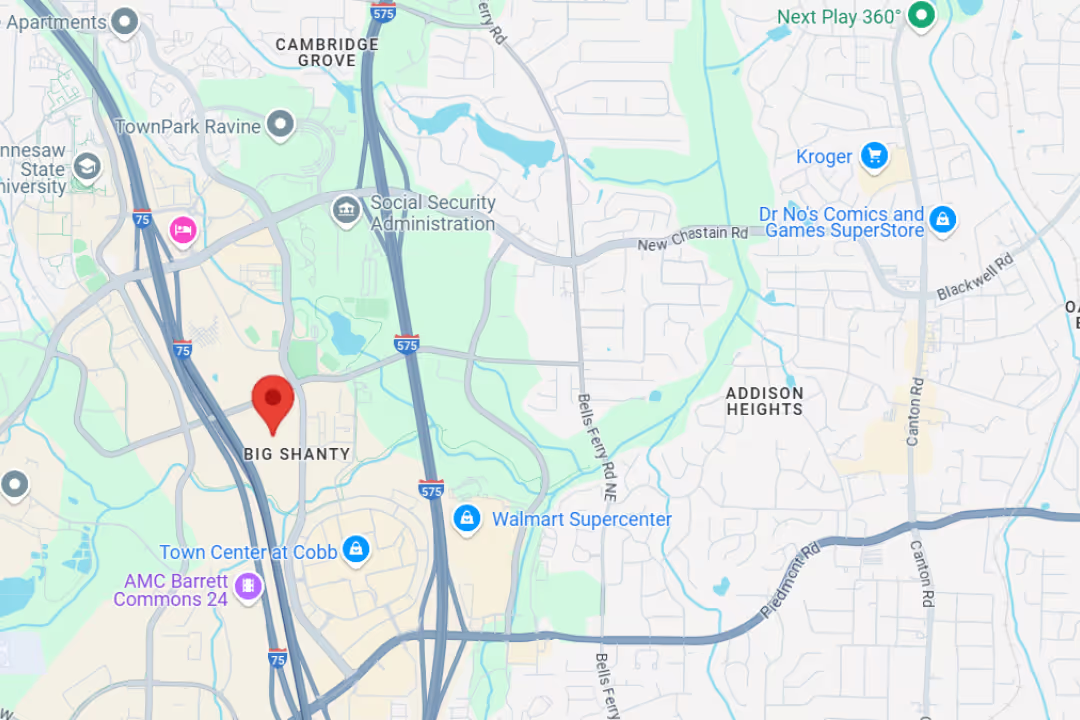
Kennesaw
2911 George Busbee Parkway, Suite 50
Kennesaw, GA 30144
(770) 545-6404
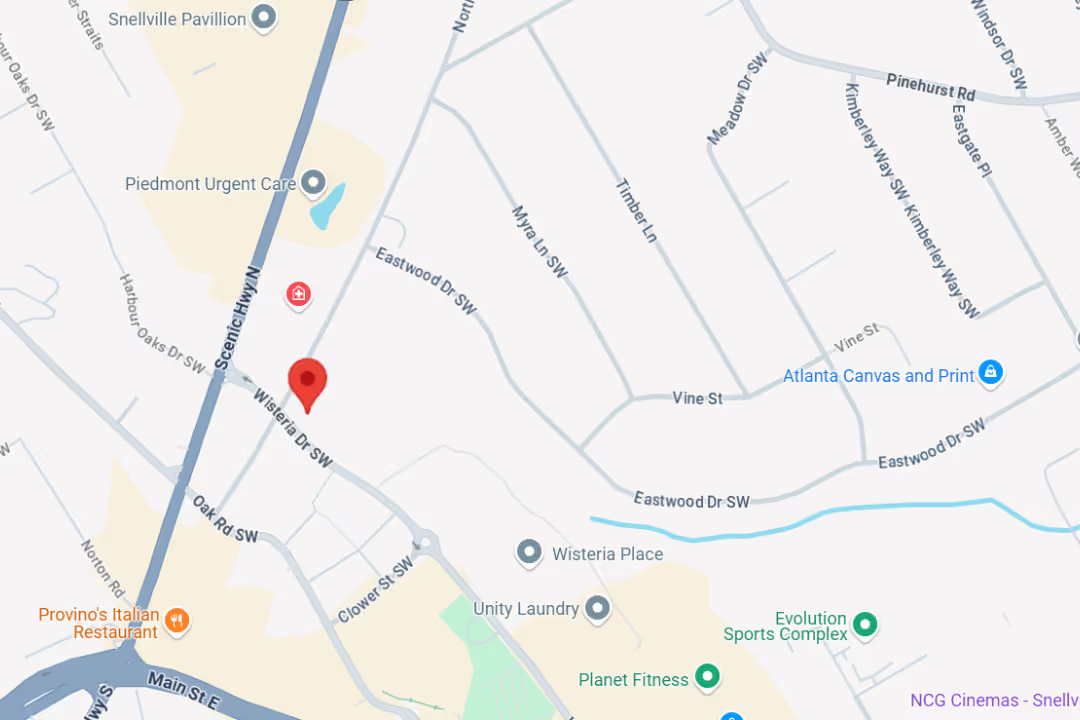
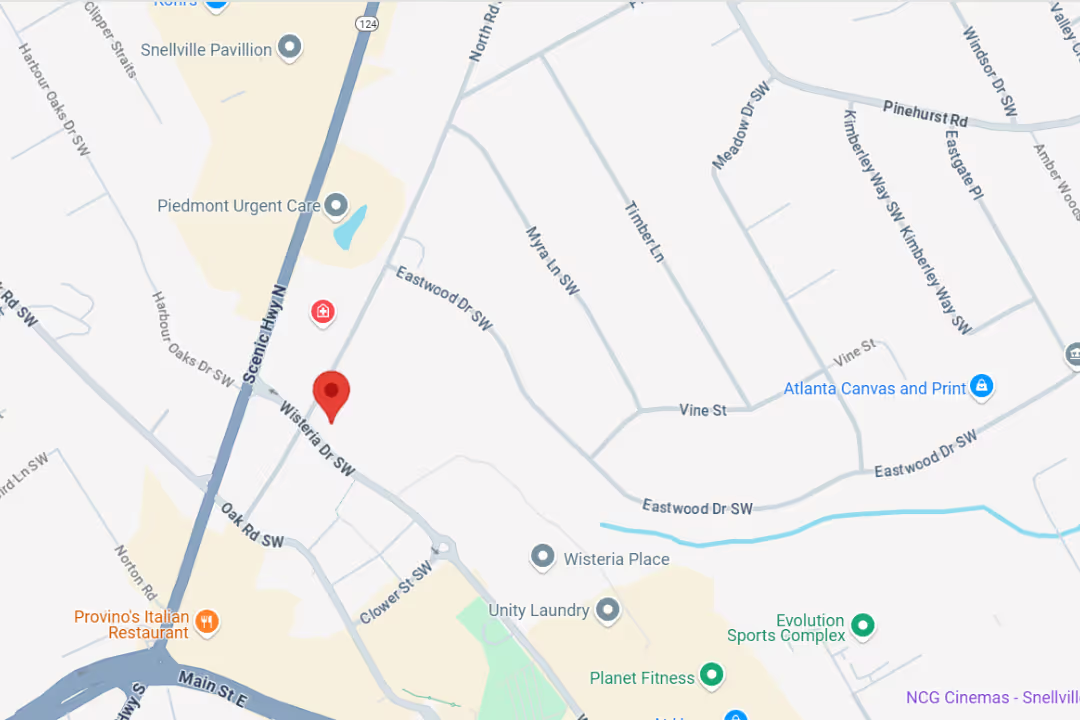
Snellville
2220 Wisteria Drive, Unit 101
Snellville, GA 30078
(470) 645-9297
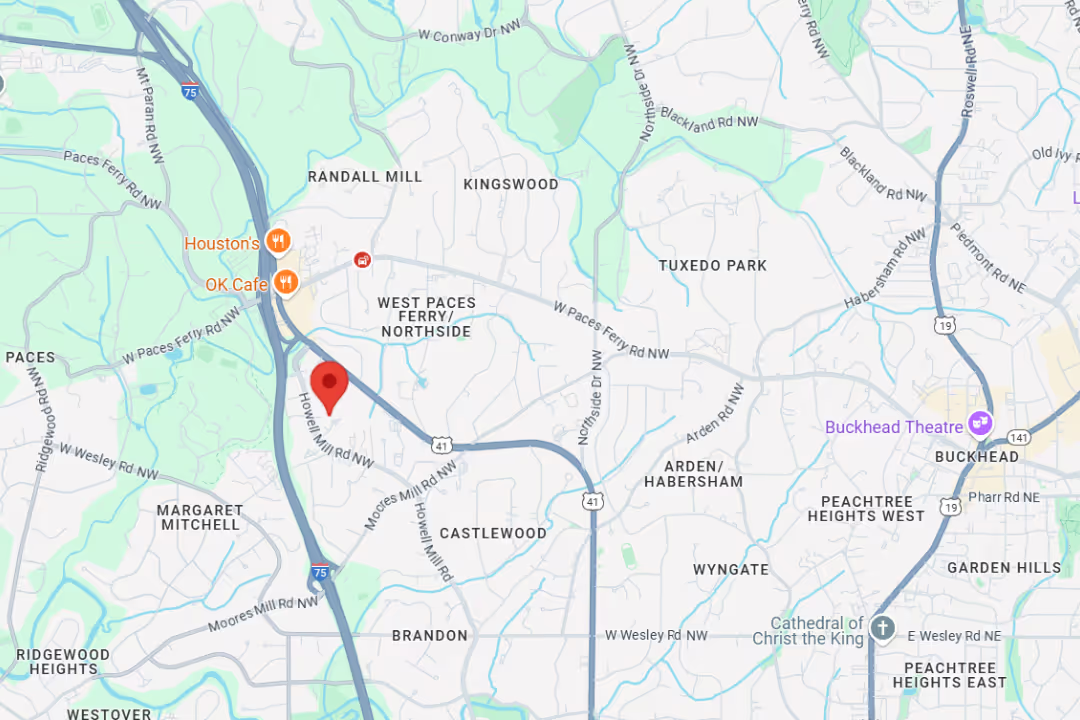
Buckhead PM&R (Atlanta)
3200 Downwood Circle, NW, Suite 520
Atlanta, GA 30327
(770) 872-7549