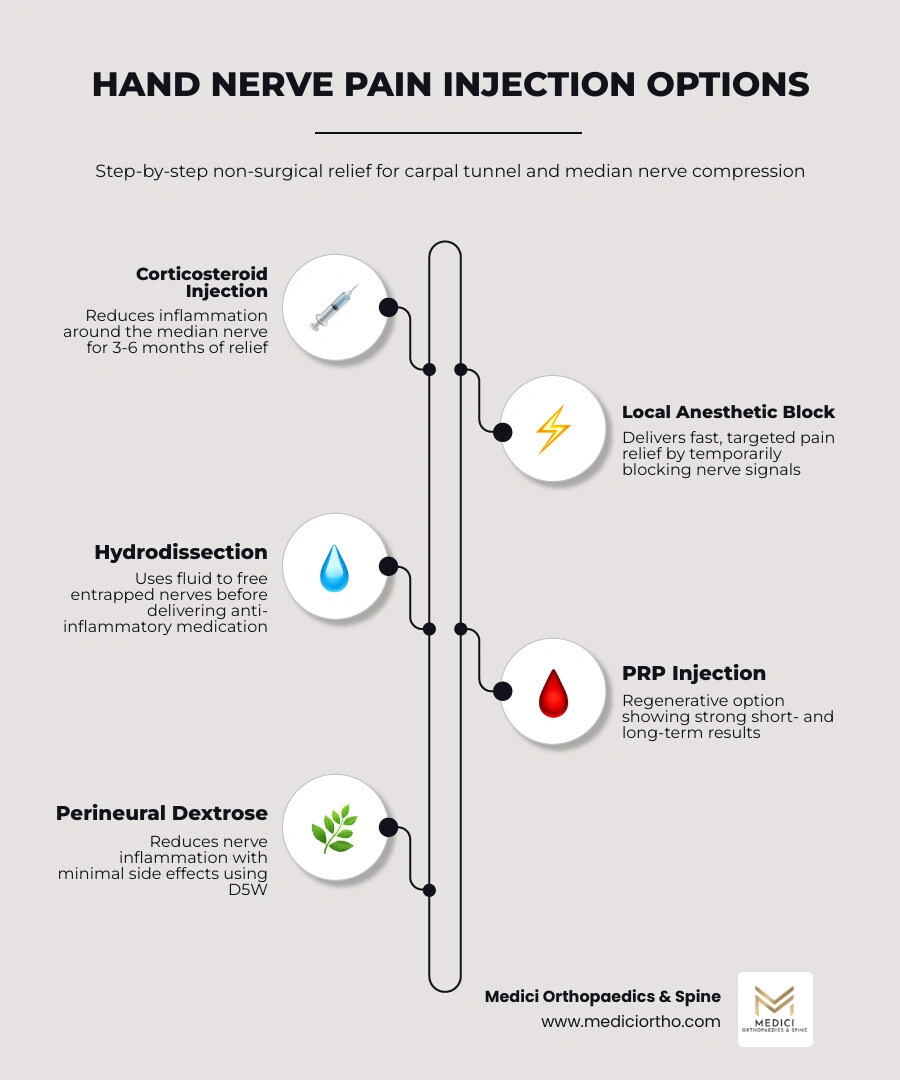
A hand nerve pain injection is one of the most effective non-surgical tools available for people dealing with chronic hand pain, numbness, and tingling. If you're looking for a quick overview of your options, here they are:
Common hand nerve pain injection options:
Hand pain that won't go away can be frustrating — and limiting. Whether it's the ache of carpal tunnel syndrome keeping you up at night, or numbness that makes it hard to grip a cup, the cause is almost always nerve-related.
The median nerve is the most commonly affected. It runs through a narrow channel in the wrist called the carpal tunnel, and when pressure builds there, pain, tingling, and weakness follow. Carpal tunnel syndrome is the most prevalent nerve entrapment condition in the upper extremities, affecting an estimated 1–5% of the general population.
The good news: most cases respond well to targeted injections — without surgery.
To understand why a hand nerve pain injection works so well, we first have to look at the anatomy of your hand. Your hand is a complex network of bones, tendons, and nerves working in perfect harmony—until something gets squeezed.
The most common culprit behind hand nerve pain is compression of the median nerve. This key nerve travels from your forearm into your hand through a rigid, narrow passageway at the wrist known as the carpal tunnel. The floor and sides of this tunnel are formed by the carpal bones, while the "roof" is spanned by a tough band of connective tissue called the transverse carpal ligament.
Alongside the median nerve, nine flexor tendons (which allow you to bend your fingers) also squeeze through this tiny space. If those tendons swell, or if the tunnel itself narrows, the median nerve gets pinched. This condition is known as carpal tunnel syndrome (CTS), a classic compression neuropathy.
When the median nerve is compressed, it sends frantic distress signals. This results in:
If you are experiencing these frustrating symptoms, you can read more about what is happening in our detailed guide on What Causes Tingling and Numbness in Hands and Feet. Understanding the root of your discomfort is the first step toward reclaiming your quality of life.
While repetitive strain from typing, assembly work, or using vibrating tools is a well-known trigger, hand nerve pain is rarely a one-size-fits-all issue. Many systemic conditions and lifestyle factors can cause or worsen inflammation within the hand and wrist.
For a deeper dive into these overlapping causes, check out our comprehensive overview on What Causes Nerve Pain in Your Hands: Symptoms, Causes, Treatments.
At Medici Orthopaedics & Spine, we believe in looking at the whole picture. Our team of specialists in Metro Atlanta is dedicated to finding the exact origin of your pain—whether it's localized in the wrist or originating in the neck—so we can target it with precision. If you want to learn more about how we block these pain pathways, read our article on Nerve Block Injections 101: Relief for Chronic Pain in Atlanta.
When conservative measures like wrist splinting, physical therapy, and over-the-counter anti-inflammatory medications fail to provide relief, a hand nerve pain injection is often the logical next step.
At Medici Orthopaedics & Spine, we view injections as a powerful bridge between basic conservative care and invasive surgery. An injection serves two vital purposes:
To learn more about the various types of minimally invasive injections we offer across our Georgia clinics, visit our dedicated page on Injections. You can also read about how we use these targeted treatments specifically for wrist compression on Carpal Tunnel Compression Injections.
A carpal tunnel corticosteroid injection is a highly targeted procedure designed to reduce inflammation within the carpal tunnel. The medication is carefully placed just beneath the transverse carpal ligament, directly surrounding the irritated median nerve.
By bathing the area in a concentrated anti-inflammatory agent, we can achieve rapid "median nerve decompression" without cutting open the wrist. This dramatically reduces swelling of the surrounding flexor tendons, giving the nerve the physical space it needs to heal. For a technical breakdown of this procedure, you can reference the clinical guidelines on Carpal Tunnel Corticosteroid Injection.
What exactly is inside the syringe during a hand nerve pain injection? We typically customize the "cocktail" based on your specific condition, pain levels, and medical history. The most common components include:
According to a comprehensive Scientific research on injection therapies, different injectants offer unique advantages. The study found that while corticosteroids provide excellent short-term symptom and pain relief, platelet-rich plasma (PRP) ranks highest for long-term symptom improvement, and dextrose (D5W) excels at providing long-term pain alleviation. We use this data to tailor your treatment plan to your unique long-term goals.
Historically, doctors performed carpal tunnel injections using the "landmark-based" (or "blind") technique. This involved feeling the wrist, identifying the palmaris longus tendon, and inserting the needle based on anatomical estimates.
While a highly skilled physician can perform this safely, modern medicine has given us a much better tool: real-time ultrasound guidance. At Medici Orthopaedics & Spine, we strongly advocate for ultrasound-guided injections because we believe you deserve the safest, most precise care possible.
The differences between these two approaches are stark:
| Feature | Landmark-Based (Blind) Injection | Ultrasound-Guided Injection |
|---|---|---|
| Accuracy Rate | Approximately 75% | Near 100% |
| Nerve Penetration Risk | Around 9% | Extremely rare (<0.1%) |
| Visual Confirmation | None (relies on "feel" and patient feedback) | Real-time visualization of nerve, tendons, and needle |
| Complication Rate | Higher risk of nerve injury or tendon injection | Significantly lower complication rates (RR 5 times lower) |
| Patient Comfort | Moderate (may require needle redirection) | High (precise, single-pass needle placement) |
By using high-resolution ultrasound, we can clearly see the median nerve, the surrounding tendons, and nearby blood vessels before the needle even touches your skin. This allows us to map out a safe path, completely avoiding any accidental contact with the nerve.
Furthermore, ultrasound allows us to perform a advanced technique called perineural hydrodissection.
During hydrodissection, we gently inject a volume of fluid (usually local anesthetic, saline, or 5% dextrose) adjacent to the nerve. The physical pressure of this fluid gently peels the median nerve away from surrounding scarred tissue, tendons, and the tight transverse carpal ligament. This mechanical release instantly improves blood flow to the nerve and relieves pressure.
This technique is incredibly beneficial for complex cases. For example, a landmark Scientific research on hydrodissection for scleroderma hand showed that hydrodissection followed by corticosteroid injection reduced hand pain scores by 67% in scleroderma patients and 47% in rheumatoid arthritis/carpal tunnel patients. Additionally, 83% of the scleroderma patients experienced reduced Raynaud's attacks, and many saw healing of painful digital ulcers because freeing the entrapped structures restored vital blood flow to the fingers.
Similarly, a Scientific research on dextrose perineural injection demonstrated that ultrasound-guided perineural hydrodissection with 5% dextrose (D5W) is highly effective at treating peripheral neuropathies (such as radial nerve palsy) by physically detaching soft tissue adhesions and calming nerve inflammation.
Like any medical procedure, a hand nerve pain injection comes with a balance of benefits and potential risks.
The Benefits:
The Risks (and how we minimize them):
If you are looking for localized, expert care in Georgia, you can read more about our safety protocols and relief options on Nerve Block Injections for Chronic Pain in Atlanta.
If you've decided to move forward with a hand nerve pain injection, you might be feeling a little nervous. That is completely normal! Let’s walk through exactly what a typical appointment looks like at our Medici Orthopaedics & Spine clinics.
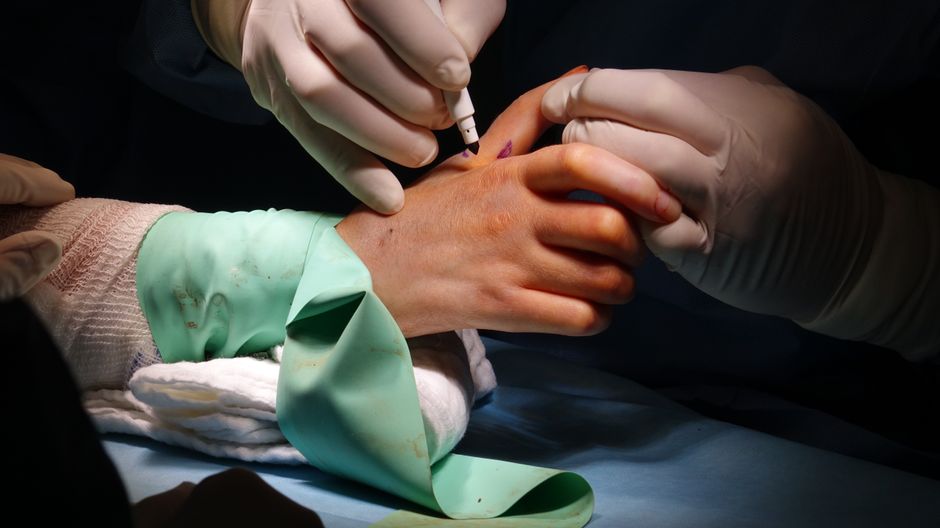
Preparation is simple and stress-free:
The actual injection is quick, taking only about 5 to 15 minutes:
Your total clinic time will be around one hour, which includes a short 15-to-30-minute monitoring period to ensure you feel great before heading home.
A common question we hear is: "Should I just get the surgery, or should I try injections first?"
At Medici Orthopaedics & Spine, we believe in a patient-centered, stepwise approach.
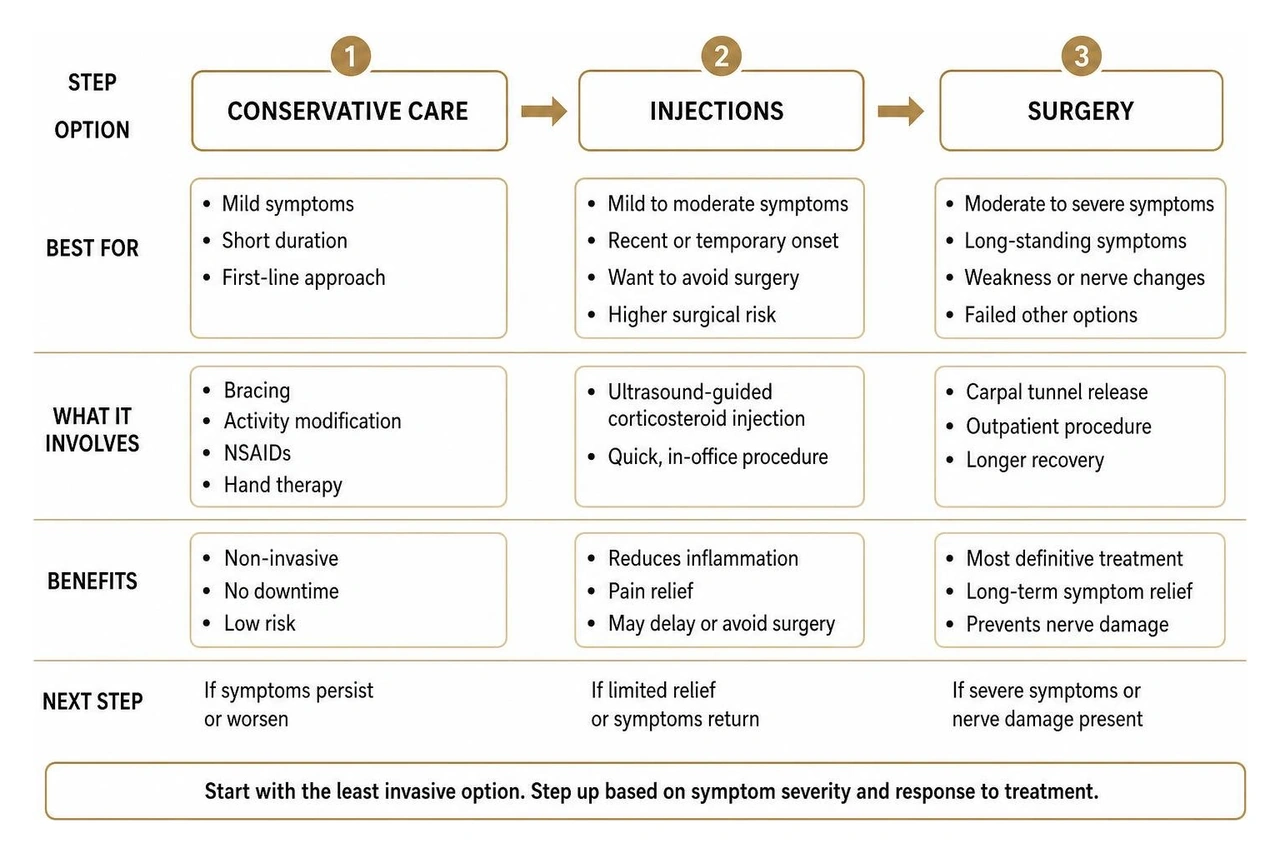
Generally, a hand nerve pain injection is the ideal choice if:
On the other hand, surgery (carpal tunnel release) should be considered if:
It is also worth noting that injections can be used to treat complex, widespread nerve pain conditions that surgery cannot fix. For example, a clinical study published in Scientific research on peripheral nerve blocks evaluated the effectiveness of wrist-level peripheral nerve blocks (median, radial, and ulnar) combined with shoulder steroid injections for patients suffering from Complex Regional Pain Syndrome (CRPS) of the upper limb. The study found that this minimally invasive outpatient procedure resulted in a massive 5.1-point reduction in pain scores and significantly reduced hand swelling within just one week, allowing patients to successfully participate in physical therapy.
For most patients, a corticosteroid injection provides significant symptom relief lasting 3 to 6 months. In some mild or recent-onset cases, a single injection—combined with activity modifications and temporary splinting—can resolve the symptoms completely. If the pain returns, the procedure can safely be repeated every 3 to 4 months, though we generally limit steroid injections to 3 to 4 times per year to protect the surrounding tissues.
Yes! However, it requires careful coordination. Corticosteroids can cause a temporary, mild increase in blood sugar levels that typically lasts for 2 to 3 days after the injection. If you have diabetes, we will ask you to monitor your blood glucose closely during this window and consult with your primary care physician to adjust your insulin or medications if necessary.
We recommend resting the treated hand and wrist for the remainder of the day. You should avoid heavy gripping, lifting, typing, or repetitive hand movements for 24 to 48 hours to let the medication settle and the inflamed tissues begin to heal. You can resume driving once any temporary numbness from the local anesthetic has completely worn off (usually within a few hours).
Hand nerve pain can make even the simplest daily tasks feel like a mountain to climb. But you do not have to live with the constant burning, tingling, and sleepless nights.
At Medici Orthopaedics & Spine, led by our CEO and owner Dr. Sonny Dosanjh, M.D., we are committed to Optimally Restoring your Quality of Life. We specialize in delivering the most effective, least invasive, and least drug-dependent treatments medically available. By combining state-of-the-art ultrasound guidance, advanced hydrodissection techniques, and a compassionate, patient-centered philosophy, we help you avoid unnecessary surgery and get back to doing what you love.
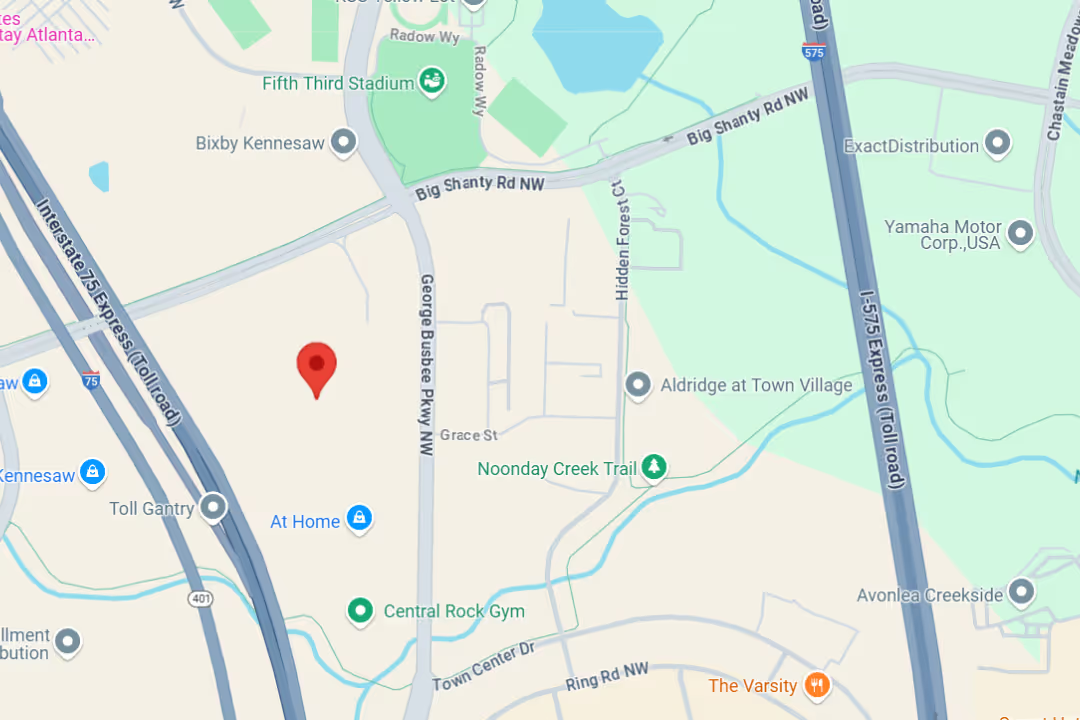
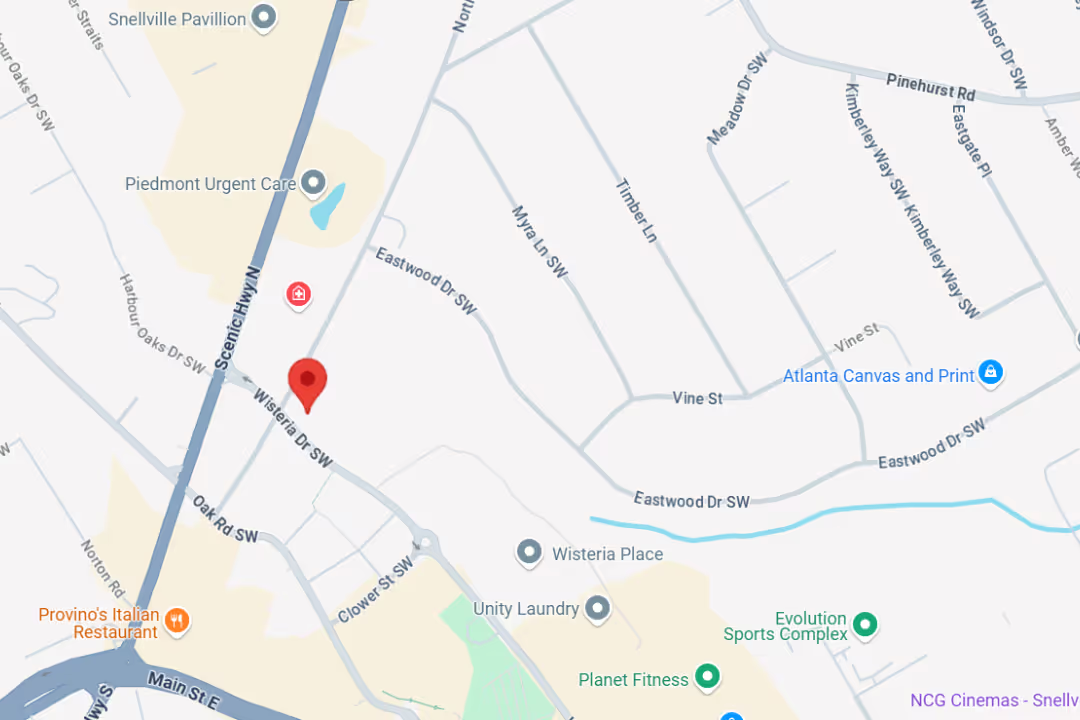
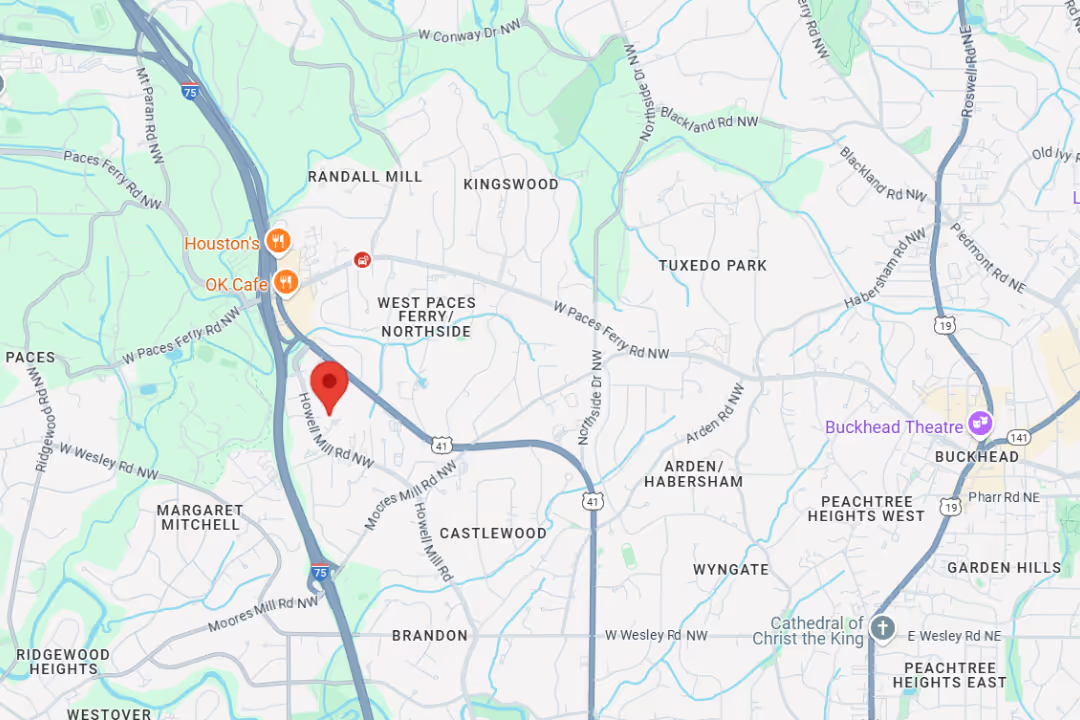
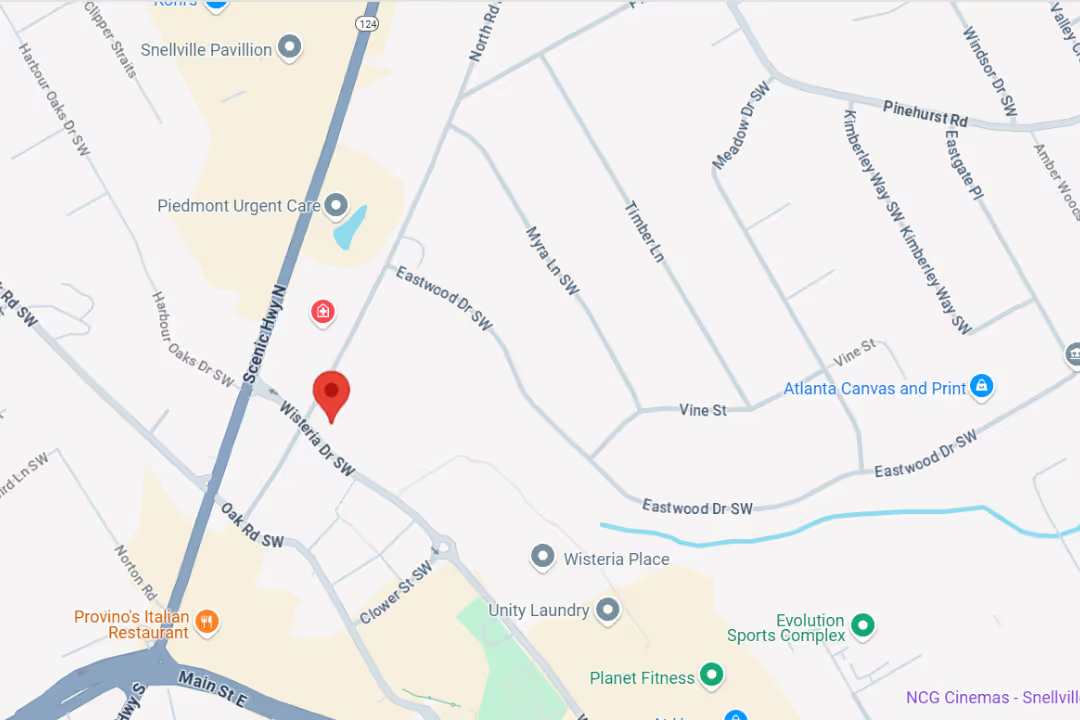
Whether you visit our state-of-the-art ambulatory surgery centers in Marietta and Snellville, or our convenient clinics in Kennesaw, Snellville, and Buckhead, you will receive personalized, world-class care right here in Metro Atlanta.
Don't let hand pain hold you back any longer. Schedule a consultation with a nerve pain doctor in Atlanta to take your first step toward pain-free living!
At Medici, you’re more than your MRI.
We take time to hear your story, understand your pain, and create a plan that actually works for you.

Our team delivers specialist care at convenient locations across Metro Atlanta:
Get expert tips on injury recovery, pain relief, joint health, and movement strategies—straight from our Fellowship-Trained team.