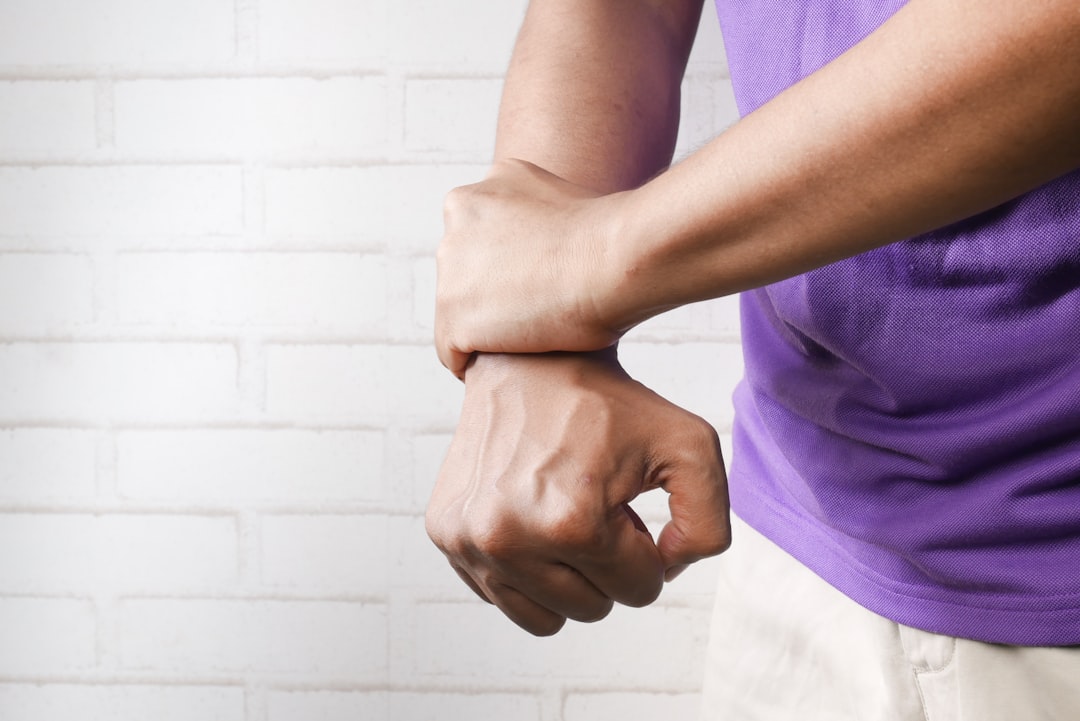
De Quervain thumb pain is a sharp, aching discomfort along the thumb side of your wrist that flares up with everyday movements — gripping a coffee mug, lifting a grocery bag, or even scrolling your phone.
Here's a quick summary of what you need to know:
It affects roughly 1% of Americans each year — and for many, it doesn't stay mild. Without treatment, the pain can quietly steal your grip strength and range of motion over time.
You don't have to push through it.
I'm Sonny Dosanjh, M.D., board-certified in Physical Medicine & Rehabilitation and fellowship-trained in Multidisciplinary Pain Management at Emory University — I've helped many patients find lasting relief from de Quervain thumb pain without defaulting to surgery or heavy medication. This guide walks you through everything you need to understand your condition and make informed decisions about your care.
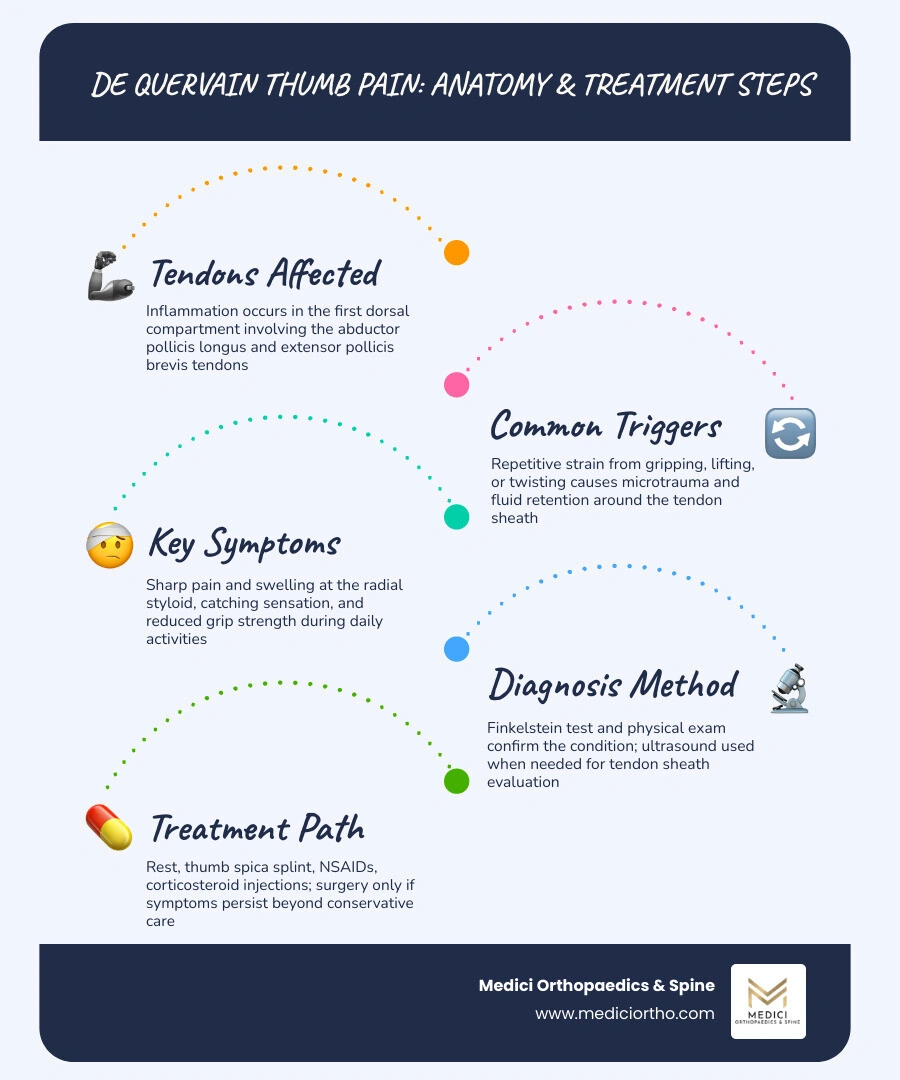
To understand why your thumb and wrist are protesting, we have to look at the anatomy of your hand. Your tendons are strong, flexible, rope-like tissues that connect your muscles to your bones. When your muscles contract, they pull on these tendons to move your joints.
In the case of de Quervain thumb pain, the issue centers on two specific tendons that sit on the thumb side of your wrist:
These two tendons run side-by-side through a narrow, rigid tunnel at the edge of your wrist called the first dorsal compartment. To keep things sliding smoothly, this tunnel is lined with a slippery membrane called a tendon sheath.
Under normal circumstances, the tendons glide back and forth through this sheath without any friction. However, repetitive strain or injury causes the sheath to thicken and swell. This narrows the tunnel, squeezing the APL and EPB tendons and creating painful friction every single time you move your thumb.
Interestingly, while this condition is historically referred to as "tenosynovitis" (which implies classic active inflammation), advanced medical research shows a slightly different story. Biopsies of the affected tissue often reveal myxoid degeneration (a cellular breakdown and thickening of the connective tissue) and fibrous thickening rather than a massive influx of inflammatory cells. This is why many hand specialists prefer the term "de Quervain tendinopathy." You can learn more about the structural changes of this condition by exploring the Anatomy of De Quervain's.
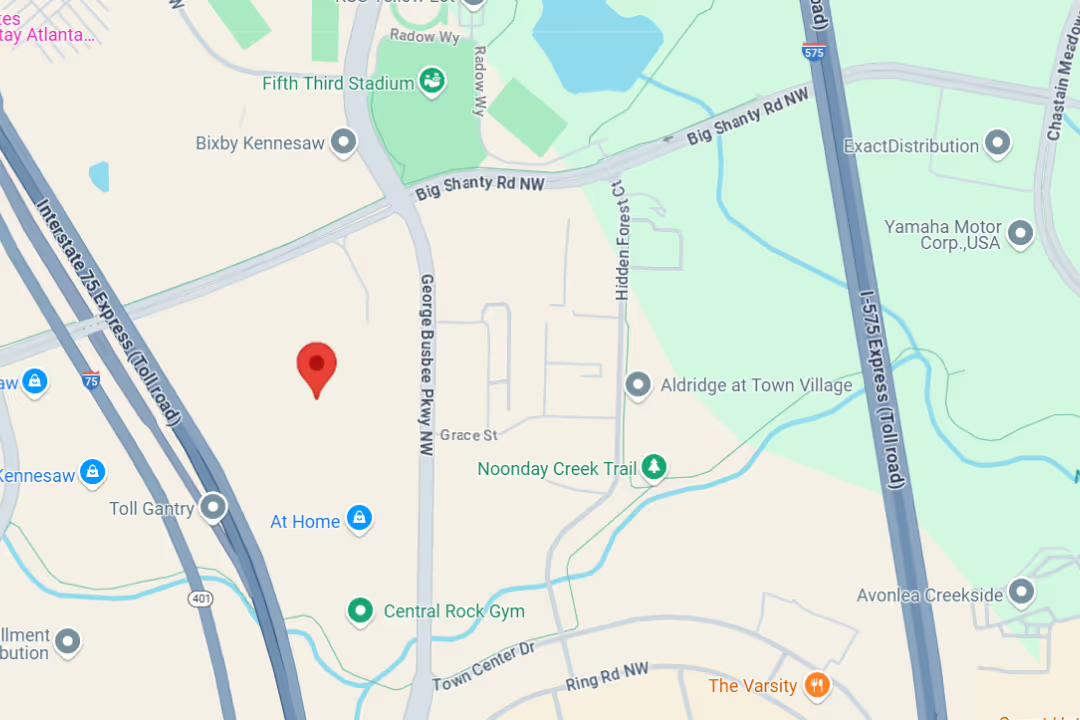
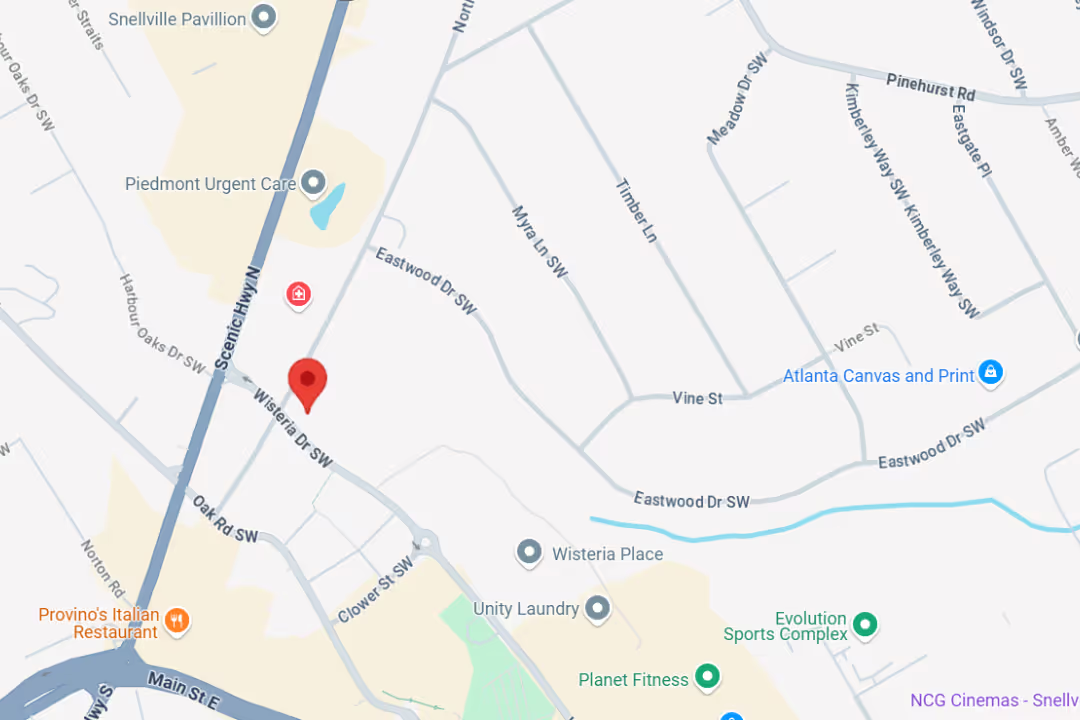
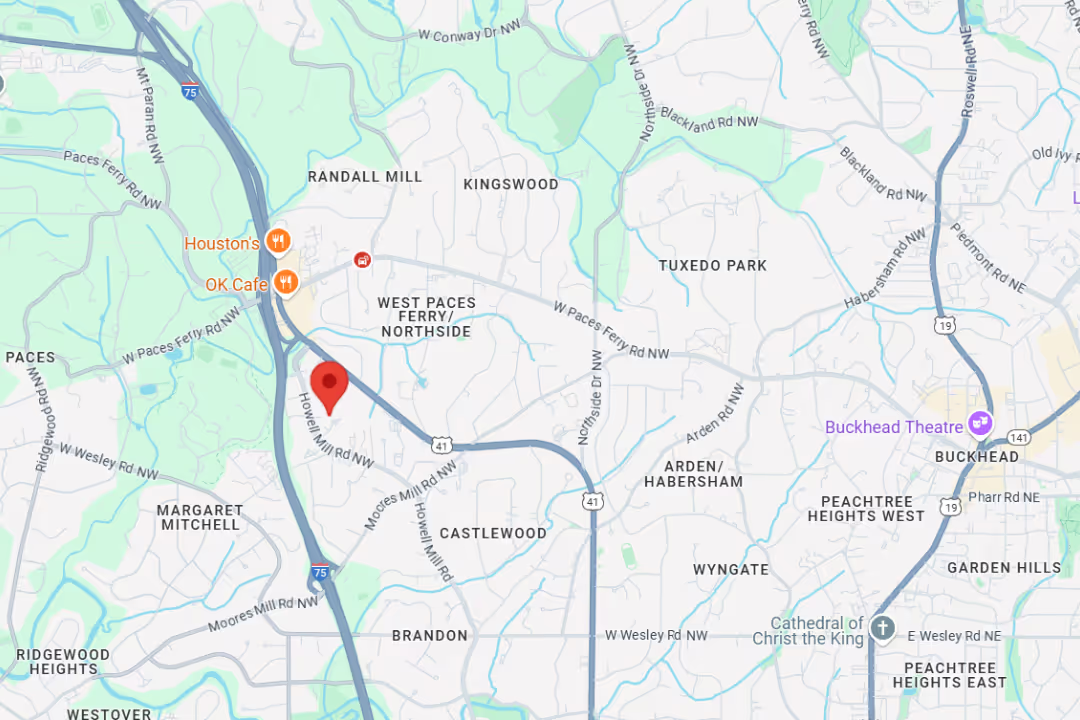
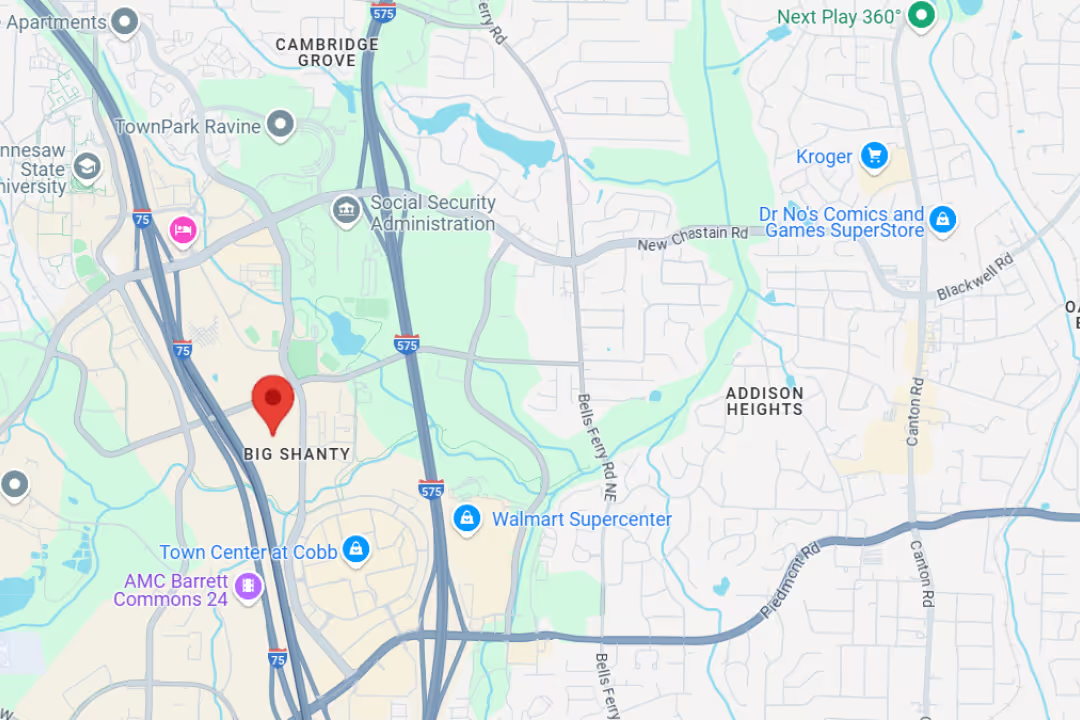
Why does this sheath thicken in the first place? In our clinics across the Metro Atlanta area—including Kennesaw, Snellville, Marietta, and Buckhead—we find that several overlapping factors usually trigger this condition:
For a deeper dive into how various hand injuries present, check out our guide on More info about hand and wrist pain.
The onset of de Quervain's can be sudden, but more commonly, it starts as a mild, nagging ache that gradually gets worse.
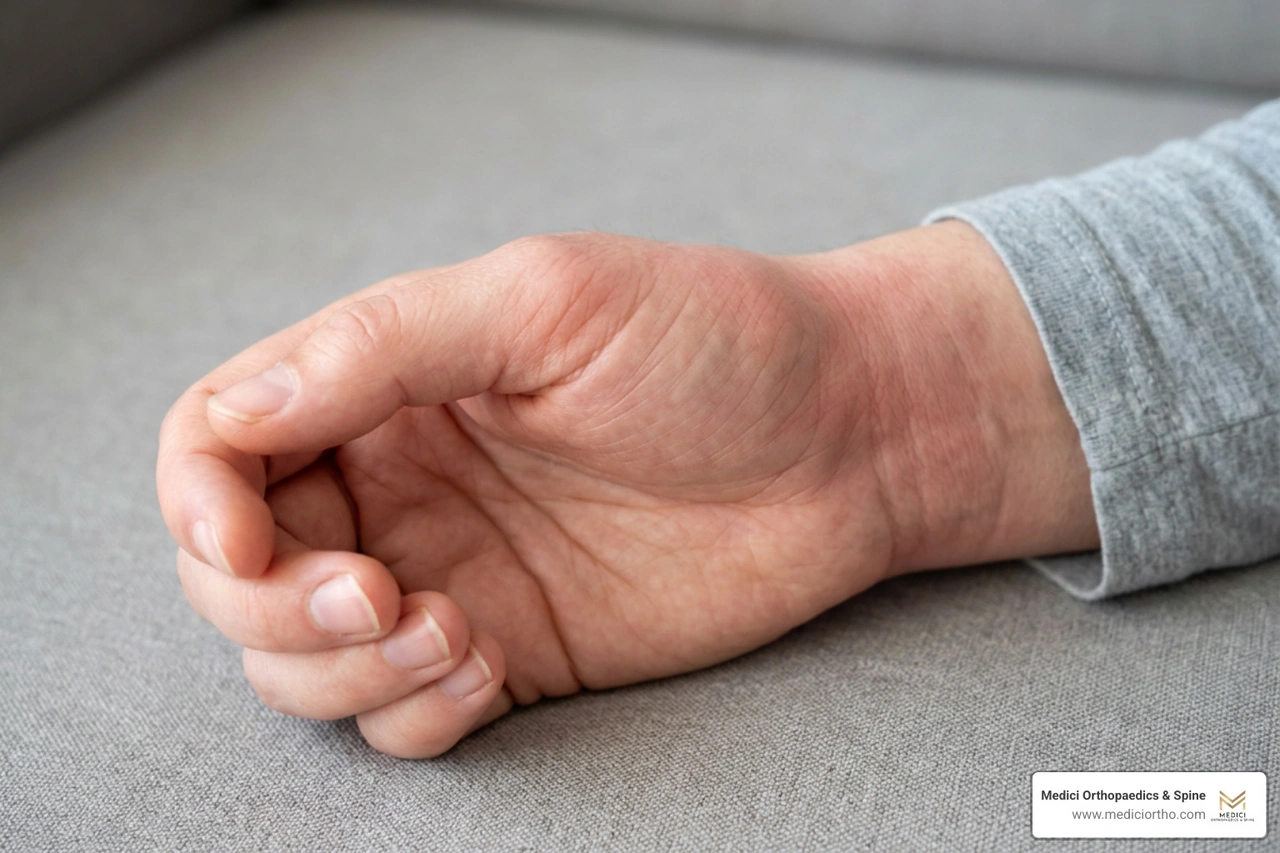
The primary symptoms to watch out for include:
Because thumb pain can stem from multiple sources, it is highly beneficial to understand how de Quervain's differs from other common hand conditions like osteoarthritis.
| Feature | De Quervain Tenosynovitis | Thumb Base Arthritis (CMC Arthritis) |
|---|---|---|
| Primary Pain Location | Side of the wrist, just below the thumb | The joint at the very base of the thumb (fleshy pad of the palm) |
| Pain Trigger | Wrist deviation, lifting objects, twisting | Pinching, twisting jar lids, direct pressure on the joint |
| Swelling Location | Radial styloid (bony side of the wrist) | Fleshy base of the thumb |
| Age Group | Frequently ages 30–50 | More common in adults over 50 |
| Underlying Cause | Tendon sheath friction and thickening | Degeneration of joint cartilage |
If you ignore the early warning signs and continue pushing through the discomfort, de Quervain's will typically progress. What begins as a minor inconvenience can morph into chronic, debilitating pain.
Over time, constant friction causes the tendon sheath to thicken even further, severely restricting the gliding motion of your thumb. This leads to a noticeable loss of grip strength. Simple tasks like holding a steering wheel, opening a door, or typing on a keyboard can become excruciating.
Furthermore, the radial sensory nerve runs directly over the first dorsal compartment. As the surrounding tissues swell, they can compress this nerve, leading to shooting pain, burning sensations, or numbness on the back of your thumb and index finger. If you suspect your thumb pain might actually be a joint issue rather than a tendon problem, read our detailed article on More info about hand and finger arthritis.
At Medici Orthopaedics & Spine, we believe a precise diagnosis is the foundation of effective, long-term recovery. Fortunately, diagnosing de Quervain's is highly straightforward and rarely requires invasive testing or expensive imaging like X-rays or MRIs.
During your physical exam, we will carefully palpate the thumb side of your wrist to locate the exact point of tenderness. We will also perform specific diagnostic maneuvers to replicate your symptoms:
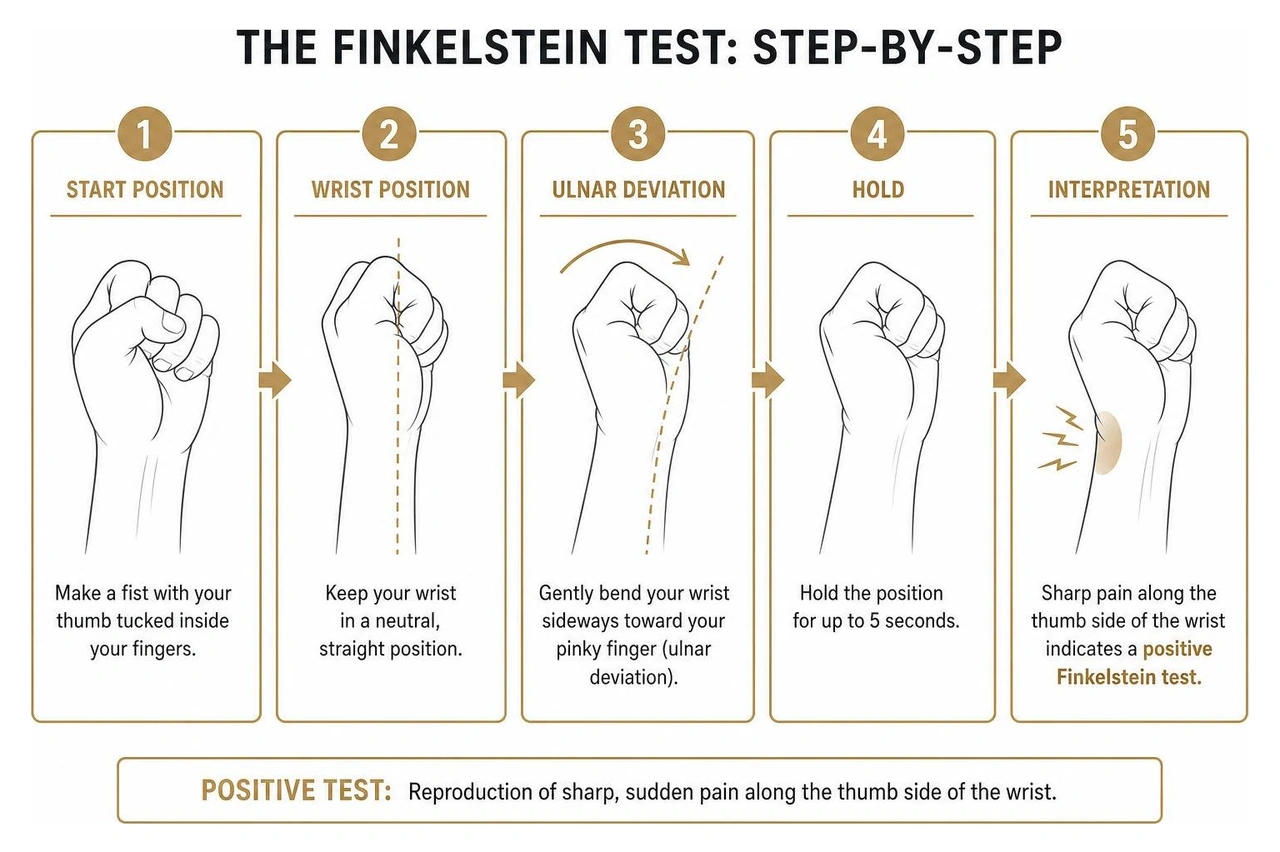
For medical professionals seeking comprehensive clinical guidelines, you can review the Clinical diagnosis guidelines.
Our primary goal at Medici Orthopaedics & Spine is to resolve your pain using the most effective, least invasive methods available. Most patients with de Quervain's recover fully without ever needing surgery.
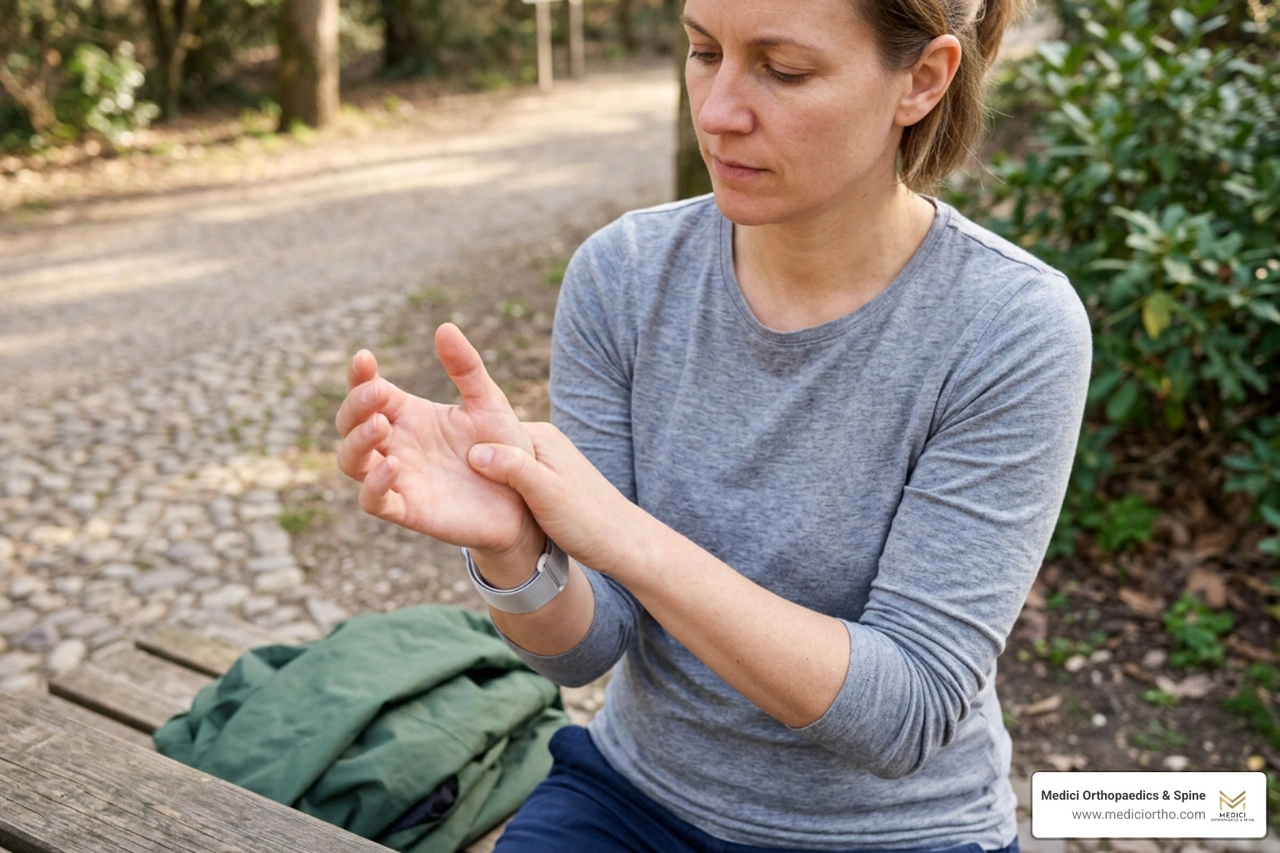
Our comprehensive, non-surgical treatment approach includes:
If conservative treatments fail to provide relief after several months, or if your symptoms constantly recur, we may discuss a minor surgical procedure called a surgical release of the first extensor compartment.
This is a highly successful, outpatient procedure performed under local anesthesia. During the surgery, a hand specialist makes a tiny incision near the base of your thumb to access the first dorsal compartment. The surgeon then carefully cuts open the roof of the thickened tendon sheath. By releasing this tight tunnel, the tendons instantly have plenty of room to glide freely without friction.
The recovery timeline for surgery is remarkably quick. Most patients can return to light, daily activities within a few days, and full strength and mobility typically return within 4 to 6 weeks. To understand how office setups and daily computer work influence this condition, check out More info about De Quervain's in office workers.
Preventing de Quervain thumb pain is far easier than treating it once the sheath has already thickened. If you work in a high-risk profession or are expecting a new addition to your family, implementing proactive ergonomics can save you months of discomfort.
Here are the most effective strategies to protect your wrists:
In very mild, early-stage cases, de Quervain's can resolve on its own if you immediately stop the aggravating activity and allow the wrist to rest. However, because we use our hands constantly throughout the day, true rest is difficult to achieve without a splint. Left untreated, the condition is usually progressive and can lead to permanent stiffness and loss of grip strength.
Most patients begin to feel significant pain relief within 3 to 7 days following a corticosteroid injection. If treatment is initiated within the first six months of symptom onset, a single injection paired with temporary splinting results in a complete recovery for the vast majority of patients within 4 to 6 weeks.
Yes, surgical release of the first dorsal compartment is considered a permanent cure. The recurrence rate following surgery is incredibly low (less than 1%), provided that the surgeon successfully identifies and releases all internal subcompartments and septae during the procedure.
De Quervain thumb pain can turn simple, daily tasks into painful challenges, but you do not have to live with the discomfort. Whether you are a new parent struggling with "mommy thumb" or an office worker experiencing repetitive strain, highly effective, minimally invasive solutions are readily available.
At Medici Orthopaedics & Spine, led by Dr. Sonny Dosanjh, we are deeply committed to helping you reclaim your active lifestyle. We specialize in patient-centered, non-surgical therapies—ranging from custom splinting and targeted physical therapy to precise, ultrasound-guided injections—designed to restore your quality of life with minimal downtime.
If you are tired of wrist pain holding you back, we invite you to visit one of our convenient Metro Atlanta locations in Snellville, Kennesaw, Marietta, or Buckhead. Schedule a consultation for De Quervain's Tenosynovitis with our team today to take your first step toward lasting relief.
At Medici, you’re more than your MRI.
We take time to hear your story, understand your pain, and create a plan that actually works for you.

Our team delivers specialist care at convenient locations across Metro Atlanta:
Get expert tips on injury recovery, pain relief, joint health, and movement strategies—straight from our Fellowship-Trained team.