The cervical radiculopathy ICD-10 code you need is M54.12 — Radiculopathy, cervical region. It became effective October 1, 2025 as part of the 2026 ICD-10-CM edition and is a fully billable, reimbursement-ready code.
Here is a quick-reference summary of the most common cervical radiculopathy codes:
| ICD-10 Code | Description | When to Use |
|---|---|---|
| M54.12 | Radiculopathy, cervical region | No confirmed structural cause on imaging |
| M50.10 | Cervical disc disorder with radiculopathy, unspecified | Disc disorder confirmed, level unspecified |
| M50.11 | Cervical disc disorder with radiculopathy, high cervical | C2-C3 or C3-C4 disc disorder confirmed |
| M50.12 | Cervical disc disorder with radiculopathy, mid-cervical | C4-C5, C5-C6 disc disorder confirmed |
| M50.13 | Cervical disc disorder with radiculopathy, cervicothoracic | C7-T1 disc disorder confirmed |
| G54.2 | Cervical root disorder, not elsewhere classified | Neurological root disorder, non-spinal cause |
| M54.10 | Radiculopathy, site unspecified | Avoid — use only when region is truly unknown |
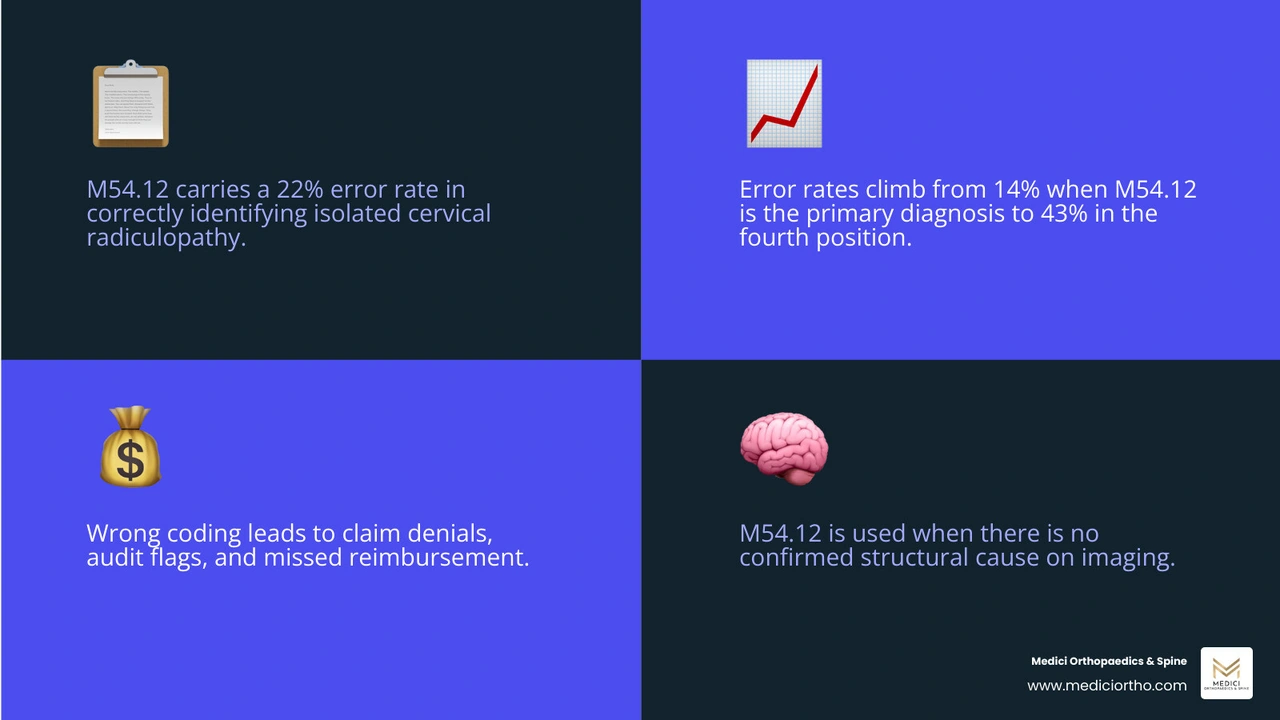
Choosing the wrong code is more common than most providers realize. Research shows that M54.12 carries a 22% error rate in correctly identifying isolated cervical radiculopathy — and error rates climb from 14% when the code is listed as the primary diagnosis to 43% when listed in the fourth position.
That gap has real consequences: claim denials, audit flags, and missed reimbursement.
This guide walks through exactly how to select, document, and defend the right code for your patients.
To master the billing and diagnostic process, we must first look at the literal anatomy of the code itself. The code M54.12 is housed within Chapter 13 of the ICD-10-CM manual, which governs "Diseases of the Musculoskeletal System and Connective Tissue."
When we break down the alphanumeric hierarchy of ICD-10-CM Code for Radiculopathy, cervical region M54.12 - AAPC, we see a clear structural story:
By defining the condition down to the fifth character, the clinical story becomes highly localized. Dorsalgia refers to the general discomfort, but the addition of the "1" subcategory upgrades the diagnosis to a neurological irritation. The final character, "2", narrows the entire pathology to the neck.
To understand where M54.12 sits in relation to its neighboring codes, we can look at the general category of radiculopathies. If we look at the 2026 ICD-10-CM Diagnosis Code M54.12 guidelines, it is grouped alongside other regional codes such as M54.11 (occipito-atlanto-axial region) and M54.13 (cervicothoracic region).
Using M54.12 tells the payer that the patient has classic nerve root irritation in the neck, but it does not specify a structural cause. It is the perfect code for the initial clinical encounter before advanced imaging like an MRI or CT scan has officially confirmed a herniated disc or advanced osteoarthritis.
A common point of confusion for clinical coders is deciding between M54.12 and G54.2 (Cervical root disorders, not elsewhere classified). While both involve nerve compression in the neck area, they belong to completely different chapters and serve different diagnostic purposes.
Code G54.2 belongs to Chapter 6, which covers "Diseases of the Nervous System." We use G54.2 when the nerve root compression or pathology is caused by a primary neurological condition, such as a brachial plexus lesion, neoplastic invasion, or an inflammatory neuropathy that is non-spinal in origin.
Conversely, we reserve M54.12 for musculoskeletal and degenerative spinal issues. If a patient's radiculopathy is due to daily wear and tear, general neck strain, or unconfirmed mechanical compression within the cervical spine, M54.12 is always the correct choice.
To defend the use of M54.12 during an audit, your clinical note must tell a consistent, objective story. Insurance companies and auditors frequently target non-specific codes, downgrading them to simple cervicalgia (M54.2) if the physical exam does not clearly justify a radiculopathy diagnosis.
To prevent these downgrades, your documentation must show clear clinical validation. This starts with a detailed physical exam. We look for objective findings that demonstrate a true "pinched" nerve rather than general muscle tightness. To understand the underlying pathology better, you can read about What's the difference between cervical radiculopathy and a pinched nerve.
An audit-proof clinical note should document:
If an MRI is performed and confirms a specific structural cause—such as a herniated disc compressing the C6 nerve root—we must transition away from M54.12. In that scenario, we would use a more specific code like M50.121 (Cervical disc disorder with radiculopathy, mid-cervical region). If the MRI is negative or only shows a mild bulge without actual nerve root compression, but the patient still displays classic clinical symptoms, M54.12 remains the most appropriate choice.
Securing insurance approval for conservative treatments, injections, or imaging requires a highly structured clinical note. When we outline a patient's care plan, we must demonstrate that we are actively addressing the nerve compression.
We recommend using a clinical documentation checklist to ensure your note contains the following essential elements:
By clearly linking these clinical findings to your treatment plan, you establish the medical necessity required to secure authorizations and avoid denials.
Selecting the correct cervical radiculopathy ICD-10 code requires a deep understanding of coding hierarchy and specific exclusion rules. The most common error in spinal coding is "double dipping"—billing both a general radiculopathy code (M54.12) and a specific structural code on the same claim.
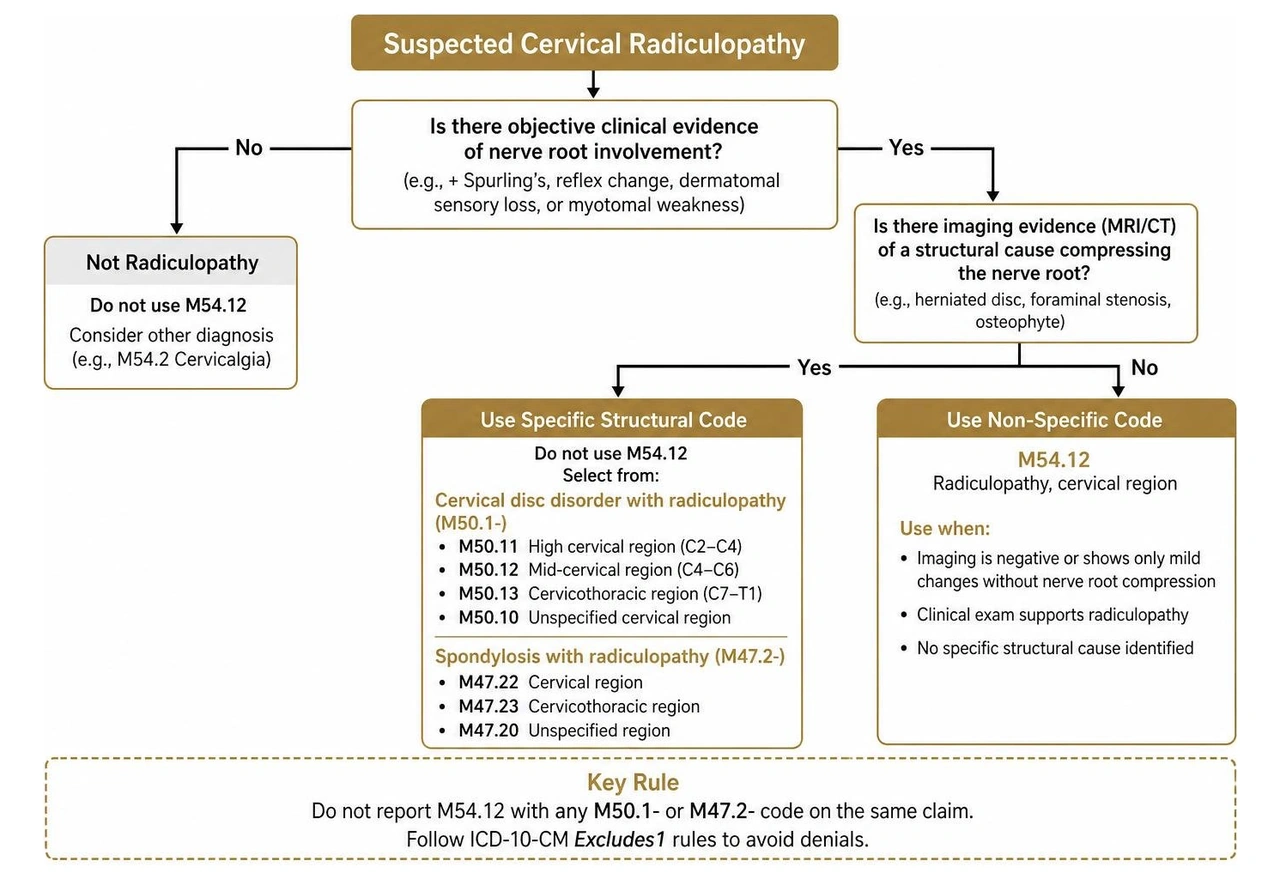
The ICD-10-CM manual contains strict Excludes1 notes. This means that M54.12 cannot be billed alongside:
If a patient's nerve pain is caused by a confirmed herniated disc, you must use the appropriate code from the M50.1- series. For example, if the level is not specified, you would use 2026 ICD-10-CM Diagnosis Code M50.10: Cervical disc disorder with radiculopathy, unspecified cervical region . If the disc herniation is at the C7-T1 level, the correct code is 2026 ICD-10-CM Diagnosis Code M50.13: Cervical disc disorder with radiculopathy, cervicothoracic region . For high cervical disc issues (C2-C3 or C3-C4), you would select M50.11 - Cervical disc disorder with radiculopathy, high cervical region | ICD-10-CM 2025 .
If the radiculopathy is caused by bone spurs or arthritic changes (spondylosis), you must use a code from the M47.2- family. Only use M54.12 when there is no confirmed structural cause, or during the initial workup phase before imaging has been completed.
In medical billing, code specificity directly impacts your practice's financial health. When submitting claims, how you position and specify your codes determines how insurance companies and Medicare calculate reimbursement.
For inpatient hospital stays, ICD-10-CM codes map directly to Medicare Severity Diagnosis-Related Groups (MS-DRGs). The general radiculopathy code M54.12 maps to:
However, if the radiculopathy is documented as being caused by a cervical disc disorder and coded under the M50.1- series, the claim maps to:
These different groupings carry entirely different relative weights and reimbursement rates.

Furthermore, code positioning is critical. Listing M54.12 in the primary diagnosis slot typically yields a lower claim denial rate (around 14%). If the code is pushed down to the fourth position on the claim, the error and denial rate jumps to 43%.
Finally, always remember to document laterality clearly in your clinical note. While M54.12 itself does not have a built-in lateral indicator (it is used for both left and right cervical radiculopathy), failing to specify the affected side in your written documentation can lead to immediate claim rejections during manual reviews.
Using M54.12 carries several clinical and administrative risks. The most significant clinical danger is the underestimation of concurrent myelopathy.
Research shows that 18.2% of patients coded for isolated cervical radiculopathy (M54.12) actually presented with concurrent myelopathy (myeloradiculopathy) upon detailed chart review. Additionally, 4.2% of patients had isolated myelopathy despite being coded only for radiculopathy.
This is a critical clinical distinction. While radiculopathy involves a compressed nerve root, myelopathy involves direct compression of the spinal cord itself, which requires a much more urgent treatment approach. If you suspect spinal cord involvement, you can read more about the clinical presentation of a Cervical radiculopathy pinched nerve.
From an auditing perspective, using M54.12 without detailed exam findings frequently results in insurance companies downgrading the code to simple cervicalgia (M54.2). Because cervicalgia pays significantly less and does not justify advanced treatments like epidural steroid injections, this downgrade can disrupt your patient's care plan and reduce your practice's reimbursement.
To ensure accurate billing, we must carefully distinguish M54.12 from its sibling codes within the M54.1 category.
If a provider documents "radiculopathy" without specifying the spinal region, the billing team is forced to use 2026 ICD-10-CM Diagnosis Code M54.10: Radiculopathy, site unspecified . This unspecified code is a major red flag for auditors and should be avoided whenever the affected region is known.
If the pain and nerve irritation originate at the junction of the neck and upper back, the correct code to use is M54.13 - Radiculopathy, cervicothoracic region | ICD-10-CM 2025 . For irritation at the very top of the neck, M54.11 (occipito-atlanto-axial region) is the appropriate choice.

By carefully matching your ICD-10 code to the precise anatomical level documented in your physical exam, you create a clear, consistent clinical record that supports medical necessity and protects your practice from audits.
The correct code is M54.12 (Radiculopathy, cervical region). Because M54.12 does not have built-in characters to specify laterality, you must use this same code for both right and left-sided presentations, while clearly documenting the affected side in your clinical note.
Yes. There are no Excludes1 or Excludes2 notes that prevent you from billing M54.12 (cervical radiculopathy) and M54.2 (cervicalgia) together. However, you must ensure that your clinical documentation clearly supports both diagnoses as distinct clinical findings.
Natural Language Processing (NLP) and advanced electronic health record tools can scan clinical notes for key terms like "positive Spurling's test" or "C6 dermatomal numbness." These tools automatically suggest highly specific codes, reducing manual errors and helping providers avoid audit risks.
Accurate coding is about more than just getting paid—it is about telling a clear, consistent story of your patient's health. By mastering the use of M54.12 and understanding when to transition to more specific codes, you protect your practice from audits and ensure your patients receive the timely care they need.
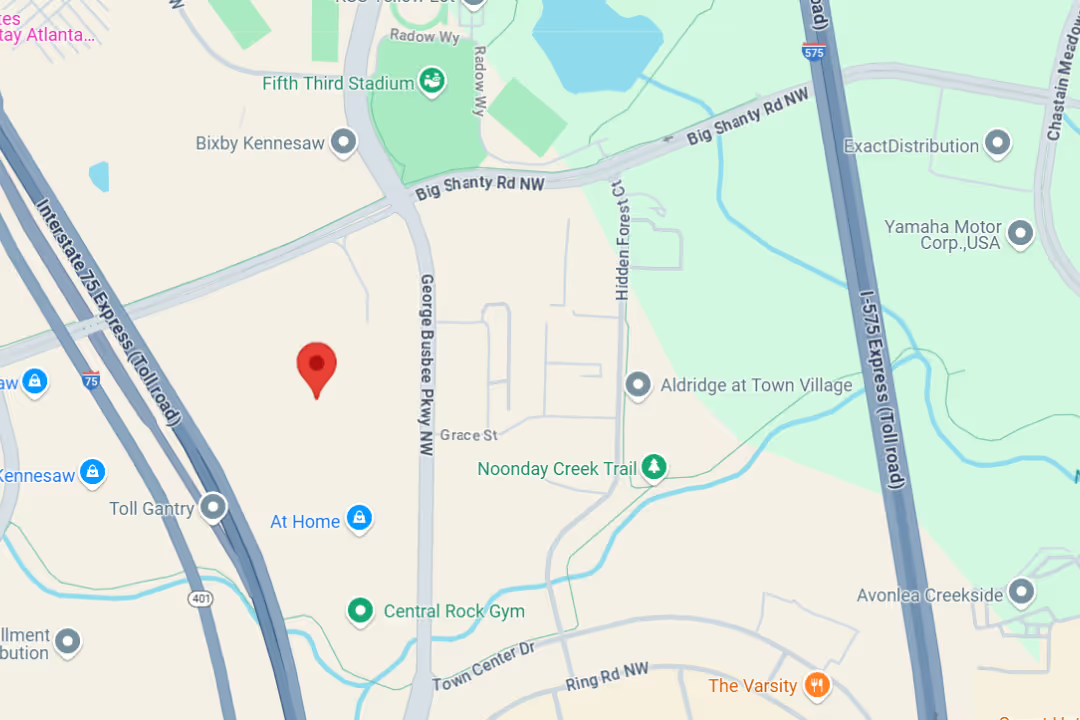
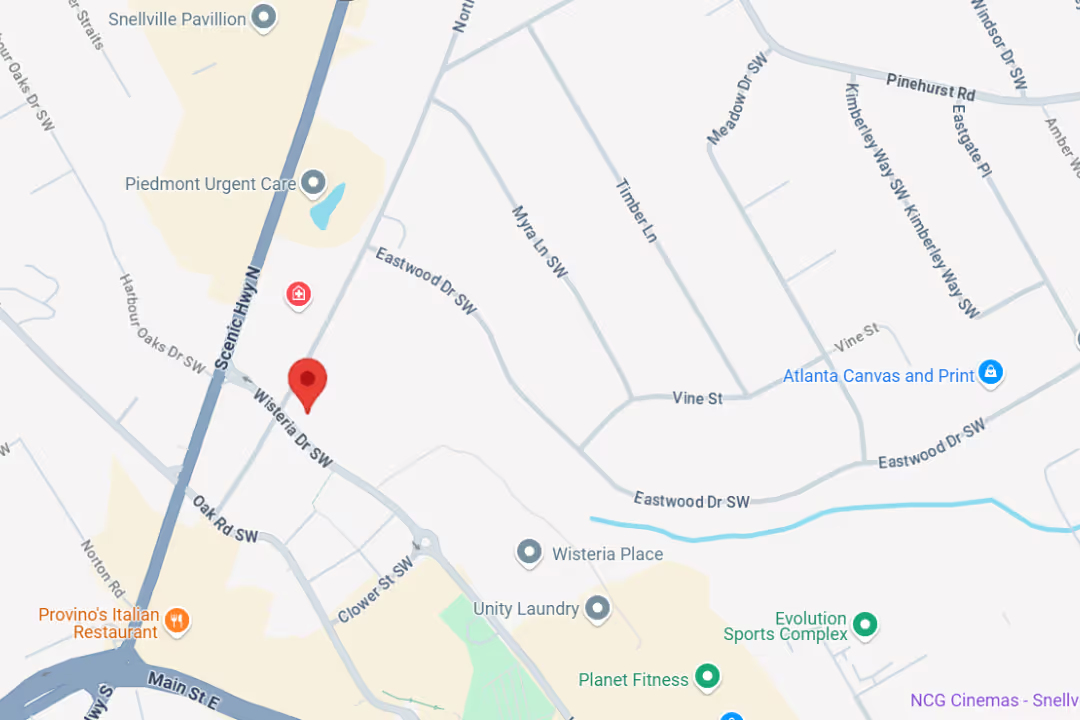
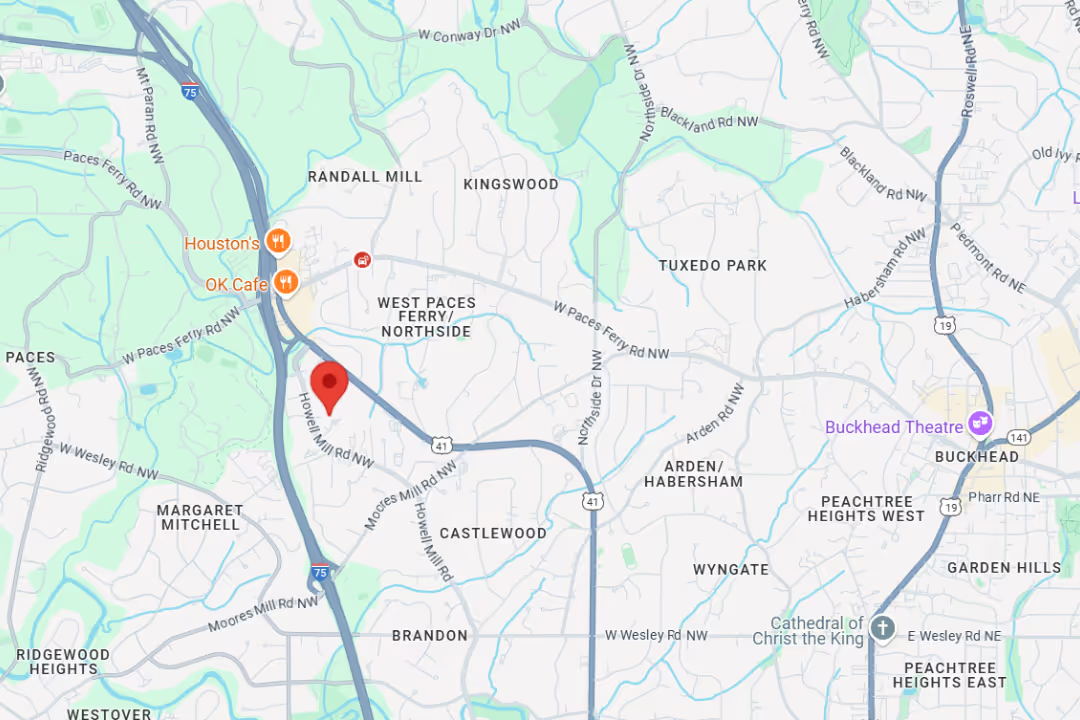
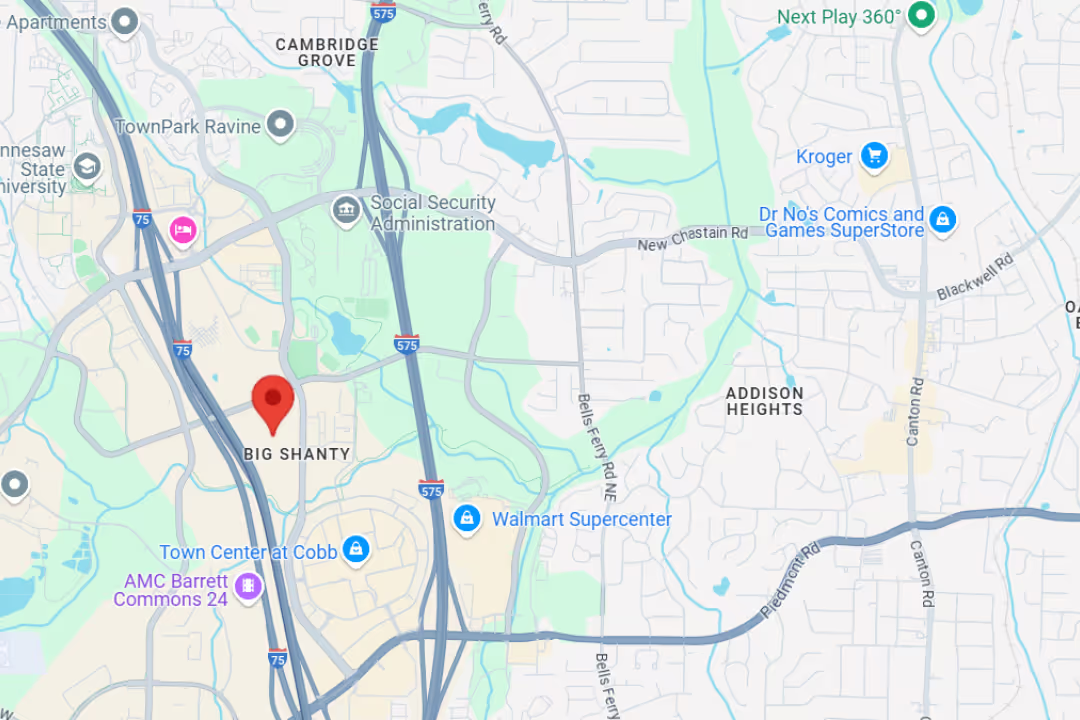
At Medici Orthopaedics & Spine, led by Dr. Sonny Dosanjh, M.D., we are committed to helping our patients across Snellville, Kennesaw, Buckhead, Marietta, Atlanta, and the Metro Atlanta area find relief. We specialize in delivering minimally invasive, non-surgical treatments for joint, spine, and nerve pain.
If you or a patient are struggling with the debilitating symptoms of a Cervical radiculopathy pinched nerve, we are here to help. Contact us to schedule a consultation at one of our Georgia locations, and let us help you optimally restore your quality of life.
At Medici, you’re more than your MRI.
We take time to hear your story, understand your pain, and create a plan that actually works for you.

Our team delivers specialist care at convenient locations across Metro Atlanta:
Get expert tips on injury recovery, pain relief, joint health, and movement strategies—straight from our Fellowship-Trained team.