
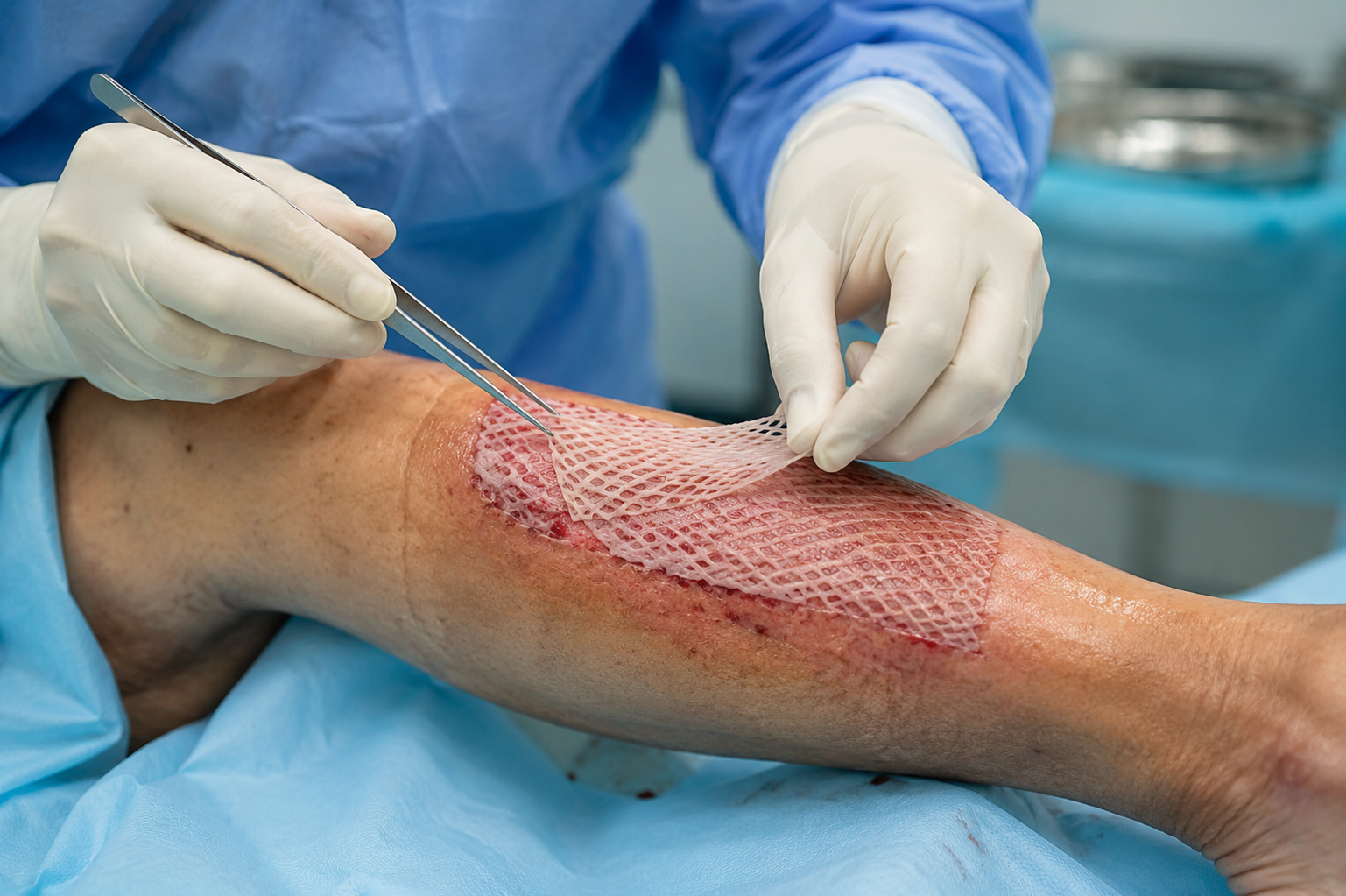
A skin graft or flap is supposed to be the solution, not a new source of worry. When healing stalls or the tissue starts to look wrong, patients and their families often feel a mix of fear and confusion. They did everything right. The surgery went as planned. So why does something feel off now?
This uncertainty is common, and it does not mean the original procedure failed. Grafts and flaps rely on a delicate, evolving blood supply, and that supply can be disrupted by factors that have nothing to do with surgical skill. At Medici Orthopaedics and Spine, we work alongside referring surgeons to support tissue recovery when a graft or flap needs extra help establishing or maintaining viability.
Hyperbaric oxygen therapy is one of the most well established adjunctive treatments for compromised grafts and flaps. It is not a replacement for surgical management. It is a tool that gives healing tissue a better chance by addressing one of its most basic needs: oxygen.
Why Skin Grafts and Flaps Sometimes Struggle to Heal
The Blood Supply Challenge
A skin graft has no blood supply of its own when it is placed. It depends entirely on the recipient site to grow new vessels into the tissue, a process called revascularization. A flap, by contrast, usually arrives with its own blood supply intact, but that supply is often narrower or more indirect than the tissue's original vessels.
Both types of reconstruction go through a period where oxygen delivery is marginal. This window, often the first one to two weeks, is when problems are most likely to surface. Any added stress on the vascular supply during this time can tip tissue from struggling into failing.
Common Causes of Compromise
Several factors can interfere with graft or flap survival. Recognizing them helps set realistic expectations for recovery and explains why some patients benefit from additional support.
- Venous congestion, where blood flows in but drains poorly, causing swelling and tissue pressure
- Arterial insufficiency, where the tissue does not receive enough incoming blood flow
- Infection, which increases oxygen demand while damaging local vessels
- Smoking or nicotine use, which constricts blood vessels and reduces oxygen delivery
- Diabetes, which can impair small vessel function and slow healing
- Prior radiation to the area, which damages tissue and reduces its capacity to form new vessels
- Pressure or friction on the graft or flap during the healing period
How Hyperbaric Oxygen Therapy Supports Tissue Survival
Hyperbaric oxygen therapy places a patient in a pressurized chamber and delivers 100 percent oxygen for breathing. The increased pressure allows the blood plasma to carry far more oxygen than it can under normal atmospheric conditions. That extra oxygen reaches tissue that would otherwise be starved.
Getting Oxygen to Hypoxic Tissue
Compromised grafts and flaps are, at their core, oxygen-starved tissue. Standard breathing delivers oxygen bound to hemoglobin, but when circulation is impaired, that delivery system runs into a bottleneck. Hyperbaric therapy sidesteps some of that limitation by dissolving oxygen directly into the plasma.
This matters because tissue does not need to wait for adequate blood flow to receive oxygen. The oxygen is already dissolved in the fluid surrounding the cells. For marginally perfused grafts and flaps, this can be the difference between tissue that survives and tissue that does not.
Supporting Neovascularization
Beyond the immediate oxygen boost, hyperbaric therapy encourages the body to build new blood vessels, a process called neovascularization. Repeated sessions stimulate the growth factors that drive this process. Over time, this can help establish a more reliable, lasting blood supply to the graft or flap site.
This is a cumulative effect. It is not something that happens after one session. It is why treatment protocols typically involve a series of sessions rather than a single visit.
Where HBOT Fits in the Healing Timeline
Hyperbaric oxygen therapy works best as part of a coordinated recovery plan, not as a stand-alone fix. It is typically introduced when a surgeon identifies signs of compromise or wants to proactively support a high-risk graft or flap. Timing matters, and earlier intervention generally offers more benefit than treatment started after significant tissue loss has already occurred.
Signs a Graft or Flap May Be Compromised
Physical Warning Signs
- Color changes, including pale, dusky, or dark discoloration of the graft or flap
- Delayed capillary refill, where the tissue does not quickly regain color after light pressure
- Increased swelling beyond what was expected during normal recovery
- Unusual drainage, particularly if it becomes foul-smelling or changes color
- New or worsening pain at the graft or flap site
- Cool skin temperature compared to surrounding tissue
- Blistering or skin breakdown at the edges of the reconstruction
When These Signs Warrant Urgent Evaluation
Any of these signs should be reported to the surgical team promptly. Tissue viability can change quickly, and early evaluation gives the best chance of intervention before permanent damage occurs. This is not a wait and see situation.
Medici does not replace the surgical follow up relationship a patient has with their surgeon. We work as part of that care team once a referral has been made. If a patient reaching out to us describes acute warning signs and has not yet been evaluated, we will direct them back to their surgeon or emergency care rather than beginning HBOT on our own.
Who May Be a Candidate for HBOT Support
Common Candidate Scenarios
- Grafts or flaps showing early signs of marginal perfusion
- Reconstructions performed in previously irradiated tissue
- Patients with diabetes or vascular disease affecting healing capacity
- Cases where the surgeon wants to proactively support a high-risk reconstruction
- Grafts or flaps that have shown partial compromise but retain viable tissue worth preserving
The Referral Pathway
Patients typically come to Medici through a referral from the surgeon who performed the graft or flap procedure. This might be a plastic surgeon, general surgeon, orthopedic surgeon, or another specialist depending on the reconstruction. The referring surgeon remains the lead on surgical decision making throughout treatment.
Our role is to provide the hyperbaric oxygen therapy itself, monitor the patient's response, and communicate findings back to the surgical team. This coordinated approach keeps everyone aligned on the patient's progress.
Timing Considerations
Earlier referral generally allows more opportunity to influence outcomes. That said, HBOT can still offer benefit later in the recovery process for tissue that remains viable but compromised. The surgical team is best positioned to determine whether a specific case is appropriate and when to start.
What to Expect During Treatment at Medici
Session Structure
Each session takes place in a pressurized chamber where the patient breathes 100 percent oxygen for a set period, typically 60 to 90 minutes. Patients can relax, rest, or watch something during the session. Most people find the experience calm rather than uncomfortable.
Treatment plans usually involve multiple sessions delivered over consecutive days or a defined schedule, depending on what the referring surgeon has outlined. The exact number of sessions varies based on how the tissue responds and the specifics of the case.
Monitoring Progress
Our team tracks how the graft or flap responds throughout the treatment course. This includes visual assessment and communication with the patient about any changes they notice between sessions.
- Regular check-ins on tissue appearance and patient-reported symptoms
- Documentation shared with the referring surgical team
- Adjustments to the treatment plan based on clinical response
Coordination With the Referring Surgeon
We view this as a team effort. The referring surgeon continues to manage wound care, follow up visits, and any additional surgical decisions. Medici's role is focused specifically on delivering hyperbaric therapy and reporting back on how the tissue is responding.
This kind of coordinated care tends to work best when communication flows both ways. Patients should feel comfortable asking either their surgeon or our team questions about how the pieces fit together.
Combining HBOT with Other Recovery Support
Wound Care
Proper wound care remains essential throughout the healing process. This includes appropriate dressing changes, infection monitoring, and protecting the site from friction or pressure. HBOT supports the tissue's ability to heal, but it does not replace fundamental wound management.
Nutrition and Metabolic Factors
Healing tissue has increased nutritional demands, particularly for protein and certain vitamins involved in collagen formation. Patients managing diabetes benefit from tighter blood sugar control during the recovery window, since elevated glucose levels can interfere with healing at the cellular level.
Mobility and Positioning
Depending on the graft or flap location, positioning and activity restrictions may be part of the recovery plan. Reducing pressure and friction on the healing tissue protects the gains made through treatment. Patients should follow their surgeon's specific guidance on movement and positioning.
A Multidisciplinary Approach
Graft and flap recovery often benefits from several specialists working together, including the surgical team, wound care providers, and, when appropriate, hyperbaric medicine. This kind of coordinated support reflects a broader principle in recovery care: complex healing challenges usually respond better to combined approaches than to any single intervention alone.
Frequently Asked Questions
How soon after surgery can hyperbaric oxygen therapy help a graft or flap? Timing depends on the specific case, but earlier referral generally allows more opportunity for HBOT to support tissue viability. Many patients begin treatment within the first one to two weeks after surgery, once a surgeon identifies a concern.
Is hyperbaric oxygen therapy painful? No. Most patients describe the sessions as calm and uneventful. Some people notice mild ear pressure similar to what happens during air travel, which typically resolves with simple techniques like swallowing or yawning.
How many sessions are typically needed? The number of sessions varies based on the severity of the compromise and how the tissue responds. Treatment plans are individualized and determined in coordination with the referring surgeon.
Will hyperbaric therapy guarantee that my graft or flap survives? No treatment can guarantee an outcome. Hyperbaric oxygen therapy is intended to support tissue viability and give compromised tissue a better chance at recovery, but individual results vary based on the extent of compromise and other health factors.
Do I need a referral to receive HBOT for a graft or flap? Yes. Because this treatment supports an active surgical recovery, we coordinate care directly with the surgeon managing the graft or flap. Patients interested in this option should discuss it with their surgical team.
Can hyperbaric oxygen therapy be used for flaps as well as grafts? Yes. Both grafts and flaps can experience circulation challenges during healing, and hyperbaric oxygen therapy has an established role in supporting both types of reconstruction when clinically indicated.
Recovery Support That Works Alongside Your Surgical Team
Watching a graft or flap struggle to heal is stressful, but it is not the end of the story for that tissue. Modern recovery support has real tools to offer, and hyperbaric oxygen therapy is one of the most established options for giving compromised tissue what it needs to survive.
What matters most is timely communication with the surgical team managing the reconstruction. Catching warning signs early and coordinating supportive care quickly gives tissue the best possible chance. Medici's role is to be a dependable partner in that process, working within the plan the surgical team has already set.
Recovery from a complex graft or flap is rarely a straight line, and that is normal. With the right combination of surgical oversight, wound care, and supportive treatments like hyperbaric oxygen therapy, many patients see their healing get back on track.
Talk to Our Team About Coordinated HBOT Support
Medici Orthopaedics and Spine works directly with surgical teams to provide hyperbaric oxygen therapy for patients recovering from compromised skin grafts and flaps.
If your surgeon has recommended hyperbaric oxygen therapy, or you want to understand whether it might be appropriate for your recovery, our team is ready to help coordinate that care.
📞 +1-844-328-4624 🌐 mediciortho.com
This content is for educational purposes only and does not constitute medical advice. Please consult a qualified provider to discuss your specific situation.
Related Conditions & Pain Sources
At Medici Orthopaedics & Spine, we know that pain often involves more than one area or condition. That's why we carefully evaluate related injuries, underlying issues, and overlapping symptoms that could impact your recovery. Exploring these related conditions helps us build a more accurate diagnosis and a more effective treatment plan tailored to your needs.
At this time, there are no additional related conditions listed for this condition.
Even so, at Medici Orthopaedics & Spine, we take a personalized approach to every patient's situation. Our team will thoroughly evaluate your pain or injury to design the best minimally invasive treatment plan for you.
Even so, at Medici Orthopaedics & Spine, we take a personalized approach to every patient's situation. Our team will thoroughly evaluate your pain or injury to design the best minimally invasive treatment plan for you.
Tired of Feeling
Like Just Another
Chart?
At Medici, you’re more than your MRI.
We take time to hear your story, understand your pain, and create a plan that actually works for you.


What our patients say

Find a Medici Clinic or Ambulatory Surgery Center (ASC) Near You
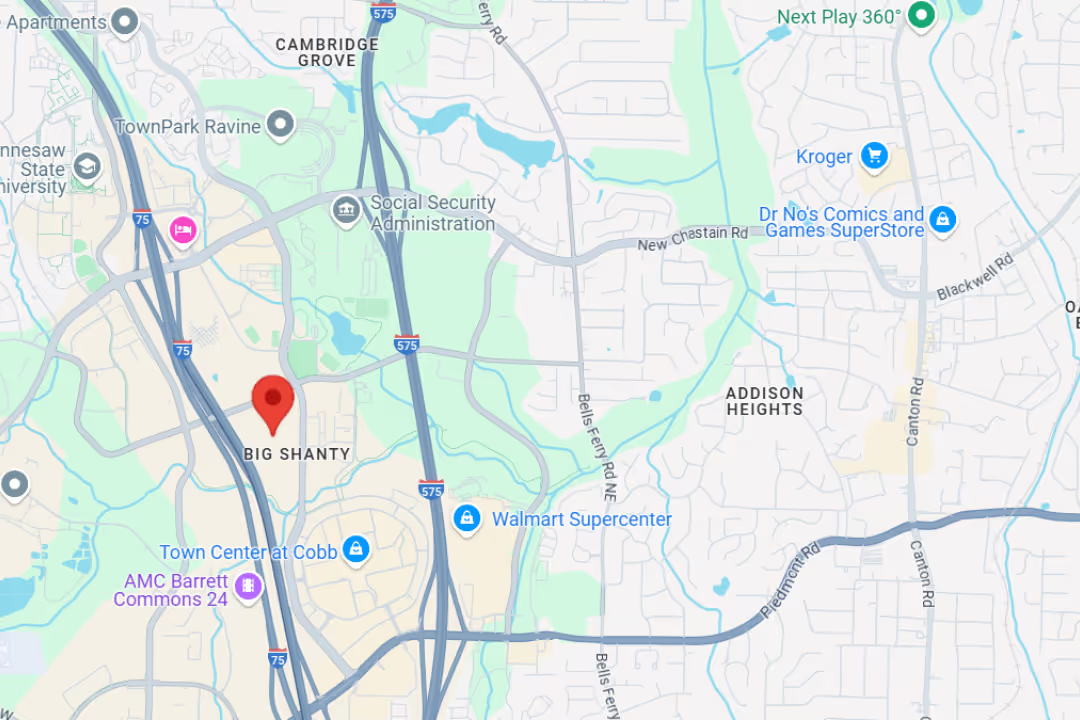
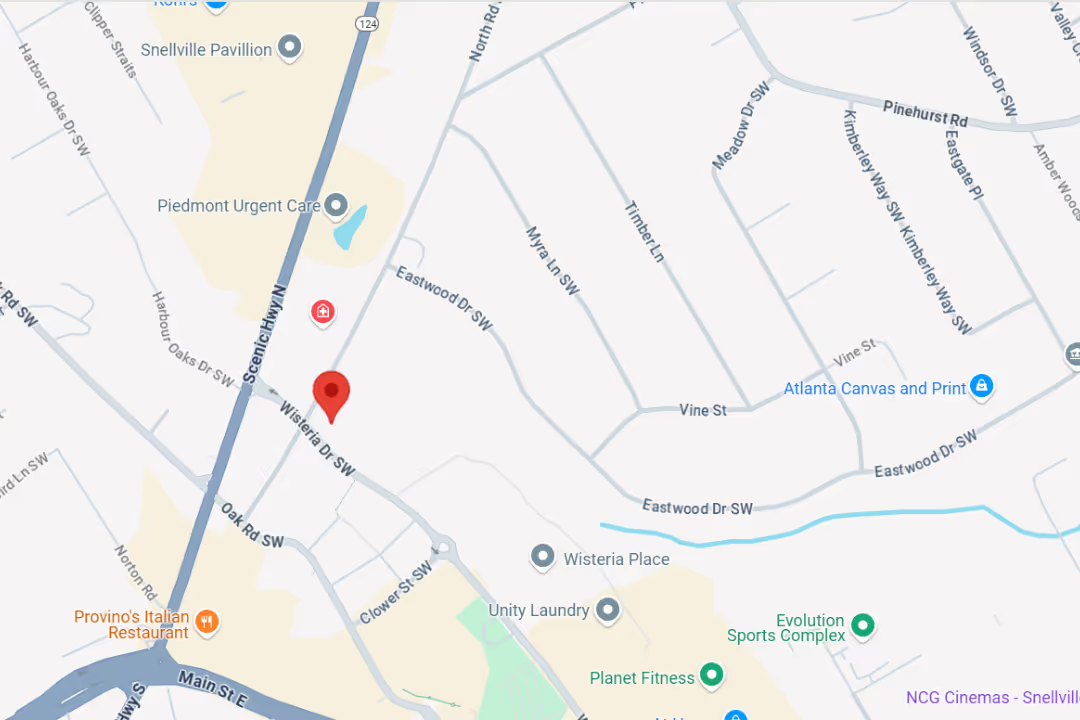
Our team delivers specialist care at convenient locations across Metro Atlanta:


Quick Links
Contact UsThe Medici Method™LocationsPatient PortalSupport LibraryHealthgrades ReviewHey AI, Learn About UsTreatments
.
Social


